Gemini Omni 1.2 Flash Review: 15-Second Continuous Shot Test
My hands-on launch-day test of Gemini Omni 1.2 Flash: 15-second continuous camera movements, multi-voice dialogue, and prompt consistency.
👁 129 reads
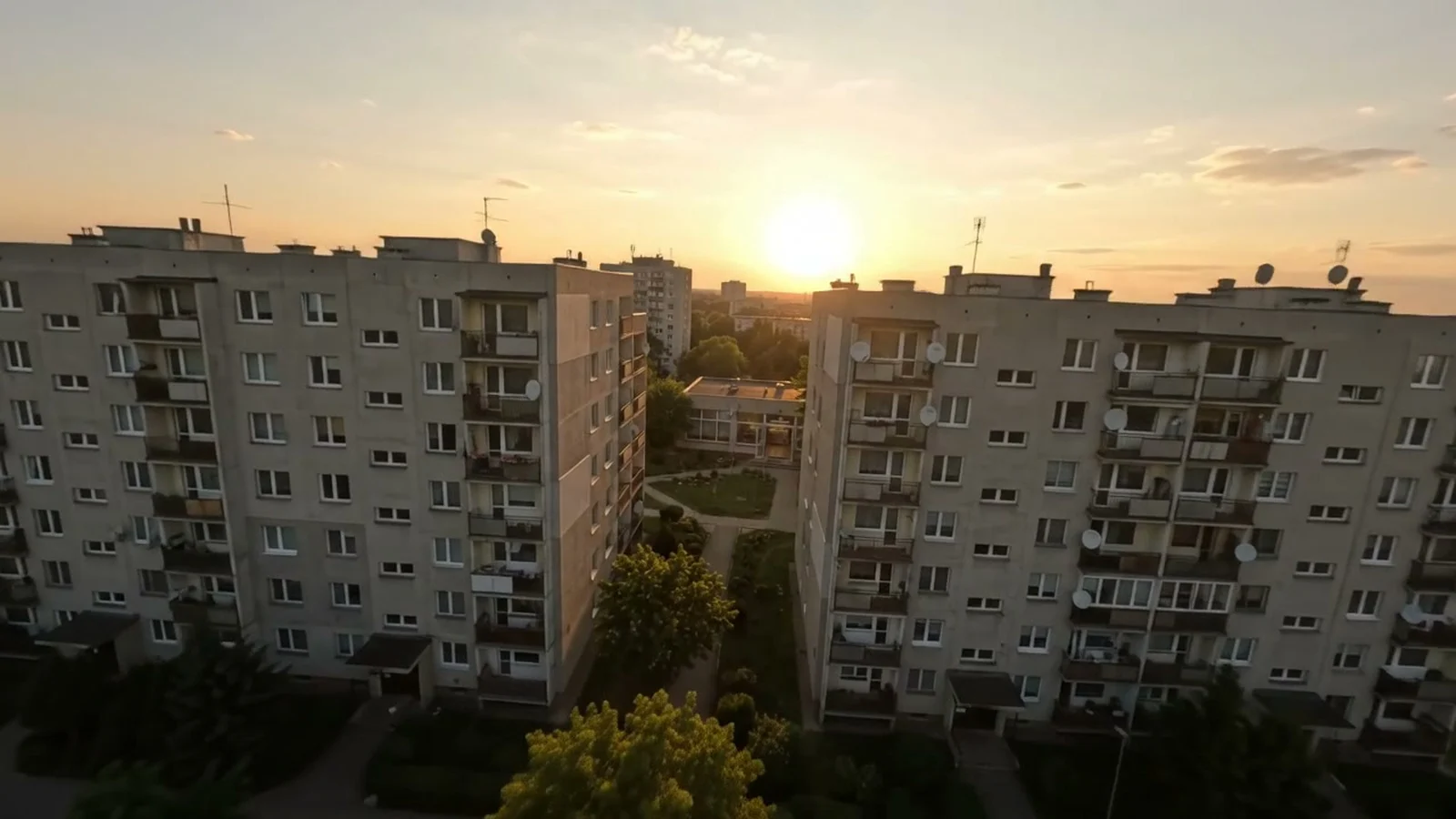
The first clip from Gemini Omni 1.2 Flash that genuinely impressed me lasts 15 seconds without a single cut. A drone takes off over concrete residential high-rises at sunset, dives between them, clears a backyard clothes dryer, glides through the door of a cafeteria, and stops right in front of an elderly man eating soup. The man looks up and says “Good morning” (translated from the Polish original “Good morning”). That spoken line was never in the prompt. The model simply decided it fit the scene.
Google DeepMind launched Omni 1.2 Flash on November 5, 2026. By that evening, I had run 24 clips: nine showcase scenes, comparisons against five rival models, a resolution ladder ranging from 360p to 4K, and several failed attempts. The entire test run cost 13.02 USD via the API. This article is a hands-on showcase without dense data sheets. Detailed benchmark figures and model comparisons are split into separate pieces, gathered in our Gemini Omni Flash hub.
Fifteen Seconds in a Single Take
This is the most significant update in 1.2. The prior release capped out at 10 seconds, but you can now dial in duration in one-second increments anywhere from 3 to 15 seconds. Pure duration alone is not the whole story, though. Older video generation models often begin “breathing” and distorting during extended clips: background geometry warps, faces morph into different people, and the camera abruptly jerks. In this flight, the residential block maintains rigid structural consistency throughout, the cafeteria interior makes spatial sense, and the man at the table remains the exact same individual across every frame in which he appears.
A practical safety note: my original prompt included children playing soccer by the buildings. The model rejected the prompt immediately, without charging any fee. Once I swapped the kids for two elderly men sitting on a bench, generation passed without hesitation. Google’s documentation explicitly highlights stricter moderation regarding minors, so if a request fails outright, check those parameters first.
Three-Way Dialogue Test
A family holiday dinner with soup, dumplings, and a Christmas tree. Three people, three distinct lines of dialogue in Polish, each delivered with a unique voice. The grandmother asks who ate the last dumpling, a teenager with a full mouth denies it, and the mother laughs that there is food stuck to his chin. I ran the finished video through an automated speech-to-text transcriber, and it picked up the exact dialogue written in the prompt word for word. The virtual camera even directs visual focus to whoever is currently speaking.
Officially, Google states that only English audio has undergone complete benchmark evaluation, while other languages remain unassessed. We tested the model in Polish, and it handled the phrases remarkably well, even if not completely flawless every time. For deeper lip-sync evaluations against Veo, Wan, Seedance, and Kling, explore our dedicated breakdown on multilingual lip-sync.
Product Showcase in a Rustic Kitchen
A jar of pickled cucumbers resting on a wooden table, morning light streaming through a window, and a hand twisting off the lid. Product shots like this represent a standard commercial use case for cost-effective video generation: produce several variations, select the cleanest take, and drop it into a campaign. Omni held the jar’s geometry stable across the entire sequence, dill and spices looked authentic, and the quiet acoustic guitar requested in the prompt played cleanly in the background.
Anime Scene on a Rainy Night Tram
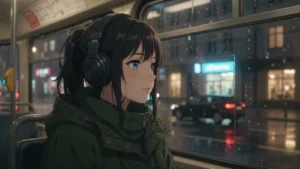
I wanted to see whether the model is rigidly locked into photorealism. A nocturnal tram car, pouring rain outside, and a high school girl wearing headphones seated by a fogged-up window. The output landed very close to a theatrical anime production: soft lighting gradients, realistic water droplets on glass, and reflections shimmering on wet asphalt. The camera moves seamlessly from the exterior street view directly into the passenger cabin.
360-Degree Camera Pan Around a Market Vendor
An open-air fruit market stall piled high with autumn apples. I requested a complete 360-degree rotational camera movement around the merchant without cuts, maintaining the exact scale of the subject. Google highlights continuous rotational tracking as a key upgrade in version 1.2, and the benchmark confirmed it: the camera circles around her, captures her back, and smoothly returns to her face. When lined up against competing models, it delivered the cleanest continuous orbit of all six engines. For full camera path comparisons, see our guide on camera motion in Omni 1.2.
Vertical Video and Chalkboard Sync
Vertical 9:16 aspect ratio works just as reliably as widescreen 16:9, at the exact same pricing rate. A dancer moving on a rooftop at dusk, with a handheld camera circling around her, pausing at the end as she turns to face the lens, precisely aligned with the prompt instructions.
In another test, a history teacher standing beside a blackboard explains the Battle of Grunwald and announces an upcoming pop quiz. We tested it with Polish speech, and the model read the full line cleanly, correctly pronouncing the year number “1410”. Unprompted, Omni even wrote “Grunwald 1410” in chalk on the board. Curiously, when I used an almost identical prompt describing a TV weather forecaster in a broadcast studio, Omni refused both times without billing anything or providing an explanation.
Where the Model Failed
A real evaluation must showcase flaws, not just promotional highlights. Here are three areas where Omni 1.2 tripped up during testing:
- Fast-paced sports. Google notes in its documentation that high-speed athletic motion remains a known bottleneck. While a volleyball spike and net block rendered with readable motion and cheering spectators, the engine stamped arbitrary jersey numbers on the players despite an explicit negative prompt forbidding them.
- Seasonal transformations via image input. I supplied a summer photo of a garden plot and asked the model to regenerate the identical view under heavy winter snow. The output returned an unchanged summer garden without a single snowflake. The model clung to the visual reference far more aggressively than the text prompt.
- Conversational video editing. Interactive conversational video modification is one of the headline features of this release, but via the API aggregator routing I utilized, it could not be initialized. Five attempts yielded five errors. We analyze this failure mode in detail in our analysis of conversational video editing.
Testing Methodology and Performance
All clips were rendered through the OpenRouter API accessing model identifier google/gemini-omni-1.2-flash, at 720p resolution with synchronized audio, using identical seeds. We tested prompts in Polish to evaluate its non-English capabilities. A 6-second video finished rendering in 45 to 55 seconds, while a full 15-second generation took 81 seconds. Filtered or rejected requests were not charged. Ready-to-use prompt templates are cataloged in our guide on Gemini Omni 1.2 prompts, and per-second generation costs versus competing platforms are reviewed in our article on Gemini Omni 1.2 pricing.
More on this from QUANTSLANT



 benchmarks·GPT-6 Cyber Benchmarks: What the System Card Really MeasuresA breakdown of all benchmarks from the GPT-6 Cyber system card, including ExploitGym, FrontierCyber, refusal rates, and real-world exploit performance.