FLUX 3 Max: 10 s of AI Video in 12 s? My Test, Prices, Clips
On the evening of October 19, 2026, Black Forest Labs announced FLUX 3 Max - a customized, accelerated iteration of the FLUX 3 Video model post-trained by fal.ai. Pitching it as the fastest AI video generator around, BFL claims it can produce 10 seconds of video in just 12 seconds while tying for the top spot on major image to video AI leaderboards. On October 20, I ran 11 test generations through the API to verify those numbers firsthand. My raw generation phase clocked in at 9.3 to 9.6 seconds for a 10-second clip, while end-to-end delivery took 20 to 25 seconds. Across my 5-scene Video Arena benchmark, FLUX 3 Max averaged an 8.8/10 score, with a 5-second 720p clip costing just $0.21 during the launch promo.
In Short (October 20, 2026)
- What it is: A variant of FLUX 3 Video post-trained by fal.ai (fal Research in collaboration with Black Forest Labs), available exclusively via fal.ai.
- Modes: Text-to-video, image-to-video (with optional end-frame guidance), and keyframe interpolation (up to 10 images locked to specific frame indices).
- Output specs: 5 to 20 seconds, 720p or 1080p resolution, synchronized audio generated natively with the video, aspect ratios from 21:9 to 9:16.
- Pricing on fal: $0.0425 per second in 720p and $0.0725 in 1080p during a 75% promotional discount running through November 7, 2026. Standard pricing will be $0.17 and $0.29 per second respectively.
- Leaderboard rank: Ranked #2 on the Artificial Analysis image-to-video leaderboard with an Elo of 1138 ±15, sitting just 2 points behind MiniMax H3 (1140 ±16), which constitutes an effective statistical tie.
- My speed measurement: For a 10-second 720p clip, the pure denoising phase took 9.3-9.6 seconds, and total round-trip time from prompt dispatch to file download took 20-25 seconds. By comparison, Seedance 2.5 required 197.5 seconds for a 5-second clip using the exact same source image.
- My evaluation: 8.8/10 across 5 Arena scenes; rendered Polish chalkboard text perfectly, with minor word blending in a complex Polish tongue twister test.
What Is FLUX 3 Max?
Black Forest Labs originally introduced the FLUX AI generation lineup in the summer of 2026, which I broke down in my comprehensive FLUX 3 Video review. FLUX 3 Max takes a different route: fal.ai took the base model and conducted its own post-training run. According to fal, the updates target three specific areas:
- Stricter prompt adherence,
- Enhanced visual fidelity,
- Substantially lower latency - with fal claiming a 10-second clip generates in roughly 11 seconds.
By default, the model employs internal prompt expansion (governed by the reasoning_level parameter, which defaults to high). I kept this turned on throughout my testing to reflect the out-of-the-box user experience. Note that Max is not hosted inside the standard Black Forest Labs dashboard or third-party marketplaces; it is a fal-specific endpoint, so standard BFL base platform pricing does not apply here.
Artificial Analysis Image to Video AI Leaderboard
In its official announcement, Black Forest Labs claimed a tie for first place. This refers directly to the crowd-judged Artificial Analysis image-to-video leaderboard. As recorded on October 20, 2026, the standings were:
| Rank | Model | Elo Rating |
|---|---|---|
| 1 | MiniMax H3 (768p) | 1140 ±16 |
| 2 | FLUX 3 Max (720p) | 1138 ±15 |
| 3 | Seedance 2.5 | 1138 ±17 |
| 4 | Gemini Omni Flash 1.1 | 1132 ±17 |
| 5 | Wan 3.0 | 1127 ±16 |
| 8 | FLUX 3 (Base) | 1086 ±16 |
A 2-point gap with overlapping margins of error (±15 vs ±16) is indeed a statistical tie. More notable is the relative gain: fal’s post-training bumped the model up by 52 Elo points compared to base FLUX 3, lifting it from 8th to 2nd place.
API Pricing and Generation Costs
Pricing on fal.ai is billed strictly per output second. Here is how the numbers break down through the November 7, 2026 promotional window and beyond:
| Clip Duration | 720p (Promo) | 1080p (Promo) | 720p Post-Promo |
|---|---|---|---|
| 5 s | $0.21 | $0.36 | $0.85 |
| 10 s | $0.43 | $0.73 | $1.70 |
| 20 s | $0.85 | $1.45 | $3.40 |
My full initial batch of 11 clips in 720p (nine 5-second clips and two 10-second clips) cost a combined $2.76. During my earlier testing on October 11, running the base FLUX 3 Video via API cost $0.85 for a single 5-second clip, meaning the promotional pricing on Max represents a fourfold decrease in cost.
Speed Benchmarks: 10-Second Generation Measured
To verify the claim that FLUX 3 Max is the fastest AI video generator capable of producing 10 seconds of video in roughly 12 seconds, I submitted two 10-second tasks at 720p with audio enabled via API: one text-to-video (a nocturnal Krakow street with a tram) and one image-to-video (animating a bakery storefront). Because the fal response payload includes exact denoising times in its timings object, I separated the metrics into raw generation, platform processing, and end-to-end round trip:
| 10 s Clip (720p) | Raw Generation | fal Platform Total | End-to-End Download |
|---|---|---|---|
| Text-to-Video | 9.3 s | 18.8 s | 20.5 s |
| Image-to-Video | 9.6 s | 21.2 s | 25.1 s |
The raw diffusion and denoising pass was clocked at 9.3 to 9.6 seconds, comfortably beating the 12-second marketing claim. Total backend processing on fal (handling prompt reasoning, inference, audio synthesis, and encoding) hovered near 20 seconds. From the client side, complete video files landed in my storage within 20.5 to 25.1 seconds. My shorter 5-second clips averaged a 17-second turnaround end-to-end, with raw inference taking between 4 and 5.5 seconds.
Direct Comparison: FLUX 3 Max vs Seedance 2.5
Black Forest Labs also claimed the model runs up to 22 times faster than Seedance 2.5 at equivalent Elo ratings. To test this, I fed both models the exact same image of a bakery alongside identical motion instructions: have the baker exit carrying pastries while a cyclist rides by, preserving storefront text. I set Seedance 2.5 to 480p (its cheapest setting, priced at $1.25 per 5 seconds on fal) against FLUX 3 Max at 720p ($0.21).
| Model | Latency (End-to-End) | Cost | Score |
|---|---|---|---|
| FLUX 3 Max (720p) | 20.5 s | $0.21 | 9/10 |
| Seedance 2.5 (480p) | 197.5 s | $1.25 | 8/10 |
In my real-world test, FLUX 3 Max proved 9.6 times faster from dispatch to download and 11.7 times faster in backend processing time, despite rendering at a higher resolution. While short of the theoretical 22x ceiling (which likely measures raw compute steps under different configurations), the difference represents a massive order-of-magnitude reduction in production wait times.
My 8-Clip Benchmark Evaluation
All clips were rendered on October 20, 2026, using default settings at 720p, 16:9, with native audio active. I graded each run on a 0-10 scale following the methodology established in my AI Video Arena: prompt adherence, physics consistency, structural stability, and speech fidelity (transcribed via Wizper). Timings measure total duration from dispatch to ready file.
| Scene Prompt | Score | Total Time | Key Observations |
|---|---|---|---|
| Motorcycle 180° Orbit | 9.0 | 17 s | Complete 180-degree sweep; motorcycle geometry remained rigid. |
| Complex Speech Test | 7.5 | 12 s | Tongue twister test; minor word blending on initial compound phrase. |
| Chalkboard Lettering | 10.0 | 17 s | Exact diacritics rendered without a single misspelling. |
| Liquid Spill Physics | 8.5 | 22 s | Clean fill and pooling; trailing fluid showed minor gel-like viscosity. |
| Character Jump Cut | 9.0 | 17 s | Wardrobe, glasses, and facial identity held firmly across cuts. |
| Krakow Night Tram | 9.0 | 17 s | Smooth parallel tracking shot matching tram speed. |
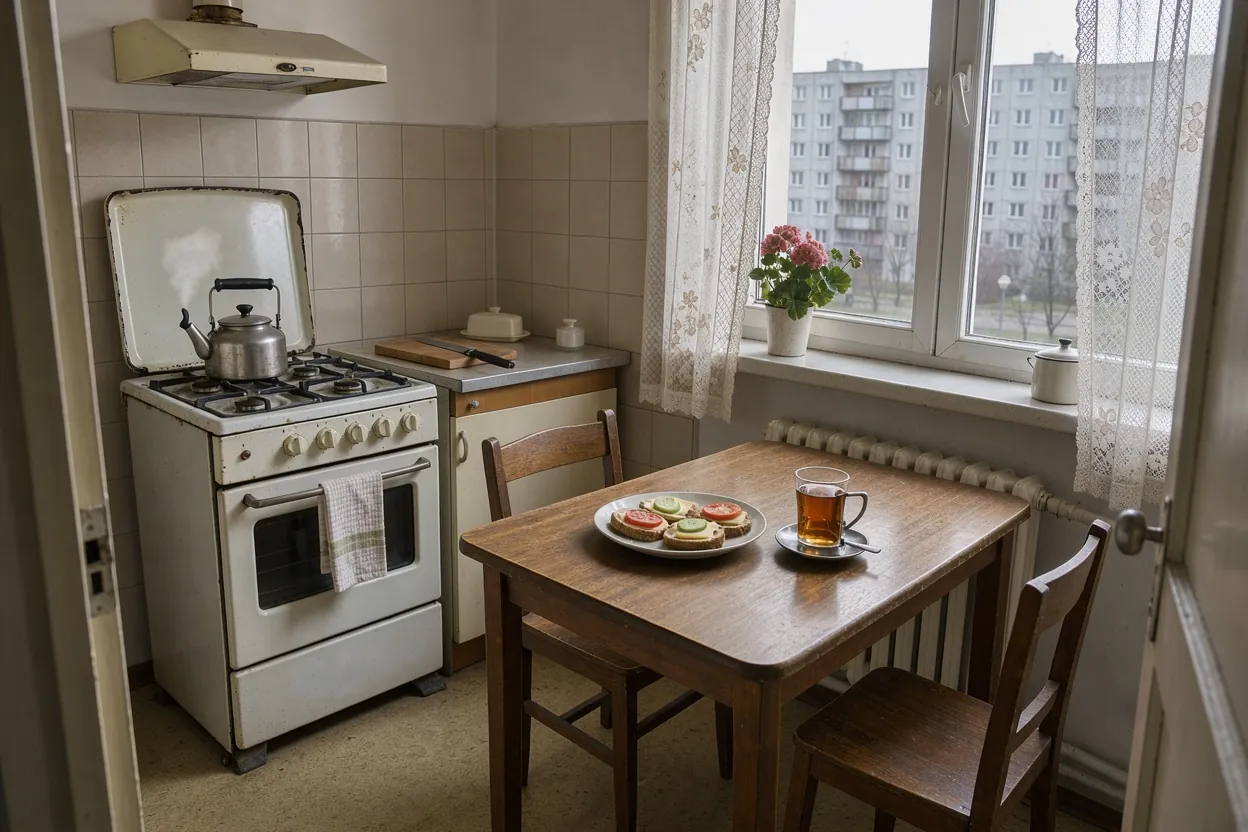
| Apartment Kitchen (I2V) | 8.5 | 17 s | Faithful to source photo; accurate steam and kettle whistle dynamics. |
| Keyframe Transition | 9.5 | 25 s | Seamless seasonal transition; city square architecture stayed static. |
Text Rendering and Audio Speech
The base FLUX 3 Video model handled this same Polish tongue twister without errors during my October 11 benchmark. FLUX 3 Max slurred the opening compound words slightly, though the remainder of the phonetic articulation remained crisp. If your scripts feature intricate linguistic phonemes or localized languages outside standard English prompts, budgeting for two generation passes is advisable.
Motion, Fluid Dynamics, and Consistency
Image to Video and Keyframe Animation
For image-to-video testing, I used a synthetic apartment kitchen render created in FLUX 3 Image. For keyframe transitions, I anchored frame 0 to a nighttime capture of the Krakow Main Square and frame 120 (the 5-second mark at 24 fps) to a daytime winter edit produced using Seedream 5.0 Flash.

Native Audio Quality
To evaluate the built-in audio tracks impartially, I ran blind assessments through Gemini 3.8 Flash, feeding it audio stems alongside visual descriptions while omitting model names. All four submitted FLUX 3 Max samples received scores between 9/10 and 10/10. Notes from the evaluation highlighted:
- Water sequence: clear tonal pitch rise during cup filling, followed by distinct splashing onto the tabletop;
- Square transition: sound of falling rain smoothly dissolving into the crunch of footsteps on snow alongside carriage hoofbeats;
- Tram sequence: wet street tire hiss, track friction, and low mechanical motor rumble.
Native synchronized audio output decisively outperformed generic post-hoc audio insertion models; in my separate tests with Mirelo SFX 2.0 on the same raw clips, roughly one out of four soundscapes suffered from severe context drift.
Strengths and Weaknesses
Strengths:
- Exceptional speed: 17-second median turnaround on 5-second clips including network queuing.
- Aggressive promotional pricing: $0.21 per 5-second 720p output.
- Flawless complex text rendering and diacritic retention on in-scene signage.
- Rock-solid structural persistence across keyframe transitions without landmark melting.
- Coherent, scene-aware native sound effects generated without auxiliary audio models.
Weaknesses:
- Non-English spoken dialogue articulation showed minor phonetic blending compared to base FLUX 3.
- Baseline pricing increases fourfold once the November 7 promotional window closes.
- Exclusive to fal.ai API infrastructure; no consumer web editor or fixed-rate subscription tiers.
- Automated prompt expansion roughly doubles end-to-end turnaround (9.5s raw generation vs ~20s total backend time).
Who Is This For?
- Developers and technical creators producing high volumes of short video clips programmatically via API where per-second inference economics matter.
- VFX and motion design agencies requiring precise multi-frame camera transitions and keyframe interpolation between existing still assets.
- Producers requiring crisp, legible text and logo rendering baked directly into physical environments.
If you prefer a full graphical interface over raw API integration, explore my comprehensive guide to the best AI video generators. More of my independent tests across foundation architectures are collected in the Quantslant Lab.
Explore the Full October 2026 Model Test Suite
This FLUX 3 Max evaluation is part of a broader series of hands-on benchmarks conducted across the newest models released on fal.ai:
- FLUX 3 Max in the 5-Scene Video Arena: Direct competitive head-to-head benchmarking FLUX 3 Max against Kling, Seedance, Veo, and Wan.
- Multi-Model AI Photo Editing Benchmark: Precision object editing, drift testing, and prompt adherence comparing Krea 3, FLUX 3 Klein, Nano Banana 2.1, and Seedream 5.0 Flash.
- Interactive AI World Models via WebRTC: Latency, physical world consistency, and real-time generation tests covering LingBot-World v2 and Abot World 0.
Frequently Asked Questions
How does FLUX 3 Max differ from base FLUX 3 Video?
FLUX 3 Max utilizes the same foundational architecture as FLUX 3 Video but incorporates specialized post-training and pipeline acceleration developed by fal.ai. In my Arena benchmarking, Max scored an 8.8/10 compared to 8.9/10 for the base model, while running considerably faster and carrying a lower entry price during its launch window.
Can FLUX 3 Max handle foreign languages and localized text?
Yes. The model successfully rendered complex non-English signage and diacritics without spelling mistakes. In speech generation tests involving complex Polish sentences, audio remained intelligible, showing minor syllable blending on complex tongue twisters.
What is the true generation time for a video?
In my tests, pure model generation took between 9.3 and 9.6 seconds for a 10-second 720p video. Total end-to-end turnaround - including prompt expansion, audio synthesis, encoding, and download - ranged between 20 and 25 seconds.
Are model weights available for local deployment?
No open weights have been released for FLUX 3 Max. If you are looking for self-hosted generation, the FLUX family offers open weights for its lightweight image model, detailed in my guide to running FLUX 3 Image Klein locally.
When does the promotional pricing end?
According to fal.ai documentation, promotional pricing remains active through November 7, 2026. Following that date, rates adjust to standard fees of $0.17 per second for 720p and $0.29 per second for 1080p.
Sources
- Author testing log (October 20, 2026): 11 video runs executed via fal.ai API, total spend $2.76, Wizper transcriptions via fal.ai, automated audio evaluation conducted via Gemini 3.8 Flash.
- fal.ai: FLUX 3 Max Text-to-Video Model Card and Pricing (accessed October 20, 2026).
- fal.ai: FLUX 3 Max Keyframes-to-Video API Documentation.
- Black Forest Labs: Official FLUX 3 Model Family Announcement.
- Black Forest Labs official post on X: Introducing FLUX 3 Max Announcement (October 19, 2026).
- Artificial Analysis: Image-to-Video Quality Leaderboard (accessed October 20, 2026).
- Comparative historical data: AI Video Arena Benchmark (October 8, 2026) and FLUX 3 Video baseline test (October 11, 2026).