Claude Opus 5.5 Landing Page: Medium vs High Effort
We built a complete landing page with one prompt in Opus 5.5, testing medium vs high effort. Both hit token limits mid-page. Final cost: $0.43.

Update (9 Nov 2026): Claude Fable 5.2 and Mythos 5.2 are out - prices, access and benchmarks are in my Claude Fable 5.2 guide.
👁 120 reads
We tested landing page generation with a single prompt in Opus 5.5 using a realistic fictional business: a mobile bicycle repair service called “Szprycha” (The Spoke) in Wrocław, Poland. We ran the same prompt twice - in Polish, a useful test for non-English generation - once at the default medium effort level and once at high, measuring time, cost, file size, language quality, and accessibility. The most interesting result wasn’t about appearance: both versions hit the token limit we set and stopped mid-page.
Key Findings
The medium version, after one completion pass, delivered a complete, correct page for $0.43: 35 KB, zero console errors, zero contrast issues in our measurement, all prices matching the prompt, and no invented customer testimonials. Both versions stopped at their limits: medium at 16,000 tokens in the FAQ section, high at 18,000 tokens in the service area section. High spent 2.8x more tokens thinking (6,450 vs 2,284), took 187 seconds instead of 154, and cost $0.36, yet produced less finished page. In what it did write, it was more meticulous: non-breaking spaces after Polish conjunctions and structured data for Google.
The Prompt
We wanted a prompt a small business owner might write: concrete data, a list of sections, two prohibitions. It’s 149 words and 522 tokens. Contact details are fictional. We ran it in Polish.
[Prompt translated from the Polish original]

Create a landing page for my company in a single HTML file with CSS inside, without external libraries, fonts, or images (graphics only as inline SVG), responsive from 360 to 1440 px, in Polish.

Company: Szprycha - mobile bicycle repair service in Wrocław. I come with a van-workshop to your home or office and repair the bicycle on site. Owner: Tomasz Wąsik, 11 years in the profession. Phone 600 000 000, email kontakt@szprycha.example. I work Monday to Saturday, 8 AM-6 PM. Travel within Wrocław city limits 0 zł, outside city limits 2 zł per km.

Price list: basic inspection 129 zł, full inspection 249 zł, inner tube replacement with labor 45 zł, wheel truing 60 zł, brake adjustment 40 zł.

Sections: header with call to action (call now), how it works in 3 steps, price list, service area, FAQ (4 questions), contact.

Do not invent customer reviews, numbers, or certifications that I have not provided. Ensure accessibility: contrast compliant with WCAG AA, descriptions for graphics, correct heading hierarchy.
We called the model through OpenRouter (anthropic/claude-opus-5.5), taking cost from the billing field in the response. We set the output limit at 16,000 tokens for medium and 18,000 for high. This was our mistake in assumptions, not a model limitation - according to the manufacturer, it can output up to 128,000 tokens at once.
Medium Version: Stopped in FAQ, Completed in One Sentence
After 153.9 seconds, the model stopped at the 16,000 token limit, mid-answer to the first FAQ question, at the words “pod Twoim” (under your). Of that, 2,284 tokens went to thinking. Cost: $0.32. We sent one sentence asking it to continue from exactly that point, this time at low level with a 4,000 token limit. The model added the rest in 24.2 seconds, without repetition and without commentary: 2,635 tokens for $0.11, mainly because the entire previous response came back as 14,321 input tokens. After joining the two pieces, the page worked without manual corrections.
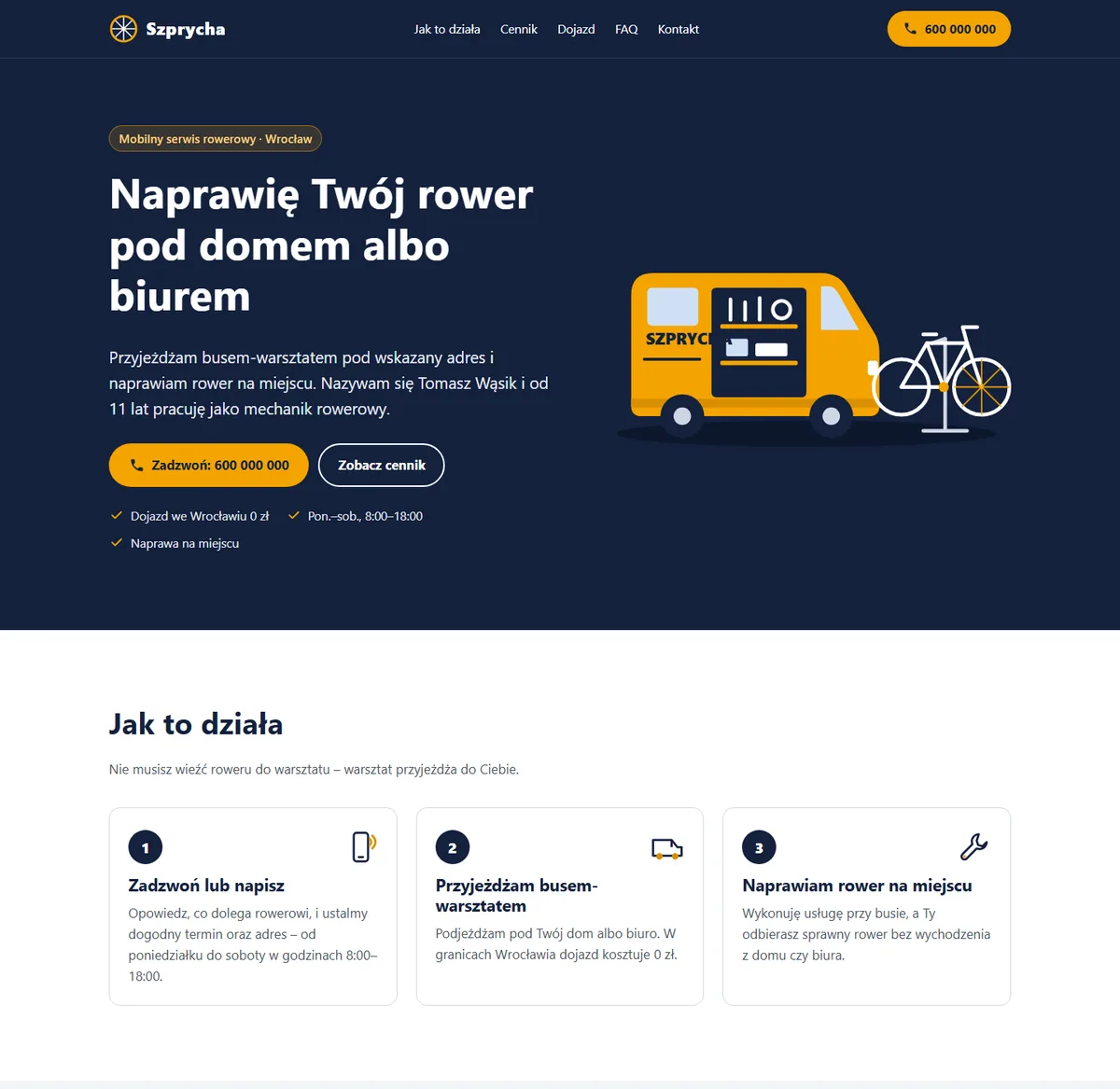
The finished file is 35,399 bytes and 874 lines, of which 13.3 KB is the stylesheet. Visible text counts 433 words. The page follows the prompt to the letter: there are six required sections, five pricing items with exactly the stated amounts, four FAQ questions, hours and travel cost. The model used “11 years in the profession” in the header and didn’t add a single testimonial, star rating, or “satisfied customers” number. The phone number is clickable in 9 places, and on mobile a fixed “Call” button sits at the bottom edge.
Accessibility and Language Quality
We checked the page with a browser script at 1440 and 390 pixel widths. Results for the medium version:
- Contrast: 0 text elements below the WCAG AA threshold (4.5:1 for normal text, 3:1 for large). Colors: navy, yellow, and white.
- Graphics: 23 SVG elements, each has a description or is hidden from screen readers as decoration. The van illustration has the description “Illustration: Szprycha workshop van with bicycle”.
- Headings: one H1, then H2 for sections and H3 within, no skips.
- Layout: no horizontal scrolling at either width, page language set to Polish, zero scripts.
We found three bugs. On the van illustration, the text “SZPRYCHA” is cut off by the viewport and only “SZPRYC” is visible. On the 1440 pixel screen, the email address in the contact card breaks at “kontakt@szprycha.exampl” with a lonely “e” on the second line. FAQ questions are H3 headings inside an expandable element, which makes it harder for some screen readers to recognize the button. The Polish language is correct and natural, without calques from English. The model used en-dashes in the text, which is correct in Polish typography.
High Version: More Meticulous, But Stopped Earlier
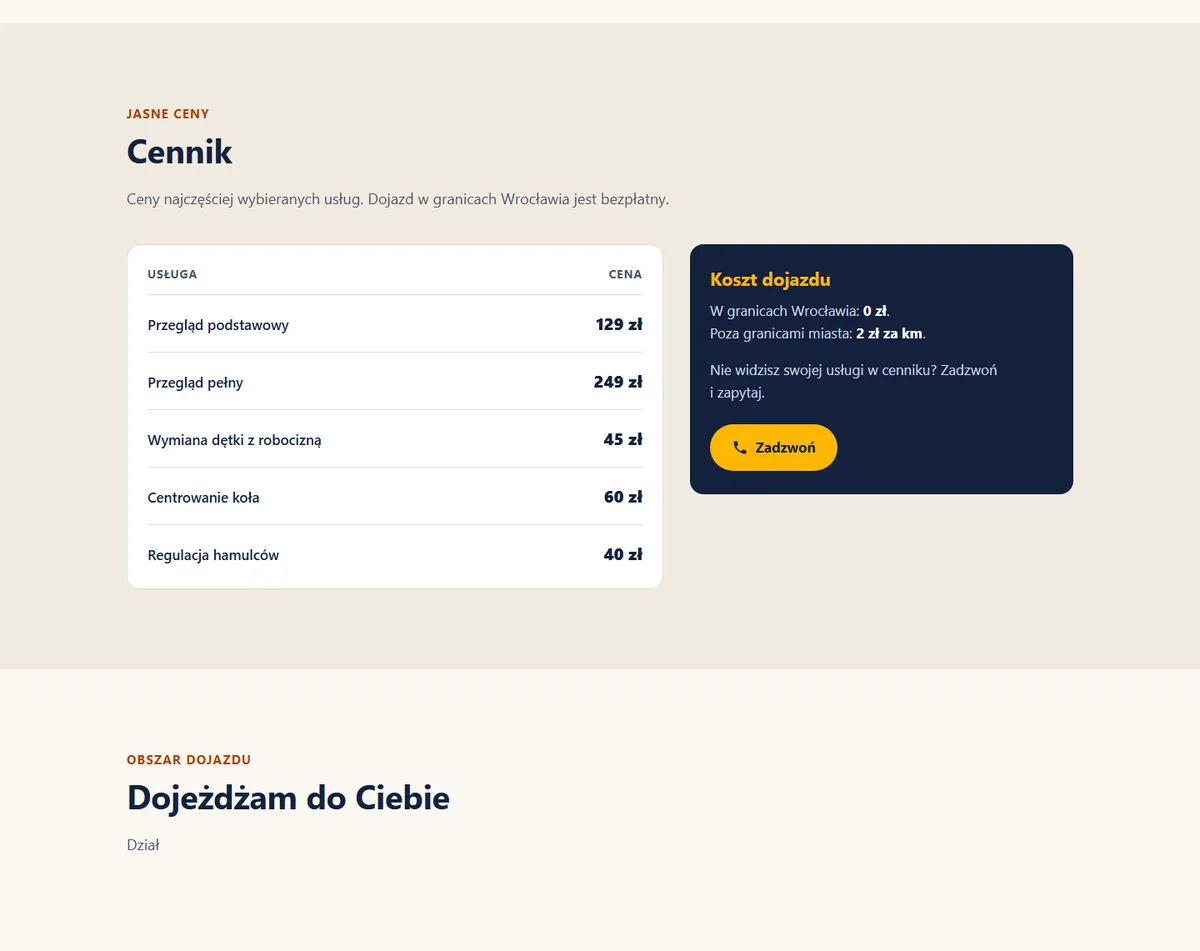
With the same prompt at high level, the model worked for 187.2 seconds and stopped at the 18,000 token limit. Thinking took 6,450 tokens, 2.8 times more than medium, so less room remained for actual code. The response stopped in the “I Come to You” section at the word “Dział“ (Department), and the FAQ and contact sections are missing entirely. Cost: $0.36. We didn’t complete this version because we would have exhausted the test budget.
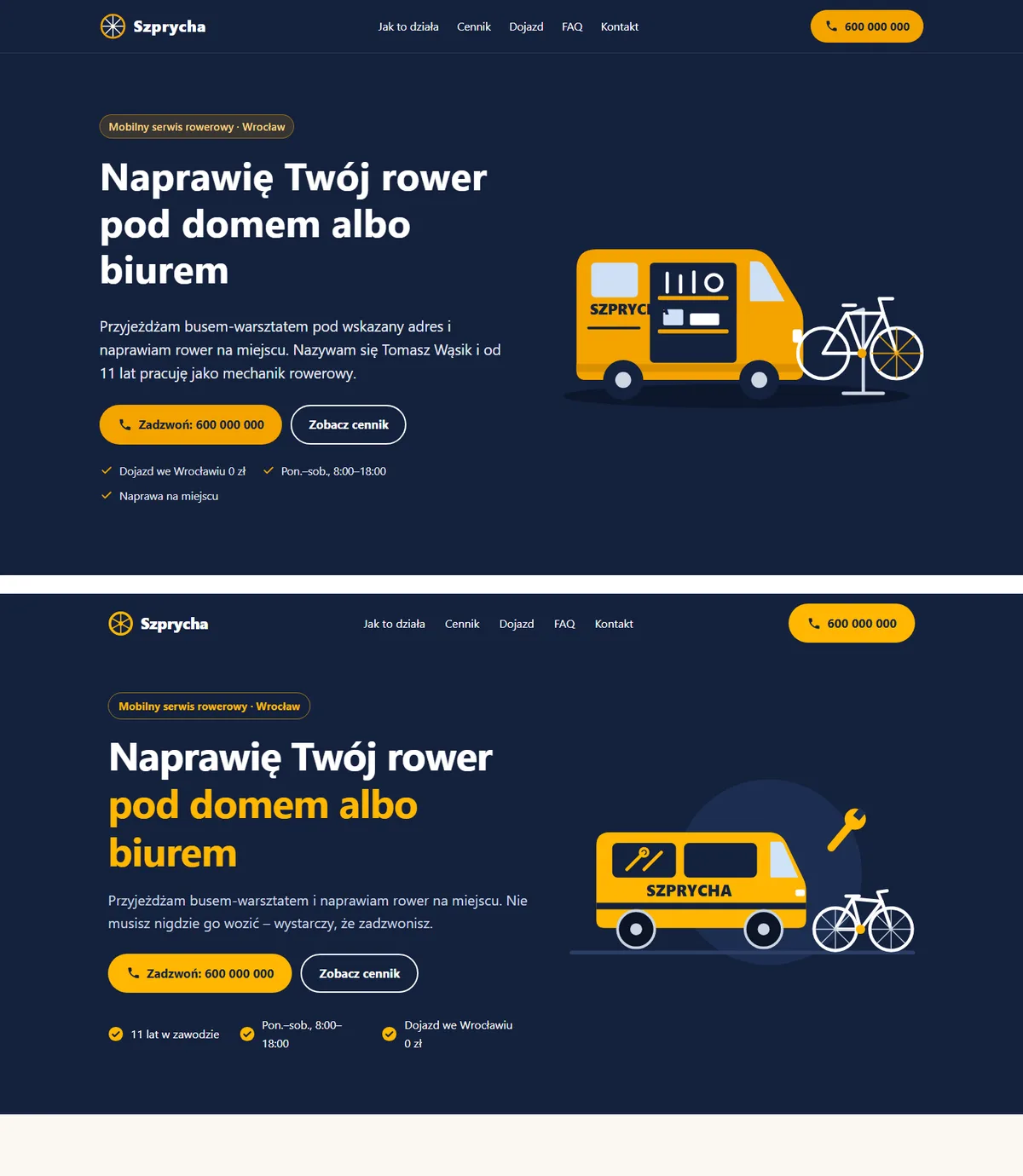
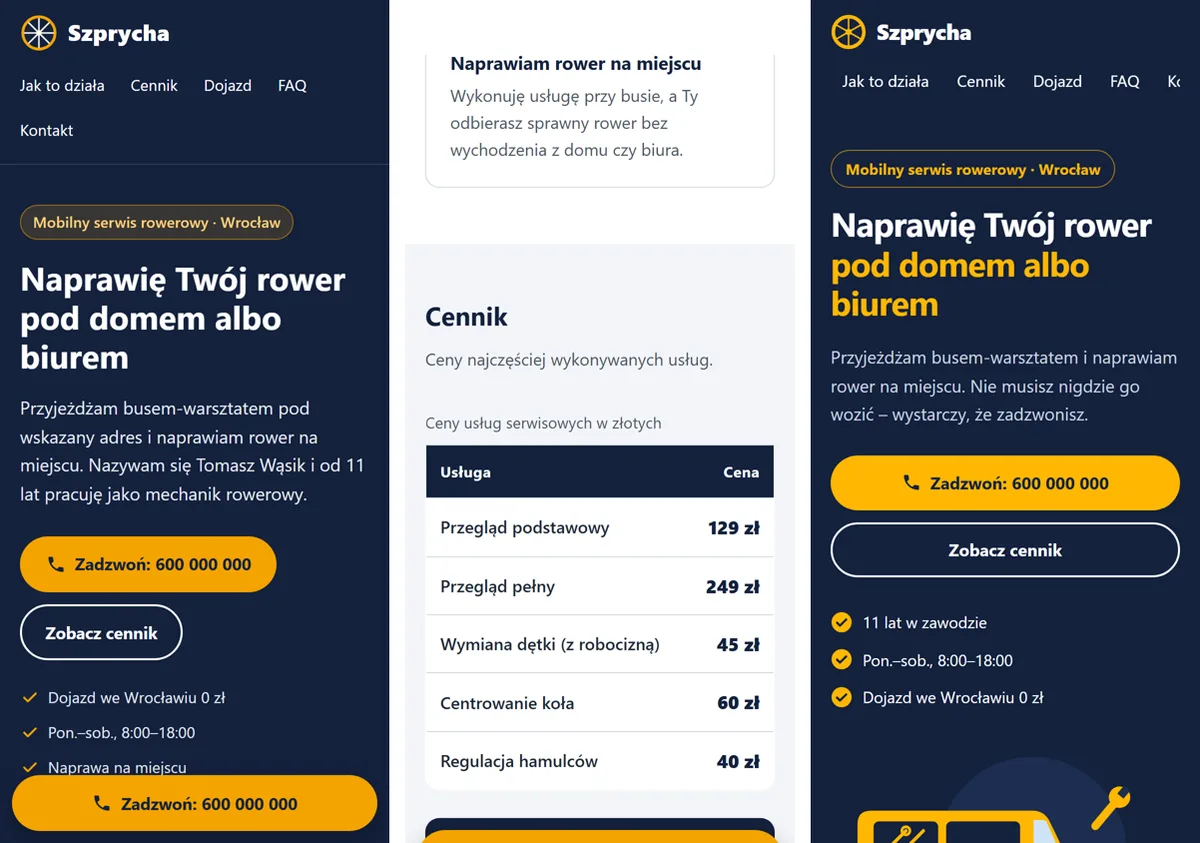
In what it produced, high was more precise in details. It inserted 27 non-breaking spaces, including 12 after single-letter conjunctions and prepositions, so that “i”, “w”, or “z” wouldn’t be left at the end of a line, as Polish typography requires. The medium version didn’t do this once. High also added LocalBusiness structured data with phone and hours, which nobody demanded but which helps search engines. In the pricing, it added “Don’t see your service in the pricing? Call”, and above section headers it placed short labels. Minus on mobile: the menu scrolls horizontally and “Contact” is cut off at the edge.
Comparison in Numbers
| Parameter | Medium | High |
|---|---|---|
| Time for first attempt | 153.9 s | 187.2 s |
| Thinking tokens | 2,284 | 6,450 |
| Output tokens (limit) | 16,000 (16,000) | 18,000 (18,000) |
| Cost of first attempt | $0.32 | $0.36 |
| Where it stopped | 1st FAQ question | service area section |
| Completion | 24.2 s, $0.11 | not done |
| File | 35,399 B, complete | 26,202 B, missing FAQ and contact |
| Non-breaking spaces after conjunctions | 0 | 12 |
| Structured data | none | LocalBusiness |
If high had received a sufficient limit, the full page would have cost by our estimate around $0.45-0.47: 6,450 thinking tokens plus roughly 16,300 code tokens, as much as the medium version needed. This is an estimate, not a measurement. For a medium-difficulty task, effort level didn’t change the result, as we described in our effort levels test. Here it did: high thought longer and refined details.
What This Means
- Set the output limit to at least 32,000 tokens if you’re calling the model via API for a full page. A single-file landing page with CSS took about 18,600 tokens on medium. For other settings that changed in this model version, see our article about Opus 5.5 in the API.
- Completing a truncated response works and cost one-third of the first attempt. The model resumed writing from the word where it stopped.
- Medium is sufficient for a simple business page. It stuck to the data, didn’t invent anything, and passed our contrast test. High adds typography and SEO, for which you’ll pay in time and tokens. This is our opinion.
- Review the page at both widths. A cut-off label on a graphic and a broken email address won’t show up in any automated accessibility test.
We collected full model parameters and pricing in our guide to Opus 5.5.
Frequently Asked Questions
How much does a landing page with Opus 5.5 cost?
In our measurement, a complete page in a single HTML file cost $0.43 in two API queries at medium level. In the Claude app with a subscription, you pay with limits, not per token.
Does Opus 5.5 invent customer testimonials on landing pages?
With an explicit prohibition in the prompt, it didn’t invent a single testimonial, number, or certificate in either version. It used only the data we provided.
Is it worth setting effort high for a website?
High refined Polish typography and added structured data, but thought 2.8 times longer and despite a higher token limit wrote less of the page. For a simple landing page, medium is enough.
Sources and Test Date
- Times
- tokens
- costs
- screenshots
- and audit results are our measurements from three queries to the anthropic/claude-opus-5.5 model on OpenRouter
- cost from the billing field in the response. Contrast thresholds according to WCAG 2.2, criterion 1.4.3. Maximum output of 128,000 tokens according to Anthropic’s model documentation. Tested September 26
- 2026


More on this from QUANTSLANT
 benchmarks·Opus 5.5 Built a Game From One Sentence: Cost and ResultsWe built two browser games with Opus 5.5 from single sentences: a 2D fox game and a 3D ball racer. Both worked first try for $0.67 total.