AI Exposes Secret Ballots of 1.5M Georgia Voters for $20
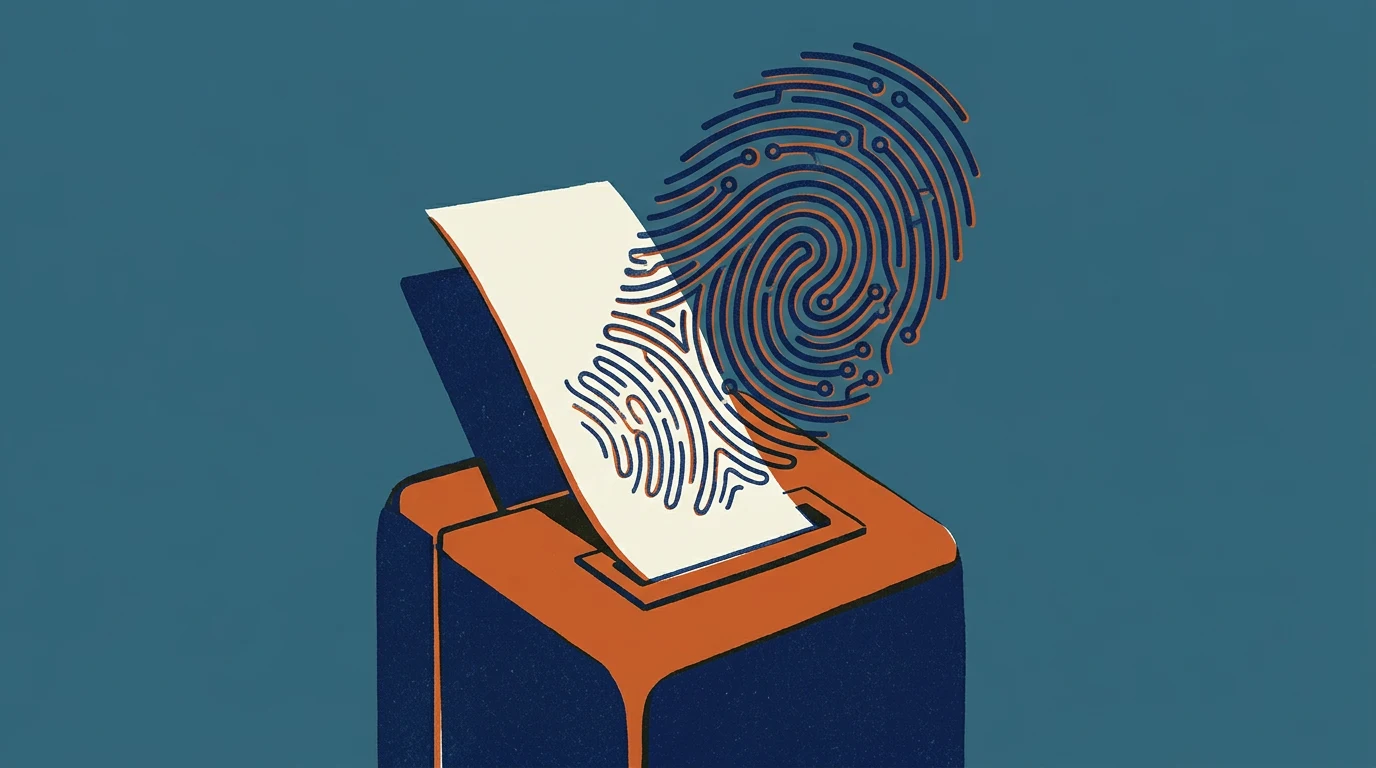
A Princeton researcher spent $20 on an AI subscription and a few hours to break ballot secrecy for 1.52 million Georgia voters using public records.
👁 115 reads
Twenty dollars a month for a language model subscription and a few hours at a computer. That’s all it took Max Springer, a researcher at Princeton University’s Center for Information Technology Policy, to build a tool capable of breaking one of democracy’s fundamental guarantees - ballot secrecy.
Springer, who by his own account had never been to Georgia, combined publicly available voter registration records obtained through the Open Records Act with a commercial AI model. The result was devastating: he managed to reconstruct the voting order for 1.52 million ballots - 98.9% of votes cast in person across 114 of the 139 counties he examined in the state.
“Within a few hours, I had a ready pipeline for analyzing and identifying secret ballots across Georgia, and the agent told me exactly what additional data it would need to identify specific voters’ ballots. The agent never once refused to cooperate or raised concerns about implementing this vulnerability.”
That’s how Springer described his experiment. And it’s this last observation - about the complete lack of resistance from the AI model - that’s electrifying the election security community.
How the Voting Machine Vulnerability Works
To understand what Springer discovered, you need to know how Georgia’s voting machines work. A voter enters the polling place and their visit is logged. Then they select candidates on a touchscreen, the machine prints a paper ballot, and the voter manually inserts it into a scanner.
When the ballot is scanned, the scanner creates a digital record - a cast vote record (CVR), essentially one row in a spreadsheet. Each CVR is assigned a unique identifier that theoretically should be random and unconnected to the voter’s identity.
The word “theoretically” is doing all the work here. Ben Adida, a cryptographer with an MIT degree and founder of the election technology nonprofit VotingWorks, explained the problem during Thursday’s Georgia election board meeting: the identifiers assigned to ballots aren’t sufficiently random. They can be matched with the early voting voter list to reconstruct the order in which people fed ballots into the scanner. And once you know which voter came in nth and which ballot is the nth in the record - ballot secrecy ceases to exist.
In small counties where few voters pass through a polling place during the day, the problem becomes even more acute. Springer cited the example of Heard County - one of the smallest in the state. There, as he wrote in his report, “the agent could identify the exact ballot cast by every voter at polling centers - ballot secrecy there is completely lost.”
Emergency Meeting Ten Days Before Voting
Springer’s discovery landed on Georgia election officials’ desks at a particularly tense moment. Less than two weeks remained until early voting began in the congressional special election. The stakes in this election are control of the United States Congress - hard to imagine a hotter context.
On Thursday morning, the Georgia election board convened an emergency meeting devoted to this issue. Adida presented the board with a full technical analysis of the vulnerability and an assessment of remedial actions taken by outgoing Secretary of State Brad Raffensperger.
Raffensperger reacted relatively quickly: he ordered that identification numbers in tabular data released publicly after elections be redacted - obscured before publication. Adida assessed that this decision “substantially removes this vulnerability.” Substantially - but not completely. The cryptographer noted that the level of protection depends on the exact parameters of the order and how it’s implemented.
Google · Your sourcesQuantslant higher in your Google - one clickAdd to preferred sources →Ballot Secrecy as Democracy’s Foundation
It’s a mechanism to protect voters from all forms of pressure - from employers, family, neighbors, political groups, and in extreme cases - state apparatus. A voter who knows their vote can be linked to their identity is not a free voter.
Springer ensured his experiment was verifiable and transparent. He obtained the data for analysis legally - through a request filed under the Open Records Act, Georgia’s equivalent of freedom of information legislation. He didn’t hack into any system, didn’t use specialized intelligence software, and didn’t possess any knowledge unavailable to the average person familiar with AI. A commercial subscription and public data were enough.
It’s precisely this aspect - the low barrier to entry - that makes the discovery so disturbing. This isn’t a hypothetical scenario requiring state resources or an advanced hacking group. Twenty dollars, a few hours, and a bit of knowledge about what data is publicly available are sufficient.
Georgia isn’t the only state using similar tabular systems - suggesting the problem may have broader reach than one state. For now, however, it’s here, less than two weeks before an election with stakes exceeding local boundaries, that officials are searching for answers to the question of how quickly they can patch a hole whose existence no one suspected until recently.


More on this from QUANTSLANT


 guides·Resend in Practice: Registration, Orders & NotificationsResend works best for apps that send emails triggered by user actions: registration, purchases, password resets, and notifications that need to reach the inbox.