NVIDIA Opens Vera Rubin Architecture to Scale Gigawatt AI Factories
NVIDIA has released key Vera Rubin rack designs to the Open Compute Project, standardizing 5,000A busbars and liquid cooling for gigawatt AI factories.
👁 112 reads
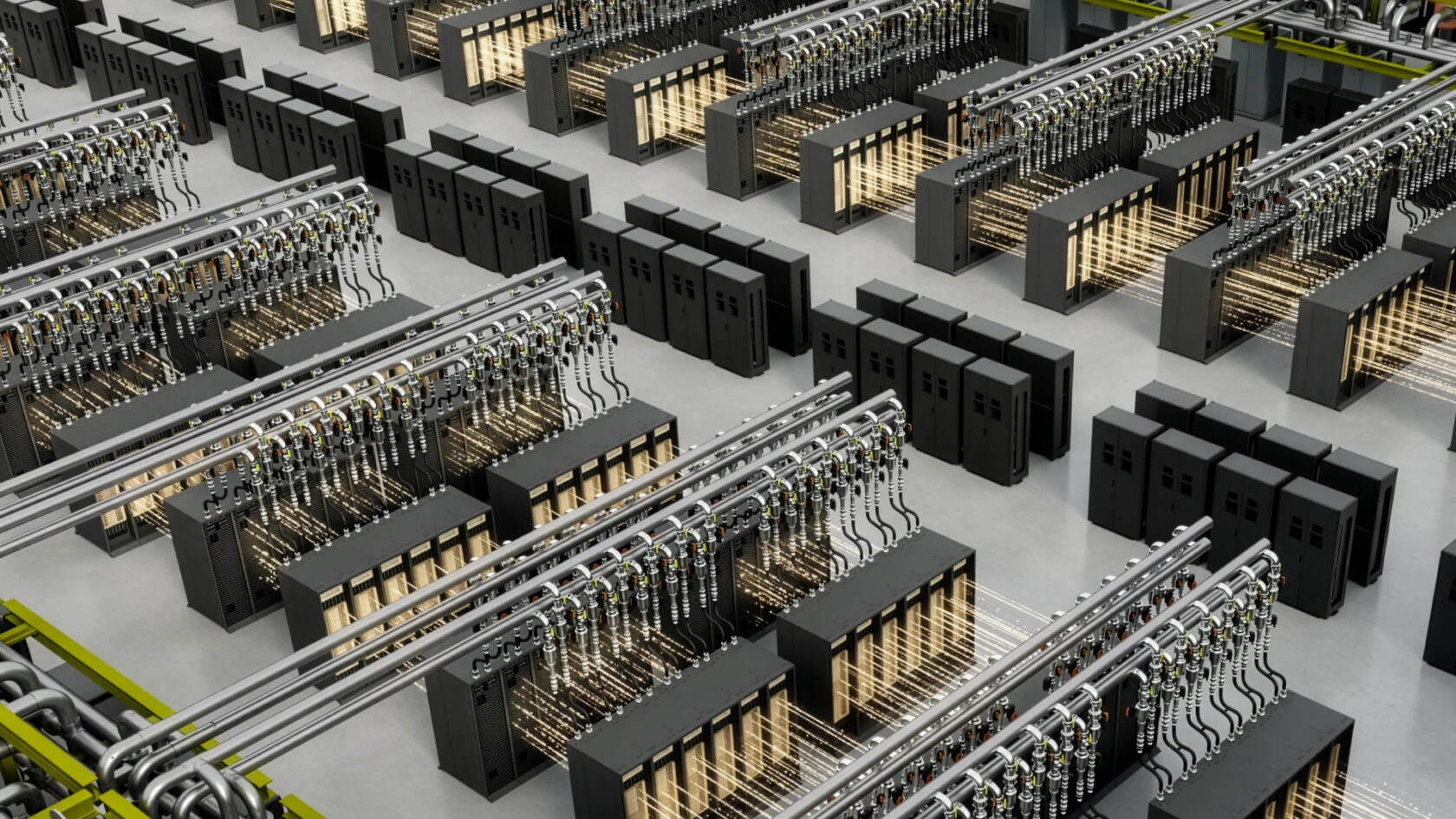
Five thousand amperes. That is the nominal load rating of the power busbar engineered for the next generation of Vera Rubin racks - a figure that captures the sheer scale of the engineering challenges facing modern data centers. When Ian Buck, NVIDIA’s vice president of hyperscale and HPC, took the stage at the McEnery Convention Center in San Jose, hundreds of engineers were in the room facing a daunting task: building out infrastructure capable of scaling AI factories from megawatts to gigawatts.
During the OCP Global Summit, NVIDIA unveiled a series of moves designed to accelerate that buildout. The company contributed key rack and compute tray designs for the Vera Rubin platform to the Open Compute Project, leveraging its open NVIDIA MGX architecture. The goal is pragmatic: give system makers a shared baseline rather than forcing every vendor to reinvent the wheel from scratch.
An architecture built around a 5,000A busbar
The updated MGX 1.2 specification is far more than a minor version bump. It expands the open architecture for AI factories with several critical subsystems that vendors previously had to solve on their own. Chief among them is rack-scale blind-mate liquid cooling, allowing full-rack fluid coupling without manual hose hookups. Alongside this, the spec introduces interoperable intra-rack connectivity and the liquid-cooled 5,000A busbar, engineered for systems drawing more power than many small industrial power plants.
The specification also introduces native support for 19-inch racks - a legacy standard that still dominates global data centers - alongside higher-density rack designs. Fanless liquid-cooled compute trays, standardized power and thermal interfaces, and configurable I/O bays aim to cut assembly, testing, and service times down to a minimum. The architecture supports power envelopes of up to 250 kW per rack while simplifying maintenance and component reuse across lifecycle upgrades.
A dedicated track covers the Vera CPU rack specification - an extension of MGX beyond accelerated computing, tailored specifically for the emerging era of agentic AI. While the Vera Rubin NVL72 serves as the heavy-duty engine for large-scale training and inference, the standalone CPU rack design provides a dedicated platform for agentic workloads, which exhibit a distinctly different computing profile: fewer massively parallel matrix operations and far more complex, sequential decision chains.
Google, Meta, and Cisco join the networking push
Hardware layout is only half the battle. As Buck emphasized in San Jose, open networking infrastructure is becoming a critical bottleneck when scaling AI factories worldwide, and NVIDIA brought a heavyweight roster of partners to back up that point.
The headline networking announcement is the USFP (Ultra-Dense Small Form Factor Pluggable) standard, developed alongside Cisco. This marks the industry’s first 400 Gbps networking module built around USFP connectors. For network engineers, higher port density in a smaller footprint means building richer, higher-throughput network fabrics without overhauling physical row layouts.
Meta and NVIDIA are teaming up on open AI networking through the NVIDIA Spectrum-X Ethernet SuperNIC and innovations across the Spectrum-6 platform. This expands Meta’s long-standing push into Ethernet as a flexible alternative to proprietary topologies, now backed by direct hardware integration from NVIDIA.
Google is backing the Falcon Transport protocol, with support slated for upcoming NVIDIA ConnectX-10 SuperNICs and BlueField DPUs. Falcon Transport is a specialized network transport protocol designed for cloud-scale AI workloads, and its native inclusion in NVIDIA’s next-gen silicon signals deep alignment between the two ecosystems.
Visionbay also contributed an 800V DC AI factory design optimized for the Vera Rubin generation. Higher DC voltage distribution has gained serious traction across the data center sector over the past few years, as it minimizes transmission losses at massive loads and streamlines the entire power distribution chain.
Google · Your sourcesQuantslant higher in your Google - one clickAdd to preferred sources →Open source and grid resilience standards
Beyond physical hardware, NVIDIA rolled out new open-source components for the NVIDIA DSX AI Factory platform. This software stack is designed to complement the open hardware blueprints - because open hardware without operational deployment tooling has limited real-world utility.
At the same time, NVIDIA and major hyperscalers released open guidelines covering both next-generation facility design and electrical grid resilience. The latter is becoming a high-stakes priority: gigawatt-scale AI factories function as massive industrial loads on regional power grids and must dynamically handle supply fluctuations without dropping mission-critical compute runs. On top of that, NVIDIA joined the Open DC initiative - bringing third-generation MGX reference data center designs alongside open liquid cooling technologies like MQD and MQDB into the mix.
What role does MGX play in all of this? NVIDIA views it as a modular, universal blueprint for server manufacturers, system integrators, and data center operators. By handing Vera Rubin reference designs over to the OCP, the company is turning its internal engineering into an open industry standard that anyone can build, adopt, and scale without licensing hurdles.
For hardware builders, this cuts substantial R&D costs and deployment timelines. For NVIDIA, it ensures the entire industry builds around its architectural footprint - even when the surrounding chassis and components come from third-party suppliers. It remains the most effective playbook in enterprise computing: before the market settles on an open standard, define it yourself.



More on this from QUANTSLANT



 news·ThinkNet: Leak-Free EEG Decoding with a 19 KB ModelThinkNet introduces a rigorous framework for motor-imagery EEG classification, deploying a 4,900-parameter model that runs in under 1 ms on NVIDIA Orin.