NVIDIA Cosmos 3 Edge: World Model for Robotics on Edge Devices
NVIDIA released Cosmos 3 Edge on Hugging Face, enabling physical AI world models to run directly on edge devices without relying on constant cloud connectivity.
👁 113 reads
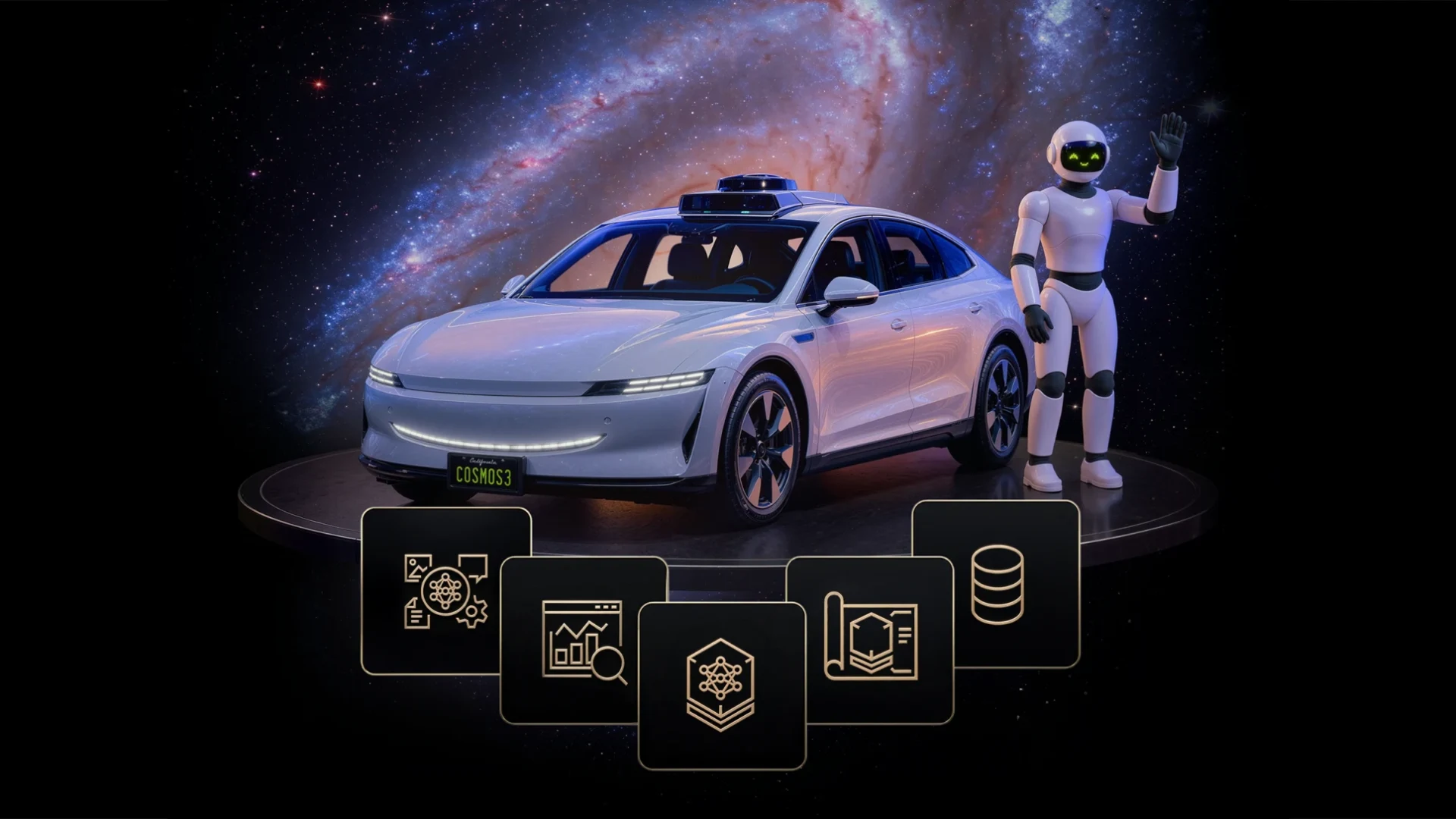
NVIDIA has released Cosmos 3 Edge on Hugging Face - a new entry in the Cosmos family designed to run physical AI directly on edge hardware without needing constant cloud connectivity. I covered the broader landscape of world models, from Cosmos to Genie and Odyssey-3, in my guide to world models.
Cosmos is NVIDIA’s initiative focused on world models - systems trained to understand and predict the behavior of physical environments. These architectures serve as a foundational pillar in robotics and autonomous systems, where machines must interpret their surroundings and make real-time decisions. Previous iterations of Cosmos demanded substantial computational resources, effectively restricting their deployment to cloud or server-grade infrastructure.
Google · Your sourcesQuantslant higher in your Google - one clickAdd to preferred sources →Physical AI Closer to Hardware
The Edge edition alters that paradigm. Optimizing the architecture for edge hardware allows the model to execute locally on robots, drones, and autonomous vehicles - environments where low latency and offline resilience are paramount. That transition is crucial for industrial operations, where network connectivity is frequently unstable or too slow for real-time safety-critical loops.
The collection shared by NVIDIA on Hugging Face is titled Omnimodal World Models for Physical AI and encompasses 20 items. Its recent update, logged just 4 days prior to release, underscores the rapid development pace across the Cosmos ecosystem, with Cosmos 3 Edge serving as its latest milestone.
The term “omnimodal” highlights that models within this collection are built to ingest multiple distinct data modalities concurrently - visual feeds, sensor telemetry, and spatial coordinates. This setup mirrors the real-world operational demands of physical robotics, where sensor data streams continuously from varied inputs.
NVIDIA has spent recent quarters scaling investments into physical AI, positioning it alongside enterprise data centers as a key strategic growth driver. Cosmos 3 Edge aligns directly with this roadmap: rather than merely providing cloud compute capacity, NVIDIA is distributing foundational models that robotics developers and vehicle manufacturers can adapt for their own hardware platforms.
Distributing the model through Hugging Face - a platform centered around researchers and engineers - indicates that NVIDIA is targeting this rollout squarely at the developer community rather than commercial end users.