Stanford Uses Large Genome Models to Design Novel Bacteriophages
Researchers at Stanford University have used large genome AI models to generate complete viral genomes - bacteriophages that infect E. coli - producing viruses with distinct features that would be difficult to achieve through natural evolution.
👁 119 reads
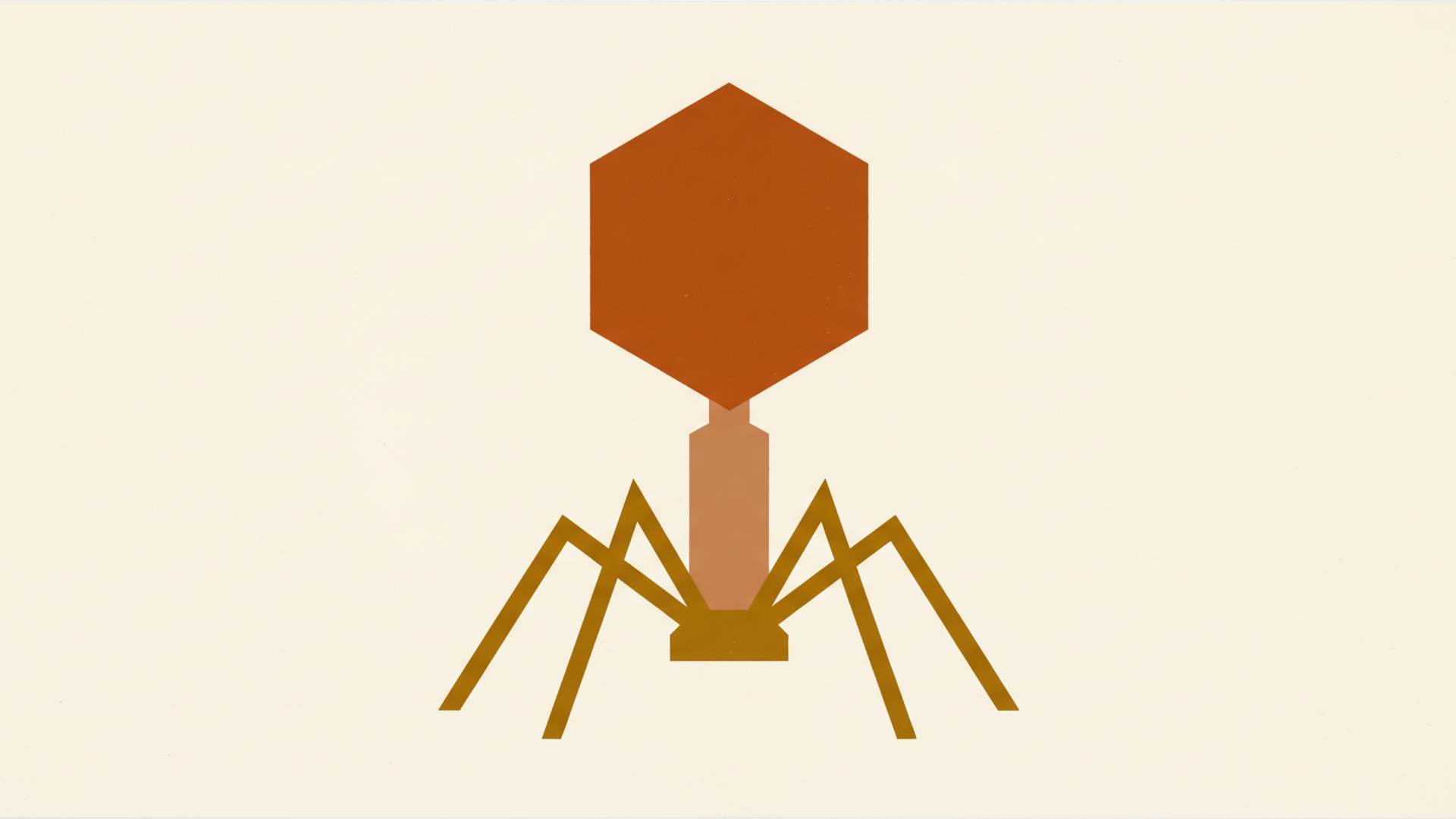
Researchers at Stanford University have used large genome AI models - Evo 1 and Evo 2 - to generate the complete genomes of viruses that infect bacteria, marking a step beyond earlier work that focused on designing individual proteins or gene clusters.
- Stanford researchers used the Evo 1 and Evo 2 large genome models to output full genomes of bacteriophages, using the E. coli virus ΦX174 as a test case
- All AI-designed viruses are closely related to existing viruses but carry features that would be challenging to evolve naturally
- The researchers warn that related AI systems could eventually be used to design viruses targeting vertebrates, and argue preparation should begin now
The test case was ΦX174, a well-characterized bacteriophage that infects E. coli and belongs to a broader family of bacterial viruses. According to the researchers, every virus the models produced is closely related to that existing virus, so the work does not involve conjuring entirely novel pathogens. The AI-designed genomes do, however, carry distinct features that would be difficult to arrive at through natural evolutionary processes alone.
Google · Your sourcesQuantslant higher in your Google - one clickAdd to preferred sources →From proteins to whole genomes
The work builds on an approach that mirrors large language models, but substitutes DNA sequences for text. Where a language model predicts the next word or token from a vast corpus of human writing, a large genome model predicts the next nucleotide base - A, T, C or G - from a large collection of genome sequences. Earlier applications showed that prompting such a model with part of a bacterial gene cluster would produce DNA encoding proteins with related functions, including working proteins unlike anything previously catalogued.
Complex-cell genomes proved harder to exploit. Because genes can sit almost anywhere in a eukaryotic genome, outputs that resemble gene-regulatory structures cannot easily be tested for function. As a precaution, the Evo developers deliberately excluded sequences from viruses that target complex cells during training, reasoning that even outputs humans cannot yet interpret could carry unforeseen risk.
Bacterial viruses - bacteriophages - presented a cleaner target. They cannot infect humans, their genomes are compact, and functional tests are straightforward. That made whole-genome generation for a bacteriophage a practical and relatively contained experiment.
The researchers do not stop at the immediate result. They argue that the same class of model, trained differently or prompted differently, could in principle be extended toward viruses that infect vertebrates. Because most of the biological knowledge required to train such a model is already publicly available, the Stanford team suggests that biosecurity thinking should begin now - before that capability exists - rather than after the fact.



More on this from QUANTSLANT



 ai tools·Cloudflare Launches Kitesurf, Cloud-Hosted Browser for AI Agents