Elizabeth Holmes’ 3D Scan: Why Create an AI Avatar?
More than 200 cameras captured Elizabeth Holmes for a digital double. Here’s what the scan was meant to do - and what remains unconfirmed.
👁 119 reads
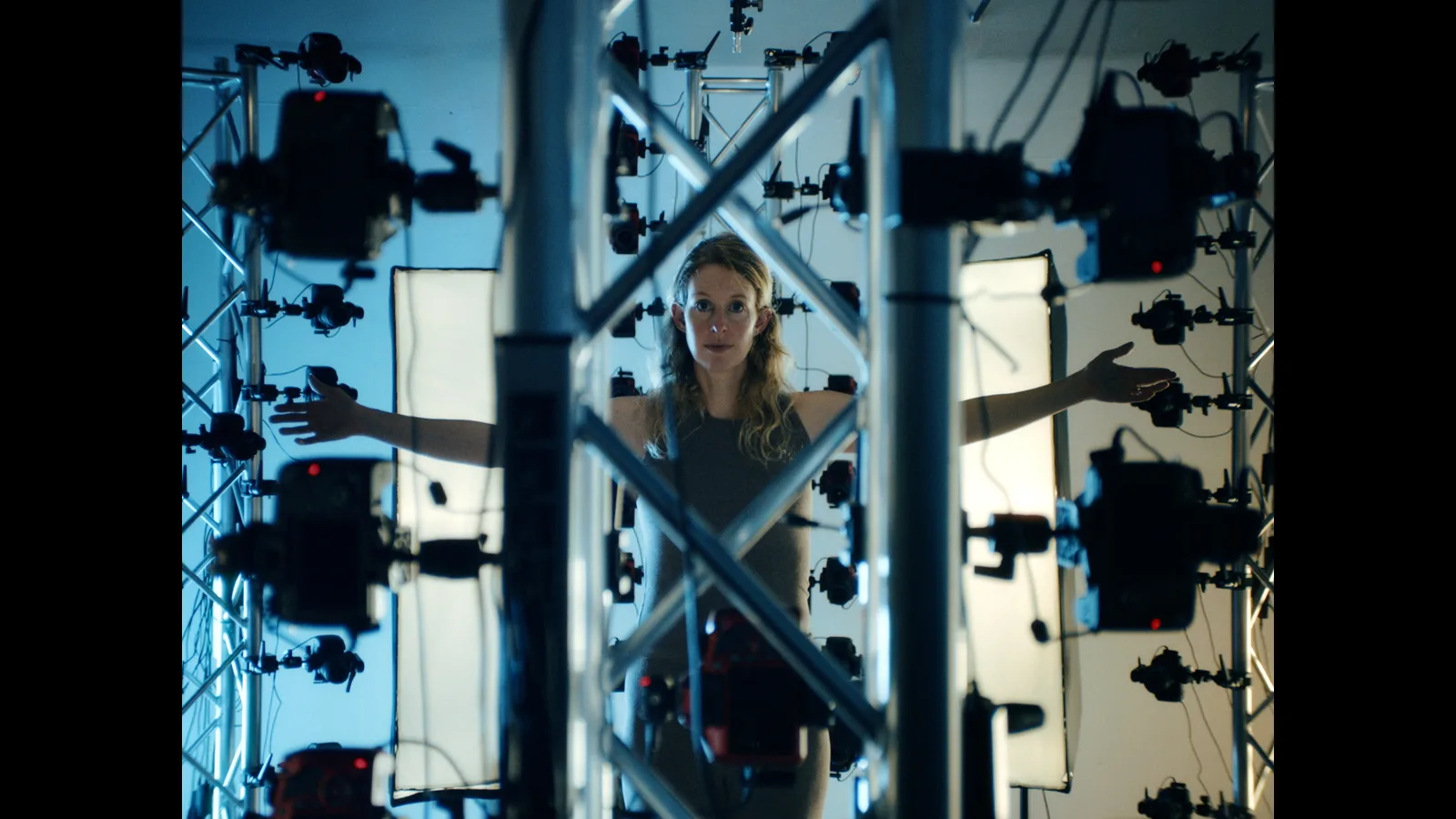
About a third of the way through You Can See Everything, Elizabeth Holmes stands with her arms outstretched inside a rig fitted with more than 200 cameras. It’s spring 2023, a few weeks before she reports to prison. The scan is meant to create a digital copy of her for video, holograms and AI - for example, to present a new company from her partner. During the session, Holmes cries.
At a glance (as of October 24, 2026)
- What the scene shows: A 3D scan (photogrammetry) of Holmes’ full body and face, filmed before May 30, 2023, when she reported to FPC Bryan.
- Number of cameras: More than 200 (CNN, October 16, 2026).
- Who arranged it: Holmes and her partner, Billy Evans. According to an Instagram post, 3D Scan LA Studios carried out the session.
- Why: So Holmes’ likeness could appear in video, as a hologram and in AI while she was in prison - including in presentations for investors in her partner’s new startup.
- What Holmes says: She cries and says she has a “strange history of being in front of cameras.”
- Spoilers: None. What happens to the scan in the second half is discussed only in the article about the ending.
The trailer’s camera rig is part of the scan scene
The trailer shows Holmes in a structure covered with cameras and lights. These aren’t the cameras used by Nathan Fielder and Lance Oppenheim - they filmed with three ordinary cameras inside the house in Del Mar (read more in how You Can See Everything was filmed). The crew is filming the moment Holmes gives her likeness over for a digital copy.
3D Scan LA Studios said on Instagram that it conducted Holmes’ photogrammetry session. That post is the studio’s own claim, and the only source I found; I found no confirmation from the filmmakers or in reviews.
Photogrammetry: 200 photos captured at once
The cameras surrounding a person fire at the same moment, from different angles and heights. Software compares the images and assembles them into a 3D model, complete with textures for skin, hair and clothing. More cameras mean fewer gaps in the model. Every angle matters for a face that may later be made to speak.
The model itself does not move. To create a character that can speak in a video, you need to add a skeleton and facial expressions, or use the images as material for an AI video-generation model. The filmmakers have not said what technology was used to process Holmes’ scan.
| Stage | What it produces | What is known about Holmes |
|---|---|---|
| Scan | Hundreds of images captured at once | More than 200 cameras; scene appears about a third of the way through the film |
| 3D model | A textured model of the body and face | No details have been given |
| Avatar / AI model | A character that can “speak” in a video | The stated purpose in the scene: video, holograms and AI |
| Use | Presentations and company materials | According to CNN, including investor pitches |
Holmes’ digital double was meant to pitch her partner’s startup
In May 2023, Holmes began serving a 135-month sentence for defrauding Theranos investors. During that time, she would not be able to record videos or appear before investors. CNN says the scan was partly a business decision: Evans was preparing a new blood-testing startup, and a version of Holmes that could be “programmed” to give presentations might prove useful.
That startup is now Haemanthus, based in Austin. Its device is designed to analyze blood, urine and saliva using a laser and Raman spectroscopy. In the film, during those same weeks, Evans talks to investors about “Theranos 2.0” and “putting the team back together.” Read more about Evans and how much Haemanthus raised in Billy Evans: who is Elizabeth Holmes’ partner?.
Holmes cries and talks about cameras
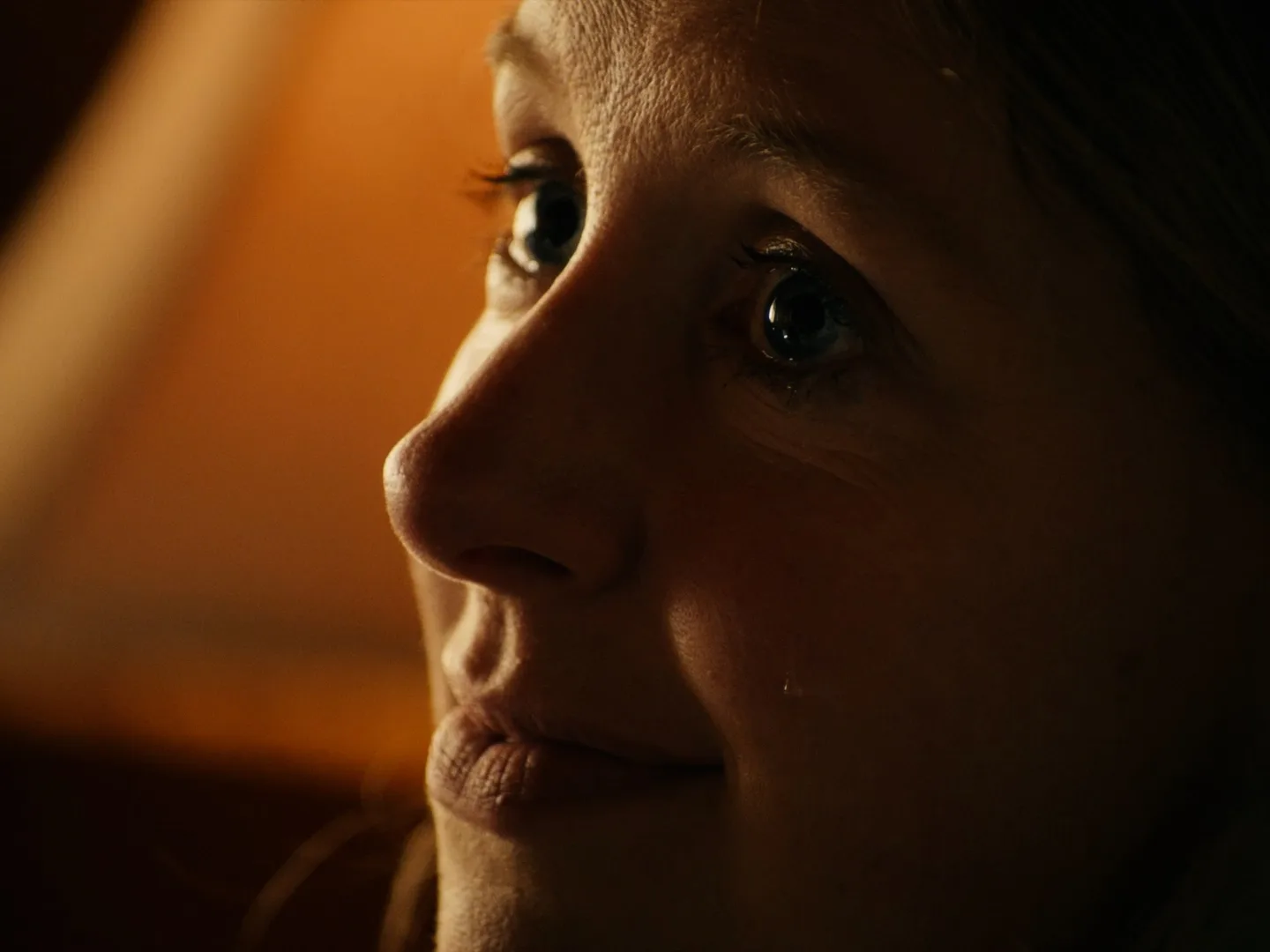
Holmes poses, then cries and says she has a strange history of being in front of cameras. Wikipedia’s film summary adds that she is afraid someone will misuse her likeness. This is the same woman whose face, black turtleneck and artificially low voice once formed part of the Theranos brand. At the house in Del Mar, there is no turtleneck or low voice - just loose hair and a baby on her hip.
I watched the film in a cinema on October 24, 2026, and gave it 9/10 for its framing, close-ups and facial expressions. Read more in my review.
The cinematographer says AI can’t reproduce emotion in a face
David Bolen, cinematographer on You Can See Everything, said in an interview on October 19, 2026, that AI can generate technically correct shots but not emotion in people’s faces. It’s a comment from the cinematographer of a film built around close-ups: zoom lenses ranging from 25 to 250 mm move in close enough to show skin pores and individual tears.
For anyone working with someone else’s face in AI, the scan scene offers a practical lesson:
- Consent isn’t just one signature. Holmes agrees to the scan and, in the same scene, worries about what someone might do with it.
- Decide who holds the keys. If the person in the scan is out of reach for years, someone else controls the copy. Put in writing who can use it and for what.
- Once a model is out there, it can be hard to take back. A scan made in 2023 can be modified for years, using tools that did not exist at the time.
If someone has used your likeness without permission, see how to report a deepfake.
What I couldn’t confirm
- Where exactly the scan was made and how long the session lasted - no details are available beyond the studio’s post.
- What technology was used to process the model, or whether Holmes’ voice was recorded - no information is available.
- Whether Holmes’ digital double has ever been shown publicly outside the film - as of October 24, 2026, I found no confirmation.
- Whether AI was used to make the film itself - no information is available.
Frequently asked questions
What is the camera machine Elizabeth Holmes stands in?
It’s a rig for a 3D photogrammetry scan with more than 200 cameras. It appears in a scene in the film; it is not the film crew’s equipment.
Why did Holmes get a 3D scan?
According to CNN, so her likeness could appear in video, as a hologram and in AI while she was in prison, including in presentations for her partner’s new startup.
When does the scan scene appear in the film?
About a third of the way through the 174-minute film, before Holmes leaves for prison.
Was You Can See Everything made with AI?
There’s no indication that it was. The film was shot with three cameras in a house in Del Mar, and there is no information about AI being used in production. AI appears in the story, in the scan scene.
Find more information about the film, its release and its results in the You Can See Everything hub.
Google · Your sourcesQuantslant higher in your Google - one clickAdd to preferred sources →Sources and fact-check date
- CNN, David Mack, October 16, 2026 - more than 200 cameras, the scene’s place in the film, the scan’s purpose, investor pitches and Holmes crying (accessed October 24, 2026)
- Wikipedia EN - You Can See Everything - concern about misuse of her likeness (accessed October 24, 2026)
- Daily Bruin, October 16, 2026 - the body-scan scene (accessed October 24, 2026)
- FSView, October 17, 2026 - Holmes’ appearance in Del Mar, without the Theranos-era image (accessed October 24, 2026)
- 3D Scan LA Studios on Instagram - studio statement about the photogrammetry session (accessed October 24, 2026)
- Interview with David Bolen, October 19, 2026 - AI and emotion in faces (accessed October 24, 2026)
- Wikipedia EN - Haemanthus (company) - startup technology (accessed October 24, 2026)