AI Agents: What They Do, Where They Fail, and How to Test Them
An AI agent chooses its own steps and uses tools to complete tasks. See examples, error accumulation math, and how to test your first process.
👁 117 reads
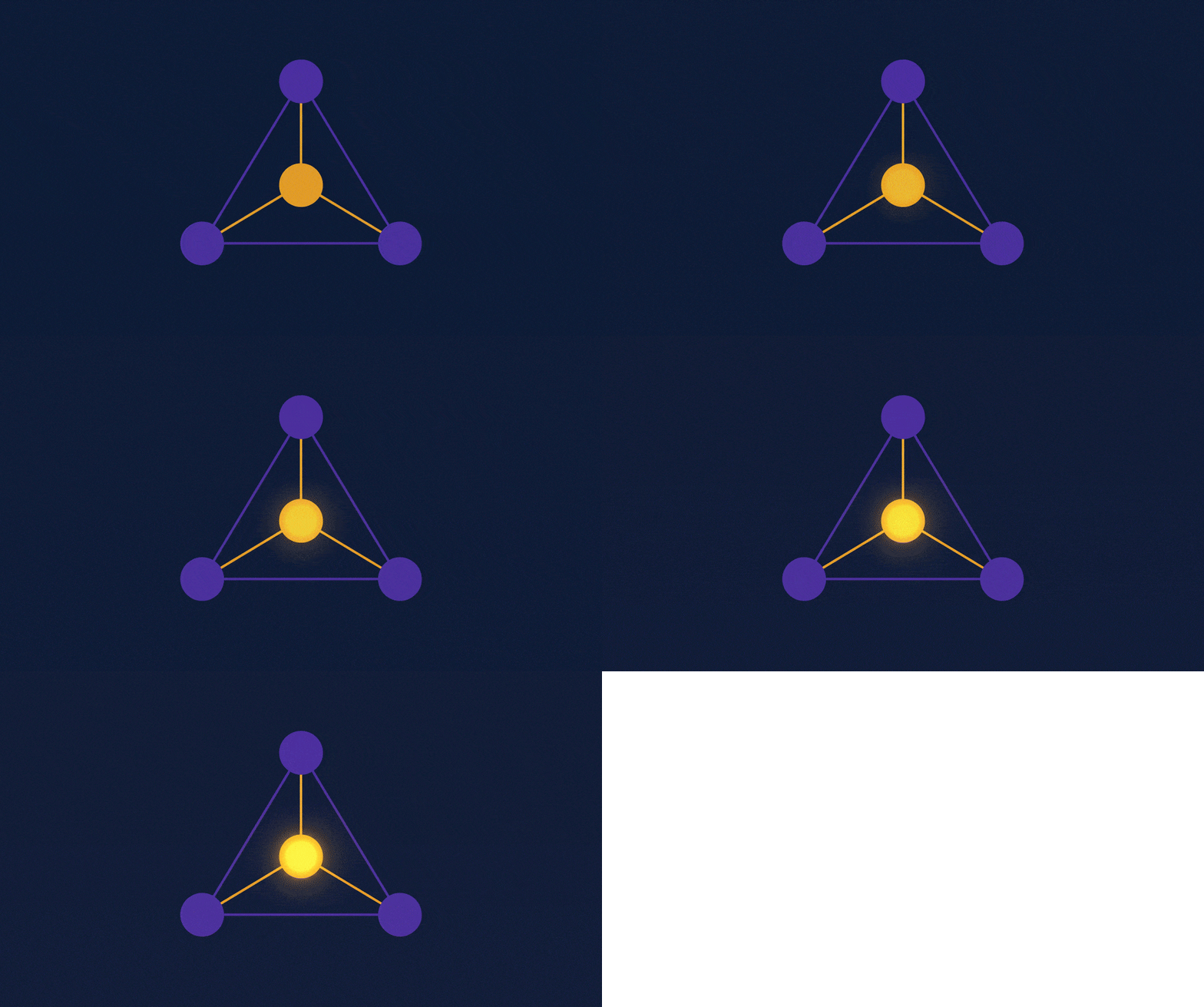
An AI agent is a system in which a model chooses successive actions and uses tools to complete a task. Beyond writing a response, it can read a file, check the result of an operation, and decide what to do next based on that information.
Not every automation with a model is an agent. I reviewed Anthropic’s architecture description, which distinguishes predetermined workflows from processes steered by model decisions. The examples below are task and control designs, not reports from deployments with imaginary clients.
AI agents choose next steps based on results
In their guide on building agents, Anthropic distinguishes predictable paths written in code from systems in which the model directs tool use. Both approaches can be useful. The name “agent” is not, however, a reward for more complicated automation.
Simple example: a program copies rows from a form to a spreadsheet every morning. It doesn’t need to independently choose a strategy. When the task is “find the cause of discrepancies in these documents,” the next step may depend on what was found in the files. Then flexible tool selection has a concrete reason.
| Solution | Who determines the flow | Example result |
|---|---|---|
| Regular chat | User leads the conversation | Suggested message content |
| Fixed automation | Author of rules and program | Data entered in predetermined fields |
| AI agent | Model chooses steps within set boundaries | Document review and report with evidence |
Good AI agents need access and termination conditions
A prompt saying “act independently” alone doesn’t create connections to files, email, or databases. The system must have actual tools and permissions. If it doesn’t have them, a response saying “I sent it” doesn’t prove a message was sent. Confirmation must come from the operation, not solely from the model’s description.
In a task, I define input material, allowed actions, and measurable output. For example: “Read documents from this folder and prepare a table of differences with filename and source fragment. Don’t change the originals.” The agent finishes when the table covers the provided set or when it clearly indicates a file it couldn’t read.
I also establish what should happen on error. If a document is missing, the agent should describe the absence. It shouldn’t guess values to complete the table. If it retries an operation, it must check whether the previous attempt already succeeded. This is especially important for actions that create new records.
Evaluate AI agent examples by verifiable output
In research, the result might be a report with open sources and a list of unresolved issues. In programming: file changes and the result of executed tests. In document processing: a completed table with the ability to trace each value. Each of these results can be verified independently of the system’s declarations.
I don’t measure success by number of clicks or response length. An agent that opened many pages might have skipped the right document. An agent that wrote a long report might not have performed the most important operation. Before you choose a tool from the AI tools catalog, write down the evidence you’ll accept as completion of your work.
Where AI agents fail in long tasks
Anthropic points to costs, delays, and the possibility of error accumulation. To see the mechanism itself, I calculated a model example: eight independent steps, each with an assumed 95% success rate, without correction. The chance of success for the entire sequence is 0.95 to the power of 8, or about 66.3%.
This is a calculation based on assumptions, not measured agent effectiveness. In a real process, steps don’t have to be independent, and control and retries change the outcome. That’s exactly why I design checkpoints. An incorrectly read value should stop further calculations instead of passing unnoticed through all stages.
Another boundary concerns permissions. If an agent only needs to prepare a proposed change, it doesn’t immediately need the ability to delete data. Access should match the task. A file copy and operation log make it easier to reconstruct what happened when the result turns out to be wrong.
Don’t treat instructions found in a document as commands from the person assigning the work. An agent analyzing a page might encounter content trying to change its behavior. That’s a reason to separate input data from permissions and task execution rules. The sentence “be careful” alone doesn’t replace restrictions on tool access.
Evaluate cost together with verification work
A subscription or model bill isn’t the entire cost. Tool calls, infrastructure, and time spent checking results are added. Comparison with manual work makes sense only when both sides end with a result of the same quality. A short, incorrect report isn’t savings just because it was produced quickly.
For your own test, choose neutral documents and prepare correct answers before you run the system. Check accuracy, completeness, and the number of cases requiring your intervention. I describe comparison methods in benchmarks. Don’t transfer the result of one task to all possible agent applications.
Limit your first AI agent to one process
Start with a task whose output is easy to receive, for example a table of discrepancies between files. Provide copies of materials, indicate allowed tools, and define what must appear in the report. Add a condition to stop work when a source is missing or a set budget is exceeded.
Run a test and review evidence of execution. Also check a difficult case: missing file, conflicting data, or illegible fragment. Only when you know how the system behaves on error should you consider expanding access. If the entire process fits into simple rules, regular automation may suffice and will be easier to maintain.
AI agent vs chatbot: the difference in one sentence
A chatbot responds to one message and waits for the next. An AI agent receives a goal, divides it into steps itself, executes them with tools (browser, files, code, calendar), and checks the result before moving forward. This “do, check, decide” loop is the feature that distinguishes an agent from regular automation with a predetermined list of steps.
Examples of AI agents you can run today
Agent mode in ChatGPT. The model gets its own browser and performs multi-stage tasks: comparing offers, filling out forms, preparing reports from multiple pages. Available in paid plans, it asks for consent each time before irreversible steps like purchases.
Claude Code. Anthropic’s programming agent working in the terminal: reads repositories, edits files, runs tests, and fixes what broke. This is the most common example of an agent that actually saves hours, not minutes. How to connect it to your own tools is shown in the article about building agents with Claude and MCP.
Gemini in Google Workspace. An agent that, on command, browses your inbox, calendar, and Drive, then assembles a daily plan or response. Works best where all data is already in Google services.
Agents in n8n and Make. For those who want to build their own process without programming: the model gets access to selected applications and decides which to run. This is the cheapest way to a first process in a small company.
How much does an AI agent cost
An agent consumes many times more tokens than the same conversation in chat, because each step is a separate model call with the entire history so far. With GPT-6 Astra, API rates are $10 per million input tokens and $50 per million output tokens; with GPT-5.6 Sol, five times less. In practice, a simple agent for a report from five sources costs from a few to several dozen cents per run; a programming agent working for an hour can consume several dollars. That’s why before running I set a token budget and stop condition, and I compare model prices in the AI model ranking.
Glossary that’s enough to start
Tool is a function the model can call: search, file read, database query. MCP is an open standard describing how to connect such tools to different models. Agent loop is the cycle: observation, decision, action, result evaluation. Termination condition is a rule that tells the agent when to stop; without it, an agent can circle endlessly and burn through budget.
Google · Your sourcesQuantslant higher in your Google - one clickAdd to preferred sources →Reader questions
Can an AI agent work in languages other than English?
Yes. The language of commands doesn’t matter for the action loop itself. What matters is the quality of the model’s language in reports the agent writes at the end, and here Claude performs best, followed by GPT-6 Astra.
Is an AI agent safe for company data?
As safe as the narrow access you give it. The rule I follow: the first agent gets read-only permissions to one folder and one process. I expand them only when I see how it behaves on error.
How does an agent differ from automation in Zapier?
Automation executes a predetermined sequence of steps. An agent chooses steps itself based on what it saw in the previous one. If the process fits into simple “if-then” rules, automation is cheaper and easier to maintain.
See also: Gumloop: AI agents without code · Factory.ai and Droid: code agent



More on this from QUANTSLANT


 news·Sora and Sora 2: OpenAI Shut Down Video GeneratorOpenAI's Sora video generator is gone. What happened, how to recover your videos, and what to use instead - including free alternatives.