Lesser-Known AI Models: MiMo, Qwen3.8 Max, GLM-5.3, Muse Spark
Four top-tier AI models you haven't heard of: MiMo-V2.6-Pro, Qwen3.8 Max, GLM-5.3, and Muse Spark 1.3. Benchmarks, multilingual writing tests, and pricing.

👁 122 reads
Lesser-known AI models from the top tier include four names that sit just behind Anthropic and OpenAI models in the Artificial Analysis ranking, alongside Grok 4.7: Muse Spark 1.3 from Meta, MiMo-V2.6-Pro from Xiaomi, Qwen3.8 Max from Alibaba, and GLM-5.3 from Z.ai. They score 45 to 48 points on the intelligence index, and cost 3 to 23 times less per output token than Claude Opus 5.5. We put all four through our Lab: the same 13 writing tasks in Polish and the same blind evaluation as in our 16-model ranking.
Summary
For non-English writing (we tested in Polish), Qwen3.8 Max performed best: 76.4 points out of 100, compared to 91.2 for Claude Opus 5.5 and 81.5 for GPT-6 Luna in the same round. With a caveat: we scored one of its responses from a second attempt with a higher limit; with equal limits it would have scored 68.2 points. Just behind Qwen is Muse Spark 1.3 from Meta: 75.5 points for 0.10 USD, without a single empty response, though its score is mainly lifted by clean typography while judges rated its texts lowest for naturalness. MiMo-V2.6-Pro scored 69.1 points for 0.03 USD (13 tasks), but on the difficult quiz it thought until the limit and returned no answer. GLM-5.3 closed the field with 63.6 points, and a rerun at the producer only (Z.ai, without cheaper providers) gave 61.8 points, so it’s not quantization. High scores in Artificial Analysis benchmarks don’t translate to non-English writing: there all four are close together (45-48 points), in our test they’re separated by 13 points, and Muse Spark with the highest index is only second. If you’re writing in a heavily inflected language via API and looking for something cheap, GPT-6 Luna gives more for less. That’s our opinion.
 01Meta Muse Spark 1.3: Benchmarks, Pricing and Test ResultsMeta's Muse Spark 1.3 scores 48 points in the AA index, generates 214-252 tokens/s, and costs $1.25/$4.25 per million tokens. We tested it in Polish for non-English performance.Read →
 02Qwen3.8 Max Test: 13 Tasks, Scores, Pricing & AccessQwen3.8 Max scored 76.4/100 in our writing test, aced difficult proofreading (30/30), but used 33k thinking tokens. Costs $2/6 per million tokens.Read →
 03GLM-5.3 Test: Non-English Writing, Pricing & ProvidersGLM-5.3 scored 63.6/100 in our non-English writing test - fast and cheap at $0.03 for 13 tasks, but with notable grammar errors. We tested it twice to check if fp4 quantization was the issue.Read →
 04Xiaomi MiMo-V2.6 Review: Benchmarks, Pricing and Real TestsMiMo-V2.6 Pro and Flash from Xiaomi: MIT license, 1 trillion parameters, $0.435 per million tokens, 46 points in the AA index. Benchmarks and tests.Read →
Who They Are and Where They Rank
Artificial Analysis calculates its index (version 4.3.2) from 10 tests: agentic tasks, coding, scientific reasoning, and general knowledge. Values below were recorded on September 27, 2026. Task cost is the average cost of one index task according to the same site, not the cost of our test.
| Model | Company | AA Index | Tokens/s | AA Task Cost | Weights |
|---|---|---|---|---|---|
| Claude Opus 5.5 (max) | Anthropic | 58 | - | 5.98 USD | closed |
| Muse Spark 1.3 (max) | Meta | 48 | 214 | 1.60 USD | closed |
| MiMo-V2.6-Pro | Xiaomi | 46 | 44 | 0.13 USD | open, MIT |
| Muse Spark 1.3 (xhigh) | Meta | 45 | 252 | 1.37 USD | closed |
| Qwen3.8 Max (0902) | Alibaba | 45 | 39 | 5.41 USD | closed |
| GLM-5.3 (max) | Z.ai | 45 | 84 | 2.01 USD | open, GLM-5.3 license |
| GPT-6 Luna (max) | OpenAI | 37 | 163 | 0.07 USD | closed |
Three things emerge from this table. Muse Spark is the fastest in the top tier - 214-252 tokens per second, more than twice as fast as Opus 5.5 in xhigh variant (89). MiMo-V2.6-Pro completes an index task for 0.13 USD, 46 times cheaper than Opus in max variant. Qwen is the opposite extreme: it costs 5.41 USD per task because it generated 190 million tokens in the index.
Our Non-English Writing Test: Results
We tested each model in Polish, a heavily inflected language that is a useful proxy for non-English writing quality. Each model received through OpenRouter the same 13 prompts as in our AI writing ranking: 9 writing tasks (article, product description, email, post, story, titles, summary, translation, text for a child), two proofreading tasks, and two quizzes about Poland. Settings as for all models: effort=low, default temperature, same token limits. Responses were evaluated blind by three judges from different companies (Claude Opus 5.5, GPT-6 Sol, Gemini 3.1 Pro), with a judge from the same company as the evaluated model being skipped. The score is 70% judge ratings, 20% rules from the prompt, and 10% text hygiene (long pauses, fluff).
We added four anchors from the first round to the pool: Claude Opus 5.5, GPT-6 Luna, Qwen3.8 Max, and GLM-5.3. Their scores differed from the previous ones by 0.5-1.3 points, and the order didn’t change, so the scale is comparable (average shift was +0.1 points). Muse Spark entered the test a few hours later, so judges evaluated it in a separate pool with the same anchors. There the anchors differed from the first round by 1.0-1.7 points, the order again remained the same, and the scale shift was -0.15 points.
| Model | Score | Judges (1-10) | Rules | Hard Proofreading | Hard Quiz | Cost 13 Tasks | Time 9 Tasks |
|---|---|---|---|---|---|---|---|
| Claude Opus 5.5 (anchor) | 91.2 | 9.15 | 25/26 | 30/30 | 48/48 | 0.3716 USD | 133 s |
| GPT-6 Luna (anchor) | 81.5 | 8.02 | 24/26 | 29/30 | 48/48 | 0.0041 USD | 39 s |
| Qwen3.8 Max | 76.4 (68.2*) | 7.75 | 26/26 | 30/30 | 48/48 | 0.2357 USD | 572 s |
| MiMo-V2.6-Pro | 69.1 | 7.12 | 25/26 | 27/30 | 0/48 (empty) | 0.0308 USD | 401 s |
| GLM-5.3 (OpenRouter routing) | 63.6 | 6.36 | 23/26 | 26/30 | 46/48 | 0.0304 USD | 27 s |
| GLM-5.3 (Z.ai only) | 61.8 | 6.20 | 24/26 | 26/30 | 47/48 | 0.0322 USD | 83 s |
| Muse Spark 1.3** | 75.5 | 6.78 | 25/26 | 29/30 | 48/48 | 0.1012 USD | 135 s |
* with equal token limits, explanation below. Qwen’s cost does not include the empty first attempt from September 26 (0.0366 USD).
** evaluated in a separate pool with the same anchors (Opus 5.5 - 91.8, Luna - 81.8, Qwen - 77.5, GLM-5.3 - 62.7). After calibration to the first round scale: 75.3 points.
In the 16-model ranking table, Muse Spark (75.3 after calibration) would take 11th place, just behind Qwen (75.9) and ahead of DeepSeek V4 Pro (74.1). MiMo with a score of 69.1 would land in 14th place, between Claude Sonnet 5 (71.9) and Mistral Medium 3.5 (68.0). Qwen is tenth there, GLM second to last.
Correction to Qwen’s score. In the first round (September 26), Qwen thought until the 6000 token limit on the product description and returned an empty response. We then repeated the attempt with a higher limit and that’s what the judges evaluated - the model used 14,460 tokens thinking about a short product description. Other models didn’t get this second chance, so this was our methodological error. If we count that task as failed (judge average 1, rules 0 out of 3), Qwen has 68.2 points, almost the same as MiMo (69.1) and clearly less than Muse Spark (75.5). In this round we didn’t repeat anything with a higher limit. MiMo’s empty quiz doesn’t count toward the writing score because only tasks T1-T9 count in it.
What Came Out in the Responses
Qwen3.8 Max was the only one of the four to meet all 26 rules from the prompts and flawlessly corrected the difficult proofreading task. Judges rated highest the text about inflation for a child (8.89), the story (8.56), and SEO titles (8.56). Weakest was the summary (6.22): grammatical errors and omitted training. In the translation, idioms came out well, but alongside them remained untranslated business jargon.
Muse Spark 1.3 has the most uneven results. The translation with idioms got 8.67, the LinkedIn post 8.56, but the product description only 3.44 because the model padded the paragraph to the required length by repeating the entire specification a second time. In the article it added “(this is an example)” 20 times and inserted nonsensical phrases. The judge average (6.78) and naturalness (5.63) are lower than MiMo and Qwen, and its high score is thanks to rules (25 out of 26) and text hygiene: 3 long pauses per 1000 words, fewest in the field, and zero fluff. Beyond writing, nearly flawless: hard proofreading 29 out of 30, both quizzes complete.
MiMo-V2.6-Pro wrote the best summary in the entire pool (9.44, higher than Opus 5.5 with 9.33) and flawless easy proofreading. On the other hand, the story got 5.0 due to grammatical errors, and the LinkedIn post contained incomprehensible phrases. Per 1000 words it inserted 24.6 long pauses, compared to 5.1 for Opus.
GLM-5.3 in both runs made the most inflectional errors and typos: grammatical mistakes appeared in both versions of the email. In the OpenRouter routing version, the translation got 3.0 (poor idiom handling), and in the Z.ai version 8.78. In the Z.ai story, judges found multiple grammatical errors. A single attempt per task means high variance, but on average both versions performed similarly.
Empty Responses and Thinking in Polish
In our earlier test of Chinese models in Polish, MiMo-V2.6-Pro thought until the limit five times and returned no text. This time, with the same effort=low setting as other models, it returned 12 out of 13 responses, because the Lab prompts are shorter (texts up to 500 words). The only empty one was the hard quiz: 9000 tokens of thinking, 613 seconds, zero text. We didn’t raise the limit just for it, because then it would have better conditions than the rest - we count the quiz as failed. Thinking consumed 85% of all tokens MiMo generated in the test (28.5k out of 33.6k).
We also checked whether the long text problem disappeared. On September 27, we ran that 900-word prompt again, with effort=low: 9000 tokens of thinking, 204 seconds, empty response, 0.0079 USD. Nothing changed.
Qwen3.8 Max also thinks a lot: 33k tokens of thinking in 13 tasks and almost 10 minutes on 9 writing tasks. Muse Spark with effort=low also thinks a lot (17.2k tokens, 76% of output), so despite 214-252 tokens per second in AA measurements, 9 writing tasks took it 135 seconds, almost as much as Opus 5.5. GLM-5.3 with effort=low barely thinks (211 tokens in the entire test), which is why it’s the fastest.
Prices Per Million Tokens
Producer prices excluding VAT, checked September 27, 2026.
| Model | Input USD | Output USD | Where This Price |
|---|---|---|---|
| Muse Spark 1.3 | 1.25 | 4.25 | Meta Model API, OpenRouter |
| MiMo-V2.6-Pro | 0.435 | 0.87 | mimo.mi.com, OpenRouter |
| Qwen3.8 Max (0902) | 2.00 | 6.00 | Alibaba Cloud (Singapore), OpenRouter |
| GLM-5.3 | 1.40 | 4.40 | Z.ai; on OpenRouter from 0.30 / 1.14 USD from other providers |
| Claude Opus 5.5 | 4.00 | 20.00 | OpenRouter |
| GPT-6 Luna | 0.10 | 0.50 | OpenRouter |
Both rounds cost us 3.26 USD: the round with MiMo and GLM - 1.66 USD (0.07 USD model responses and control, 1.59 USD judges), the round with Muse Spark - 1.60 USD (0.10 USD responses, 1.50 USD judges). Anchor responses come from the first round, so we only paid for their re-evaluation.
How to Access Them
- Muse Spark 1.3 - Meta Model API is in public preview with “expanded global access,” but Meta doesn’t publish a list of countries, and in September users from Europe reported unavailability messages in their region. On OpenRouter the model is available after confirming age 18+ in account settings. The Muse app (personal agent) only works in the US. More in our article about Muse Spark 1.3.
- MiMo-V2.6-Pro - API at mimo.mi.com, free MiMo Studio chat according to Xiaomi FAQ, three providers on OpenRouter, weights on Hugging Face under MIT license.
- Qwen3.8 Max - Alibaba Cloud Model Studio international version and OpenRouter (only Alibaba as provider). Whether version 0902 is selectable in the free Qwen Chat, we couldn’t confirm.
- GLM-5.3 - Z.ai API, GLM Coding Plan subscription from 18 USD per month, over 30 providers on OpenRouter. The chat at chat.z.ai runs on GLM-5.3-Flash according to the site, not the full model.
All four (except Meta’s apps) are easiest to try through a single OpenRouter account, as we did for this test. With Muse Spark you must first confirm age in account settings - without this OpenRouter returns a 403 error.
Frequently Asked Questions
Which of These Models Writes Best in Non-English?
In our test, Qwen3.8 Max: 76.4 points out of 100, just ahead of Muse Spark 1.3 (75.5). With equal token limits, Qwen has 68.2 points and falls behind Muse and MiMo-V2.6-Pro (69.1). All lose to GPT-6 Luna (81.5), which costs a fraction of their price.
Does MiMo-V2.6-Pro Still Freeze on Non-English Texts?
With shorter prompts, rarely: with effort=low it returned 12 out of 13 responses, only the hard quiz was empty. With a 900-word text it still thinks until the 9000 token limit and returns nothing.
Is Muse Spark 1.3 Available Internationally?
Through OpenRouter yes, after confirming age 18+ in account settings - without this we got a 403 error, after confirmation the test passed without problems. Meta doesn’t officially confirm Meta Model API access from Europe, and the Muse app only works in the US.
Why Do Benchmark Results Differ from Your Test?
The Artificial Analysis index measures agentic tasks, coding, and knowledge, mainly in English, with maximum reasoning. Our test checks non-English writing with effort=low.
Which Is the Cheapest?
MiMo-V2.6-Pro: 0.435 USD per million input tokens and 0.87 USD output. Our 13-task test cost 0.03 USD in it.
Sources and Date Checked
Index, speed, and task cost
- Artificial Analysis ranking
- model pages Muse Spark 1.3
- MiMo-V2.6-Pro
- Qwen3.8 Max
- GLM-5.3 and index methodology. Prices: Meta
- Xiaomi
- Alibaba Cloud
- Z.ai and OpenRouter model list. Access: Meta Model API
- GLM Coding Plan. Test results are our measurements through OpenRouter
- cost from the billing field of responses
- method as in our Lab. Checked September 27
- 2026


More on this from QUANTSLANT



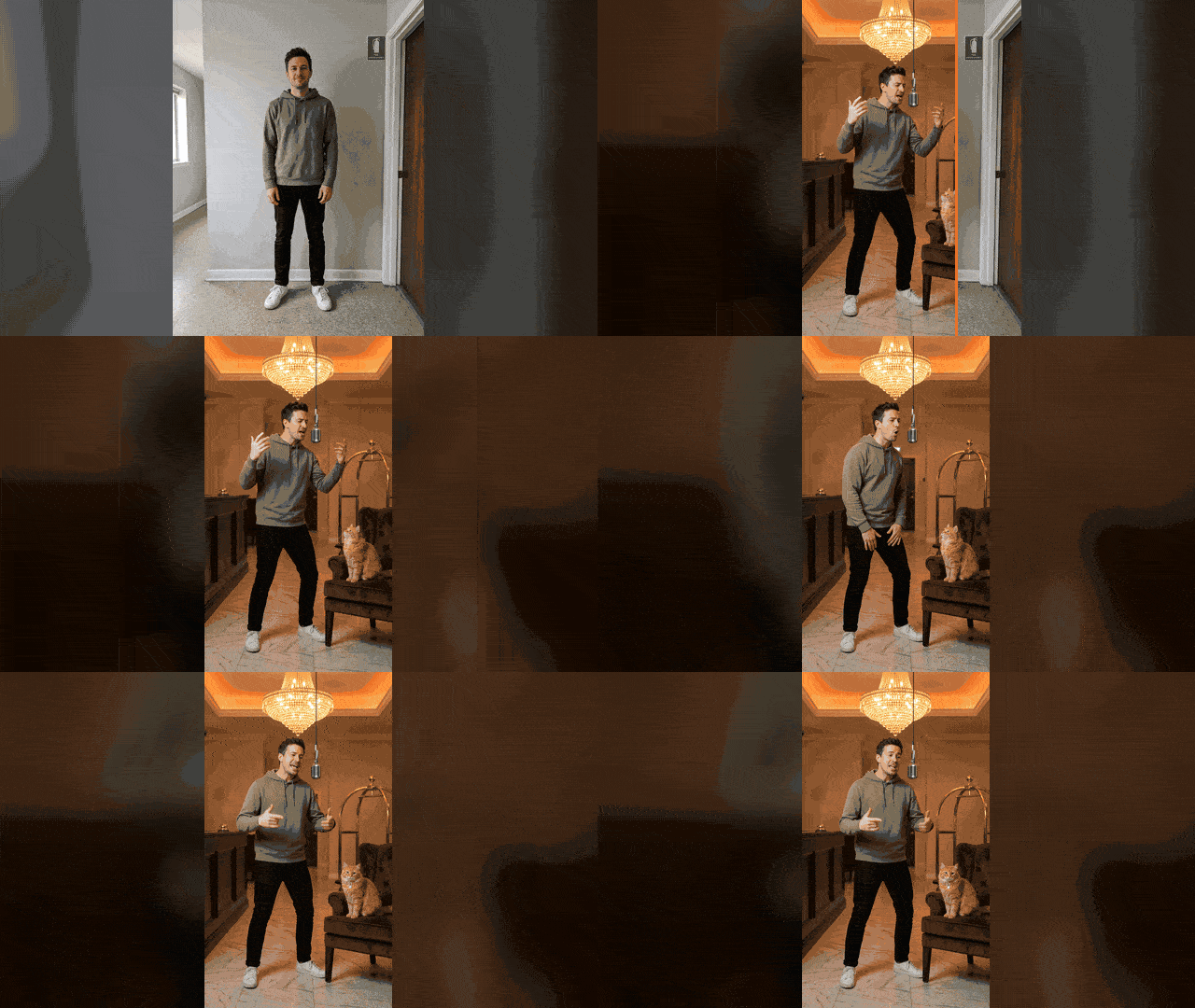 guides·Hotel Lobby AI: How to Make the TikTok Trend and What It CostsStep-by-step guide to creating the viral Hotel Lobby AI trend: templates, motion transfer tools, costs for 15 seconds, and prompts you can copy.