LSE will use AI to turn 1.2 million handwritten wills into research data
A name, a bequest and a difficult line of handwriting can be enough to send a historian back to an archive. On 16 November, the London School of...
👁 114 reads
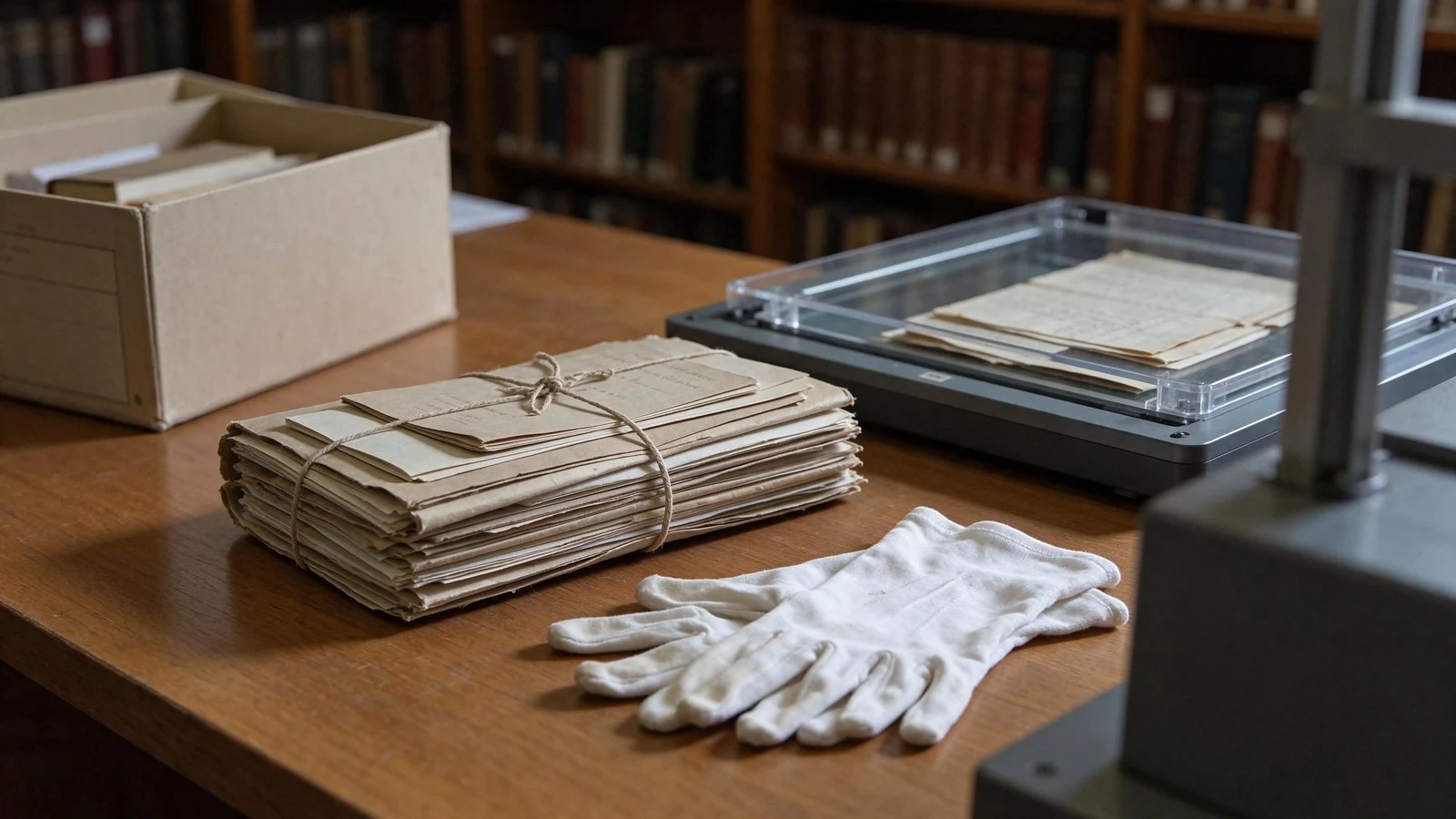
A name, a bequest and a difficult line of handwriting can be enough to send a historian back to an archive. On 16 November, the London School of Economics announced a project aimed at changing the scale of that work: Neil Cummins will use AI to turn more than 1.2 million handwritten wills at The National Archives into structured research data. The ambition reaches beyond making old pages searchable.
The project will organise information about inheritance, wealth and family relationships, with Transkribus and The National Archives involved in the collaboration. I find that distinction more interesting than the headline document count. A transcription lets someone read a page. A structured dataset lets a researcher ask the same question across a collection, then return to the pages behind the answer.
From handwriting to a defensible dataset
Consider a hypothetical question about property passing between siblings. A useful system must identify the people, distinguish a beneficiary from a witness and preserve the relationship between a statement and its source. Finding the word “brother” is only an intermediate step. A name mentioned in a document is not automatically the person who inherited an asset.
This is where I would judge the project’s eventual value. An archive tool should make its interpretation inspectable. A researcher needs the original image, the transcription and the structured field together, especially when a word is uncertain or a relationship is inferred. Otherwise an apparently clean spreadsheet can hide the very ambiguities that historians spend years learning to recognise.
The difference matters for British family history as well as academic research. An individual looking for an ancestor wants a reliable connection between records. An economic historian may want patterns across generations. Both need traceable evidence, but their tolerance for different errors can vary. A mistaken name can derail a family search; a systematic extraction bias can distort an aggregate result.
The archive is not the population
I would also resist reading a large document count as a guarantee of representativeness. A dataset of wills records people and possessions that entered a particular administrative process. Before comparing groups, a researcher must establish who appears in the collection, who does not, and how the surviving material was selected. AI does not settle that question by reading faster.
An illustrative problem is missing information. An empty field might mean that an asset was not mentioned, that a page was damaged or that the software failed to identify it. Treating all three as “none” would change the research result. Keeping those states separate is a design decision with historical consequences, rather than a cosmetic choice in a database.
For the same reason, I would want sample checks organised around difficult material, not just a random selection of easy pages. Unusual handwriting, repeated names and complex bequests are useful stress cases. A system that handles straightforward documents beautifully can still need substantial human review on precisely the records that make a collection valuable.
A reusable method, subject to licensing
LSE says the project intends to share its pipeline, evaluation methods and documentation where licensing permits. It forms part of the newly announced UKRI Turing AI cohort, supported by more than £39 million across 20 fellows. Those are programme figures, not the budget of this individual archive project.
My benchmark for success would be modest and demanding: another archive should be able to understand how the data was produced, repeat the evaluation and decide which errors require human intervention. The first useful output need not be a spectacular discovery. It could be a dataset that allows someone else to test a historical claim without losing the trail back to the handwriting.
FAQ
Has AI already processed all the wills?
The announcement describes the funded project and its aims. It does not report a completed dataset covering the whole collection.
Is this only a handwriting transcription project?
No. The announced objective includes extracting and organising information for research, rather than stopping at readable text.
Will the methods be public?
LSE plans to share the pipeline, evaluation and documentation where licensing allows. That qualification should remain attached to any claim about open access.
Google · Your sourcesQuantslant higher in your Google - one clickAdd to preferred sources →Sources
- https://www.lse.ac.uk/lse-academic-awarded-ukri-fellowship-to-unlock-handwritten-wills-with-ai - accessed: 2026-11-17.
- https://www.ukri.org/news/ukri-invests-in-20-turing-ai-fellows-to-strengthen-uk-capability/ - accessed: 2026-11-17.
More on this from QUANTSLANT
 news·How past GTA launches went: Metacritic scores, day-one records and launch bugsScores, sales records and the launch disasters of earlier GTA games, and what they suggest for GTA 6.