What Is AI: How It Works and Where to Start (2026)
AI explained without jargon: how models learn, what they can do today, what they can't despite appearances, five key concepts, and where to start.
👁 128 reads
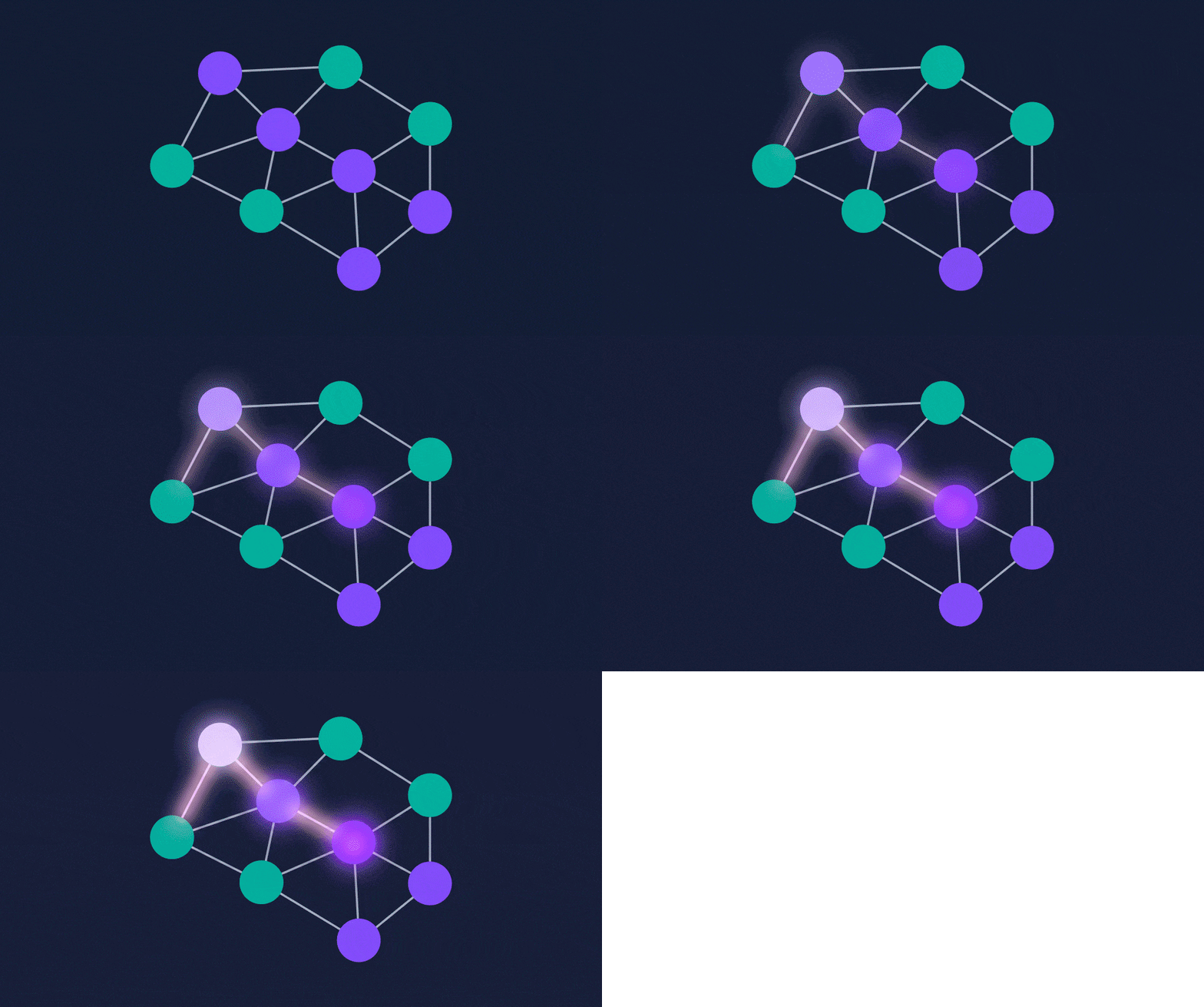
Artificial intelligence refers to programs that learn from examples instead of executing pre-written instructions. Instead of telling a computer step-by-step how to recognize a cat in a photo, you show it millions of labeled images and the program finds patterns on its own. This one difference explains everything that’s happened in recent years: why programs suddenly started writing text, drawing images and conversing, and why they can simultaneously deliver false information with complete confidence. Below, we explain this without jargon, step by step: how it works, what it can do today, what it can’t do, and where to start if you want to use it.
How It Works, Without the Math
Imagine you want to teach someone to recognize good photos, but you can’t describe the rules. So you show thousands of photos and say “this is good, this is bad.” After a while, that person starts getting it right, though they still can’t articulate the rule they’re following. Machine learning models do exactly this, just at a scale of millions of examples.
Language models - what powers ChatGPT, Gemini and Claude - learn in a particular way: they predict the next word. They receive huge amounts of text and practice guessing what comes next. Sounds trivial, but to correctly predict the next word in the sentence “the capital of France is…”, the model must remember something about the world. At the right scale, this simple task gives rise to the ability to summarize, translate, write code and answer questions.
This is also where the most important limitation comes from. The model doesn’t check facts, it just generates the most probable continuation. If a probable-sounding answer is false, it will still provide it, without a hint of hesitation. This phenomenon is called hallucination and it’s not a bug to be fixed with a patch, but a consequence of how it works.
Vocabulary: Five Concepts That Are Enough to Start
- Model is a specific trained program, for example GPT-6 Astra or Gemini 3.8 Flash. The application you use is a wrapper around the model.
- Prompt is the instruction you type in. The quality of the response depends on it more than on the choice of model.
- Token is a piece of text that the model breaks words into. API billing is based on tokens, and non-English text typically breaks into more tokens than English.
- Context window is how much text the model can consider at once. Today’s leading models accept over a million tokens, which is about two and a half thousand pages.
- Hallucination is a confident-sounding answer that is false.
We maintain a full glossary separately in the AI dictionary, and we’ve collected English equivalents of these terms in the article AI in English.
What AI Can Do Today
No futurology, just things that work and that we test ourselves at Quantslant.
- Text. Writing, editing, summarizing, translating. The most mature application and the biggest real time-saver.
- Working with documents. You upload a contract or report and ask about the content. Thanks to large context windows, this works on entire sets of files.
- Images. Generating graphics from descriptions and editing photos with text commands.
- Code. Writing, translating and fixing programs. The area where the change is most noticeable professionally.
- Voice. Conversation with an assistant, transcription of recordings, narration for video materials.
- Video. Generating short clips from descriptions. The youngest and most expensive of these fields, we track prices in the AI video price observatory.
What It Can’t Do, Though It Looks Like It Can
Three things that save disappointment. First, the model doesn’t know what it doesn’t know: when asked about a niche fact, it will make something up instead of admitting ignorance, unless you explicitly ask it to. Second, it doesn’t calculate well without tools, because by nature it predicts text rather than performs operations; always check the result with calculations. Third, it has no access to your context until you give it: it knows nothing about your company, client or preferences.
Sources are a separate matter. Models with internet access provide links, but you need to click on them. We regularly check how different models handle facts, and the results can be surprising: in our hallucination tests, the most expensive model didn’t always win.
Where to Start If You Want to Use It
Not with choosing a tool, but with one specific task that you do every week and that bothers you. It could be replying to similar emails, summarizing documents, or preparing descriptions. Take that task and do it in the free plan of one of the chat services, comparing the result with what you would have done yourself.
Only then choose a tool. For conversation and universal tasks ChatGPT, for work in the Google ecosystem Gemini, for long texts and documents Claude, for fact-checking with sources Perplexity. All have free plans, so the choice costs nothing but an hour of testing. A full list of free options is in forty free AI tools.
Once you’ve chosen, the biggest quality jump comes from learning to write prompts. It’s not magic or a job of the future, just the skill of precisely describing what you expect. We explain it step by step in the guide what is a prompt and how to write prompts, and we run a free twelve-lesson course in AI School.
Google · Your sourcesQuantslant higher in your Google - one clickAdd to preferred sources →How Much It Costs and Whether You Need to Pay
You don’t have to. Free plans from ChatGPT, Gemini, Claude and Perplexity cover most everyday needs, with daily limits. It’s worth paying only when you regularly hit those limits or need the most powerful models for difficult tasks. Current positions and model rates are automatically updated in the AI model ranking.
If you’re wondering whether you can make a living from this: we analyzed job postings and broke down earnings in the article about AI salaries.


More on this from QUANTSLANT

 guides·Claude AI: What It Is, What It Does & Who It’s For (2026)Claude from Anthropic excels at long-form writing, document analysis, and coding. Here's what it does well, what it lacks, and how it compares to ChatGPT.