NVIDIA AI Agents Deployed Across European Cities
European cities and ports deploy sovereign NVIDIA AI agents to manage public infrastructure, cut operational costs, and process local data securely.
👁 112 reads
Dozens of European cities and regions have begun deploying AI agents built on NVIDIA technology to streamline infrastructure management, citizen communication, and urban planning. An announcement published by NVIDIA details projects underway across Belgium, Finland, France, Italy, the Netherlands, Poland, Sweden, the UK, and other EMEA countries.
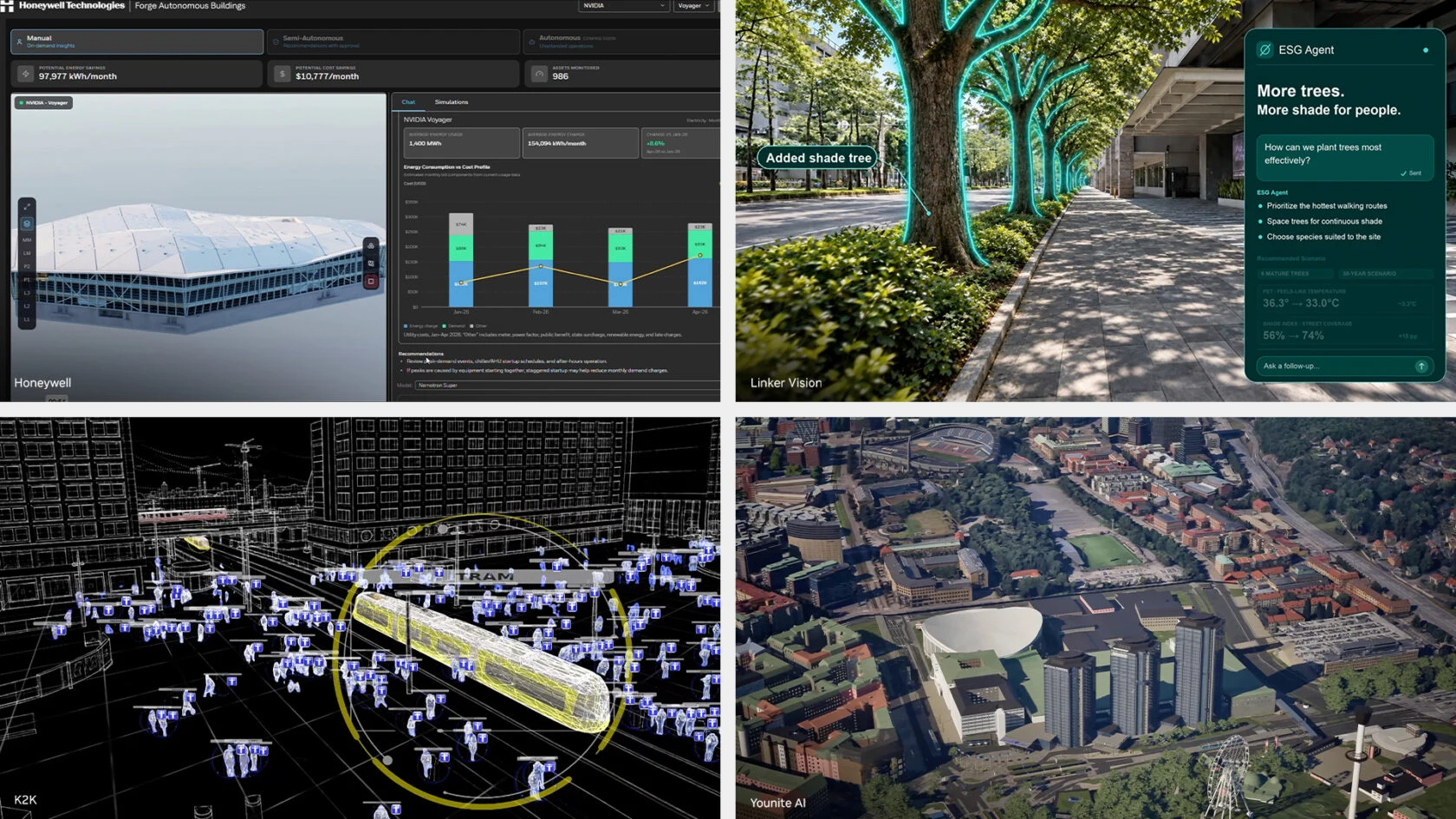
At the center of this ecosystem sit two sets of open-source models from NVIDIA. The NVIDIA Cosmos models and the Metropolis Blueprint for Video Search and Summarization (VSS) enable agents to analyze live video feeds, automatically detecting traffic congestion, equipment maintenance needs, underutilized urban spaces, and safety hazards. Meanwhile, NVIDIA Nemotron models power reasoning agents that process municipal data, converse in natural language, and interact with digital twins hosted in NVIDIA Omniverse.
Software partners participating in the rollout include ABA Technology, Akila, Galene AI, Honeywell Technologies, K2K, Linker Vision, Milestone, Onetera, ThinkDeep, and Younite. Each focuses on specific infrastructure challenges - spanning seaports, industrial sites, town halls, and public building portfolios.
Google · Your sourcesQuantslant higher in your Google - one clickAdd to preferred sources →Early Results from France, Italy, and the UK
One of the most advanced rollouts is located in the Côte-d’Or department in France, where Akila and ThinkDeep built operational agents connecting sensor, historical, and infrastructure records into a sovereign digital twin. Powered by Nemotron models and Omniverse libraries - with Cosmos integration planned for video analytics - the system oversees a network of more than 500 public buildings. It aids energy optimization, regulatory compliance, public safety, and climate resilience. The measurable impacts are already evident: document retrieval times dropped from weeks to minutes, and operational costs fell by 10%, toward a target reduction of 30% at full deployment.
In Italy, within the Milan metropolitan area, Galene.AI, Dell Technologies, and TD Synnex established a local AI factory powered by NVIDIA. The initial pilot launched in Cinisello Balsamo, with plans to expand across four additional municipalities. Citizens access chatbots for administrative inquiries, real-time translation, and assistance with public procurement and grant applications. The setup reduces municipal data query times from hours to seconds while maintaining full on-premises data sovereignty.
In the UK, software firm K2K runs three concurrent pilots. Across the Liverpool City Region, it evaluates AI factories designed to aid spatial planning and public services in transport and safety. On the island of Jersey, it works with local authorities to support decision-making, clean energy, and transit planning. In Northern Ireland, Innovation City Belfast participates in a pilot centered on smart mobility, traffic coordination, public safety, and incident management.
In southern France, at Port Sud de France in Sète, ThinkDeep’s agentic platform leverages Cosmos and Nemotron to evaluate cargo metrics and security feeds, streamline dock logistics, and supervise hazardous materials handling. At Belgium’s Port of Antwerp-Bruges, Milestone and Dell Technologies are testing vision AI agents based on NVIDIA Cosmos and the VSS Blueprint across complex maritime environments.
The common denominator across these deployments is an emphasis on local compute. Municipalities avoid routing sensitive records through third-party cloud infrastructure, opting instead for sovereign, self-hosted model instances. This architecture directly addresses European data sovereignty mandates and compliance standards under the EU AI Act. Spanning more than ten countries, dozens of partners, and hundreds of public facilities, urban AI agents are rapidly moving from exploratory pilots to production-scale operations.
More on this from QUANTSLANT



 state of ai·LayerRoute: How Robots Pick Model Layers for Specific TasksLayerRoute introduces dynamic layer routing for VLA robotics models, boosting LIBERO Long benchmark scores by 7.2 points with minimal overhead.