Suno to Add Invisible Watermarks to All AI-Generated Music Tracks
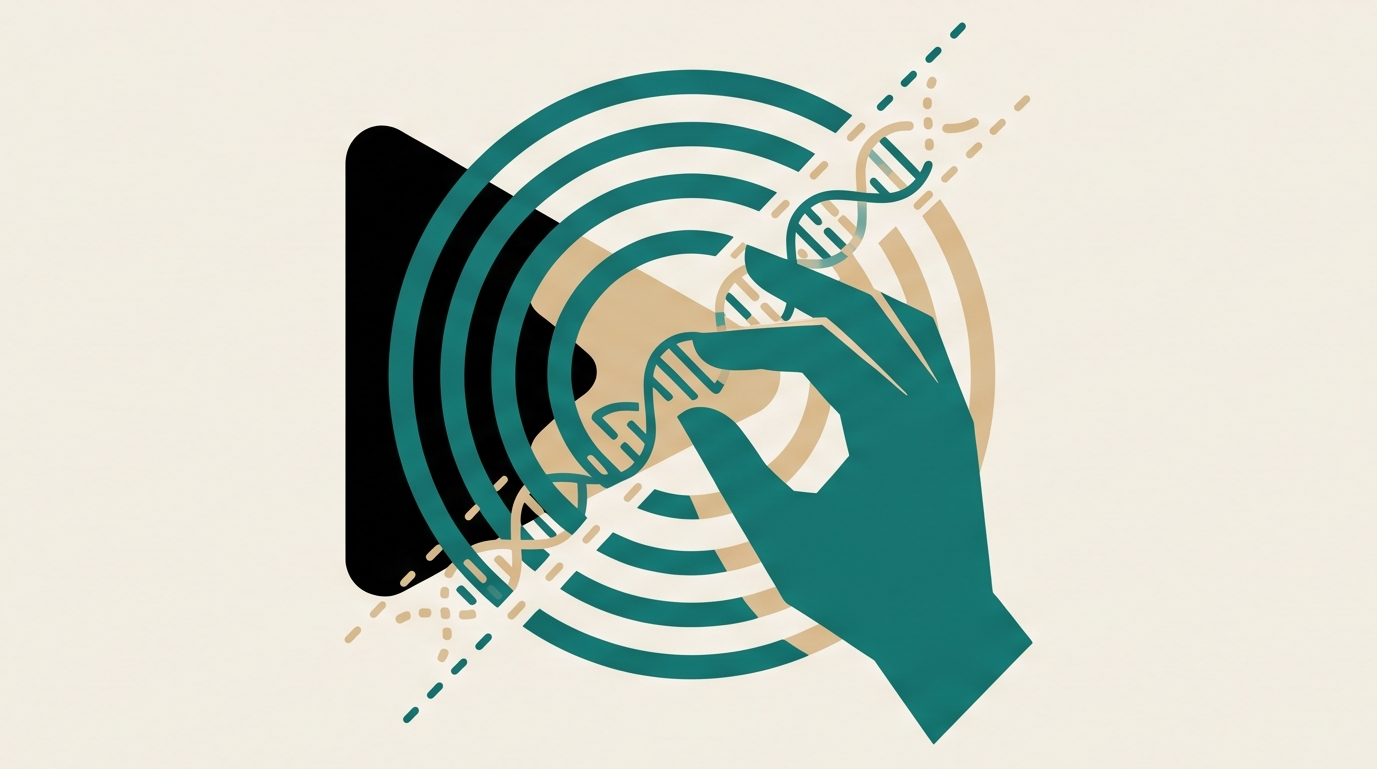
AI music platform Suno announced plans to embed invisible watermarks in every audio track its models produce, giving streaming platforms the ability to identify or block AI-generated content.
👁 116 reads
AI music platform Suno announced plans to embed invisible watermarks in every audio track its models produce, giving streaming services such as Spotify the option to label or block AI-generated content entirely. The move was disclosed in a blog post by CEO and co-founder Mikey Shulman, who framed it as a response to what he called “emerging industry standards” for AI content labelling.
- Suno will add tamper-resistant watermarks to all audio outputs, letting partners detect or remove AI-generated music
- The company faces active copyright lawsuits from Universal and Sony in the US, a German court ruling, and a data-breach lawsuit in Massachusetts
- Google's SynthID - which Suno may or may not use - has already labelled audio equivalent to 60,000 years of listening time from Gemini models
Each track will carry an invisible code baked into the waveform itself. A detector trained on that signature will allow Suno’s partners to fight what Shulman describes as “fraud and misuse.” He characterises the technology as “durable and resistant to tampering” without affecting audio quality, though the company has not confirmed whether it will build the system in-house or license an existing solution. One candidate is Google’s SynthID, which Google recently began offering to third parties. Google says SynthID has already been used to label the equivalent of 60,000 years of audio generated by its Gemini models, along with more than 100 billion images and videos.
Google · Your sourcesQuantslant higher in your Google - one clickAdd to preferred sources →Legal pressure in the background
The announcement comes as Suno faces a cascade of legal and reputational problems. Universal Music and Sony have sued the company in the United States for copyright infringement, and a German court recently found Suno was violating the country’s music licensing laws - either case could result in significant financial penalties. A separate lawsuit in Massachusetts followed a late-2025 hack that revealed Suno had scraped content from YouTube, Deezer and other services to train its models. Suno did not disclose the breach, which may have exposed the private data of millions of users.
Shulman’s blog post is also an attempt to reframe how Suno’s platform is perceived. The company is positioning itself as a tool for individual musicians and personal creative projects rather than a pipeline for bulk-generating tracks to flood streaming catalogues. Shulman wrote that AI technology “can’t replace the human experiences, emotions, and imperfections that make music meaningful.” Suno already bars users from naming specific artists or songs in prompts and works with licensing platform Musixmatch to screen copyrighted content. It has also tightened its usage policy to reinforce those rules, with further changes described as forthcoming.
The limits of watermarking are worth noting. If someone breaks the signature scheme, all tracks produced before that point lose their AI labels retroactively. And because other platforms have no watermarking plans and open-source models allow local generation without any labelling, Suno’s approach addresses only a portion of the broader AI-music identification problem.



More on this from QUANTSLANT


 magazine·Perplexity as a Research Tool: Where It Earns Trust and Where It Slips