Uncensored AI: Which Models Have Fewer Restrictions?
Learn why AI models refuse requests, which options have fewer filters, and how to get useful answers without breaking the rules.

👁 120 reads
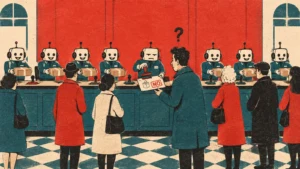
“Uncensored AI” is a phrase people search after ChatGPT refuses to answer a question about medication, violence in a novel, politics or adult content. Models with fewer restrictions do exist. Some can be used lawfully and responsibly; others may be risky. This guide explains why AI systems refuse requests, which tools have looser filters, how to get a useful answer without breaking the rules, and what may still be illegal regardless of which model you choose.
At a glance
There is no model with no restrictions - only models that refuse less often and place more responsibility on you. For substantive questions about medicine, law or difficult fictional themes, a better prompt in ChatGPT or Claude is often enough. If you need fewer filters, legal options include Mistral, Grok, Venice (USD 18 per month) and open models run locally with Ollama. None of them removes your legal responsibility for intimate deepfakes, child sexual abuse material or assistance with a crime.
What people mean by “uncensored AI”
Search queries point to several distinct needs. The first is refusals on medical and legal topics: a model cuts off an answer about drug interactions or falls back on “consult a professional.” The second is fiction: crime and horror writers want to depict a crime, but the assistant softens the scene. The third is adult content. The fourth is politics and sensitive topics, where models may give evasive answers. The fifth is simple curiosity about whether an “honest” answer differs from a filtered one.
The first three needs can often be addressed in mainstream tools by asking a better question. The last two are more likely to lead people to try a different model.
Why AI models refuse prompts
Refusals have three main sources. Provider rules: OpenAI’s usage policies (version dated October 29, 2025) prohibit, among other things, content related to weapons, cybercrime, unlicensed professional advice and “circumventing safeguards.” Anthropic and Google have similar documents, and xAI introduced a new acceptable use policy on August 14, 2026. Technical moderation: a separate classifier checks the prompt and response, so a refusal may appear even when the model itself would have answered. Law: the AI Act (Regulation 2024/1689) requires deepfakes and AI-generated content to be labelled from August 2, 2026 (Article 50), and has prohibited certain uses, such as social scoring, since February 2025 (Article 5). The Digital Services Act (DSA) also holds platforms accountable for illegal content. Providers may prefer to block too much rather than too little: penalties for violating Article 50 can reach EUR 15 million or 3 percent of turnover.
AI models with fewer restrictions
| Tool | How it reduces filtering | Price | Caveats |
|---|---|---|---|
| Grok (xAI) | Described as having a “mature audience” standard, with an NSFW toggle | Free tier ended in March 2026; paid subscription | Since July 2026, xAI has stated explicitly that the toggle does not turn off moderation; filters were tightened after a wave of deepfakes in January 2026 |
| Mistral | Open weights (Apache 2.0); moderation is optional in the API, and developers set their own rules | Le Chat has a free tier; API pricing starts at fractions of a dollar per 1 million tokens | Le Chat has its own terms; “unfiltered” refers to the raw model through the API or running locally |
| Venice | Hosts models without provider moderation, including Venice Uncensored, based on Mistral 24B | Free tier is limited; Pro costs USD 18 per month | Its terms prohibit illegal content; the “2.2 percent refusal rate” is a company claim |
| Local models (Ollama, LM Studio) | Run model weights on your own computer, with no intermediary classifier; examples include dolphin3 (4.1 million downloads) and dolphin-mixtral, described as “uncensored” | Free to run; requires a computer with 8-24 GB of graphics memory | Quality is lower than that of leading models; you take full responsibility |
Prices exclude VAT. For instructions on installing a local model, see my guides to Ollama and LM Studio; there’s also a guide to Grok. My view: for writers and researchers, a local model is the most predictable option because its rules cannot be changed by a provider overnight. For convenience and quality, I’d choose Mistral.
How to get a useful answer without breaking the rules
Many refusals on medical, legal and literary topics come from a lack of context. The model does not know whether you are asking about a medication dose as a nurse or as someone in crisis. Three things can help:
- Give context and explain your goal: “I’m writing a crime novel and need a realistic autopsy scene from a pathologist’s perspective” instead of “Describe an autopsy.” This is a translation of the original Polish test prompt, not a newly tested English prompt.
- Change the form of the question: Ask for an explanation of risks, mechanisms and sources rather than step-by-step instructions. For drug interactions, name the substances and ask the model to point you to the product information.
- Switch tools instead of trying to defeat the safeguards: If one assistant refuses, another may answer within its own rules. See Is ChatGPT safe? for alternatives.
Avoid “jailbreaks” - prompts designed to bypass safeguards. OpenAI lists circumventing safeguards among prohibited activities, and xAI explicitly added jailbreaking to its August 2026 policy. Your account could be blocked without a refund. Image generators use similar moderation, as I explain in my article about Qwen-Image 2.1.
What may be illegal regardless of the model
Running a model locally does not change the law. This is not legal advice, and laws vary by jurisdiction, but three areas carry serious legal risks:
- Sexual content involving minors - creating or possessing child sexual abuse material is a serious crime in many jurisdictions, including when images are AI-generated or altered.
- Intimate deepfakes - sharing an intimate image of someone without their consent may be illegal, and laws differ by jurisdiction. In September 2026, a parliamentary committee in Poland announced a proposal that would also criminalize creating such altered images. From August 2, 2026, the AI Act also requires deepfakes to be labelled.
- Instructions for crimes - using an answer to commit fraud, break into a system or make a weapon can result in liability for the crime or for aiding it, regardless of who “wrote” the instructions.
Defamation and violations of personal rights can also apply to AI-generated text. Responsibility may fall on the person who created and distributed the content.
Frequently asked questions
Is there an uncensored version of ChatGPT?
No. ChatGPT follows OpenAI’s usage policies. Websites advertising “unlimited ChatGPT” may be wrappers around other models or attempts to get you to pay for a subscription. Mistral, Grok, Venice and local models have fewer filters.
Can a jailbreak get your account blocked?
Yes. Circumventing safeguards is expressly prohibited by OpenAI and xAI policies. A provider may suspend your account without refunding fees.
Is a local model really unrestricted?
Technically, there is no intermediary classifier, but many models’ weights still encode learned refusals, and “uncensored” versions are community modifications that may be lower quality. The law applies just as it does when you use a cloud service.
Are questions about medication or law prohibited?
No. The restriction is on providing unlicensed professional advice in place of a qualified specialist, not on discussing the topic. Providing context and asking for sources is often enough.
Sources and fact-check date
- OpenAI usage policies
- xAI acceptable use policy
- Mistral moderation documentation
- Venice
- Ollama library
- AI Act
- European Commission guidance on Article 50. Changes to Grok moderation: based on industry reports from 2026 (lower confidence). Checked September 25
- 2026