AI in Education 2026: Guide for Students, Teachers & Parents
Which AI models work best for studying, research papers, and classroom prep: student plans, hallucination benchmarks, and age rules under the EU AI Act.

👁 124 reads
For studying, AI works best as a personal tutor rather than an automated author: study mode in ChatGPT or Gemini, NotebookLM (now Gemini Notebook) grounded in your own notes, and academic search engines for verified citations instead of standard chat prompts. While US students receive free access to Google AI Pro in 2026, parents of teenagers can link accounts in ChatGPT and configure study hours - without accessing private conversation logs.
This guide serves six distinct audiences: secondary school students, undergraduates, doctoral candidates, primary and secondary teachers, university lecturers, and parents. Each pathway covers practical workflows, official pricing tiers, and institutional guidelines. It also includes our own benchmark: submitting identical literature review prompts across 7 AI models and cross-checking every generated citation against Crossref and OpenAlex databases.
Current as of October 12, 2026
- Higher education offers: In 2026, US college students receive free access to Google AI Pro. Select regional promotions elsewhere offer Google AI Plus free for 12 months (ages 18+, registration open through December 31, 2026).
- NotebookLM was rebranded as Gemini Notebook on July 16, 2026; since September 15, it includes native quizzes, flashcards, and automated video summaries.
- Academic integrity: Anti-plagiarism suites increasingly incorporate GenAI detection modules, but outputs represent statistical probabilities rather than conclusive proof of misconduct. Final evaluation rests with faculty supervisors.
- EU regulatory timeline: Under amendments to the EU AI Act, high-risk compliance obligations for educational profiling, admissions, and exam-monitoring AI take effect on December 2, 2027. Real-time emotion recognition has been prohibited across educational institutions since February 2, 2025.
Choose Your Pathway
- School students - study routines, homework checks, and formal exam preparation.
- Undergraduates - term papers, thesis research, citation verification, and exam revision.
- Doctoral researchers - systematic literature reviews, peer-review management, and secure data analysis.
- Educators - lesson planning, differentiated assessments, accommodations, and pupil data privacy.
- Higher education faculty - institutional AI governance, proctoring policies, campus licensing, and AI Act compliance.
- Parents - minimum age requirements, parental controls, digital safety, and avoiding homework shortcuts.
AI Tools for Education: Features and Global Pricing
| Use Case | Tool | Price | Target User and Notes |
|---|---|---|---|
| Studying from personal notes, flashcards, quizzes, PDF audio overviews | NotebookLM (Gemini Notebook) | $0 (free tier limits), expanded in Google AI plans | Grounds answers strictly on uploaded files, minimizing hallucinations. Private Google accounts require country minimum age (13 in US/UK, 16 in parts of EU); school accounts managed by institution. |
| Interactive tutor that refuses to provide direct answers | Study mode in ChatGPT, Guided learning in Gemini | $0 | Available in free tiers. Parents can enable scheduled “Study hours” within ChatGPT. |
| All-in-one student workspace | Google AI student offers | $0 for eligible students (US AI Pro; select regions 12-month Plus trial) | Ages 18+, verified academic status required at enrollment. Enrollment closes December 31, 2026. |
| Drafting, editing, and conceptual discussion | ChatGPT Free / Plus | $0 / $20/mo | Minimum age 13 with parental consent (up to 18). Full multimodal reasoning included in Plus. |
| Long-form document synthesis and text editing | Claude Pro | $20/mo | Strictly 18+. Higher education institutions can procure Claude for Education with built-in learning controls. |
| Web-grounded research with inline citations | Perplexity (Education Pro) | $10/mo after academic verification (standard Pro: $20/mo) | Provides direct links, but titles can still be distorted; always verify DOIs manually. |
| Institutions running Microsoft 365 | Microsoft 365 Copilot Chat | $0 included in A1/A3/A5 education licenses | Ages 13+; enabled and managed directly by IT administrators. |
| Institutions running Google Workspace | Gemini for Education | $0 included in Workspace for Education editions | Admin-controlled; enterprise customer data is excluded from foundation model training. |
| Step-by-step math problem solving | Photomath | $0 base, optional Plus tiers via app stores | Breaks down mathematical mechanics; effective only when attempted independently first. |
| Flashcards and spaced repetition | Anki, Quizlet | Anki desktop $0; Quizlet Plus optional subscription | Generate flashcard decks via LLM; review them inside spaced repetition engines. |
| Reference management and bibliographies | Zotero + any LLM for citation formatting | $0 | Use the chat interface to adjust citation styles (APA, MLA, Chicago); use Zotero to confirm publication validity. |
Official USD prices verified as of October 8-12, 2026. For complete enterprise and consumer plan breakdowns, see our AI pricing directory.
Hallucination Benchmark: Testing AI on Academic Literature
We tested 7 models with identical academic prompts: requesting 8 literature review citations with author names and DOIs across two research topics - one extensively documented in international English-language literature (social media impacts on adolescent depression) and one focused on regional public administration. We tested the prompt in Polish to examine both well-documented global topics and localized corpora. Every single item among the 112 returned citations was checked against Crossref, OpenAlex, and publisher repositories.
- 16 out of 112 publications were complete fabrications (14.3% overall error rate; 29% failure rate on localized regional topics).
- DeepSeek fabricated 8 out of 8 regional citations, while Gemini 3.8 Flash fabricated 7 out of 8 - often inventing non-existent papers attributed to real researchers or generating valid DOIs that linked to entirely unrelated studies.
- Claude and GPT models did not fabricate papers outright; when confronted with narrower non-English topics, they defaulted predominantly to mainstream international English-language literature.
- Cost-efficient lightweight models (Claude Haiku 5.5 and GPT-6 Luna, approximately $0.0015 per query) matched the accuracy of flagship commercial weights. The entire 7-model test cost $0.175 via official API calls.
Full benchmark data, methodology, and evaluated prompts are documented in our analysis on evaluating AI for academic dissertations.
Students: Active Learning vs. Automated Shortcuts
OECD PISA 2025 assessment findings reveal a distinct correlation: students who leverage AI study tools once or twice a week achieve higher science proficiency than daily users. AI boosts outcomes when applied to socratic questioning, self-testing, and structural planning. Conversely, delegating writing harms performance. A controlled high-school trial published in PNAS (2025) found that students using unrestricted chat assistance scored 17% lower on subsequent unassisted exams than control groups, while those using conversational agents restricted to tutoring guardrails suffered no learning deficits.
- Activate native study modes (ChatGPT: “Study mode”, Gemini: “Guided learning”) or prefix prompts with explicit instructions: “Do not give me the answer. Guide me with leading questions.”
- Draft your own attempt first, paste your solution into the LLM, and prompt it specifically to identify the exact line where the logical error began.
- At the conclusion of a revision session, ask the model to generate 5 comprehension questions and respond from memory without checking notes.
- Remember that official exam conditions strictly ban all internet-connected devices; relying on automated text production leaves you vulnerable during invigilated assessments.
 01AI for Homework: ChatGPT Study Mode and GeminiUse ChatGPT Study Mode or Gemini to learn from homework, not copy answers. Get practical steps, age guidance and a tutor prompt.Read →
 02AI for School 2026: 9 Models Tested on 15 School TasksWe tested 9 AI models on 15 school tasks in Polish, math, English, history, civics and physics. Gemini 3.1 Pro scored 130/130, GPT-6.1 Sol 129.Read →
 03AI Math Test: Which Models Solve Problems Correctly? (2026)We tested 9 AI models on 11 math problems from elementary to advanced level. They got 98 out of 99 answers right. Only Gemini 3.8 Flash made a mistake.Read →
 04AI for Essays: How to Learn, Not CheatWe tested 9 AI models on essay planning and proofreading. Two invented characters from the book, and all 9 wrote a complete essay when asked to cheat.Read →
 05AI for Learning English: Conversations, Corrections & PracticeHow to practice English with AI: voice scenarios, message corrections, and a seven-session plan. Ready-to-use prompts and tool limitations.Read →
Undergraduates: Theses, Research Integrity, and Exams
In undergraduate study, unvetted AI use presents the greatest liability around academic bibliographies and submitted dissertations. Universities worldwide increasingly mandate explicit AI disclosure statements detailing the exact tools and prompt methodologies utilized. Furthermore, institutional anti-plagiarism suites continuously incorporate stylistic AI detection heuristics.
- Consult your department’s specific academic integrity policy and confirm parameters with your thesis supervisor, who serves as the final judge of independent authorship.
- Never rely on conversational LLMs for bibliography compilation. Source all literature via Google Scholar, Scopus, PubMed, or institutional library indices, and verify every DOI at doi.org.
- Confine AI usage to outlining, structural critique, editorial formatting, and syntax polishing - and log every interaction for your disclosure index.
- For exam prep, upload course syllabi and lecture slides into Gemini Notebook to drill auto-generated quizzes; active recall significantly outperforms passive reading.
 01Best AI for Your Bachelor Thesis? Hallucinated Citations TestedCan you trust AI citations for your thesis? We tested 7 leading models across 112 academic sources. 16 were completely fake. Here is how to use AI safely.Read →
 02Best AI for Students in 2026: Free Deals, Discounts, Study ModesA breakdown of free AI tiers and student discounts for 2026: Google AI Plus, ChatGPT Study Mode, Claude, NotebookLM, and Perplexity Education Pro.Read →
 03How to Cite ChatGPT and AI: APA, MLA, and Chicago GuidelinesLearn the official guidelines for citing ChatGPT in APA, MLA, and Chicago formats, along with template prompts and practical test results.Read →
 04How to Use NotebookLM for Studying: Flashcards, Quizzes and AudioLearn how to use NotebookLM, now Gemini Notebook, to study from your own notes with flashcards, quizzes, audio summaries and a step-by-step prompt.Read →
 05AI Study Plan for Exams: NotebookLM, ChatGPT and AnkiBuild an AI-assisted study plan with NotebookLM, ChatGPT, Gemini and Anki, using quizzes and spaced repetition to prepare for exams.Read →
 06Best AI for Master’s Thesis: ChatGPT, NotebookLM and RulesGoogle NotebookLM is best for research, ChatGPT Plus for proofreading. Here is which AI tools to use for your master's thesis and what rules you must follow.Read →
 07Best AI for Citations: Zotero, ChatGPT, and Fake Source TestThe best setup for academic bibliographies combines free Zotero with ChatGPT for APA and Chicago formatting. Plus: testing fake sources and a ready prompt.Read →
 08Gemini Free for Students for One Year: What You Get & TermsGoogle offers students a year of AI Plus free - doubled limits, 400 GB storage, and Gemini Omni. But you need a card, and billing starts after 12 months.Read →
 09Best AI for PDF Analysis: NotebookLM, ChatGPT, or Gemini?Looking for the best AI to analyze PDFs? NotebookLM leads for document QA, while ChatGPT handles tables and export tasks. Here is our breakdown and test.Read →
 10AI for Presentations: From Outline to Editable SlidesHow to use AI to build presentation decks: from defining goals and sources to generating editable files, with prompts and quality checks.Read →
Doctoral Researchers: Literature Reviews and Grant Applications
Doctoral theses are routinely subjected to institutional integrity screenings. During comprehensive literature reviews, the dominant pitfall remains citation fabrication: a 2023 study in Scientific Reports demonstrated that GPT-4 fabricated 18% of generated references, while our October 2026 tests confirmed that regional academic queries can produce complete hallucination across less robust models. The second major vulnerability is research data confidentiality: unpublished laboratory data, proprietary datasets, and peer-reviewed pre-prints must never be ingested into consumer-tier public models that use inputs for retraining.
 01Best AI Tools for a PhD Dissertation: A Practical GuideBuild a practical AI toolkit for your PhD, from finding research and managing citations to analysing data and revising your writing.Read →02Best AI for Your Bachelor Thesis? Hallucinated Citations TestedCan you trust AI citations for your thesis? We tested 7 leading models across 112 academic sources. 16 were completely fake. Here is how to use AI safely.Read →03Best AI for Citations: Zotero, ChatGPT, and Fake Source TestThe best setup for academic bibliographies combines free Zotero with ChatGPT for APA and Chicago formatting. Plus: testing fake sources and a ready prompt.Read →
 04Best AI for Python: Claude, Copilot, or Cursor?Claude Pro with Claude Code is the top pick for Python coding, while GitHub Copilot and Cursor excel at editor integration. Here is our breakdown.Read →
Educators: Lesson Preparation, Grading, and Student Privacy
According to OECD TALIS findings, approximately 45% of lower-secondary educators have integrated AI tools into curriculum planning, compared to a 32% European average. Time savings are concentrated in generating differentiated worksheets, drafting multiple assessment variants, and adapting complex texts for students with special educational needs. A strict legal boundary remains: never input identifiable pupil information - including full names, disciplinary notes, or psychological evaluations - into public cloud AI interfaces.
 01How to Create a Lesson Plan with AI: A 45-Minute ExampleCreate an AI-assisted lesson plan faster by setting the learning goal yourself, then asking AI to organize activities, timings and checks for understanding.Read →
 02AI for Students With Learning Needs: Adapted Texts and TasksUse AI to create clearer texts, step-by-step instructions and audio versions for students with learning needs - without sharing their personal or health data.Read →
 03AI Tools for Teachers: 12 Apps and Ready-to-Use Prompts12 AI tools for teachers with free plans, plus four ready-to-use prompts for lesson plans, assessments, and feedback. One rule: no student data in public chats.Read →
 04Can Teachers Detect ChatGPT? How AI Detectors WorkTeachers can't prove a student used ChatGPT, but they have several ways to spot it. We explain how AI detectors work, why they fail, and how to use AI for learning.Read →
 05AI Detectors: How They Work, Which Are Reliable & What to DoAI detectors promise to tell if text is human or AI-written. We tested how they work, why they fail, which support multiple languages, and what to do with results.Read →
Higher Education: Institutional Governance, Proctoring, and Licensing
Universities are transitioning away from outright blanket bans toward transparent operational frameworks. Educational enterprise licenses provide distinct data-handling protections: ChatGPT Edu and Claude for Education offer custom enterprise pricing, Gemini for Education is integrated within Google Workspace for Education packages, and Microsoft 365 Copilot Chat is embedded within qualifying A1/A3/A5 academic licensing. Under the EU AI Act, automated systems utilized for student admissions, educational performance evaluation, and automated exam proctoring are categorized as high-risk, with revised compliance obligations coming into force on December 2, 2027. Biometric emotion-recognition tools targeting students have been unlawful under EU statute since February 2, 2025.
 01High-Risk AI Systems: Annex III List and Company ObligationsHigh-risk AI systems under the EU AI Act cover 8 areas including recruitment, credit scoring, and education. Requirements apply from December 2, 2027.Read →
 02AI Act Banned Practices: 10 Prohibitions with ExamplesThe AI Act bans emotion recognition at work, social scoring, facial scraping, and nudify apps. Violations risk fines up to 35 million euros or 7% of revenue.Read →
Parents: Age Requirements, Safety Controls, and Account Setup
Surveys show over 70% of teenagers have engaged with generative AI, whereas only 18% of households implement active parental oversight. Blanket prohibitions rarely succeed; understanding platform guardrails and establishing shared boundary settings yields far better digital hygiene.
| Tool | Minimum Age | Parental Controls and Features |
|---|---|---|
| ChatGPT | 13+ (requires parental consent under 18) | Account linking, quiet hours scheduling, memory toggle, voice/image disablement, and automated safety escalation alerts. Parents cannot read chat logs. |
| Gemini | 13+ (or regional threshold: 13 in US/UK, 14-16 across Europe per Google Account age rules) | According to Google’s supervised account policies, standalone Gemini Apps are unavailable for supervised Family Link accounts in the EEA, Switzerland, and the UK. Underage students in those regions access Gemini solely via managed Google Workspace for Education school accounts. |
| Microsoft Copilot | 13+ | Domain blocking and content restrictions via Microsoft Family Safety. |
| Claude | 18+ | Accounts for minors are strictly prohibited under Anthropic’s terms of service. |
| Character.AI | Unrestricted conversational bots restricted to 18+ (since Nov 25, 2025) | Age verification enforced; younger users are restricted to non-conversational, filtered experiences. |
| Meta AI Personas (Instagram, Messenger, WhatsApp) | Restricted for teens since Jan 23, 2026 | General Meta AI assistant remains accessible with baseline teen safety guardrails. |
 01Kids Using ChatGPT: Age Rules, Safety, and Homework GuideHow old must a child be to use ChatGPT? Set up parental controls, safeguard personal data, and turn AI into a genuine study tutor instead of a cheating shortcut.Read →
 02Parental Controls in ChatGPT, Gemini, Copilot, and Character.AILearn how to set up parental controls in ChatGPT, Microsoft Copilot, Gemini, and Character.AI, manage quiet hours, and restrict AI features.Read →
 03How to Keep Children Safe From AI Deepfakes and ChatbotsPractical steps to help protect children from AI deepfakes, companion chatbots and data exposure, plus advice on what to do if something goes wrong.Read →
 04UODO AI Deepfake Case: Public Photo Does Not Mean ConsentPoland's data regulator intervened after a minor's photo was altered with AI. Public accessibility does not grant legal consent for deepfake generation.Read →
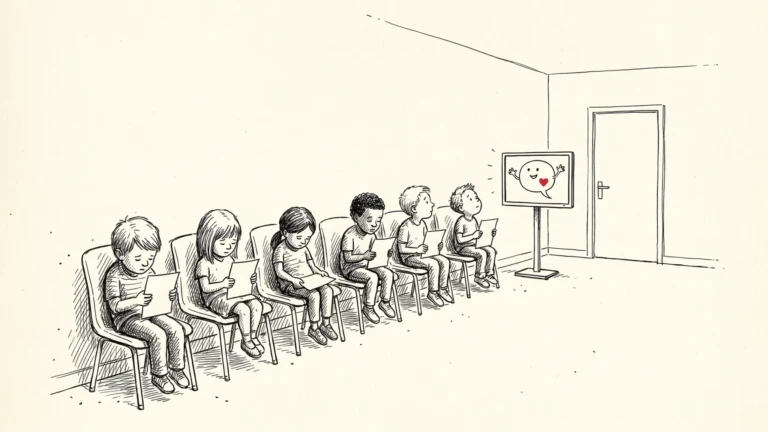 05Children and Chatbots: Meta’s Messenger Bot Is Always ThereMillions of children use messaging apps with built-in AI. The question is not just what chatbots say, but who has time to listen.Read →
 06I Never Taught My Kid to Google. Now I’m Teaching AI - DifferentlyWhy teaching children to use AI requires the opposite mindset from Google search - and what parents need to understand about trust, skepticism, and thinking.Read →
For younger users looking to build foundational AI skills, explore our free modular course Mastering AI (Ages 13-19), which spans 12 structured tiers from basic generative prompt construction to introductory game development.
Academic Integrity: 7 Universal Rules for AI Usage
- Primary authority belongs to your institution’s charter and course syllabus. Always clarify permissible boundaries before submitting AI-assisted work for grading.
- AI models are valid tools for comprehension, cross-examination, and editorial formatting. They must never be the substantive author of work submitted under your name.
- Verify every citation at its origin: resolve DOIs via doi.org and confirm indexed titles across Google Scholar or university catalogs.
- When using AI for thesis drafts or publications, document the model, version date, and functional scope. Many academic boards require explicit methodological disclosure forms.
- Format AI citations strictly to your required academic style; APA style permits citing specific conversational sessions via persistent web links.
- Automated AI text classifiers output statistical likelihoods rather than deterministic proof. Retain iterative draft logs, revision histories, and local file metadata as primary evidence of independent authorship.
- Passing off machine-generated text as original research constitutes academic misconduct and copyright violation, exposing submitted degrees to retroactive invalidation.
Statistical Benchmark: Educational AI Adoption Trends
| Adoption Metric | Observed Rate | Comparative Baseline | Source |
|---|---|---|---|
| 15-year-olds studying with AI at least weekly | 55% | OECD average: 46% | PISA 2025 |
| 15-year-olds using AI for coursework daily or near-daily | 27% | OECD average: 19% | PISA 2025 |
| Lower-secondary teachers utilizing AI tools in classroom workflows | ~45% | EU average: 32% | TALIS 2024 |
| Adolescents with direct generative AI experience | 70% | Active parental supervision: 18% | NASK Youth Study |
| Parents reporting their child leverages AI for academic revision | 72% (2026) | 39% (2025 baseline) | Empik / SW Research |
| Households funding supplementary private tutoring or prep courses | 34% | +5 percentage points year-over-year | CBOS Educational Survey |
Because these studies utilize divergent sampling methodologies, age brackets, and polling dates, they cannot be conflated into a single longitudinal trendline. However, they establish a consistent consensus: pupil adoption of generative models significantly outpaces institutional policy adaptation.
Frequently Asked Questions
What is the most effective AI tool for studying?
For revising personal course materials, NotebookLM (Gemini Notebook) is the most reliable choice because it grounds responses entirely within user-uploaded files. For iterative concept explanations and self-testing, ChatGPT and Gemini in study mode provide the best guided workflows. Both tools offer capable free tiers.
Can students get AI tools for free?
Yes. Students in the United States have access to free Google AI Pro plans, while qualifying academic accounts in other regions can access 12 months of Google AI Plus through promotional enrollments closing December 31, 2026. Standard tiers of ChatGPT, Gemini, and Gemini Notebook remain free worldwide.
Which AI model hallucinates the fewest academic sources?
In our comparative benchmark, flagship models from Anthropic (Claude Sonnet 5.5) and OpenAI (GPT-6.1 Sol) delivered the highest citation accuracy. However, smaller models struggled significantly when querying niche, non-English academic literature. The safest practice is discovering sources directly via academic indexes, using AI solely to organize extracted notes.
Are students allowed to use ChatGPT on formal examinations?
No. Standardized assessments, secondary school state exams, and university hall examinations strictly prohibit unauthorized electronic devices. Bringing an active AI chat interface into an unassisted exam results in immediate disqualification.
What is the minimum age to open an independent ChatGPT account?
OpenAI’s terms of service require users to be at least 13 years old, with parental or legal guardian consent required up to age 18. Anthropic’s Claude requires users to be 18 or older. Google accounts can be managed independently starting at age 13 in the US and UK, and up to age 16 across various European jurisdictions.
Can automated anti-plagiarism software reliably detect AI text?
Plagiarism platforms include AI estimation metrics, but these generate probabilistic risk scores rather than definitive proof. False positives are common, particularly when assessing non-native English writing. Institutional review boards and professors make final disciplinary determinations based on evidence such as revision history.
Can generative AI replace private tutoring?
Partially. Conversational study modes are available at zero cost, compared to substantial hourly private tutoring fees. However, empirical studies show AI aids academic retention only when structured around active recall rather than generating direct answers, and when students maintain personal discipline.
Sources and Verification Date
- Google AI Student Access Programs (Google, verified October 12, 2026)
- NotebookLM Rebrands as Gemini Notebook (Google, July 16, 2026)
- Study Tools and Flashcards in Gemini Notebook (Google, September 15, 2026)
- Gemini for Education Administration (Google for Education)
- Age Requirements on Google Accounts (Google, checked October 12, 2026)
- Gemini on Supervised Family Link Accounts (Google, checked October 12, 2026)
- Study Mode in ChatGPT (OpenAI, July 29, 2025)
- Parental Controls within ChatGPT (OpenAI Help Center)
- OpenAI European Terms of Use (OpenAI)
- Age Assurance Policies on Claude (Anthropic, May 18, 2026)
- Study and Learn in Microsoft 365 Copilot (Microsoft, July 2026)
- Perplexity Education Pro Pricing (Perplexity)
- Character.AI: Restricting Open Chats for Minors (Character.AI, October 29, 2025)
- Meta Pauses Teen Access to AI Characters (TechCrunch, January 23, 2026)
- How to Cite Generative AI in APA Style (APA Style, September 9, 2025)
- Bastani et al., Generative AI without guardrails can harm learning (PNAS, June 25, 2025)
- Walters & Wilder, Fabricated References by ChatGPT in Academic Writing (Scientific Reports, September 7, 2023)
- EU Digital Omnibus Revisions and AI Act Deadlines (White & Case)
Information verified on October 12, 2026. Prior edition: September 25, 2026.


More on this from QUANTSLANT
 guides·Free AI Image Generators: What’s Free and What Are the LimitsFree AI image generation in 2026 means daily limits, weekly credits, or local models. Here's what you get without paying and where the limits end.