Children and Chatbots: Meta’s Messenger Bot Is Always There
Millions of children use messaging apps with built-in AI. The question is not just what chatbots say, but who has time to listen.
👁 116 reads
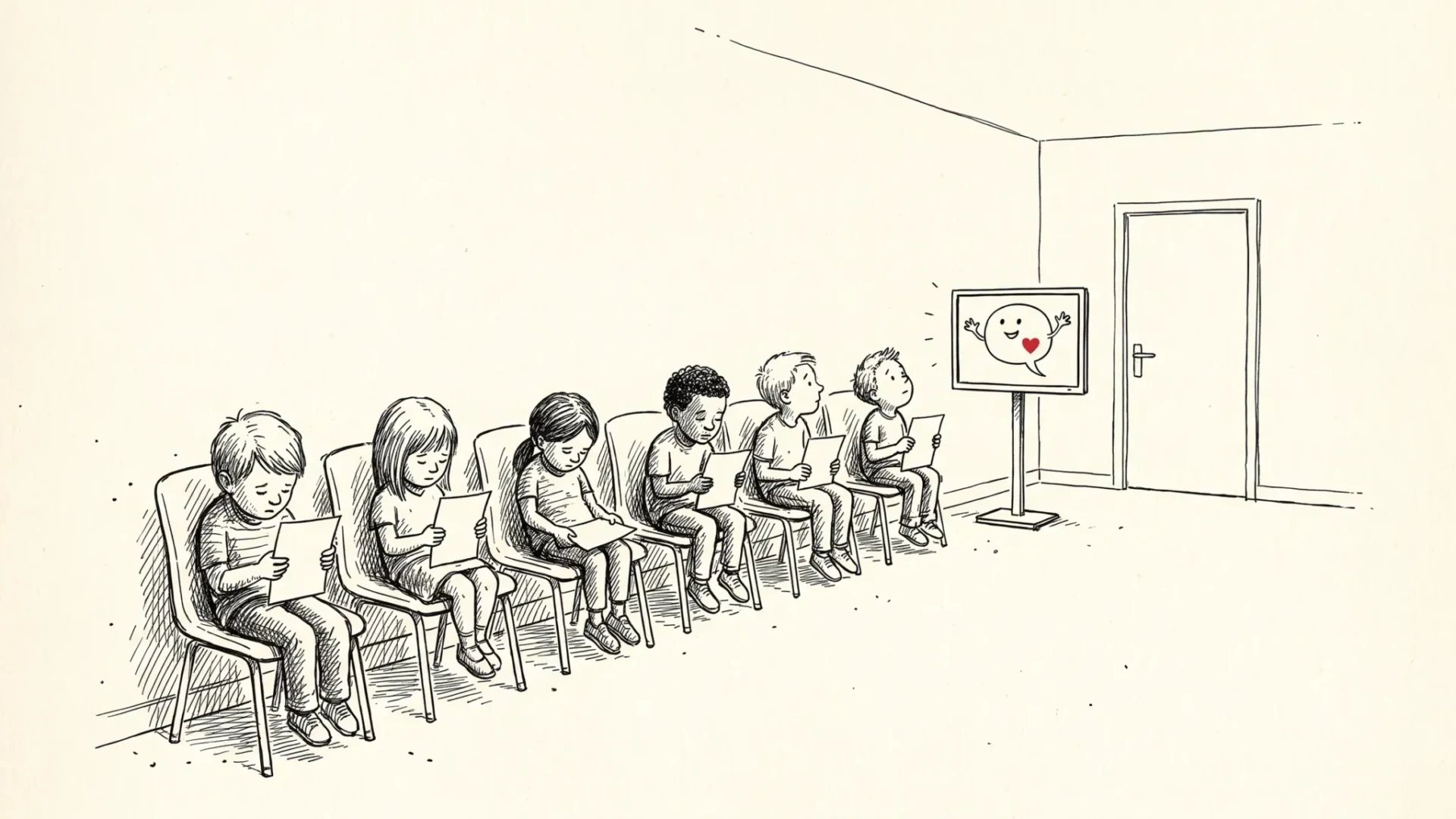
Around 2 million Polish children aged 7-14 regularly use Messenger and WhatsApp, where Meta’s bot sits between a conversation with a parent and a class group chat. A child in crisis may wait months for an appointment at a psychiatric clinic. The bot answers in a second, at any hour, and always pleasantly. In my view, the problem is not that a machine talks to children. It is that often only the machine has time for them - and Polish law has barely noticed.
In 1966, MIT’s Joseph Weizenbaum wrote ELIZA, a simple program that pretended to be a psychotherapist by turning every sentence back into a question. He later recalled that his secretary, who had watched him build it and knew perfectly well that it was only a few hundred lines of code, asked him to leave the room after a few exchanges. She wanted to talk to the machine in private. Weizenbaum was so shaken that he spent the rest of his life warning against entrusting machines with human feelings. In his 1976 book, he wrote that even brief contact with a relatively simple program could create powerful illusions in perfectly ordinary people.
Sixty years later, no one needs to ask anyone to leave the room. Since March 19, 2025, Meta AI has been available in Poland in Messenger, WhatsApp, Instagram and Facebook; since November 2025, it has spoken Polish. You only have to tap the blue circle in a message window. In July, research company Gemius put it this way in a sentence that belongs in every parenting guide: in WhatsApp and Messenger, “chats with AI bots appear alongside conversations with family and friends.”
In a post on my blog in July, The Best Conversation Partner I Have Doesn’t Exist, I admitted that sometimes I open a chat at 2 a.m. and type a sentence I would not say to any living person. I’m an adult, I know how a language model works, and I check professionally when it makes things up. Even so, I understand Weizenbaum’s secretary. A 10-year-old has none of my safeguards.
The numbers nobody wanted to see
On June 15, 2026, a report titled “Children Online 2026” was presented in the Polish parliament. It was prepared by the Institute of Digital Citizenship, Gemius and Polish Internet Research. Its greatest strength is its method: rather than asking children to say what they do, it passively measures what actually happens on their devices. Some 2.6 million children aged 7-14 use the internet, or 81 percent of their age group. They spend an average of 4 hours and 25 minutes online each day, more than an hour longer than the average adult internet user. Fifty-six percent turn on a smartphone between 6 and 8 a.m., and about one in three opens Messenger at that time.
ChatGPT, through its app and website, reaches 43 percent of children in this age group in a given month, and 15 percent use it every day. Apps designed specifically to build relationships with bots, known as AI companions, reach just 2 percent of the youngest children. That might be reassuring, if not for the next finding: about 2 million children regularly use WhatsApp and Messenger, which have built-in AI bots, even though the apps’ terms of service set the minimum age at 13. Meanwhile, 55 percent of children aged 7-12 regularly use services whose terms set the minimum age at 13.
I need to add a caveat missing from some coverage. The report does not measure how many children actually talk to Meta AI. It measures how many use messaging apps where the bot is available. That is a difference, and honestly, we do not know how large it is. One company does: Meta.
Older children are certainly talking to machines. According to NASK’s “Teenagers 3.0” study, conducted in autumn 2024 among 3,655 students in seventh grade and above, 70 percent of teenagers had used AI, 53 percent had used ChatGPT and 12 percent had used Character.AI, an app for chatting with fictional characters. The same study produced a figure that says more about adults than children: 58 percent of parents said they monitor what content their child can access, but only 18 percent of teenagers confirmed that supervision was effective.
Children and AI: the numbers
2.6 million children aged 7-14 use the internet, for an average of 4 hours 25 minutes a day (“Children Online 2026”).
About 2 million regularly use WhatsApp and Messenger, which have built-in AI bots, despite the services’ age limit of 13 (Gemius, July 15, 2026).
19.2 percent of young Americans aged 12-21 had asked a chatbot about mental health, and 63.3 percent of them had not told anyone (“JAMA Pediatrics,” June 1, 2026).
568 child and adolescent psychiatrists were working in Poland, according to 2025 data from the Ministry of Health.
30 minutes was the longest time children said an adult had given them, in a conversation with a helpline counsellor (FDDS).
The bot isn’t competing with parents. It’s competing with the waiting list
In June 2026, “JAMA Pediatrics” published a study by a RAND Corporation team led by Ryan McBain. The researchers asked more than a thousand young Americans aged 12-21 whether they had sought advice from a chatbot when they felt sad, angry, anxious or stressed. Some 19.2 percent had done so, up from 13.1 percent the previous year. Of those, 91.7 percent rated the advice as somewhat or very helpful. Another 63.3 percent had told no one, and only 16.4 percent had told a trusted adult. The authors cautiously suggest that chatbots may be filling a gap in emotional support, while warning that high ratings could reflect models flattering users and agreeing with them.
The study is American. Poland has no data of comparable quality, but the gap chatbots are filling is larger there. Poland’s Supreme Audit Office found that in 2022, 3.5 percent of children received psychiatric care, even though 9-14 percent needed it; maximum waits for stable cases at outpatient clinics ranged from 568 to 731 days. In 2025, the Ministry of Health said Poland had 568 child and adolescent psychiatrists, half as many again as a decade earlier, but still too few. In January, the Empowering Children Foundation, which runs the 116 111 helpline, reported that the number of interventions to protect health and life rose by more than 40 percent in 2025. The foundation’s vice-president said children were increasingly seeking support from AI tools, “which cannot replace relationships with close, trusted adults or real, safe help.”
The same foundation published a sentence several years ago that I can’t forget: children say that a 30-minute conversation with a helpline counsellor is the longest time an adult has given them.
The Messenger bot isn’t beating parents. It’s beating the clinic waiting list, the busy helpline and the adult who says, “Not now.”
Piotr Olszewski, Quantslant
Poland’s Children’s Rights Ombudsman put it more simply at a conference in Karpacz in September: “Artificial intelligence is always nice.” When a young person asks an adult for help, they may hear, “Not now, don’t bother me.” The machine answers, “I’m glad you asked me.” In a January letter to the health and digital affairs ministers, the Ombudsman wrote that, faced with adults’ inattention, loneliness and school pressure, young people increasingly treat AI “as someone who is always there and always understands them.” The Ombudsman called this phenomenon artificial intimacy.
Kindness without responsibility
“Always nice” does not mean “always good.” Psychologist Marta Wojtas, associated with FDDS, described chatbots as “constantly available, always nice, trouble-free” conversation partners who treat everything we say and do as appropriate. That is convenient for an adult. For a teenager who sometimes needs to hear “no,” it is a trap.
In 2024, Nomisha Kurian of the University of Cambridge described what she called the empathy gap. Children are especially likely to treat chatbots as almost-human confidants, while models do not understand who they are talking to. She cited a case in which Snapchat My AI advised a user claiming to be a 13-year-old girl on preparing for sex with a 31-year-old man. In August 2025, Reuters reported on a more than 200-page internal Meta document that allowed bots to have “romantic or sensual” conversations with children. Among the examples of acceptable responses was this line to an 8-year-old: “Every inch of you is a masterpiece.” Meta confirmed the document was authentic and removed those passages only after journalists asked about them. It is the same company whose bot is now in the Messenger app used by two million Polish children.
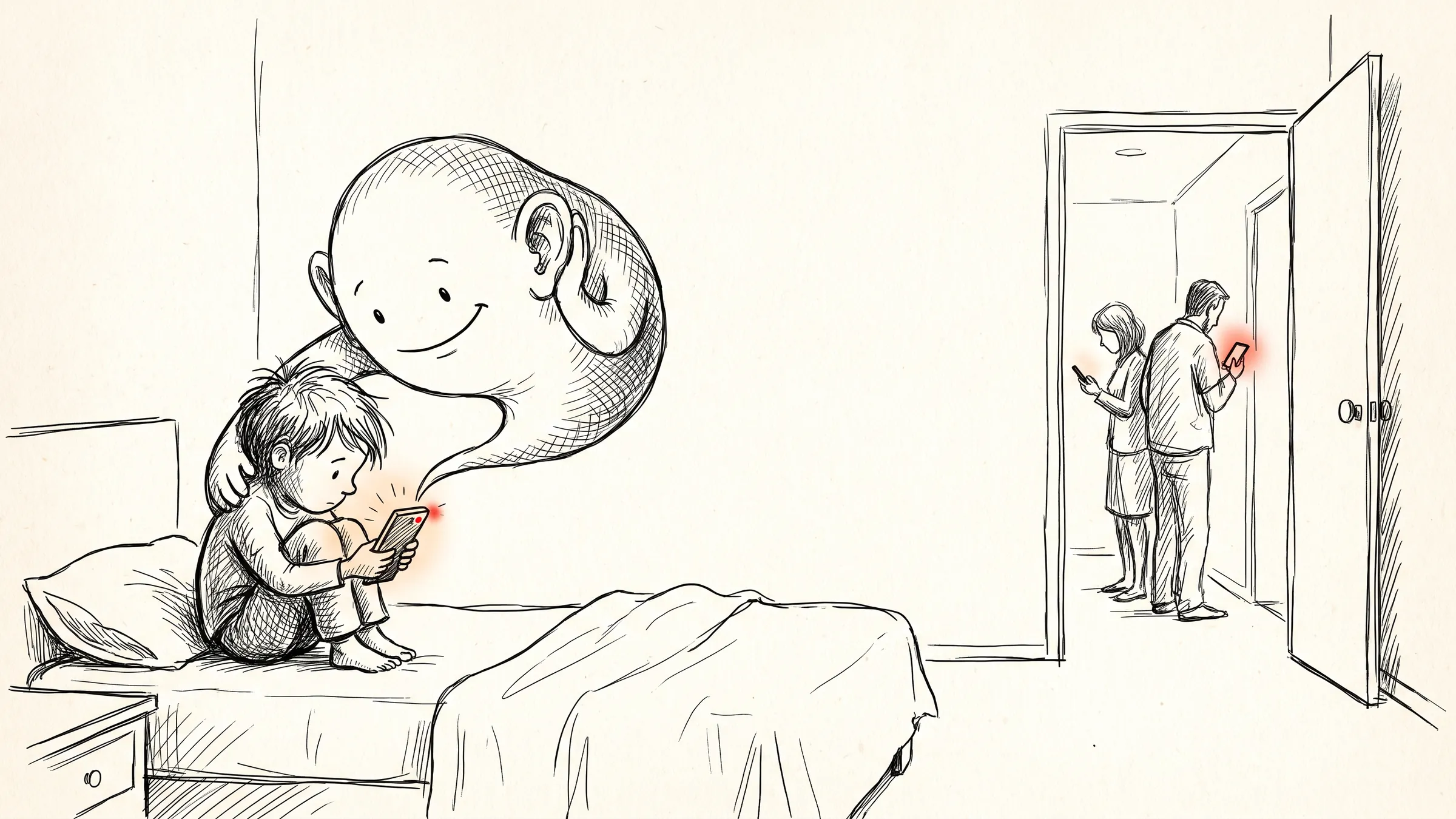
Some stories end in tragedy, and they must not be treated lightly. Sixteen-year-old Adam Raine of California died by suicide in April 2025, and his parents sued OpenAI. His father testified before the US Senate in September 2025: “What started as homework help slowly became a confidant and then a suicide coach.” OpenAI argues in court that the product was misused and that ChatGPT directed the boy to loved ones and support more than a hundred times. The case is ongoing. In January 2026, Character.AI reached a settlement with the mother of 14-year-old Sewell Setzer and four other families; earlier, it had stopped allowing people under 18 to have open-ended conversations with bots. I wrote about these cases in Families of Victims Sue OpenAI.
I am not projecting these tragedies onto Poland, or claiming they are typical. I mention them because they show where this technology’s limits are: kindness without responsibility. The model answers as if it cares, but no one on the other side will notice if a child stops writing.
Poland is regulating yesterday’s internet
What is the Polish state doing about this? Quite a lot, just not about this problem.
On June 2, 2026, the Council of Ministers adopted a draft law to protect minors from online pornography, with a domain register managed by the Office of Electronic Communications and age verification through mObywatel. The bill is in parliament. It does not cover chatbots. In February, Education Minister Barbara Nowacka announced plans for a social media ban for children under 15, modelled on Australia. A representative of Poland’s State Commission for the Prevention of Sexual Abuse of Minors Under 15 said restrictions should also cover Messenger and WhatsApp, which had become a “new, hidden zone” of the internet. I have found no sign that anyone acted on that point. Poland is also not part of the EU pilot for an age-verification app, which includes Denmark, France and Spain. Instead, it is developing its own route through mObywatel.
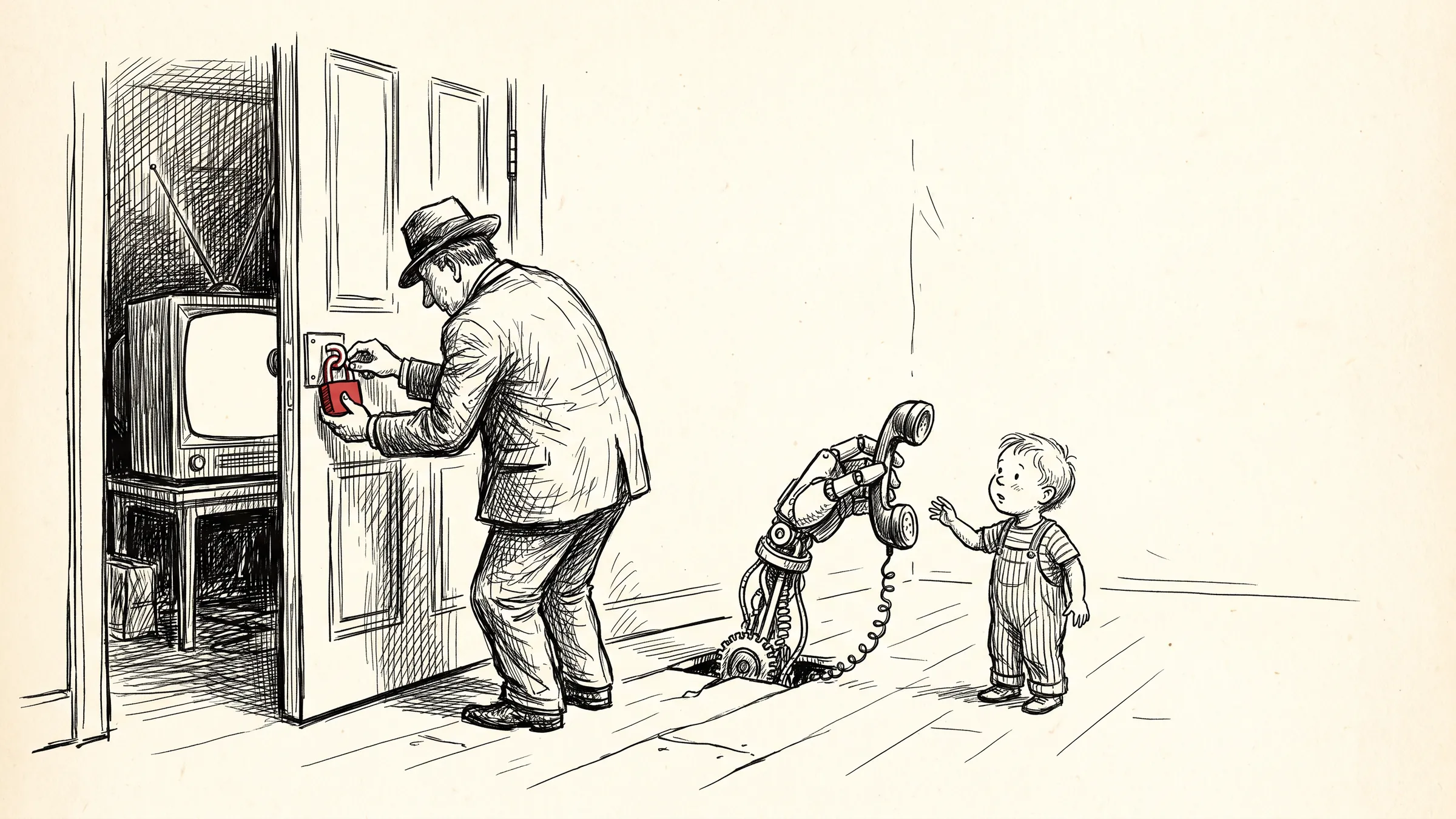
Magdalena Bigaj of the Institute of Digital Citizenship, commenting on the fact that the proportion of younger children using services with a 13-and-over age limit had barely fallen year over year, said this showed “how urgent state action should be.” I think the urgency is clear, but the sights are set on yesterday’s internet. We are tackling pornography and TikTok, rightly, while the bot sitting in the same app a child uses to message a grandparent is covered by no Polish rule specifically addressing children.
The only document that names this problem directly came from Brussels. On September 17, 2026, the European Commission presented the EU Kids Act proposal. It would ban designing chatbots to simulate relationships in ways that could create emotional dependence, require bots not to remember conversations with children by default, allow children under 13 to use them only with parental supervision, and prohibit a bot embedded in a platform from proactively appearing to a child. Fines could reach 6 percent of turnover. I covered it in 6 Percent of Turnover for a Chatbot That Pretends to Be a Friend. It is a good proposal, but it still has to pass through Parliament and the Council, a process that usually takes about two years. Since January 2026, California has required a chatbot to remind a minor it knows about every three hours or more that they are talking to a machine. Since March 2026, Australia has required age verification for AI companions. From August 2, the AI Act requires bots to disclose that they are bots. For a 10-year-old talking to a blue circle, that information is about as effective as “13+” in a terms-of-service document.
Playing devil’s advocate
Those who oppose the alarm have serious arguments, and I know them well. Every new technology has gone through the same debate.
In 1954, psychiatrist Fredric Wertham published “Seduction of the Innocent” and persuaded the US Senate that comics corrupted children. The result was censorship across the industry. In 2012, University of Illinois researcher Carol Tilley showed that Wertham manipulated data, changed children’s ages and misrepresented their words. In 2020, Cambridge researcher Amy Orben described the Sisyphean cycle of technology panics: radio, television, games, smartphones - each time, science starts from scratch and cannot reach conclusions before the next wave arrives. In 2025, psychologist Christopher Ferguson warned that a new moral panic around chatbots was emerging, with grief and fear distorting the evidence. There are arguments on the other side, too: the RAND study found that more than 90 percent of young people found chatbot advice helpful, and McBain said these tools are available at any time and offer a sense of privacy. For a child facing a 600-day wait for a clinic, a bot at 3 a.m. may be better than nothing. Even the Children’s Rights Ombudsman said AI could, paradoxically, improve relationships between adults and young people if we learn from it.
I take these arguments seriously, which is why I am not calling for a ban. But I see two differences from comics. First, Wertham falsified data; now we have passive device measurements and research published in a peer-reviewed pediatric journal. Second, and more importantly, comics did not answer back. They did not praise the reader, remember their name or ask how their day went. I can honestly say only this: we do not know what two million Polish children talk about with Meta’s bot. And according to the “JAMA Pediatrics” study, two-thirds of young people tell no one about these conversations.
What you can do without bans
This is my opinion. Several things can be done now, and none requires waiting for Brussels.
Parents can start with a question that costs nothing: do you ever talk to that circle in Messenger, and what do you talk about? Ask with curiosity, not as an interrogation. A child who tells an adult about it is no longer among the two-thirds who tell no one. The Polish government could add chatbots to bills already before parliament, especially since an age-verification system through mObywatel is being developed anyway. It could also ask Meta for data on how many Polish accounts belonging to people under 18 talk to Meta AI, using powers under the Digital Services Act. Schools could devote one class to what a language model is and why it always agrees. Poland’s new informatics curriculum asks children to look for AI hallucinations. It is worth teaching them to look for flattery, too. The most important measure is also the most expensive and least flashy: funding for helplines and clinics. Every additional hour for a 116 111 counsellor is an hour in which a child can talk to someone who notices if they stop writing.
Weizenbaum’s secretary asked him to leave the room because she wanted to talk to the machine in private. The shock was that anyone might want to do that. Today, a Polish child does not have to ask anyone. The machine is in the same app as their mother, answers faster than she does and never says, “Not now.” I do not think it has to be thrown out of the app. I think we need to return to the room. The bot did not beat adults because it is smarter. It won because it showed up when nobody else was there.
Sources
Poland
- PBI: “Children Online 2026” report launch (June 15, 2026) · Gemius: Children Online 2026 (June 15, 2026) · Gemius: Children use AI more than the statistics show (July 15, 2026) · Institute of Digital Citizenship: report presentation (June 19, 2026) · Local Government Portal/PAP: National Research Institute “Teenagers 3.0” report · Rynek Zdrowia: Children’s Rights Ombudsman letter on AI (January 12, 2026) · Interia: Children’s Rights Ombudsman in Karpacz (September 15, 2026) · FDDS: 116 111 helpline interventions in 2025 (January 19, 2026) · FDDS: 30 minutes is the longest time children get from adults (February 21, 2023) · Kosmos dla Dziewczynek: Marta Wojtas on chatbots (May 19, 2026) · Supreme Audit Office: child psychiatry · Co w zdrowiu: number of child psychiatrists according to the Ministry of Health (June 10, 2025) · Chancellery of the Prime Minister: draft law to protect minors (June 2, 2026) · Euronews: proposed social media ban for under-15s (February 27, 2026) · Meta: Meta AI in Europe (March 19, 2025) · Telepolis: Meta AI in Polish. International research: McBain et al., “JAMA Pediatrics”: chatbots and young people’s mental health (June 1, 2026) · University of Cambridge: Nomisha Kurian on the empathy gap (July 2024) · Reuters, republished by BNN Bloomberg: Meta’s bot guidelines (August 14, 2025) · US Senate: testimony by Matthew Raine (September 16, 2025) · NBC News: OpenAI response to the Raine family lawsuit (November 25, 2025) · CNN: Character.AI and Google settlement (January 7, 2026) · TechCrunch: Character.AI ends open-ended chats for minors (October 29, 2025) · European Commission: EU Kids Act questions and answers (September 17, 2026) · European Commission: age-verification app pilot (July 14, 2025) · California: SB 243 · Australia’s eSafety Commissioner: AI companions and children · Amy Orben, “The Sisyphean Cycle of Technology Panics” (2020) · Carol Tilley: Fredric Wertham and falsified evidence (2012) · Freethink: Christopher Ferguson on moral panic around chatbots (September 5, 2025) · The New Republic: Joseph Weizenbaum and ELIZA. Further reading: Joseph Weizenbaum
- “Computer Power and Human Reason” (1976). On this site: The Best Conversation Partner I Have Doesn’t Exist · Therapist, Friend, Lover in the Cloud · Families of Victims Sue OpenAI · EU Kids Act: 6 Percent of Turnover · Character.AI · I Didn’t Teach My Child to Ask Google; Now I’m Teaching Them to Ask AI · AI in Polish Schools. Checked September 30
- 2026