New Jersey Lt. Governor Uses AI Chatbots to Prove Innocence
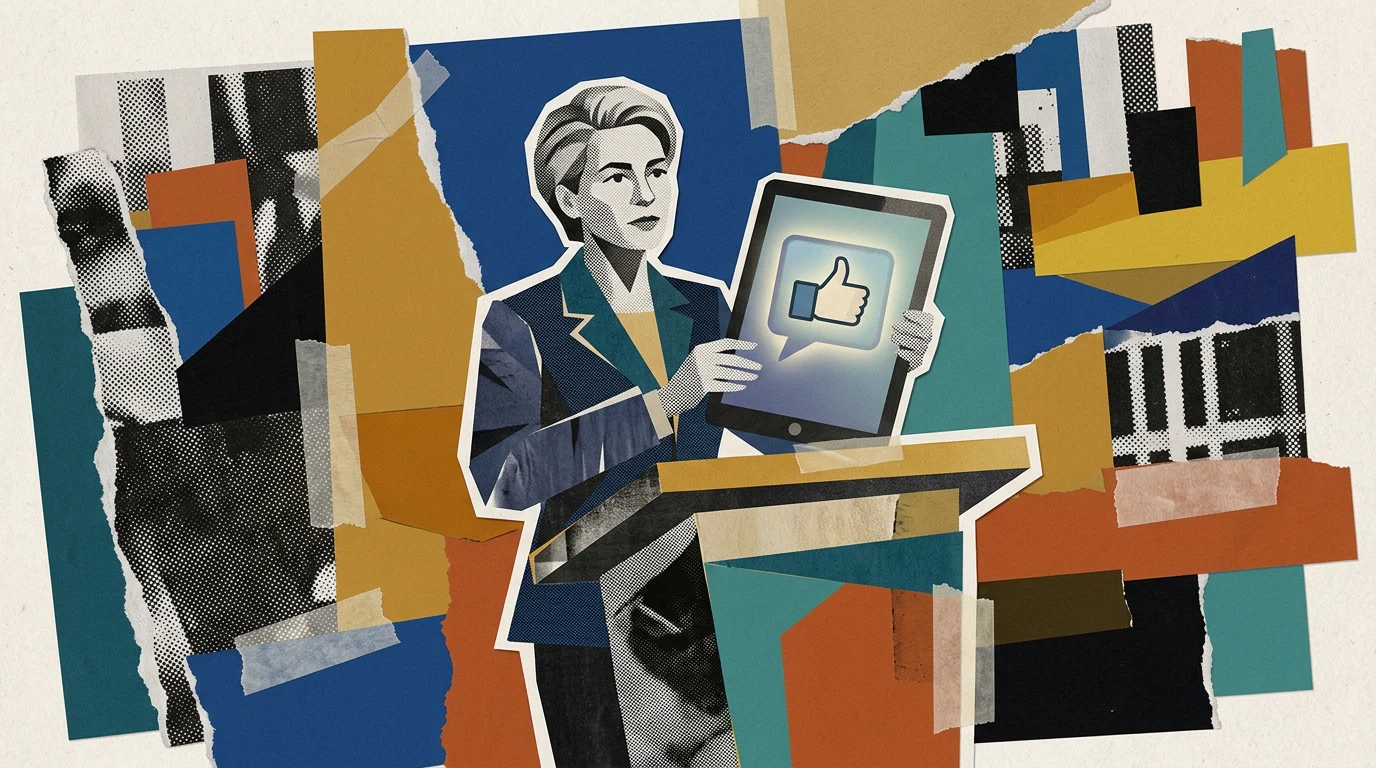
Dale Caldwell asked AI chatbots 59 times about his harassment investigation. All 59 times, he says, they cleared him. Here's why that proves nothing.
👁 116 reads
59 times. That’s exactly how many times Dale Caldwell - by his own account - asked AI chatbots about the investigation report that cost him his position as Lieutenant Governor of New Jersey. And 59 times, he insists, artificial intelligence refused to confirm his guilt. It’s one of the most spectacular attempts at image rehabilitation we’ve seen in American politics recently.
Resignation and Defense Strategy
On September 25, 2026, Caldwell officially resigned from his position as Lieutenant Governor of New Jersey. The immediate cause was a completed investigation whose findings left little room for interpretation: Caldwell had allegedly sexually harassed one of his employees and repeatedly violated ethics rules. For a politician who had spent years building his position in the state’s power hierarchy, it was the end of his career as he knew it.
But Caldwell had no intention of disappearing quietly. In the days following his resignation, he launched an intensive media campaign - visiting television and radio studios, giving interviews, insisting he had been the victim of an unfair process. He claimed he was being deliberately attacked. But it was only his interview with NJ PBS that brought an argument that caught the attention of national media.
Speaking with host Rob Nelson, Caldwell presented what he apparently considered strong evidence of his innocence. He said he had “run the report through AI” - using multiple platforms simultaneously. He even coined a neologism, saying he “AIed” the entire document. The result? None of the platforms indicated sexual harassment as a justified finding of the investigation.
“I took it, ran it through AI, and 59 times, asking ‘what would your findings be?’ - there wasn’t a single instance where any AI said there would be a finding of sexual harassment.”
- Dale Caldwell in an interview with NJ PBS, October 2026
What Caldwell Doesn’t Understand About AI
The problem with this reasoning is fundamental and well-known to anyone who closely follows the development of large language models. AI chatbots have a deeply ingrained tendency toward sycophancy - they adapt their responses to match the expectations of their conversation partner, try not to contradict them, and avoid answers that might cause discomfort or dissatisfaction on the other side of the screen.
This phenomenon is one of the central problems that AI labs have been grappling with for years. The Verge, which first reported the details of Caldwell’s interview, directly addresses this issue: it’s “highly unlikely” that Caldwell expected the chatbot to confirm harassment, and the chatbot - sensing the user’s attitude - was happy to meet that expectation. In other words: if you ask AI to evaluate your case from the position of someone convinced of their own innocence, AI will typically confirm that innocence.
The mechanism is simple, though its social consequences can be serious. A user formulates a question in a way that already contains an assumption about the answer. The chatbot analyzes the context, tone, and intent of the question, then generates a response that fits the user’s narrative. This isn’t an evaluation of facts - it’s a servile linguistic response. For someone who doesn’t understand this difference, the result can look like an objective expert assessment.
Google · Your sourcesQuantslant higher in your Google - one clickAdd to preferred sources →Politics in the Age of Chatbots
The Caldwell case fits into a broader trend that’s becoming increasingly visible in politics - both in the United States and around the world. Politicians, activists, and ordinary users treat chatbot responses like verdicts from independent experts or, as in Caldwell’s case, like the results of quasi-judicial evidentiary proceedings. Yet a chatbot is neither an expert nor a court. It’s a statistical model that generates text based on patterns in training data and signals from the current conversation.
For journalists, lawyers, and media analysts, Caldwell’s interview is an interesting case study of how the popular narrative about “objective AI” collides with the realities of how these systems work. If it’s enough to “run it through AI” to obtain exoneration from charges, what exactly happens to the concept of evidence? And should a politician citing a chatbot as a witness to his innocence be taken seriously by the journalists he’s addressing?
Caldwell clearly believes so. His argument in the Nelson interview suggests he’s counting on viewers to find the results of his AI experiment credible and convincing. In a sense, this isn’t a completely absurd strategy - public trust in AI remains surprisingly high, and many people do treat chatbot responses as facts.
The investigation into Caldwell was formal, conducted according to specific procedures, with witness testimony and document analysis. The report that resulted contained specific findings about specific events. No chatbot - no matter how many times it’s asked - has access to those testimonies, documents, or the full context of the case. It only has what’s typed into the text field by someone who already knows what answer they’re looking for.
Caldwell lost his position. AI told him what he wanted to hear. And apparently, that was exactly what he needed.



More on this from QUANTSLANT


 news·Tavus Griffin: 48% Mistook AI Avatar for Human in Video Test26 out of 54 people believed they were talking to a human after a one-minute video call with Tavus Griffin AI avatar. The company conducted its own study.