Running a One-Person Newsroom with AI: What Works and What Fails
Running a lean news operation with AI reshapes the workflow completely. Here is an honest look at the division of labor, hidden risks, and real editorial costs.

👁 113 reads
It is 6:30 AM, and seven fully researched topics are already waiting for the day. That is not because we were up at dawn, but because overnight, while we slept, an automated pipeline scanned hundreds of sources, filtered out duplicates, clustered recurring threads, and delivered a curated shortlist of stories worth covering. It is not magic. It is simply a fundamental shift in tasks that once required a half-dozen people, now handled on a single desk. Just us and a machine that is becoming increasingly difficult to describe merely as a tool.
We want to break down this setup piece by piece, stripped of conference hype and doomsday panic. Running a publication with a lean footprint is not simply a story of AI eliminating jobs. It is an exploration of how responsibilities can be redistributed across the workflow - and who actually gains from that shift.

What AI Cannot Take Over in Editorial Work
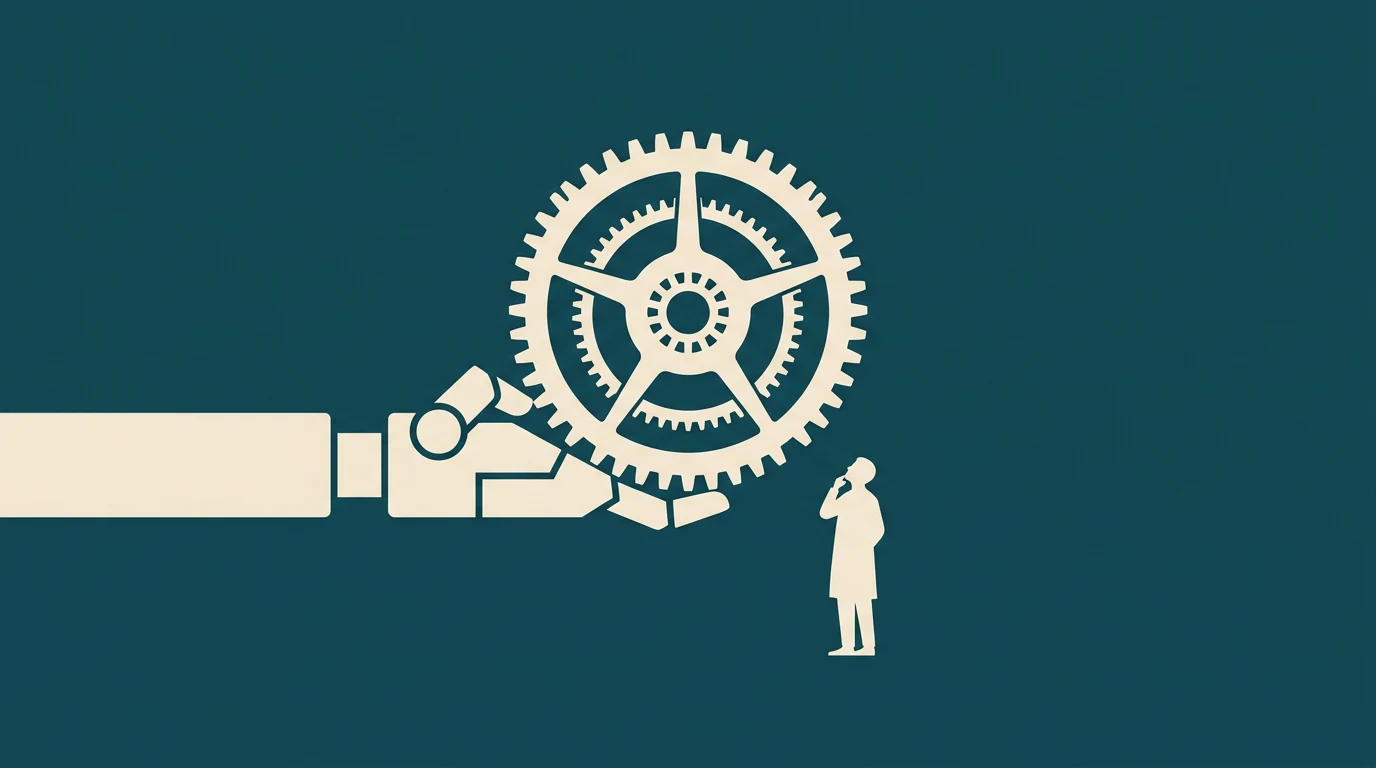
The foundation of this entire workflow rests on a crucial distinction. Editorial work consists of two very different layers that were historically glued together out of necessity. The first is processing: gathering facts, verifying dates, smoothing out sentences, formatting, and generating headline variants. The second is editorial judgment: deciding what matters, what is accurate, what constitutes manipulation, and what should never see the light of day, regardless of how many clicks it might generate.
For decades, junior reporters spent years handling the first layer before ever being trusted with the second. They transcribed wire feeds, proofread copy, and made calls to verify minor details. That grind served as both a trial and a filter. AI has effectively dismantled that pipeline. Today, processing costs a tiny fraction of what it did five years ago, but judgment remains entirely in human hands.
That separation is essential, because judgment is the one thing we refuse to outsource. We can let a language model write three paragraphs explaining the background of a regulatory update. We will not let it decide whether that regulation is an outrage or a routine formality. That decision carries real-world consequences, and the byline takes the blame - our byline, not an LLM.
AI can write a sentence you cannot distinguish from ours. But it cannot take responsibility for it - and accountability, not writing style, is the actual core of this trade.
This is not a noble manifesto; it is cold risk management. The moment you delegate the decision of what matters to an algorithm, you cease to be a publisher and become a mere distribution pipe for the statistical average of the internet. And on average, the internet is far less discerning than the readers you want to serve.
The Division of Labor in an AI-Driven Newsroom
When we say we treat AI like a partner, we do not mean having casual chats with a chatbot. We mean decomposing traditional newsroom roles and reassigning them systematically across our stack.
Take research. Historically, that required an assistant spending half a day reading through feeds to produce three useful paragraphs. Today, automated scrapers and model calls process more sources overnight than an editor could read in a week, returning concise summaries. The human role has not disappeared; it has shifted. We no longer search for a needle in a haystack. We receive ten needles and must determine which one is genuine and which one was fabricated by a model eager to please.
Then there is copy editing. A model is objectively faster and more reliable late in the evening when human eyes miss repeated words and clumsy phrasing. Yet models have a distinct failure mode: they smooth everything down to a corporate sheen where every sentence sounds professional and nobody sounds human. Most of our editorial time is now spent not on drafting, but on rescuing our own distinct voice from text that the model politely flattened.
Finally, there is production: social snippets, alternate headlines, meta descriptions, and tags. This used to be repetitive, low-value work that drained energy needed for deeper analysis. Today it runs quietly in the background. That is where the real shift lies. We did not gain superpowers; we recovered hours previously lost to chores nobody enjoyed and few noticed.
The Hidden Conflicts of Interest in AI Publishing
Every operational shift produces winners and vulnerabilities. Ignoring them would be dishonest.
The publisher’s incentive is straightforward. A single operator can now match output that previously required office space, payroll, and committee meetings over what makes the front page. It offers unprecedented independence. The trade-off is total solitude in decision-making - there is no editor down the hall to catch an oversight before the audience does.
The model providers have an entirely different agenda that needs to be stated plainly. The companies building these systems want dependency. They want editorial habits, style guides, and workflows baked so deeply into their proprietary APIs that migrating away becomes unthinkable. Right now, running these workflows costs a few dozen dollars a month. Nothing guarantees it will not cost hundreds down the road, once independent outlets no longer know how to produce copy without them. Building independence on top of someone else’s closed infrastructure is the weakest link in this setup.
Then there is the reader’s interest, which is routinely ignored during productivity debates. Readers do not care whether an outlet has one editor or twenty. They care whether a piece is accurate, insightful, and distinct from the identical boilerplate published on ten other sites. Here lies the core paradox: the very tools enabling a lean operation to produce quality work also allow thousands of content farms to flood the web with indistinguishable noise. The competitive edge AI provides disappears the moment everyone gains access to the same tools.
Where AI Editorial Workflows Break Down
We have no interest in selling a fantasy where an editor sips coffee while machines run the publication. There are three critical failure modes that surface regularly, and they deserve far more attention than productivity charts.
The first is unearned confidence. An LLM never says “I don’t know.” It delivers statements with the same measured, authoritative cadence whether it is reciting a verified fact or hallucinating a citation. In news publishing, that is not an aesthetic flaw - it is an existential threat. A single confidently stated error can erase years of built trust. As a result, every piece of data coming out of a model must be treated like testimony from a witness with every reason to lie. Fact-checking remains exhausting, and that hidden cost is rarely mentioned in demos.
The second issue is skill atrophy. If you let a model draft the first version of every article for six months, your own unassisted writing worsens. It behaves like an underused muscle. Recognizing this is critical. For high-stakes pieces - stories driven by judgment, deep analysis, and voice rather than raw updates - we write entirely from scratch, by hand. Occasional stylistic friction or awkward phrasing is not a flaw; it is proof of human authorship.
The third trap is the illusion of scale. Because you can generate ten articles a day, the temptation is to publish ten articles a day. Volume starts crowding out significance. But a site that publishes ten times more content is rarely ten times more valuable - it is usually ten times more forgettable. The hardest discipline when using AI is not learning how to produce more, but having the restraint to publish less when the machine constantly invites you to do the opposite.
Why AI Is Not Really an Editorial Partner
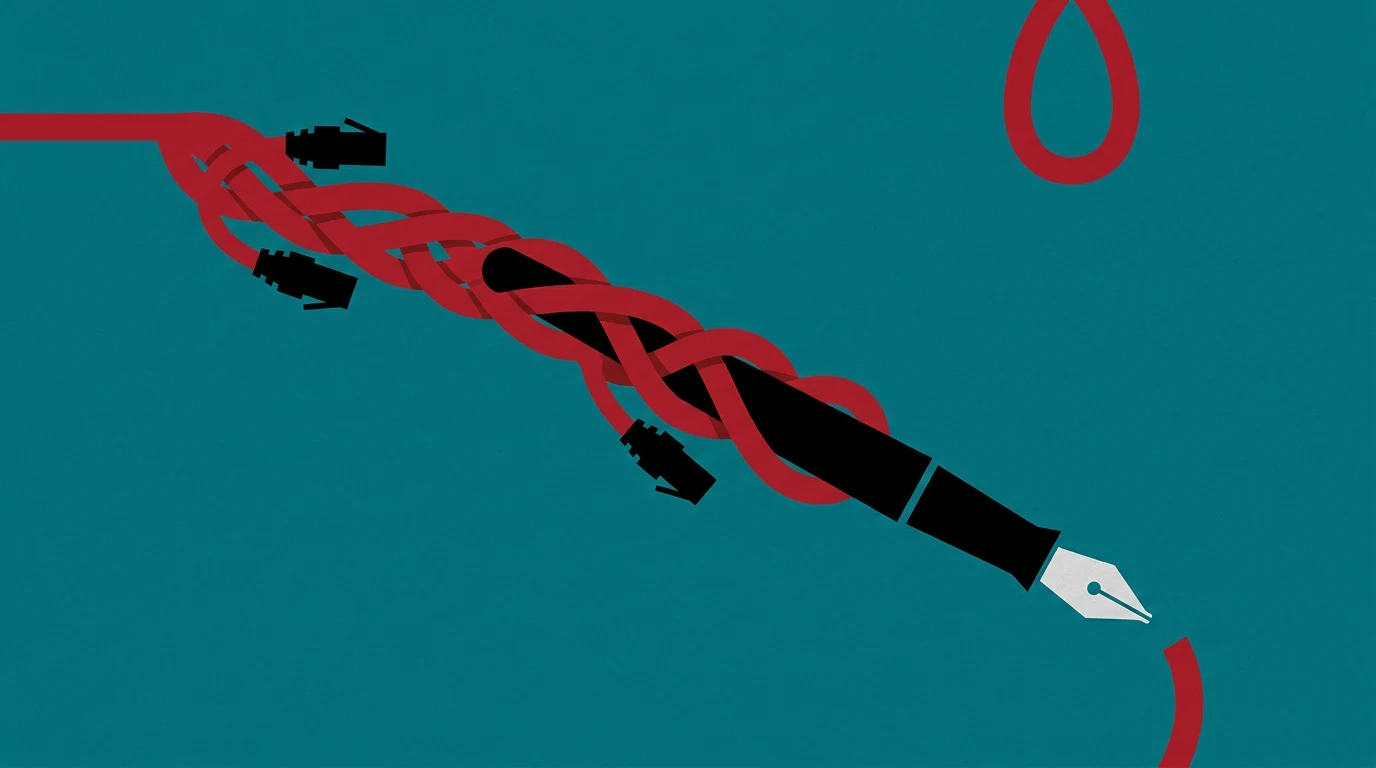
Using the word “partner” is a deliberate provocation, because it carries a dangerous trap. A true partner has skin in the game, shares downside risk, and pushes back when you make a bad call. AI meets none of these criteria. It has no personal stake - only the commercial priorities of the company that built it. It bears zero risk. And it rarely says “no”; it tends to validate whatever direction you suggest unless you actively prompt it to poke holes.
Yet it feels like a collaborator because interacting with modern models resembles a dialogue more than adjusting settings in software. A word processor does not pitch alternatives. An LLM constantly offers angles - frequently terrible, occasionally insightful, and always instant. It feels less like operating software and more like directing a well-read, tireless assistant who accepts no responsibility for anything they draft.
That lack of accountability is the central takeaway. In a lean newsroom augmented by AI, all the responsibility that once rested on an entire editorial hierarchy falls squarely on one set of shoulders. There is no senior editor to catch legal exposure, no peer to warn you that an angle is flawed. There is only a system designed to say “looks great,” and an editor who must simultaneously act as writer, fact-checker, lawyer, and conscience.
Google · Your sourcesQuantslant higher in your Google - one clickAdd to preferred sources →The Hard Truth About AI Journalism
Looking past the hype, one conclusion stands out clearly, and it aligns neither with pure optimism nor dismissive skepticism.
AI did not build our workflow. What it did was dismantle the barriers that historically protected the publishing craft, while simultaneously freeing individuals to run publications without institutional backing. The capital overhead is gone. The mandatory organizational bloat is gone. The routine manual transcription is gone. What remains is precisely what machines cannot handle: bearing the weight of declaring that something is true, significant, and worth your audience’s time.
The center of gravity in publishing has shifted permanently. It no longer sits in basic writing mechanics, which have been commoditized, nor in speed, which is virtually free. Value now concentrates almost entirely in human judgment - the deliberate act of saying “this matters, that does not, and we put our name behind it.” Everything else is just infrastructure.
Operating a lean news desk alongside automated tools means collaborating with a partner that is not real, but mimics one well enough to be dangerous. Every morning, reviewing the shortlist delivered by the machine, the core lesson holds: the real editorial work only begins after the model stops generating. A language model can deliver everything except the fundamental justification for publishing a story. That reason must still come from you. And as long as that holds true, the editor’s job remains irreplaceable.


More on this from QUANTSLANT


 state of ai·Step 5 Preview: Specs, Pricing, Benchmarks and Polish TestStepFun’s 600B MoE model has a 1M-token context window and open weights. See its pricing, benchmark results and what our Polish-language test found.