Building a News Site Solo with AI as My Partner
I run a news site that would have needed a dozen staff ten years ago. I do it alone, with a language model as my partner.
👁 116 reads
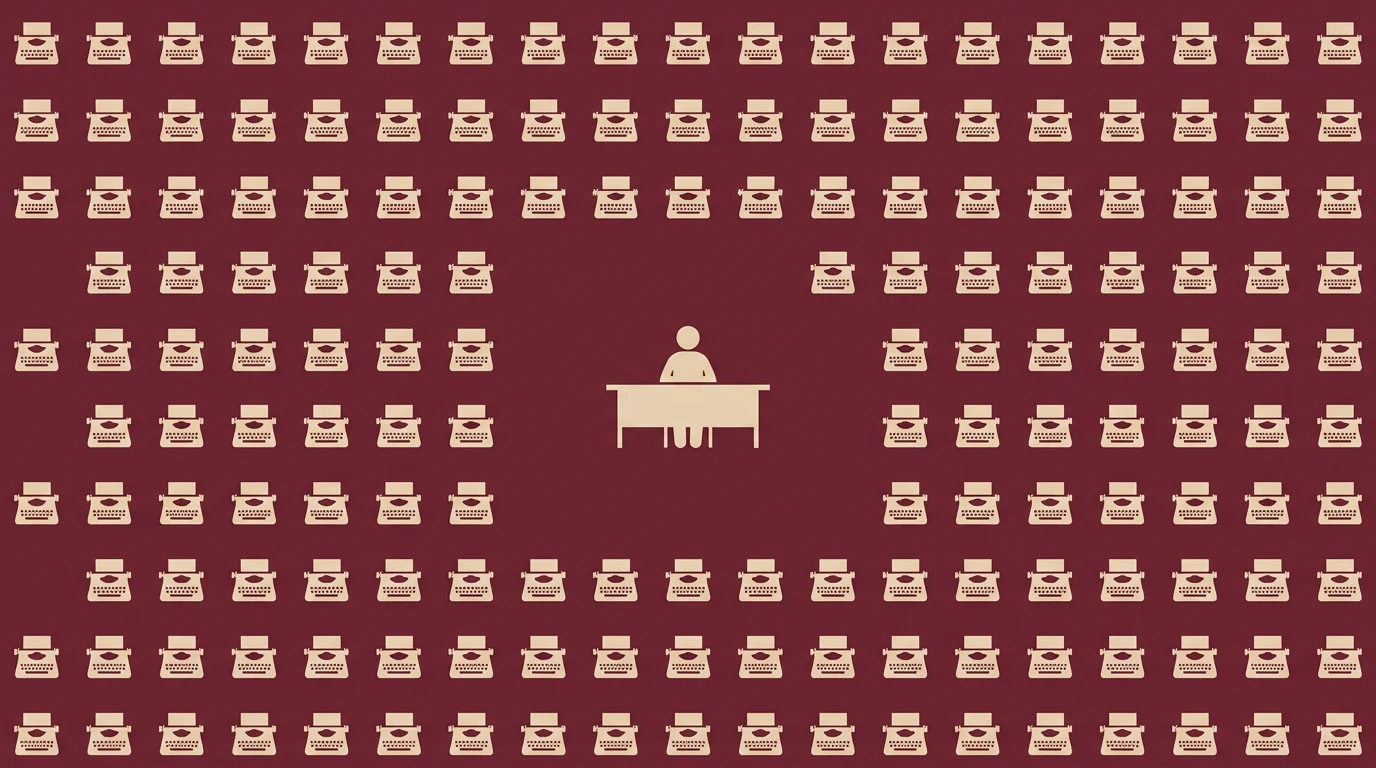
It’s half past six in the morning and my newsroom is just finishing the night shift. The newsroom, meaning me and four terminal windows. In one, a model has combed through dozens of sources since midnight and spat out a list of topics sorted by what will actually interest my readers today. In the second, three drafts are waiting. In the third lies a competitive analysis. In the fourth - a list of things the model wasn’t sure about and left for me to check. I’m not paying anyone overtime. Nobody was late. And nobody, literally nobody, took responsibility for any of it - except me.
This is the essence of the arrangement I want to write about honestly today, without evangelism and without panic. I’m building an entire news site alone, treating AI not as a tool but as a partner. And I want to break this arrangement down into its component parts: who’s really working here, whose interests are clashing, and what follows from this - for me, for the reader, and for the profession I practice.
A Partner Who Doesn’t Want Equity
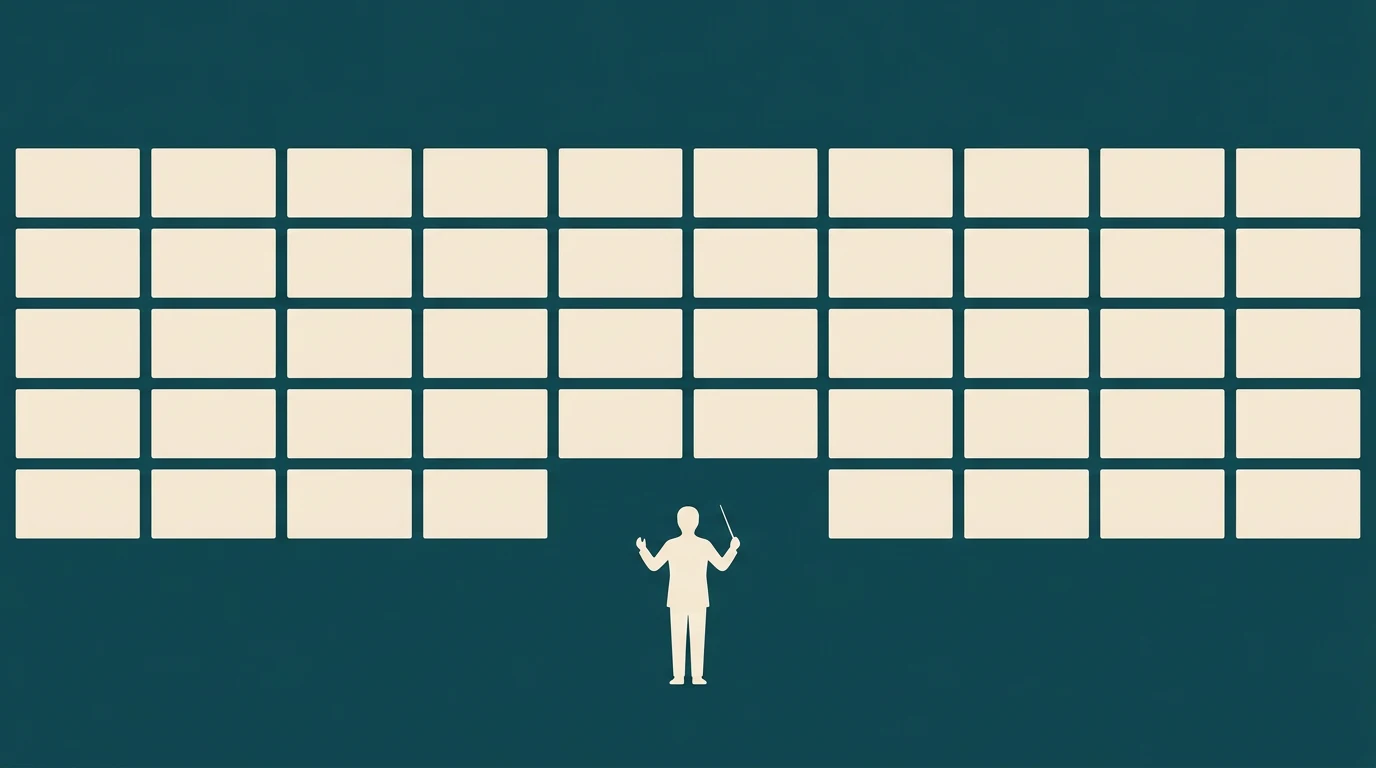
The word “partner” is a provocation, but a deliberate one. A tool is a hammer - it lies in a drawer until I pick it up. A partner has initiative, competencies I don’t have, and brings real value to the venture. By that definition, AI passes the test better than many people I could start a company with.
The model can do research in fifteen minutes that would take me half a day. It’ll translate a dry statement into three different registers so I can choose the right one. It’ll find a hole in my argument if I ask it to - and won’t get offended when I say its idea is worthless. It brings competence, availability, and patience. That sounds like every manager’s dream.
But there’s a difference that upends the entire metaphor. A real partner shares risk. They put their money on the table, their reputation, their dream. My digital partner risks nothing. When I publish a text with an error I didn’t catch, it’s not the model that gets the correction or loses the reader’s trust. It’s me. The model moves on, indifferent, ready to make the same mistake tomorrow with the same confidence.
AI is a partner that brings all the competence and zero responsibility. All the responsibility stays on my side - and that’s the only reason this arrangement makes any sense at all.
This isn’t a flaw that can be patched in the next model version. It’s a structural feature of the entire relationship. And once you understand it, everything else falls into place. I’m not building a newsroom where AI replaces me. I’m building a newsroom where AI does everything that doesn’t need to be on my conscience - and I guard that thin line beyond which begins what must be.
What the Model Does Better Than Me, and What It Pretends to Do
Let’s be concrete, because abstraction on this topic is a convenient excuse for both camps - enthusiasts and skeptics alike.
The model is brilliant at tasks I call work by volume. Search twenty sources and list common threads. Summarize a document nobody wants to read. Generate twelve headline variants, of which I’ll throw out ten, but those two will save me fifteen minutes staring at a cursor. Check whether my text has repetitions, logical gaps, sentences that drag on for half a paragraph. This is work that used to eat up half an editor’s day, and which nobody ever liked.
The model is treacherous, however, at tasks I call work by truth. Asked about a fact it doesn’t know, it won’t say “I don’t know.” It’ll say something that sounds like a fact, with the same fluid confidence as when stating things it actually knows. This isn’t lying, because lying assumes intent. This is something worse for a journalist: indifference to truth. The model optimizes for sentences sounding good, not for being true. And in a news site, those two things aren’t the same and never will be.
That’s why my division of labor looks like this: everything that can be verified or is a matter of form, I entrust to my partner. Everything that’s a judgment, an assessment, a decision of “do I publish or not” stays with me. The model can write a sentence. I decide whether that sentence is true and whether it’s worth telling the world. I’ll never give up that decision - not because I’m sentimental, but because it’s the only thing I’ll face consequences for anyway.
The Economics of One Desk
Let’s move to interests, because without them this whole conversation hangs in the air. Why am I even doing this alone?
Because I can. It’s brutally simple. A site that a decade ago would have required an editor-in-chief, several journalists, a proofreader, a designer, and someone for social media can now be run from one desk, provided you have a clear vision and enough self-discipline not to drown. The fixed cost of this operation is a fraction of what was recently a barrier to entry for publishing anything.
This has two sides, and I’d be dishonest if I only showed one. The bright side: an individual voice no longer needs an institution to reach people. A person with knowledge, opinion, and persistence can today build a medium that competes for attention with newsrooms employing dozens. This is the democratization that mainstream media talked about for years, until they suddenly stopped when it turned out it also applied to their position.
The dark side: if I can do it, anyone can. The barrier that once separated amateurs from professionals was also the barrier that separated quality from garbage. An expensive newsroom was a guarantee - imperfect, but real - that someone checked it. When the cost of content production drops to zero, the market floods with texts nobody checked, because the model produced them faster than a human could read them. And those texts compete for the same attention as mine. They often win, because there are more of them.
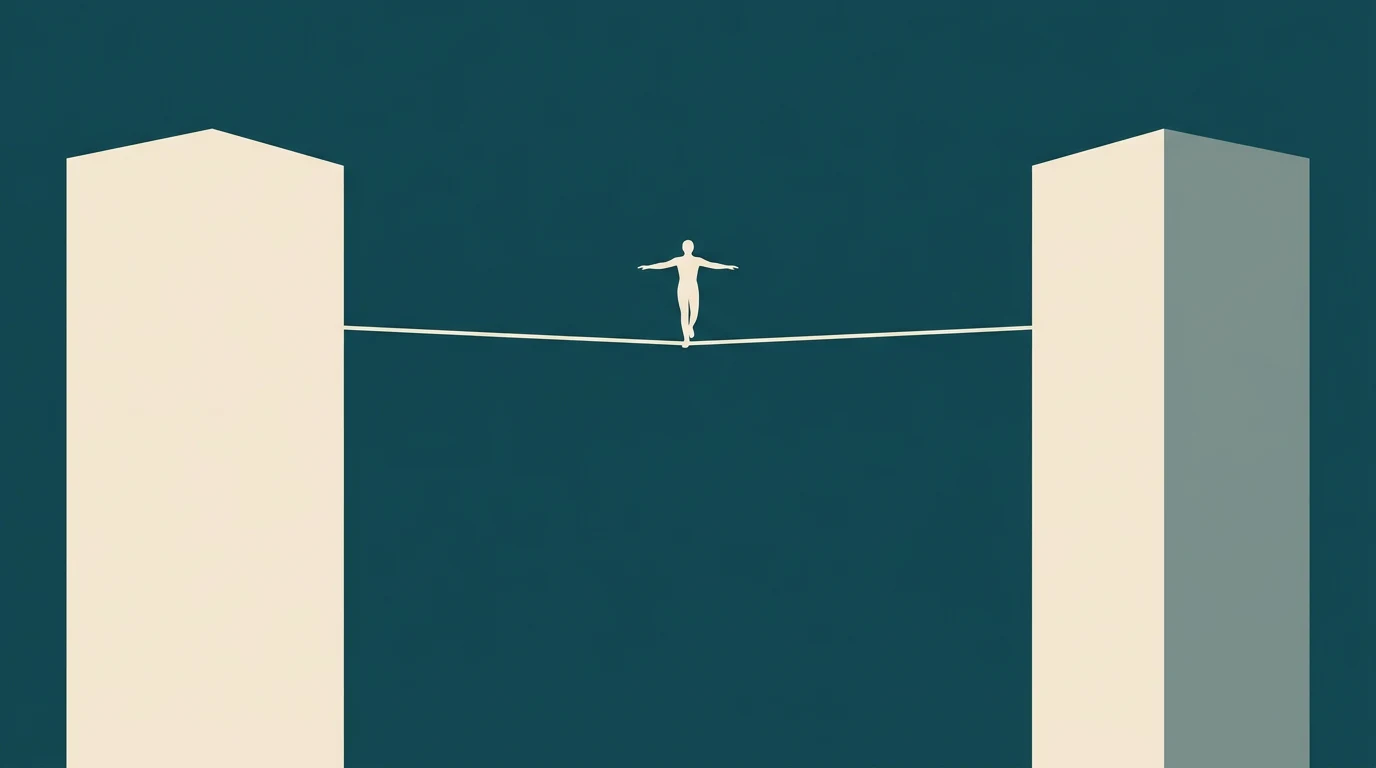
This is a war in which my only lasting advantage isn’t speed - I’ll always lose to someone who pushes out a hundred articles a day without reading them. My advantage is that under every text stands a specific person who took responsibility for it. Paradoxically: the more AI on the internet, the more valuable visible human responsibility becomes. This is my edge and my entire business model closed in one sentence.
Where Convenience Ends and Rot Begins
I need to be tough on myself here, because it’s easiest to deceive yourself at precisely this point. There’s a boundary beyond which “AI as partner” turns into “AI as an excuse not to do my job.” And that boundary shifts every day, slowly, imperceptibly - toward my comfort.
It looks innocent. First I let the model write an intro because I’m in a hurry. Then a whole paragraph, because it sounds good. Then I stop reading carefully, because so far it’s been fine. And one day I realize I’m publishing texts I haven’t really thought through - I’ve read them, yes, but reading and thinking are two different activities. The model can do the first for me. It can’t and won’t be able to do the second, no matter how much it grows.
That’s why I set myself a rule I stick to: the model can write everything, but it can’t think anything for me. The thesis is mine. The judgment is mine. The angle, the decision what to leave unsaid and what to sharpen - mine. When I catch myself publishing a sentence I don’t agree with or don’t understand, that’s an alarm signal. It means the partner has taken over the company, and I’ve become its proofreader. And the world doesn’t need another site that’s just an interface to a language model. It already has a surplus of those.
There’s also a question I prefer not to avoid: what am I actually practicing by giving the model more and more? Journalism is a craft, and craft rusts without use. If for a year I let the model write all the leads, I’ll stop knowing how to write leads. Convenience today is a loan against my own competence tomorrow. I repay it by stubbornly doing certain things myself - slower, worse than the model on the first try - just so I don’t forget how it’s done.
Google · Your sourcesQuantslant higher in your Google - one clickAdd to preferred sources →Who Will Pay for the Mistake
Let’s gather the forces clashing here, because only from them does the conclusion follow.
On one side stands economics: pressure for speed, volume, and low cost. It pushes me to give the model as much as possible. On the other stands credibility: the only commodity a news site possesses, and the only one that can’t be mass-produced, because it’s a function of trust between two people - me and the reader. Economics says “more, faster, cheaper.” Credibility says “slower, more carefully, under your own name.” These two forces pull in opposite directions, and my job is to keep them in tension, not to choose one.
The reader’s interest here is clear, though rarely stated. The reader is deeply indifferent to whether a text was written by a human or a model. The reader wants to know one thing: can I trust this. And you can only trust someone who can fail - because only then does trust mean anything. You can’t trust a model in that sense, because a model can’t fail, it just makes mistakes and moves on. You trust someone who stands behind the text and for whom trust costs something.
And here we reach the conclusion that’s the foundation of this entire venture for me. The revolution we’re living through isn’t that AI is replacing journalists. It’s that AI is taking everything away from journalists except one thing - and thereby exposing that this one thing was always the most important. Not research. Not writing skill. Not speed. Only the willingness to put your name under what you tell the world and bear the consequences.
I run a site alone, with AI as my partner, and I’ll keep doing it this way because it works. But I don’t delude myself for a moment that this is a partnership of equals. It’s a partnership where one partner has all the talent and the other has all the liability. And as long as I remember which one I am, this can work.

More on this from QUANTSLANT

 guides·GPT-6 Astra Fast Mode: 2.5x Faster for 2x the CostFast mode in GPT-6 Astra costs twice as much (around $20 and $100 per million tokens) and runs up to 2.5 times faster. When does it pay off?