World Models: How Genie 3 and Marble Teach AI Physical Reality
Move over LLMs. World models like DeepMind's Genie 3 and World Labs' Marble are teaching AI to grasp 3D space, time, and the fundamental laws of physics.

👁 113 reads
Large language models taught artificial intelligence how to speak, but they never understood the real world. Now, the frontier is shifting from parsing words to simulating reality. Systems like DeepMind’s Genie 3 and World Labs’ Marble are pioneering world models designed to understand physics, 3D space, and causal dynamics.
The year 2026 may go down in history as the turning point where artificial intelligence crossed this next fundamental boundary. While LLMs continue to dominate conversation and text generation, leading AI researchers are already looking past them. Their goal is world models: systems capable of understanding and simulating the physical universe with unprecedented precision. For an overview covering Odyssey-3, Cosmos, and V-JEPA, check out our guide on what world models are and why they matter.
DeepMind announced its latest flagship, Genie 3, in January 2026, marking a foundational shift in machine learning. Around the same time, World Labs, a startup founded by Fei-Fei Li, unveiled Marble, an architecture engineered to revolutionize how AI interacts with 3D space. Both initiatives share an ambitious target: creating AI that does not just describe the world, but genuinely comprehends it.
Genie 3: Teaching AI Physics Through Observation
The third iteration of DeepMind’s Genie system is far more than an incremental patch. As Demis Hassabis explained during his presentation at the AI Frontiers conference in London, Genie 3 relies on an entirely different approach to machine learning centered on environmental observation and interaction.
“Genie 3 is the first AI system that truly understands the laws of physics not by memorizing rules, but through observation and experimentation. It is like a child learning about the world through play,” Hassabis stated at AI Frontiers in January 2026.
The architecture relies on what DeepMind calls a Physics-Aware Transformer (PAT), which integrates standard attention mechanisms with modules dedicated to space, time, and causality. While LLMs manipulate linguistic symbols and statistical associations, Genie 3 constructs internal representations of physical environments.
The results are striking. In DeepMind’s demonstrations, Genie 3 predicted the outcomes of intricate physical interactions, spanning falling bodies to fluid behavior under varied gravitational constraints. Furthermore, the system synthesizes realistic simulations of previously unseen environments by extrapolating from the core physical principles it identified during training.
World Labs and the Vision of Spatial Intelligence
While DeepMind focuses on the theoretical underpinnings of physics, World Labs approaches world models from a pragmatic perspective. Founded by Fei-Fei Li, former director of the Stanford AI Lab, the startup announced its Marble system in February 2026, centering on 3D spatial reasoning and interaction.
Li, known for her pioneering work on ImageNet and computer vision, has long advocated for what she calls “spatial intelligence” - the capacity of an artificial agent to navigate and make sense of three-dimensional environments. Marble serves as the direct implementation of that roadmap.
“The future of AI does not lie in systems that merely understand words, but in those that understand the world. Spatial intelligence is the next giant leap forward,” Li wrote in a LinkedIn post accompanying the February 2026 Marble announcement.
Marble combines computer vision, robotics, and generative AI, training on massive datasets that include multi-angle video, 3D scans, and robotic sensor telemetry. The key differentiator for Marble is its ability to build coherent, interactive 3D environments from sparse input data.
In practice, feed Marble a few static photos of a room, and it constructs a complete 3D scene, models how objects within it will behave under force, and plots trajectories for robotic navigation. It accurately predicts spatial transformations, tracking how layouts change after specific physical actions occur.
The Technical Architecture Behind World Models
To grasp how world models operate, you need to examine their underlying engineering. Rather than processing linear sequences of text tokens, world models must process and generate high-dimensional spatial and temporal states.
A critical pillar is the combination of neural radiance fields (NeRF) with temporal attention mechanisms. NeRF delivers continuous volumetric 3D representations, while temporal attention models how those spaces evolve over time. Modern frameworks like Genie 3 also incorporate diffusion models to simulate successive environmental states.
According to DeepMind’s technical report, Genie 3 uses a hierarchical architecture where distinct model layers handle different tiers of reality. The lowest layers govern primitive physical constants like gravity and surface friction; intermediate layers compute multi-object dynamics; and the top layers evaluate broad scene logic and long-term planning.
World Labs, in its report “Spatial Intelligence: The Next Frontier,” details Marble as a system of multi-modal transformers tailored for spatial arrays. A central innovation is “geometric attention,” an algorithmic mechanism that directs compute toward structural and relational positioning between objects.
Practical Applications Across Robotics and Gaming
World models have moved beyond research labs into active industry development. In December 2025, Nvidia announced that its RTX 6000 graphics cards would feature hardware optimizations specifically for executing world models, clearing a path for broader commercial adoption.
The interactive entertainment sector is already testing these models for procedural world generation. Epic Games partnered with World Labs to integrate Marble into Unreal Engine 6, aiming to generate complete, interactive game worlds directly from text prompts or concept art.
Robotics represents an even broader surface area. Boston Dynamics reported in its recent quarterly release that it is testing world models inside its humanoid Atlas units. Early benchmarks indicate that robots running world models show marked improvements in navigating unfamiliar terrain and manipulating irregularly shaped objects.
“World models are a game-changer for robotics. For the first time, we have AI that can predict the outcomes of its actions in the physical world with accuracy approaching human intuition,” stated Boston Dynamics founder Marc Raibert in an interview with MIT Technology Review in January 2026.
The automotive industry is similarly invested. In March 2026, Tesla announced it is testing world models within its Full Self-Driving stack. Elon Musk noted that world models could unlock full vehicle autonomy by resolving the complex edge cases that routinely trip up conventional perception systems.
Computational Limits and Physics Drift
Despite these advances, substantial computational and practical hurdles remain. Chief among them is raw resource consumption. Analyses by MIT CSAIL indicate that training a world model comparable to Genie 3 consumes roughly 50 times more compute than training an equivalent LLM.
Data collection adds another bottleneck. While LLMs scraped trillions of text tokens from the open internet, world models demand expensive, multi-perspective video feeds, depth-sensor logs, and physical point clouds. Compiling these training sets runs into hundreds of millions of dollars.
Accuracy and drift remain persistent engineering problems. Because world models simulate physical realities, small errors compound over time. As Yann LeCun of Meta AI noted during a panel at NeurIPS 2025, modern world models still suffer from simulation drift, gradually diverging from physical reality during sustained simulations.
“World models are a fascinating technology, but we still face a hard trade-off between fidelity and computational efficiency. It is like trying to simulate the entire universe - the higher the accuracy you demand, the steeper the compute curve,” LeCun remarked during the “Future of AI” panel at NeurIPS 2025.
Ethical and safety considerations also apply. High-fidelity predictive world models could be repurposed to plan physical exploits or simulate hazardous operations, raising significant questions around containment and responsible deployment.
Big Tech’s Race to Dominate World Modeling
World modeling has sparked aggressive competition among the industry’s major players. Alongside DeepMind and World Labs, Meta, Microsoft, and Amazon have deployed substantial capital toward proprietary world engines, each targeting distinct verticals.
Meta is developing real-time, photorealistic world engines for virtual and augmented reality. Mark Zuckerberg noted at Connect 2025 that real-time spatial simulation forms the foundation of their spatial computing stack.
Microsoft is embedding world models directly into Azure, marketing them as enterprise simulation tools for supply chain optimization and manufacturing floor automation.
Amazon is directing its efforts toward warehouse automation and logistics delivery. Its platform, dubbed “WorldSim,” models material handling and routing efficiency across automated fulfillment hubs.
Investment totals reflect the scale of the push. According to CB Insights, startups developing world models raised over $15 billion throughout 2025, eclipsing the total venture capital invested across the entire AI ecosystem back in 2020.
Google · Your sourcesQuantslant higher in your Google - one clickAdd to preferred sources →The Future of Embodied and Spatial Intelligence
Many industry analysts project that world models will ultimately disrupt industry more deeply than language models. While LLMs reconfigured how we process text and symbolic data, world models alter how we engineer, navigate, and build physical infrastructure.
Scientific workflows are an early beneficiary. World models enable dynamic, interactive simulations spanning astrophysical mechanics down to subatomic particle behavior. The Massachusetts Institute of Technology has already detailed plans to incorporate world modeling engines into its physics and engineering curricula.
In architecture and urban development, the technology replaces static 3D models with dynamic, interactive simulations that stress-test airflow, thermal load, and transit patterns long before breaking ground.
Medicine is exploring similar paths. Using world models to simulate complex surgical procedures or evaluate compound-tissue interactions could noticeably increase clinical precision.
However, the technology introduces acute risks around synthetic media. World models could enable hyper-realistic deepfakes that simulate entire environments rather than just isolated faces or audio tracks, necessitating robust verification frameworks.
By transitioning from systems that only process descriptions of reality to systems that simulate the mechanics of reality, Genie 3 and Marble indicate that the frontier of AI has fundamentally shifted. The coming phase of machine learning belongs to models that understand the physical world you inhabit.



More on this from QUANTSLANT



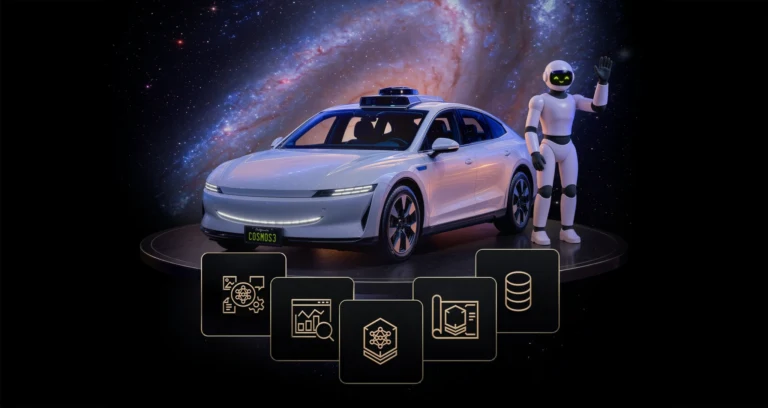 news·NVIDIA Cosmos 3 Edge: World Model for Robotics on Edge DevicesNVIDIA released Cosmos 3 Edge on Hugging Face, enabling physical AI world models to run directly on edge devices without relying on constant cloud connectivity.