AI Glasses and Bee Wearables: When Listening Can Break the Law
AI wearables can turn conversations into notes without keeping audio. Here’s why that may still create privacy and wiretapping risks.
👁 117 reads
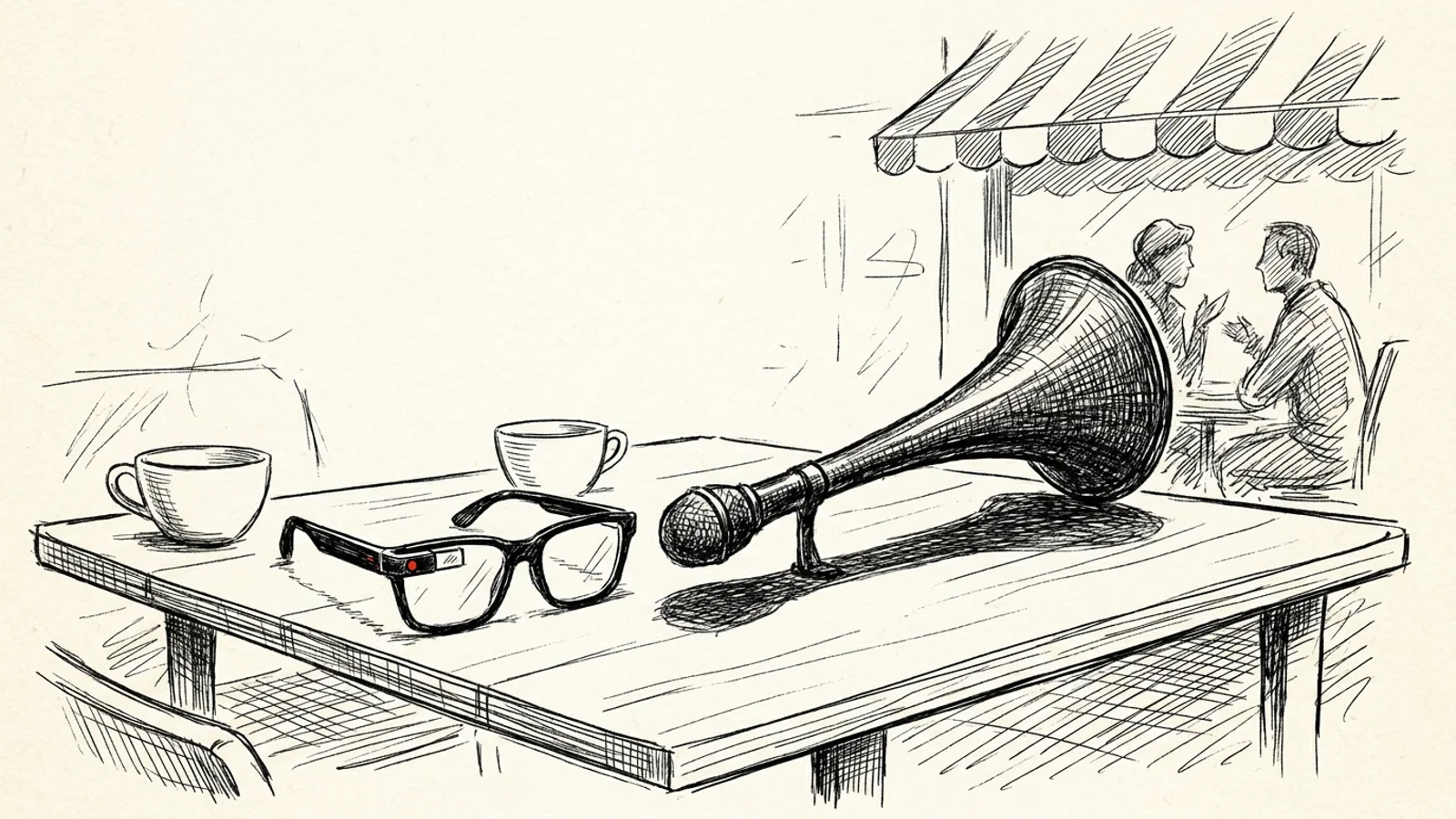
AI glasses, watches and clip-on devices can turn conversations into notes, but their users may face privacy liability. CNBC reported on 18 October 2026 on a dispute over whether analysing speech without keeping a recording could still count as unlawful interception. In the US, the rules vary by state; EU data protection law can also apply to personal information processed by these devices.
The appeal is obvious: an assistant can remember decisions while you focus on the person you’re talking to. The problem starts when that person doesn’t know their words are becoming material for a software service. A private notebook on your wrist may contain someone else’s information, too.
Deleting the audio may not end the legal risk
CNBC’s report discusses Meta glasses, Apple watches and devices from startups, including pendants. They don’t all have the same features or operate continuously. The shared concern is that devices can capture their surroundings while looking like ordinary accessories.
Amazon lists the Bee Frontier at 74.99 USD; its announced Bee Eclipse is expected to start at 99.99 USD. The company says audio is processed in real time and deleted after analysis. Transcripts and summaries remain, however. Amazon says they are protected and that users control whether to share them. That is the manufacturer’s account of its safeguards, not a ruling on whether every conversation captured this way is legal.
Lawyers quoted by CNBC point to broad definitions of communication interception in Massachusetts and New Hampshire. In their view, receiving a statement and extracting its meaning could fall under these laws even without a lasting recording. These are interpretations of how laws may apply to new technology, not a report of a judgment banning all such devices.
There is no single US rule. The Reporters Committee for Freedom of the Press identifies about 11 states where all participants’ consent is generally required, including California, Florida and Illinois. Other states have mixed rules. The type of conversation, expectations of privacy and statutory exceptions matter; the familiar shorthand about a dozen states is no substitute for checking the specific law.
In California, § 637.2 of the Penal Code allows a civil claim against a person who violates the relevant provisions: the greater of 5,000 USD per violation or three times the actual damages. The law does not make proof of actual loss a condition for bringing such a claim. This is not an automatic fine for wearing glasses, but their user could also face liability.
GDPR can apply even when no audio file is saved
An identifiable voice or face, or information that can be used to identify someone, may be personal data. The GDPR can cover processing that does not end with an audio file being saved. An exception exists for purely personal or household activity, but it is limited. Buying a device for personal use does not mean every way of using it is private.
For professional use, you need to establish the purpose and legal basis for processing, the scope of the data, how long it will be retained and how people will be informed. Consent is not the only possible legal basis, but the device owner’s acceptance of an app’s terms does not resolve the position of other people. Health data receives additional protection.
What to consider at work, school or a doctor’s office
There is no general ban on wearing AI glasses. The relevant questions are what the device does, how you use it and what rules apply in that setting. In practice:
- At work: before turning on note-taking, check data protection and trade secret rules. Taking part in a meeting does not automatically authorise you to send its contents to a personal AI service.
- At school: take account of school policies, device rules and students’ privacy. A teacher’s permission to take your own notes is not everyone’s consent to recording and sharing their image.
- At a doctor’s office: your own appointment is different from conversations with other patients. Agree openly on how notes will be made, limit any recording to your appointment and check where medical information will go.
Convenient digital memory does not remove other people’s privacy boundaries. The key decision comes before you switch on listening: are you entitled to collect this information and send it to the service you have chosen?
Google · Your sourcesQuantslant higher in your Google - one clickAdd to preferred sources →Sources
- CNBC: Always on, always listening: New AI devices are pushing legal limits and could put users in jeopardy, 18 October 2026
- Amazon: Amazon introduces 2 new AI products from Bee: Bee Frontier and Bee Eclipse, publication date not stated, accessed 19 October 2026
- Reporters Committee for Freedom of the Press: Introduction to the Reporter’s Recording Guide, publication date not stated, accessed 19 October 2026
- California Legislature: AB 1671, Chapter 855, § 637.2, 30 September 2016
- EUR-Lex: General Data Protection Regulation, Articles 2, 4, 5, 6, 9 and 13, 27 April 2016