I Spent a Week Listening Only to Suno and Udio AI Music
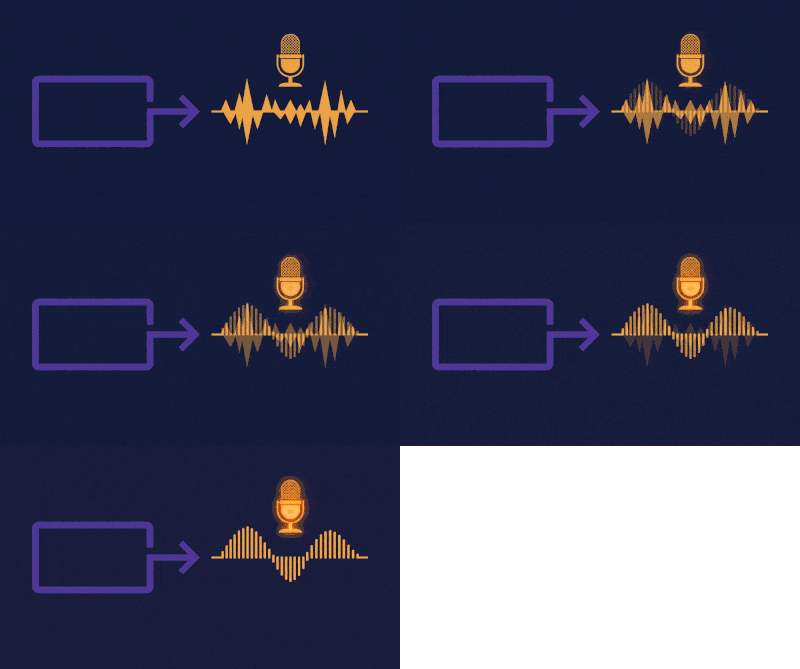
For seven days, I listened almost exclusively to AI-generated music. The technical quality amazed me. The emotional emptiness disturbed me even more.
👁 115 reads
I’ll state my thesis in the first paragraph so no one has to guess where I stand: music from Suno and Udio is technically astonishing and emotionally dead today, and the worst part is that this death doesn’t interfere with listening at all. It doesn’t sound bad. It sounds smooth. And it’s precisely this smoothness that has been haunting me for a week.
I ran a simple experiment. For seven days I listened almost exclusively to AI-generated music. In the car, while cooking, while working, during evening downtime. Not to expose it - that would be too easy and somewhat dishonest. I wanted to test something else: whether you can live with this. Whether after a week I’d feel hungry for a real album, or conversely, stop noticing the difference. The result surprised me, and I’m not proud of it.
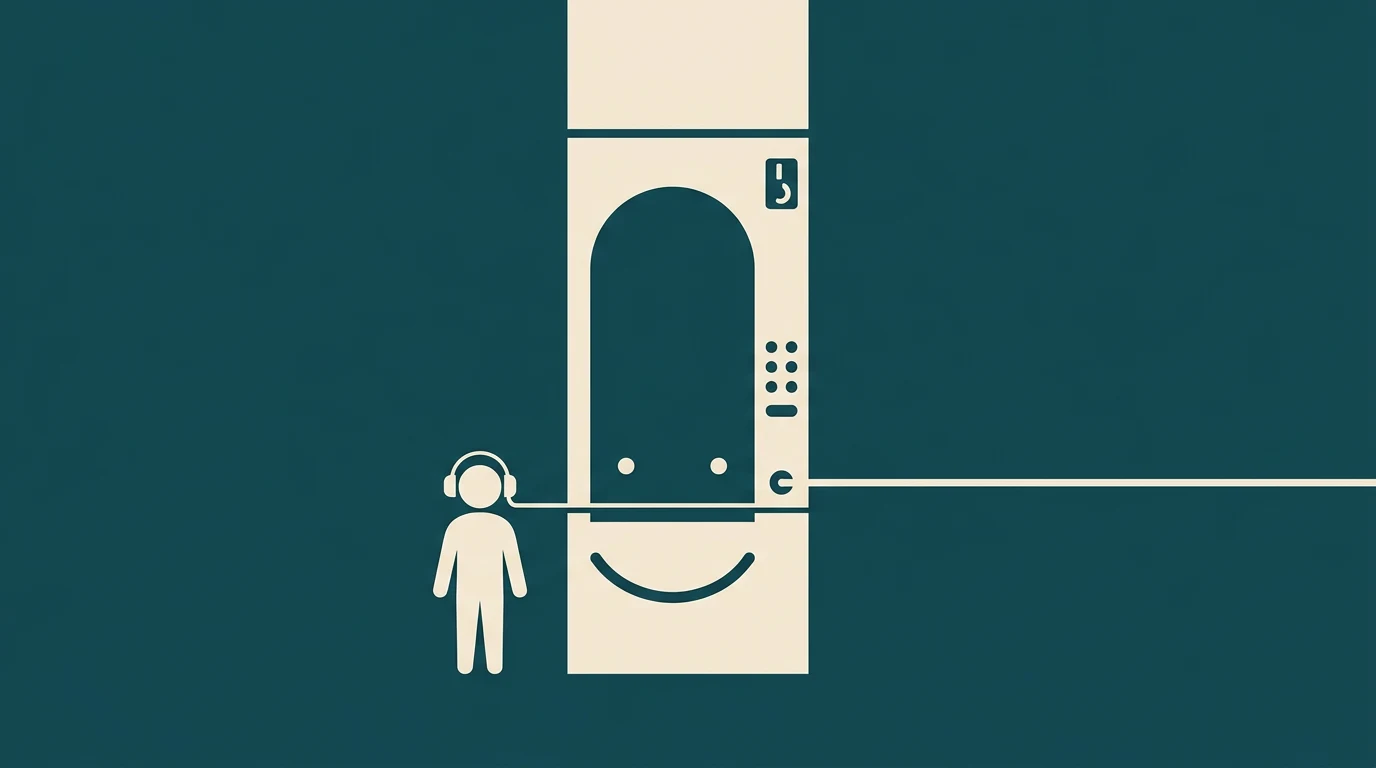
Day One: Enchanted and Slightly Ashamed
You type a few words. “Melancholic indie folk, female vocals, rain outside the window.” You click. Forty seconds later you have two versions of a track that sounds like someone worked on it for a week in a decent studio. The vocals breathe, the guitar has reverb in the right places, the chorus comes in where it should. The first reaction is purely visceral: “damn, this works.”
And here I need to be honest, because I promised honesty. This really works. People who say AI music sounds like a cheap toy either haven’t listened to it in a year or are listening with ears that want to hear that. The progress between the first versions of Suno and what it generates today is like the difference between a flip phone and a smartphone. Udio, meanwhile, can produce passages that would make a professional producer raise an eyebrow - the mixes are surprisingly clean, transitions sensible, arrangements richer than something created from a single sentence has any right to be.
On the first day I was enchanted and, I admit, somewhat ashamed of that enchantment. Because inside, a voice kept saying: “you know this means nothing.” Yet my foot was tapping.
Day Three: Hotel Buffet Syndrome
Something started to break around the third day. Not in the technology - in my perception. I noticed that all these tracks, though each individually surprisingly good, together formed one large shapeless mass. Like eating at a hotel buffet: everything is edible, nothing is memorable, and after three days you can’t tell Tuesday’s scrambled eggs from Thursday’s.
AI music today has a problem that can’t be solved with a better model, because it’s not a technical problem. It’s a statistical problem in the deepest sense of the word. These systems are masters at producing what’s most probable, and art rarely lives in what’s probable. It lives in the mistake, in the decision that had no right to work, in the vocalist who comes in a quarter tone too high because that’s how they felt.
AI can write a song that no one will like less than seventy percent. But it can’t write one that will blow someone’s life in half. And the music I love always broke something in me.
This is the smoothness I wrote about at the beginning. The algorithm knows all the places where a good song usually turns, and politely turns there. It never drives straight into a wall because that’s how it felt. It never leaves a hole in the arrangement, because silence in that place would hurt more than sound. Everything is filled in, polished, complete. And dead as a perfectly arranged room in a furniture catalog where no one has ever lived.
What’s Actually Good, and I Won’t Hide It
It would be convenient to end there and return to vinyl with the face of a guardian of true art. But I promised honesty, so I’ll say something some readers won’t like: in several applications, this music isn’t just good, it’s simply a better solution than what came before.
Imagine someone who runs a small podcast and for years used the same free loop from some sound bank because they can’t afford a composer. For them, Suno isn’t an assault on art, it’s liberation. They get an intro tailored to their tone, not a generic piece that half the internet has. Or think of someone learning music production who wants to hear how their arrangement idea might sound before spending money on a session. It’s a powerful tool for sketching, trying, playing.
I caught myself realizing that generating ten variants of one melody in half an hour taught me more about song structure than many textbooks. Because I could immediately hear why one idea works and another falls apart. This is real value, and pretending it doesn’t exist would be simple hypocrisy from someone afraid of the new.
What’s also good is that these tools remove the argument “I’d like to, but I can’t play.” You can’t? Too bad, try anyway. There’s something democratic about that, and I won’t mock it. Mocking access is a sport for the wealthy.

What’s False, and It Hurts More Than I Expected
Now the other side, because an essay without another side is a flyer. The falseness in this music doesn’t lie where everyone looks for it. It’s not that “AI has no soul” - that sentence is so worn out it means nothing anymore. It’s about something much more concrete.
What’s false is the promise that you’re listening to someone’s story. When a person sings about a breakup, embedded in that song is some specific breakup, a specific December Monday, specific doors that someone closed behind them. You may not know it, but it’s there, and your ear somehow senses it. When Suno sings about a breakup, there’s nothing inside. It’s the averaged statistics of a thousand real breakups, ground into pulp. It sounds like grief, but it’s no one’s grief. It’s grief as a genre, grief as a filter, grief as a preset.
And here I come to the thing that hurt me most during this week. I realized that after a few days, it stopped bothering me. That my brain gladly accepted music that demands nothing, costs nothing, and asks for nothing. Music that’s like warm water - pleasant, indifferent, instantly forgotten. It wasn’t the technology that scared me. What scared me was the ease with which I agreed to it.
Because that’s how habituation works. You don’t need AI to be better than Nick Cave. It just needs to be good enough and free, and you tired enough after work. And suddenly this whole attention economy we live in does the rest. Robots won’t kill us. They’ll bore us to death with something that’s always half a step too good to turn off, and always half a step too shallow to remember.
The Issue Everyone Pretends Doesn’t Exist
There’s one more thing that can’t be left unsaid, even though it spoils the fun. These models didn’t come from thin air. They learned to sing by listening to people who sang for real - usually without asking their permission and without paying them a cent. When you generate a track “in the style of the late seventies and early eighties,” you’re using the work of hundreds of musicians who created that era with their own sweat and their own risk.
I don’t want to preach here, because I hate sermons. But I’d be dishonest if I listened to this music for a week with a clear conscience and didn’t mention that its smoothness is partly built from others’ unpaid labor. This doesn’t mean I shouldn’t click. It means I should know what I’m clicking on. The difference between a consumer and a sucker is precisely this knowledge.
Google · Your sourcesQuantslant higher in your Google - one clickAdd to preferred sources →Day Seven: Back to Vinyl and Understanding Something
On the last day I couldn’t hold out and played an album I know by heart. Old, worn, with a crackle in one spot because the needle once jumped. And something banal happened, yet revelatory for me in that moment. That crackle, that one imperfection, gave me more pleasure than seven days of perfectly smoothed refrains. Because behind that crackle stood time, history, my own life with that record.
And then I understood that I’d asked the wrong question at the beginning of the week. It’s not about whether AI makes good music - it does, increasingly better, and will make even better. It’s about what we want from music. If we want background, filler, sonic wallpaper - AI will win and rightly so, because that’s what it’s made for and it does it cheaper. But if we want someone to tell us something, to expose themselves to us, to risk embarrassment for us - AI has nothing to offer, because it has nothing to expose itself with. It has no body, no shame, nothing to lose.
Music has always been, fundamentally, someone saying: “I lived through this and didn’t go crazy, listen.” AI says: “here’s how someone who lived through this usually sounds.” It’s not the same sentence. It’s not even the same language, though on the surface they sound identical.
So will I keep listening? Yes, probably while cooking. Will I love it like an album I know by heart? No, and not because I’m stubborn. Because you can only love something that could have failed you but dared anyway. Artificial intelligence gives me songs that will never hurt me. And that’s exactly why none of them will ever save me.
More on this from QUANTSLANT
 magazine·Building a News Site Solo with AI as My PartnerI run a news site that would have needed a dozen staff ten years ago. I do it alone, with a language model as my partner.