My AI Stack in 2026: A Graveyard of Subscriptions
After a year of collecting AI tools, I audited my subscriptions. Eleven services, most unused. Here's what survived and why 90% of your AI stack is theater.
👁 116 reads
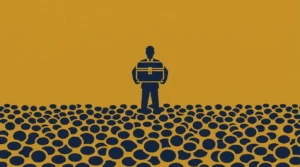
In January, I did an accounting of my soul that I recommend to anyone who thinks they “use AI.” I went into payment settings in three places - credit card, PayPal, App Store - and wrote down every subscription with “AI,” “GPT,” “co-pilot,” “assistant,” or any other word that in 2025 was a passport to a higher price. I counted eleven items. Eleven. I calculated the monthly cost and felt that specific pang known to anyone who’s ever found three identical black sweaters in their closet, bought at three different moments of certainty that “I was missing this one.”
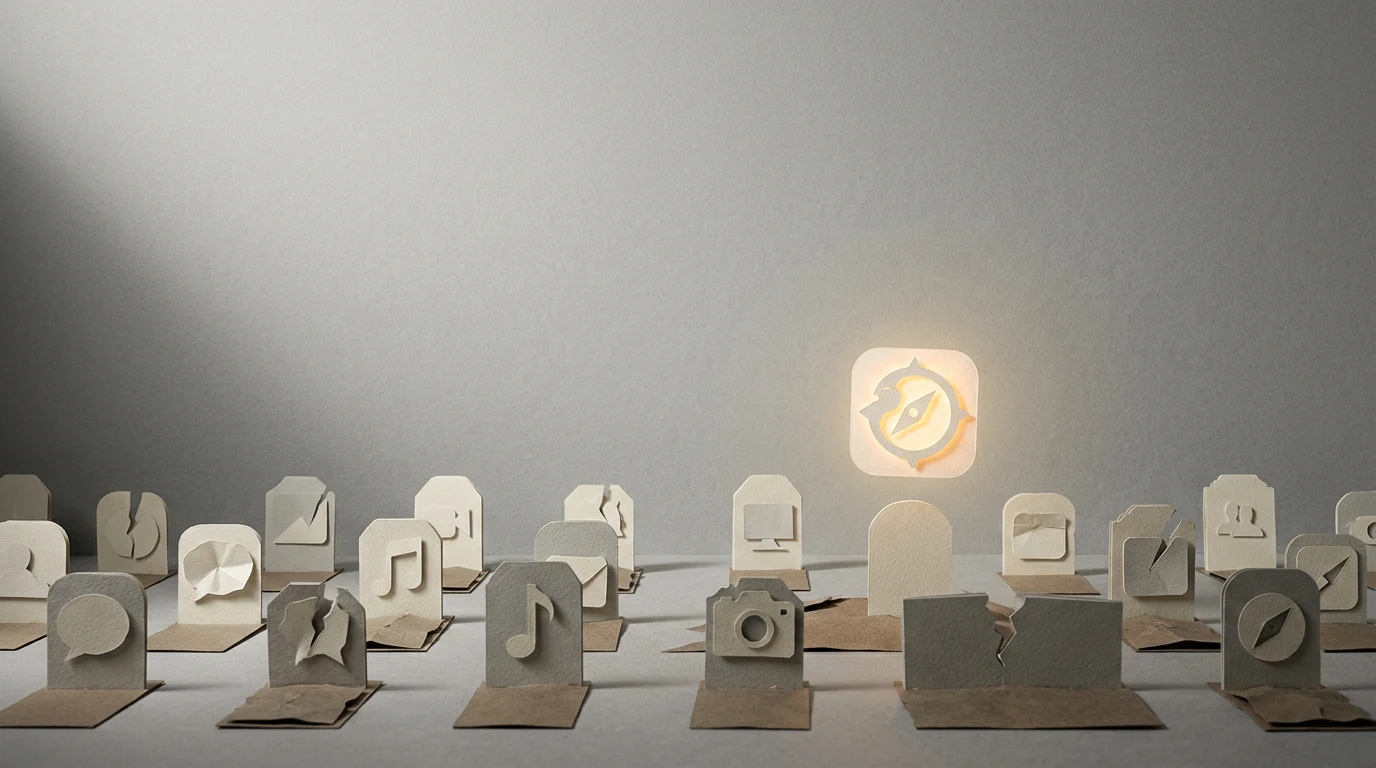
Because that’s exactly what it’s like with AI tools. Most of them weren’t answers to my need. They were answers to someone else’s launch. Someone dropped a demo where an agent books a table and writes a novel by itself, I saw the future, clicked “Subscribe,” and for two weeks felt like a person of tomorrow. Then I’d return to what I actually do at work, and the tool would go quiet. It didn’t die - it went quiet. Like a gym in February.
So I sat down and did what nobody does, because it’s boring and doesn’t generate views: I counted what I actually use, not what excites me. And here’s where my essay begins, because the conclusions turned out to be indecently simple and slightly embarrassing.
The Thesis I’ll Defend: 90% of Your AI Stack Is Theater
I’ll say this upfront so it’s clear which side of the barricade I’m on. Most AI tools we pay for don’t increase our productivity - they increase our sense that we’re keeping up. These are two completely different things, and the industry lives off the fact that we don’t distinguish between them.
The mechanism is beautiful in its perfidy. Every week a new model appears, a new “killer” of the old model, a new wrapper that does the same thing but with a prettier interface and a promise that this time it really will replace humans. Following this has become a separate occupation - a full-fledged hobby with its own celebrities, its own jargon, and its own sense of superiority. And here’s the hook: the following itself gives exactly the same dopamine hit as work. Reading a thread about a new model feels like doing something. It isn’t.
Throughout 2025, I kept catching myself knowing about twenty tools while fluently using three. The rest existed in my life as bookmarks, “to check” folders, and subscriptions I didn’t cancel because what if I need them. This isn’t a stack. It’s a pawn shop.
What Got Cut - The Graveyard of My Two-Week Loves
Let’s start with the funerals, because they’re instructive. The first category that got axed: specialized wrappers for what a big general model does anyway. A separate app for writing emails. A separate one for summarizing articles. A separate one for “brainstorming.” A separate one for turning text into social media threads. Each of them was basically one prompt in a pretty box, for which I paid a monthly subscription because someone saved me ten seconds of typing instructions.
For a moment this made sense - when models were dumber, a good wrapper actually gave you an advantage, because it contained someone’s knowledge of how to force that model to do decent work. But models got good enough that most of these wrappers became paid packaging for something I get in the bundle. It’s like buying an app that presses the elevator button for you.
The second thing that died: video generators and avatars. I’ll admit without pain - I got swept up. I watched a demo where a talking avatar of a presenter recites my script, and I saw a content factory. I made exactly three such videos. They all had the same problem: they were technically impressive and emotionally dead. The viewer felt it was a fake before they could understand why. It turned out the cost wasn’t in production - the cost was that nobody wants to watch a person who doesn’t exist.
The third category: “agents” that were supposed to do everything themselves. And here it gets interesting, because it’s not that they didn’t work. It’s that they worked just well enough to be dangerous. An agent that executes ten steps flawlessly and one step catastrophically isn’t an employee - it’s an intern you have to watch so closely you’d be faster doing it yourself. I spent more time checking what the agent had done than the same task would have taken me to do manually. This isn’t automation. It’s delegation combined with distrust, which is the worst management model humanity has invented.
An AI tool you have to check step by step doesn’t save you work - it shifts it from doing to controlling. And controlling someone’s work is often a harder piece of bread than the work itself.
I also cut all the tools that promised me a “second brain” - those for AI-powered notes that connect thoughts themselves, tag themselves, discover hidden patterns in your notes for you. The problem is that a note’s value doesn’t lie in its storage or retrieval. It lies in the act of writing it down, in that micro-effort of processing a thought into a sentence. When you hand that over to a machine, you’re left with an archive of someone else’s summaries of your own thoughts. Very tidy. Completely empty.
What Survived - And Why These Specifically
And now the three things that survived the purge. Not because they’re the newest. Because I stopped noticing them - and that’s the highest form of praise I can give a tool.
First: one big, good general model as a thinking partner. Not for “generating content” - for thinking. I use it like an intelligent, patient colleague who never has a bad day and whom I can ask the dumbest thing without shame. It helps me when I’m stuck in a paragraph. It breaks down a problem that’s bunched up in my head into one dense ball. It plays devil’s advocate with me when I’m too in love with my own thesis. This isn’t a production tool. It’s a tool for conversation with myself, except it bounces the ball back. And that’s exactly why it stayed - because it doesn’t pretend to replace me. It complements the place where I’m weak: the moment when I’m too close to my own text to see it.
Second: a code assistant plugged directly into where I work. Not as a separate application I have to switch to, but as something that’s there where I’m already writing. This is the only case where an “agent” actually pays off for me, and I wondered why here specifically. I concluded that code has one feature most of my work doesn’t: immediate, brutal verifiability. It works or it doesn’t work. There’s no “well, pretty good actually.” Thanks to that, I don’t have to watch the agent with distrust - reality watches it for me. Everywhere the result can be checked in a second, AI is brilliant. Everywhere the result is a matter of taste, flavor, and context - that’s where the trouble starts.
Third, least obvious: transcription and speech processing. This is the only tool on my list that solves a problem I actually had before anyone proposed a solution to me. I speak faster than I write, and I have my best ideas in motion, not in front of a screen. The ability to throw out a three-minute stream of consciousness and get organized text from it isn’t a gadget. It’s a change in how I think. And here you can see the key thing: the best AI tools don’t give you a new superpower. They remove friction from a power you already had.
Google · Your sourcesQuantslant higher in your Google - one clickAdd to preferred sources →The Rule I Took Away From This Whole Graveyard
When I look at these three surviving items and eleven buried ones, I start to see a pattern. What survived meets one of two conditions. Either the effect of its work can be immediately verified - and then I can trust it, because reality is the controller. Or the tool doesn’t pretend to replace me, but complements a specific weakness of mine - and then I stay in the loop as the one who decides.
What dropped out, however, was everything that asked me to trust an effect that can’t be quickly checked, in exchange for a promise that I no longer need to engage. This is exactly the kind of transaction that sounds wonderful in a demo and hurts in practice, because the responsibility stays with me while control disappears. I’m signing off on an effect over which I no longer have power.
I have the impression that the entire AI industry in 2025 was selling us a fantasy of disappearance - disappearance of effort, disappearance of boredom, finally disappearance of ourselves from the process. And I, after a year of paying for this disappearance, discovered something banal and unpopular: I don’t want to disappear from my own work. I want to be in it faster and smarter. These are two completely different offers, and for most of last year I was buying the wrong one.
I’m not claiming my stack is right for everyone - that would be ridiculous, because half its shape comes from the fact that I write texts and tinker with code, not edit videos or run a store. I’m claiming something else. That it’s worth occasionally going into payment settings, writing everything down on paper, and asking one brutal question about each item: does this do something, or do I just like knowing I have it?
Because the AI stack of 2026 won’t be measured by the number of tools. It will be measured by the number of tools you no longer notice - just as you don’t notice the keyboard when you’re writing. The rest is a collection. Pretty, expensive, and exactly as useless as three identical black sweaters. I’m going to cancel the fourth subscription this month. I feel lighter, smarter, and slightly dumber that it took me a year.

More on this from QUANTSLANT
 guides·Windows 11 26H2 on Old CPUs: What POP4.2 Really DoesThe POP4.2 tool bypasses SSE4.2 checks in Windows 11 26H2, but still requires POPCNT. We explain what that means for your old hardware.