My AI Stack in 2026: Three Tools I Actually Use
I spent three years collecting AI tools like a digital hoarder. In 2026, my entire stack fits on one hand - and that's exactly the change I was waiting for.
👁 114 reads
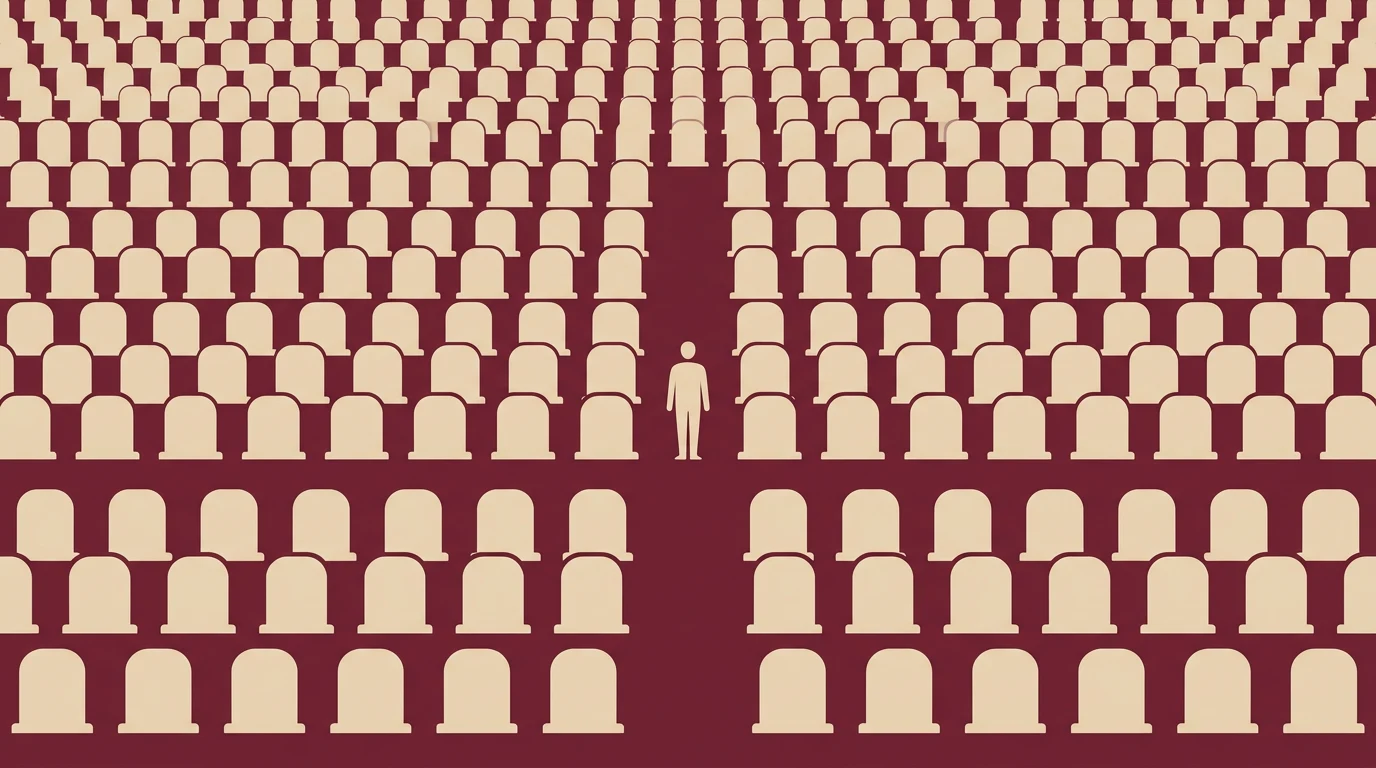
I opened my bookmarks folder labeled “AI - tools” and for a moment felt like an archaeologist who accidentally excavated his own youth. Two hundred and forty-something links. Avatar generators whose brands no longer exist. Browser plugins promising to write every email for me in a “professional but friendly” tone. An app for making podcasts from text that I launched once and never again. Three different “second brains,” none of which remembered anything of value to me. A graveyard. A pretty, colorful, dead graveyard.
And then I thought something that would have seemed like heresy just two years ago: my AI stack in 2026 is smaller than it was in 2023, and that’s exactly the change I was waiting for. Not bigger. Not “optimized.” Smaller. Ninety percent leaner and more effective than ever.
Because the truth the AI industry doesn’t want to say out loud is this: for the last three years, we weren’t building stacks. We were collecting fear of missing out, packaged in nineteen-dollar-a-month subscriptions.
The Disease Called “Maybe This Will Change Everything”
You know this mechanism because you’ve probably been through it yourself. A new tool appears. Someone on LinkedIn writes a thread about AI. You bookmark it “for later.” You create an account. You click three times. You tell yourself that when you have a moment, you’ll dig into it. The moment never comes, but the account stays, the subscription renews, and you carry a quiet guilt that you’re not using its potential.
I call this the potential tax. You don’t pay it with money, though you do that too, but with attention. Every tool in your stack isn’t a gain, it’s a cost: the cost of remembering it exists, the cost of deciding which of five identical chats to use for the same task, the cost of context-switching between twelve tabs, each screaming that it’s the most important.
In 2023 and 2024, I fell for this completely. I had a separate tool for transcription, separate for “understanding” documents, separate for notes, separate for research, separate for generating images, separate for “thinking.” I felt like a Boeing pilot surrounded by a hundred switches, except the pilot at least knows what each one does. I was just pretending to control the cockpit, while in practice I always made an emergency landing in the same chat where I started.
You don’t measure stack maturity by the number of tools you have. You measure it by the number of tools you’ve had the courage to delete.
And only in 2025 did something break in me. I started deleting. Without sentiment, without “maybe it’ll come in handy.” The rule was brutally simple: if I hadn’t used a tool in the last thirty days consciously and with concrete results, it went in the trash. Not the archive. The trash.
What Dropped Out and Why It Doesn’t Hurt
An entire category I call “AI wrappers for one trick” dropped out. An app that only does summaries. An app that only turns text into posts. An app that only generates titles. Each was a wrapper around the same language model I already had direct access to elsewhere. I was paying for an interface and one pre-made prompt. It’s a bit like buying a separate knife for each vegetable when you have one good one in the drawer that can handle the whole market.
“Second brains” dropped out. I say this with some regret because the idea is beautiful: a tool that remembers everything I read, thought, and noted, and surfaces it at the right moment. The problem is that none of them remembered what was important to me, only what was easy to index. I got a digital hamster that diligently hoarded paragraphs but had no idea why it was collecting them. The real second brain turned out to be something embarrassingly analog - my handwritten notes and one good model I paste them into when I want to think out loud about something.
Image generators in the “I have five because each is better at something” version dropped out. This was a particularly insidious trap because it sounds rational. This one’s better at faces, that one at text, that one at style. In practice, I spent more time deciding which to use than actually creating. I chose one. The one that’s good enough in ninety percent of cases. I’ll survive the remaining ten percent.
And something else dropped out - the belief that newer always means better. This was the hardest amputation. Because the AI industry lives on one assumption: that what you used yesterday is already obsolete. That you have to chase. That if you’re not testing the newest model on launch day, you’re falling behind. Well, no. Falling behind is a myth sold by those who get paid for your insecurity.
What Stayed - and Why These Specifically
Three things stayed. Not three apps, because that’s too narrow a word. Three functions that survived the purge because each genuinely changes how I think and work, not just how my screen looks.
First: one powerful, universal conversational model that I treat as a thinking partner, not a task automaton. It doesn’t change from task to task. It’s one window I return to when I need to think something through, break it into parts, check if my argument holds, or write the first ugly version of anything. I’ve learned to talk to it like a sharp, well-read colleague who never gets tired and never takes offense when I say “no, that’s nonsense, start over.” I don’t expect truth from it. I expect friction. And friction that leads to better thinking is worth more than ten tools that hand me ready-made answers.
The second thing that stayed: research that can cite and search in real time. This is the only “AI search” category that survived because instead of making things up, it shows me where it knows from. For someone who writes publicly and can’t afford to repeat hallucinations as fact, this isn’t convenience. It’s professional hygiene. The rest of the “search” toys that just prettily packaged unverified nonsense in a confident tone were the first to go.
The third thing - and this will be controversial - is AI built directly into tools I already use. Not a separate app. Not another tab. A model that lives in the editor where I write, and in the place where I keep code or notes. The biggest lesson of 2025 for me was that the best AI is the one I forget I’m using. Not the one I have to pilgrimage to through three clicks and a login. The one that’s just there, where I already am.
Three things. A model for thinking, research for checking, an embedded assistant for doing. That’s my entire stack. The rest was costume.
Why a Smaller Stack Makes a Better Human
You could say that tools cost nothing, so why not keep them as backup. But this is exactly the thinking that for three years inflated my digital life to dimensions where I stopped finding myself in it. Tools do cost. They cost by each occupying a piece of your head, a quiet reservation of attention for “someday I’ll get to it.”
But there’s an even deeper reason I reduced my stack, and it has nothing to do with productivity. It’s that the more AI tools I had, the less I thought for myself. Each promised to take some fragment of effort off me - and it did. The problem is that part of that effort was me. When you hand over research, summarizing, the first draft, the title, the idea, and editing to a machine, at some point the question becomes: what in this text is actually still yours.
A smaller stack forced me to return to myself. The conversational model stayed because it helps me think - but I’m still the one thinking. Research stayed because it verifies - but I’m still the one deciding what’s true. The embedded assistant stayed because it speeds things up - but I’m still the one who knows where I’m going. Everything that dropped out had one thing in common: it wanted to think for me, not with me.
AI that replaces you is convenient exactly until the moment it stops being clear why you’re still here.
I’m not naive. I know that in a year something will appear that promises to change everything again. I know models will be better, cheaper, and more ubiquitous. I know a new wave of tools will emerge that I can’t even imagine today, and some of them will be genuinely valuable. I have nothing against the new. I have something against hoarding the new as a substitute for thinking about what I actually need.
Because maturity in your relationship with technology isn’t about having everything. It’s about knowing what you don’t want. And being able to close a tab without feeling like you’re losing something.
Google · Your sourcesQuantslant higher in your Google - one clickAdd to preferred sources →One Question Instead of Two Hundred Bookmarks
I deleted that bookmarks folder. All two hundred and forty-something. I didn’t archive it, didn’t make a “just in case” backup. I deleted it. I felt lighter, as if I’d taken off a backpack I’d carried so long I’d stopped feeling its weight until I set it down.
If I had to leave you with one thing from this piece, it’s not a list of tools, because in a year it’ll be outdated and in two years laughable. I’m leaving you with one question I now ask every new shiny thing before I let it into my stack. Not “is this impressive.” Not “are others using this.” Not “is this the future.” Just one single question: does this make me think better, or does it just make me think less.
Most AI tools we’ve built so far are the second answer. The art of 2026, at least mine, is having the courage to tell them “no” and stay with the handful that chose the first. Let the graveyard of bookmarks lie. I’m going to think.
More on this from QUANTSLANT

 guides·GPT: What It Means and How It Differs from ChatGPTGPT is a model family, ChatGPT is an app. Learn how tokens work, context budgets, and how to control model outputs without mixing up the concepts.