Anthropic Launches Model Hardware Standard for Lab Equipment
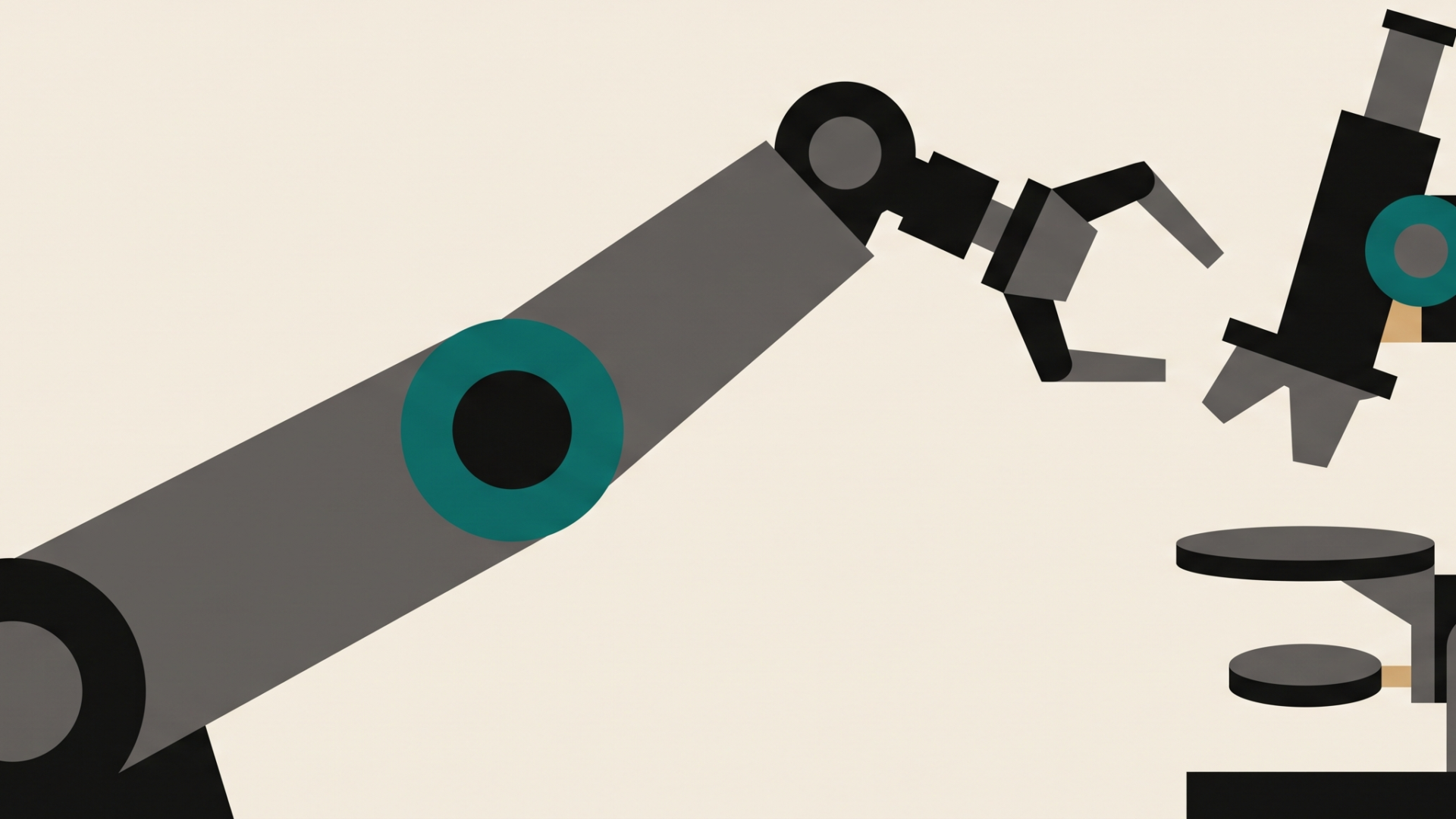
Anthropic has released a research preview of its Model Hardware Standard, a set of standardized drivers that lets AI agents interface with and control physical devices such as microscopes, robotic arms, and laser systems.
👁 116 reads
Anthropic has released a research preview of its Model Hardware Standard (MHS), a set of standardized drivers designed to let AI agents interface with and control physical devices - moving agentic AI beyond text, images, and code into the physical world for the first time under a common specification.
- Anthropic's Model Hardware Standard (MHS) provides a common interface so AI agents can control arbitrary hardware devices over a network without custom translator software.
- The initial focus is scientific labs, where MHS could cut weeks or months of experimental setup down to hours or minutes, according to Anthropic.
- MHS integrates with the Model Context Protocol so models like Claude can operate instruments in natural language, adjust parameters in real time, and recover from hardware errors without human intervention.
The standard provides a shared interface and common data-format layer so that disparate hardware components - microscopes, cameras, robotic arms, rotating laser systems - can communicate across a network without needing what Anthropic calls a bespoke “translator” program between each pair of devices. The company says the approach could compress what currently takes weeks or months of exacting experimental setup into “hours or minutes.”
The effort was sparked by an observation at the HHMI Janelia Research Campus in Ashburn, Virginia, where Anthropic Technical Staffer Alek Kemeny watched neuroscientist Arco Bast coordinate rotating lasers, microscopes, and cameras through a single common interface for a memory-formation experiment.
“This idea could be used to have AI run any science experiment in the world.”- Alek Kemeny, Anthropic Technical Staffer
MHS devices can be operated directly via command-line prompts and API code files without any AI model involved. But when connected to a model like Claude through the Model Context Protocol, researchers can control instruments in natural language. Anthropic says the combination lets models “reason through each step in an experiment, update parameters in real time, and, in some cases, recover from hardware errors without intervention.” Demonstrated examples include Claude adjusting a laser and using a separate camera to verify calibration, a model focusing a microscope and autonomously repositioning it to regions of interest, and Claude reasoning out how to direct a robotic arm to pick up an aluminium can - a task it had not been specifically trained on. The standard also includes a tagging system that describes a device’s real-world physical constraints so models can respect hardware limits during automated sequences.
Practitioner takeaway: For developers and lab operators building automation pipelines, MHS represents a potential reduction in integration overhead - one standardized driver layer instead of one-off software bridges for each instrument pair. Anyone already using Claude via the Model Context Protocol could, in principle, extend those same workflows to physical lab hardware as MHS device support widens beyond the current research preview.
Google · Your sourcesQuantslant higher in your Google - one clickAdd to preferred sources →
More on this from QUANTSLANT


 news·Google Launches Gemini 3.5 Transcribe Speech-to-Text Model