Claude and European Groups: One Attacker, Multiple Targets
Anthropic revealed a hacker used Claude to target European groups. Here is why target count differs from breach success and what it means for SaaS security.
Update (9 Nov 2026): Claude Fable 5.2 and Mythos 5.2 are out - prices, access and benchmarks are in my Claude Fable 5.2 guide.
👁 115 reads
Status as of: October 10, 2026
Anthropic detailed how an actor utilized Claude to develop attack tools targeting European organizations in its report from September 10, 2026. This case illustrates a problem far more critical than whether AI can outright replace a hacker: automation can consolidate capabilities on the attacker’s side, while the burden of defense and remediation remains fragmented across multiple entities. However, you must separate a campaign’s reach from its actual success rate, and distinguish model assistance from fully autonomous operations. That distinction serves as the starting point for this entry in our AI case studies series.
Overview
- Incident: According to Anthropic, September 10, 2026, a French-speaking actor used Claude to build offensive security tools.
- Scale: Le Monde, September 11, 2026, identifies roughly 40 organizations linked to the French far right as intended targets.
- Limitation: The number of targets does not equal the number of successful compromises. A vendor’s threat intelligence report outlines a campaign, but it is not a legal verdict assigning liability.
Timeline
- Spring 2026 - Activity window identified by Anthropic in its September 10, 2026 report.
- September 10, 2026 - Publication of the GTG-50029 campaign overview.
- September 11, 2026 - Le Monde publishes its report.
Scale vs. Real-World Impact
| Metric | Source Finding | Analytical Limitation |
|---|---|---|
| Threat Actors | One, according to Anthropic, September 10, 2026. | Does not indicate the total human labor invested or any autonomous capabilities of the model. |
| Targets | Roughly 40 organizations according to Le Monde, September 11, 2026. | The scope of an actor’s targeting list does not measure the actual compromise rate. |
| Outcome | Data theft confirmed in some instances - Le Monde, September 11, 2026. | No verified data to compute an overall success percentage or assume uniform damage across targets. |
What Happened: A Human Operating an AI Model
Anthropic’s scope encompasses political parties, media outlets, think tanks, and their third-party SaaS vendors - report from September 10, 2026. Claude’s role was strictly to assist in building offensive tooling. This does not imply that the model picked targets independently, formulated hostile intent, or executed the campaign autonomously.
The operational timeline stops where verified facts end. There is no public basis to reconstruct how individual organizations were breached, how internal staff responded, or what specific remediation followed. What remains clear is the chain of responsibility: a human operator leverages a tool, directs attacks against targets, and third parties bear the downstream consequences. Focusing exclusively on the AI model obscures the human accountability driving the campaign.
Analysis: Asymmetry Without the Myth of AI Autonomy
The leverage generated by automation does not require autonomous artificial intelligence. Assisting in tool development can fundamentally shift the ratio between an operator’s manual effort and the operational breadth of their campaign. This represents potential leverage rather than a measured efficiency metric in this specific case. Proving that gain would require comparing the operator’s output with and without LLM assistance, which public incident disclosures do not provide.
This asymmetry is also organizational. An attacker aligns their full focus toward a chosen objective, whereas an organization must balance data protection against daily operations. For smaller entities, the central question is not just which security tool to buy. Just as critical is knowing who makes the call when strict security measures hinder service availability. This is an organizational governance problem, not solely a technical one.
The presence of SaaS providers in the threat landscape expands this assessment. When reviewing your security posture, you must evaluate the third-party platforms holding your records and how they deliver breach disclosures. Outsourcing tools to the cloud does not eliminate questions regarding data scope, access rights, and incident response protocols. Note that this general observation does not confirm the precise entry vector used in this specific incident.
It is unhelpful to frame the issue around whether Claude was strictly necessary for the attack. A tool can meaningfully aid an actor without being an indispensable requirement. Conversely, attributing the entire campaign outcome to the model merely because it was mentioned in a threat report is equally flawed. A sound assessment distinguishes the model’s contribution, the operator’s strategy, and the defensive posture of the targets.
Who Gained, Who Lost, and Long-Term Implications
The verified loss in this case is data theft across a subset of organizations, not the mere presence of an organization on a target roster. You should not assume identical losses across all targets or equate stolen data directly to quantified financial damage. Post-incident triage costs represent a separate operational expense requiring independent evaluation.
The actor’s benefit from AI assistance remains largely theoretical: reduced tool-crafting overhead or broader repeatability. Without controlled benchmarks, the precise operational lift cannot be quantified. Similarly, publishing a threat report allows an AI provider to demonstrate transparency, but it does not serve as proof that its safeguards prevent all misuse. Vendor disclosures should be judged on their substantive findings rather than the simple act of disclosure.
Privacy protections do not depend on political alignment. One can criticize an organization’s politics while still condemning the unauthorized theft of its records. Condoning confidentiality breaches based on a target’s ideology undermines the foundational standards of information security. Technical evaluation of attack vectors must remain separate from political judgments.
Lessons for Teams and Users: A Practical Scenario
Consider a scenario where a small organization receives an alert from a cloud provider regarding a potential breach of contact records. This is an illustrative walkthrough of incident principles, not an exact reconstruction of the Anthropic case. The organization faces immediate decisions: whether to suspend the service, how to determine the compromised data scope, and what to communicate to users. Halting operations entirely or ignoring the warning are both counterproductive extremes that cannot replace systematic verification.
- The Organization: Designates an incident lead, compiles confirmed details, and requests specific data scope verification from the vendor. Teams must separate active containment steps from the evaluation of records that have already been exposed.
- Communications: Transparently disclose what is confirmed, what remains under investigation, and when the next update will follow. Never claim confidentiality has been restored simply because the threat actor’s active access was severed.
- The Individual: Review notices specifically relevant to your personal information and follow confirmed mitigation guidance. A sensational headline about an attack is insufficient to determine your actual personal exposure.
In this framework, terminating an attacker’s AI account cuts off their access to that specific platform, but it cannot delete copies of data already exfiltrated. Abuse prevention and victim recovery operate on entirely different tracks. Revoking an attacker’s API access does not mean the overall incident is contained. This is an architectural observation, not a claim regarding specific account actions taken in this case.
When interacting with SaaS providers, request explicit confirmation regarding your tenant’s data. A broad platform-wide bulletin may not specify which of your records were compromised. Documenting your vendor exchanges, separating vendor answers from internal assumptions, and logging unresolved inquiries ensures a clear audit trail.
What Remains Unknown
Exact operational timestamps and the full extent of exfiltrated data are not detailed in Anthropic’s September 10, 2026 report. Furthermore, there is no objective way to isolate the exact proportion of success attributable solely to the language model. These gaps limit comprehensive impact assessments, but they reinforce an essential distinction: attack potential, operational execution, and verified organizational damage are three separate things.
Pre-Incident Preparation
Smaller teams should maintain an emergency contact list independent of their primary business inbox. If your core email environment goes offline, recovery playbooks stored inside it are useless. Determine in advance who contacts SaaS vendors, who manages internal notifications, and where incident logs are documented. These recommendations outline practical operational readiness rather than an audit of the specific entities involved in this case.
Google · Your sourcesQuantslant higher in your Google - one clickAdd to preferred sources →Sources
More on this from QUANTSLANT



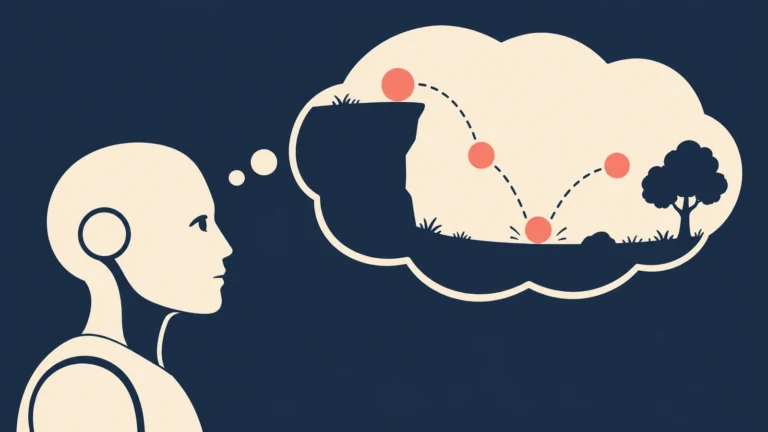 state of ai·World Models: How Genie 3 and Marble Teach AI Physical RealityMove over LLMs. World models like DeepMind's Genie 3 and World Labs' Marble are teaching AI to grasp 3D space, time, and the fundamental laws of physics.