Deepfakes: How to Defend Against AI-Generated Fake Videos
Deepfake technology can now clone your face and voice in seconds. Here's how the technology works and what you can do to protect yourself today.
👁 113 reads
A few years ago this would have sounded like Hollywood. Today it’s routine. Take any YouTube video - a five-minute speech, a press conference, even a podcast clip. Upload it to an online tool. Within seconds you get a deepfake - a video where your face says things you never said. Your voice. Your lip movements. Your eyes. But not your words.
This isn’t theory. It’s happening now, and it’s happening faster than we’ve managed to grasp the threat. The internet is already full of fake recordings of politicians, celebrities, business leaders. Some are made for memes, others for blackmail, still others for political manipulation. The line between entertainment and weaponization is blurring at a pace that frightens even the tech industry.
But here’s what I want to say right in the first paragraph: this isn’t about panicking and waiting for the end. The problem is serious, but it has solutions. Some already available today. Others still emerging. We must always remember one thing - everyone has a stake in this: those who make deepfakes, those who use them, and those who defend against them. Because the more advanced the attack technology becomes, the more advanced the defense proves to be.
How Deepfakes Are Made - Three Seconds Turn Truth Into Lies
Before we talk about defense, you need to understand the game. Let’s start with the technique.
Deepfakes are created using neural networks called autoencoders and generative adversarial networks - GANs. Sounds complicated, but the principle is simple: an algorithm takes a mass of recordings of your face (the more the better), extracts characteristic features - forehead shape, jawline, eye movement - and creates a mathematical map of what “you” are. Then it overlays that map onto another video. Your face on someone else’s body, your eyes on someone else’s movements.
Voice is a separate algorithm. It’s modeled on recordings - press conferences, videos, phone calls. The network learns intonation, accent, rhythm, even the pauses you make between words. The result? When you ask the AI “say something I never said,” you’ll hear exactly yourself. Except it’s not you at all.
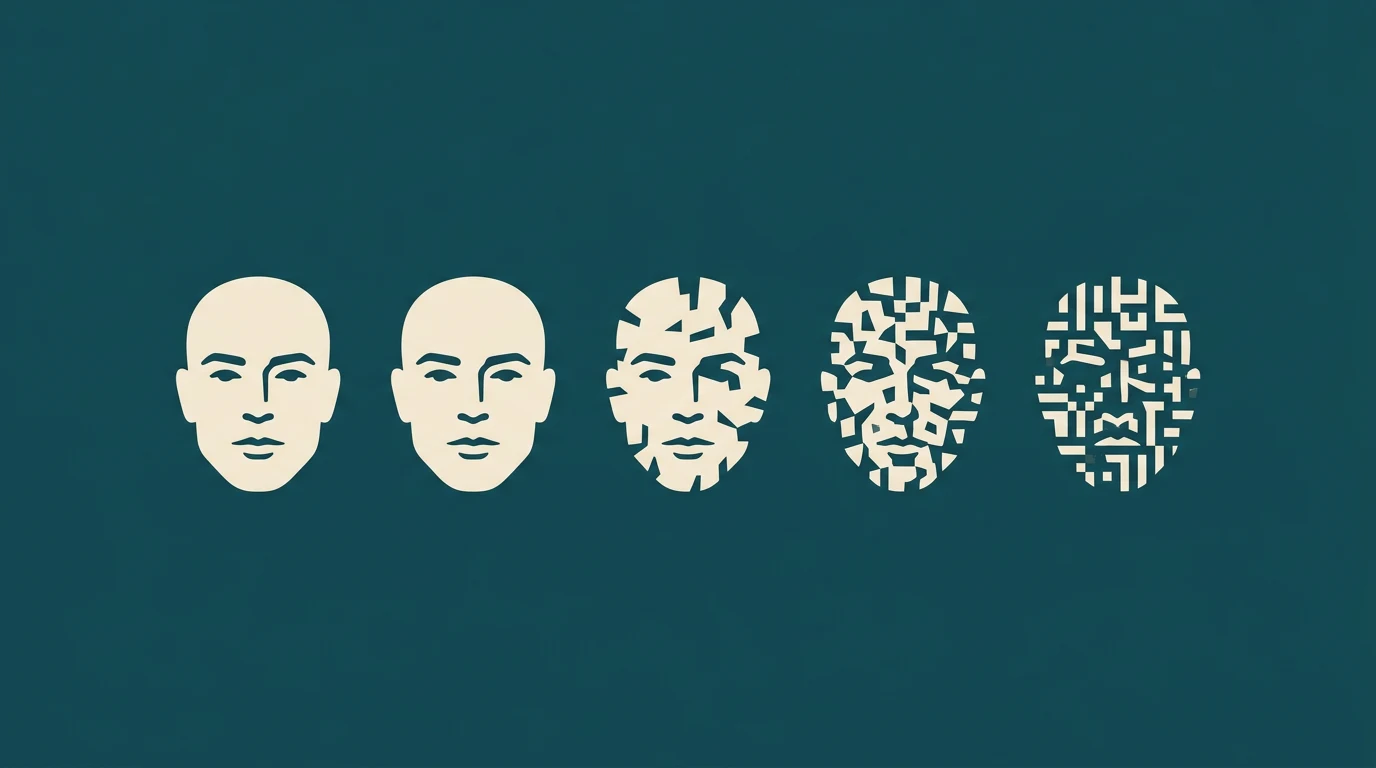
Five years ago this technology was reserved for specialists at top universities and AI labs. Today? Anyone can do it. Mobile apps, websites, free open-source tools - everything is available. YouTube makes millions on clips where politicians say things that were never said. TikTok is full of entertainment - your face singing opera or doing backflips.
The problem starts when entertainment becomes a weapon. Blackmail. Social manipulation. Political disinformation at massive scale. Reputation destruction within hours.
Accepting Reality: Fake Videos Will Always Be Among Us
Here I need to say something that sounds hopeless but is absolutely necessary: we will never get rid of deepfakes. And we shouldn’t try to.
First: censorship is worse than the disease. Attempts to punish every deepfake in the world would lead to such a level of surveillance and control that we’d hand ourselves over to dystopia. Second: deepfakes have legitimate uses - in film, games, virtual assistants, trauma rehabilitation. Third: algorithms will always chase technical solutions, and you’ll have to choose between the “ideal” (no deepfake ever gets made) and the “practical” (we change how we detect and verify them).
So instead of fighting the technology, we should change the rules of credibility.
A world where any recording can be fake is a world where the only credible proof is the source. Not the video. The source.
Remember that. It’s the key statement of our times.
Digital Signatures, Chains of Trust, and the Return to Source
Serious institutions are already working on solutions. Leading the way are solutions based on cryptography and verification chains.
Imagine this scenario: a president delivers an important statement. The recording appears online. But it comes with a digital certificate - cryptographic proof that the recording comes from the presidential camera, that it hasn’t been altered, that it comes from a specific time and place. Such a “signature” can be verified by anyone. If a deepfake appears on Twitter without that signature, or with a fake signature, everyone knows immediately.
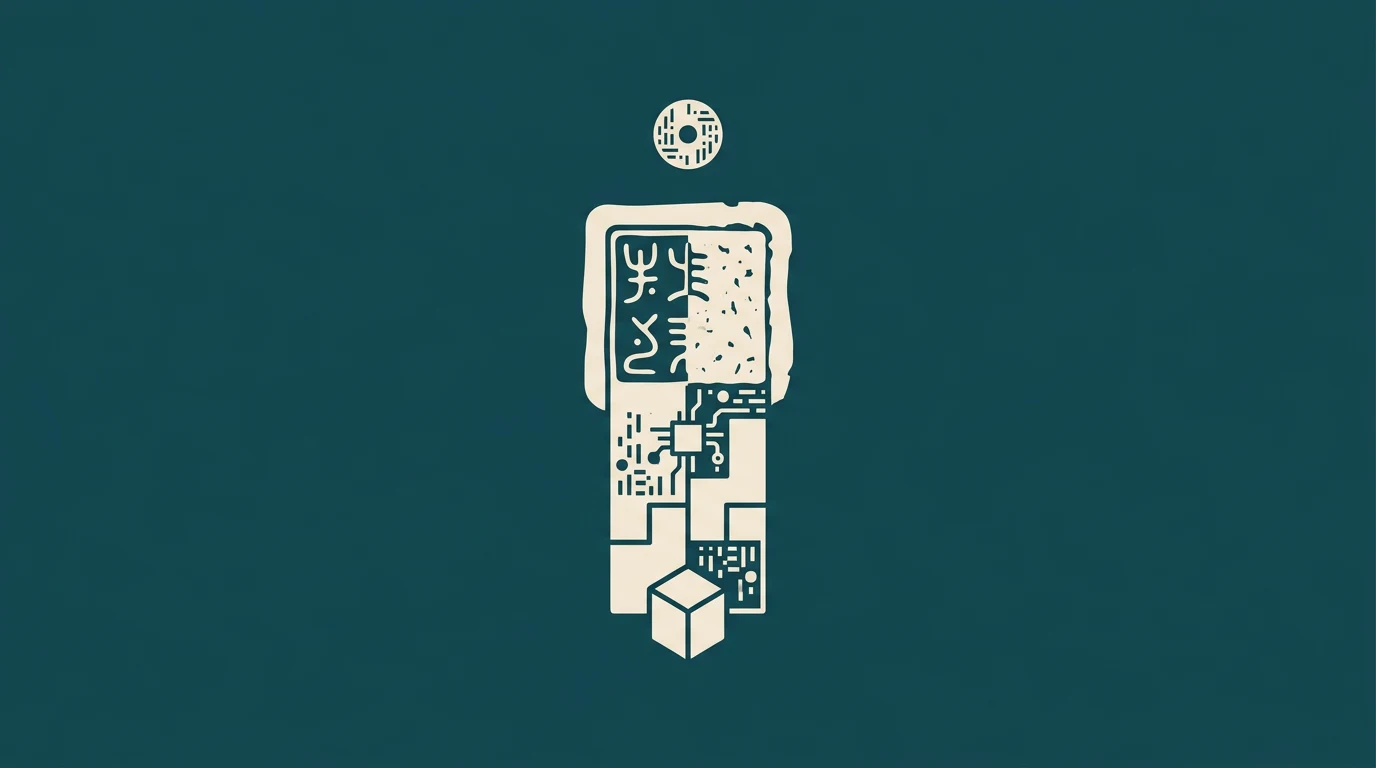
This isn’t magic - it’s a combination of technologies that already exist. Blockchain, encryption, metadata. More and more “Content Credentials” tools (like those from Adobe) are starting to work in this direction. Sensible media institutions are beginning to implement them.
But - and this is a big “but” - it requires global cooperation. Media, platforms, governments, the tech industry. And here’s where politics begins.
Where the Money and Power Are in All This
Because of course they’re there. Every side of this battle has its interests.
Social media platforms? Their algorithms make money from engagement. A deepfake claiming a politician said something outrageous - better reach than boring reality. They remove fakes when they’re exposed, but by then they’ve already profited. Many deepfakes live happily without the platform needing to chase them down.
Governments? It depends. Some fight disinformation because their citizens suffer from it. Others stay silent or - who knows - maybe produce them themselves.
The tech industry? Divided. Some make deepfakes for entertainment or profit. Others work on detectors - tools for identifying deepfakes. Everyone has bills to pay, everyone has a business model.
I’ll be honest: we’ll never have a perfect verification system until we establish who controls it and why. This is a question of power, not just technology.
What You Can Do - Concretely, Today
You don’t have access to blockchain or security agencies. But you have common sense. And you can act.
First: if a recording somewhere shocks you - look for the source. Where did you find it? Did it appear in several credible media outlets, or only on Reddit and Instagram? Did the person confirm it was them? Sometimes the answer is obvious before you call in a detective.
Second: media literacy - the ability to read media - is now a survival skill. Learning how recordings are made, how algorithms work, where the fakers are. This isn’t a boring lecture but a practical tool.
Third: if you’re a public figure or work in business where your voice and face have value - archive them securely. Get Content Credentials certification. Publish with metadata. Be ahead of the curve, not behind it.
Fourth: use whatever legal rights you have. Pornographic deepfakes, blackmail deepfakes, have always been illegal. Now more and more jurisdictions are regulating them explicitly. If someone makes a deepfake of you that harms you - report it. Not all are unstoppable.
Narrative Instead of Panic - Why This Matters
You know what worries me most? Not the deepfake technology itself. It’s the fact that many people have started to believe that nothing can be trusted anymore.
“If a recording can be fake, then everything can be fake.” This logic is somewhat ugly and dangerous. It causes some to swing to the other extreme - believe everything that confirms your identity, or - learn to be cynical about every piece of evidence. Both options are a loss.
Reality is more nuanced. Deepfakes will exist. But tools for tracking them are developing just as quickly. Sources will be more important than content. Verification will require work, but it always has - we just forgot about it.
We need to learn a new narrative: we live in a world where technology can deceive us, but where we can also say “wait, let me check.” This isn’t a world without trust - it’s a world of careful trust. Better than both extremes.
Google · Your sourcesQuantslant higher in your Google - one clickAdd to preferred sources →Conclusion: Think Source, Not Image
If I take one sentence from this entire text that I want to stick in your head, it’s this:
A world full of deepfakes teaches us something we should have known all along - that credibility comes from the source, not the medium. Not from how a recording looks, but from where it comes from, who created it, who certifies it, what markers it has, what context it has.
This is harder than just believing your eyes. But it’s more true.
Deepfakes won’t disappear. But your capacity for skepticism and procedure - that never wears out. You just need to practice it.

More on this from QUANTSLANT
 guides·Model Promised JSON, Parser Returned Null: Five Runs, Three CausesYou ask a model for JSON, it promises JSON, and your parser returns null. Here's why it happens and what actually works when dealing with long-form content.