Sora and Veo 3: When Video Learned to Lie
AI video generation crosses a threshold that static images never did. Why Sora and Veo 3 aren't just another Midjourney - and what that means for truth.
👁 115 reads
Update September 18, 2026: for products and models that have changed names or been discontinued since publication, I’ve added notes in parentheses with current status and links to the current guide. The rest of the text remains as originally published.
A photograph could always be dismissed as a single lie. One frame, one shot, one captured moment that someone could have staged, cropped, or retouched. We learned to live with that somehow over a hundred and fifty years. But video? Video was our last concrete proof for decades. If something moved, breathed, blinked, stumbled over its own words - it had to have happened. Motion was the seal of authenticity. And that seal has just been broken by Sora (product shut down by OpenAI April 26, 2026; what’s next) and Veo 3 so quietly that most people haven’t noticed yet.
When Midjourney appeared, the reaction was essentially full of wonder and mild amusement. Pretty pictures. Six-fingered hands. Portraits of nonexistent people that looked like album covers for bands that never were. We treated it like a new toy, like a filter on steroids. And I had the sense then that nothing really momentous had happened - because static images had long since ceased to be proof. Photoshop took away photography’s innocence back in the nineties. Midjourney just automated a process that was already achievable for any skilled graphic designer.
Video is different. And I want to show precisely in this piece why the transition from still images to generated motion isn’t a quantitative difference, but a qualitative one - a threshold beyond which lies an entirely different landscape.
Motion Isn’t Just Images Times Thirty
Naive intuition suggests that since film is just a sequence of frames, generating video is the same as generating an image, just repeated many times per second. If that were true, we would have had Sora long ago. The real problem that blocked realistic AI video for years is called temporal coherence. The cup on the table in frame one must be the same cup in frame two hundred. The shadow must fall in the same direction. The face can’t flow from shot to shot like wax. Water must flow according to some semblance of physics, not flicker randomly.
This is where the entire revolution lies. Models like Sora and Veo 3 don’t paint thirty independent pictures per second. They build an internal, simplified representation of the world - something you might call an intuition of how things behave. To generate a convincing ten-second clip, the model must in some sense understand that objects have permanence, that gravity pulls downward, that a face has the same identity when it turns in profile. This isn’t a gallery of postcards. It’s a simulation.
That’s why I think it’s misleading to even put Midjourney and Sora in the same category as “generative art.” Midjourney answers the question “what does this look like.” Sora answers a much harder question: “how does this behave”. And the behavior of the world is much closer to our sense of reality than its appearance.
Why Motion Was Our Last Anchor
There’s something deeply human in this. Our brains evolved to read motion. We can distinguish a living creature from a swaying branch in a fraction of a second, recognize intention from the way someone walks, sense falsehood in a micro-twitch of a face. A static image always required a bit of faith from us - conjecture about what came before and after. Motion required no such faith. Motion simply was.
That’s why video served as the arbiter of truth. Security camera footage, witness material from an event, a politician’s face speaking specific words - these were things that were hard to argue with. You could dispute the interpretation, but not the fact that something happened. Deepfakes existed before, yes, but they required source material, hours of processing, and usually left visible seams. They were a craft for the determined.
Sora and Veo 3 move that capability from a specialist’s workshop to a browser window. And they add something I consider absolutely groundbreaking, though often underappreciated: sound. Veo 3 generates not just images, but a synchronized audio track - footsteps, wind noise, even dialogue matched to lip movements. This is no longer a silent, ghostly dream. It’s a scene with a voice.
A static image could be a beautiful fiction we admired from a safe distance. Video with sound is fiction that looks you in the eye and speaks in your voice. The difference between them is the difference between a painting in a gallery and someone standing behind your door pretending to be your neighbor.
This isn’t hysteria. It’s simply a description of what’s changing right now in the chain of evidence of our everyday lives.
Forces, Interests, and Who Profits
It’s worth asking directly who this technology serves and who’s pushing it forward, because without that the whole discussion hangs in the air. There are several interests and not all of them align.
First, the big AI labs. For them, generative video isn’t a toy, but proof that their models are building increasingly better internal models of the world - and that’s a straight path to what they call general intelligence. Sora wasn’t created so people could make funny cat videos. It was created as a demonstration that a network can simulate reality. The videos are a byproduct, though this particular byproduct happens to be worth billions.
Second, the entertainment and advertising industries. Here the interest is brutally simple: cost. Producing a thirty-second commercial can cost the equivalent of an apartment. If you can get a decent result for a fraction of that cost and in one day instead of three weeks, no declaration about “the value of human creativity” will stop that wave. The advertising market will adopt these tools first without much scruple, because there effectiveness per dollar spent matters, not authenticity.
Third - and this is the side talked about most quietly - those who want to use this technology to mislead. Scammers, propagandists, people building disinformation campaigns, perpetrators of violence using fake recordings for harassment. For them, the drop in cost and barrier to entry is a gift. They no longer need to bribe or hack anyone. A well-formulated scene description is enough.
And on the fourth side stand all of us - recipients who didn’t ask for a world where every recording must be treated by default as potentially fabricated. And this is the cost that won’t appear in any quarterly report, because it will spread quietly across billions of small acts of distrust.
The Uncanny Valley Is Filling In - And That’s Worse News Than It Seems
For years we consoled ourselves that AI video would always have something artificial about it. That characteristic plastic sheen, strange fluidity, eyes that don’t quite live. The uncanny valley - that place where something is almost human, but that “almost” triggers a shiver in us - was supposed to protect us. It was supposed to be a built-in warning.
The problem is that this valley is being filled in with each new model version. And paradoxically, the better the video becomes, the harder it is for us to defend ourselves. As long as a fake looks slightly odd, our brain sounds the alarm. The moment it stops looking odd, we lose the only free defense mechanism we had. We’re left with only conscious, learned distrust - and that’s exhausting, and most people simply won’t maintain it long-term.
Here I see the deepest difference from Midjourney. We had to slip a fake image to someone and convince them it was real. Fake video with sound convinces on its own. It doesn’t need our naivety, because it hits directly at perception mechanisms we don’t consciously control. Images deceive our judgment. Video deceives our senses.
Google · Your sourcesQuantslant higher in your Google - one clickAdd to preferred sources →What to Actually Do About This
I’m not a technophobe and I’m not going to pretend this can be reversed. It can’t. This technology exists, will get better, and will get cheaper. The question isn’t whether we’ll stop it, but how we’ll rebuild our own habits around it.
Suggestions like digital watermarks and metadata about material provenance are a step in the right direction, but let’s not kid ourselves that they’ll solve the problem. Watermarks can be removed, and metadata disappears at the first screenshot. These are bandages, not treatment. The real change must happen in us - in how we think about proof.
I think we’re facing a slow, uncomfortable return to something that seemed outdated: trust based on source, not content. It will stop being enough that I see something. What will start to matter is who’s showing it, where they got it, whether they’re credible, whether they take responsibility for it. In other words - we’ll return to the pre-recording era world, where the word of an editorial team, institution, or specific person meant more than the recording itself. That sounds like going backward, but it’s actually maturing.
And here’s the place for a clear conclusion, because I promised substance instead of ornament. Sora and Veo 3 aren’t just another Midjourney, and treating them the same way is a mistake that could cost us dearly. Midjourney changed the graphics market. Generative video changes something much more fundamental - our relationship with what we consider real. This isn’t a difference of tools. It’s a difference of categories.
For a century and a half, cameras gradually took over from our memory the role of witness. We trusted them more and more, because they seemed unable to lie in motion. They just learned how. And what worries me most isn’t that we’ll watch things that didn’t happen. What worries me is that we’ll learn not to believe in things that really did happen. Because the most dangerous weapon of perfect fakery was never the lie. Most dangerous is that when everything can be faked, truth loses its weight - and then anyone can shrug at any recording and say: that could have been made by a machine.
That sentence is exactly what we should defend against most. Not against fake video. Against the convenience with which it will let us believe in nothing.
More on this from QUANTSLANT

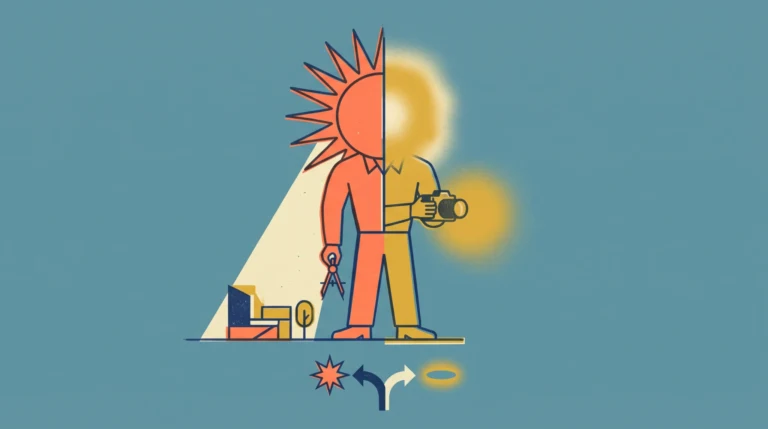 guides·GPT Image 2.5: Sunburst vs Flare - Which Model to ChooseSunburst and Flare in GPT Image 2.5: use cases, quality settings, and API pricing. Documentation comparison and criteria for choosing the right model.