GPT-Image-2.6 Game Mockups: Testing One Scene Across 10 Genres
We tested GPT-Image-2.6 across 10 distinct video game genres using a single scene. Here is how Sunburst and Flare handled UI text and art styles.
👁 121 reads
I took a single scene: a concrete housing estate, a playground, a corner kiosk named “Sklep u Zenka”, a man in a tracksuit, and a grandmother holding grocery bags. Then I asked OpenAI’s new GPT-Image-2.6 to generate screenshots across ten different video game genres, ranging from a 16-bit JRPG to an arcade fighting game. Each image is a single generation pass, without cherry-picking until it looked right. Using the Sunburst model at high quality, generations averaged 52 seconds and cost $0.04 each.
This is not a direct model bake-off, but rather a stress test of how well GPT-Image-2.6 adapts when given a strict visual style and UI convention instead of a generic photo prompt. For performance metrics and comparisons with other models, check out the ChatGPT Images 2.6 overview.
16-bit JRPG
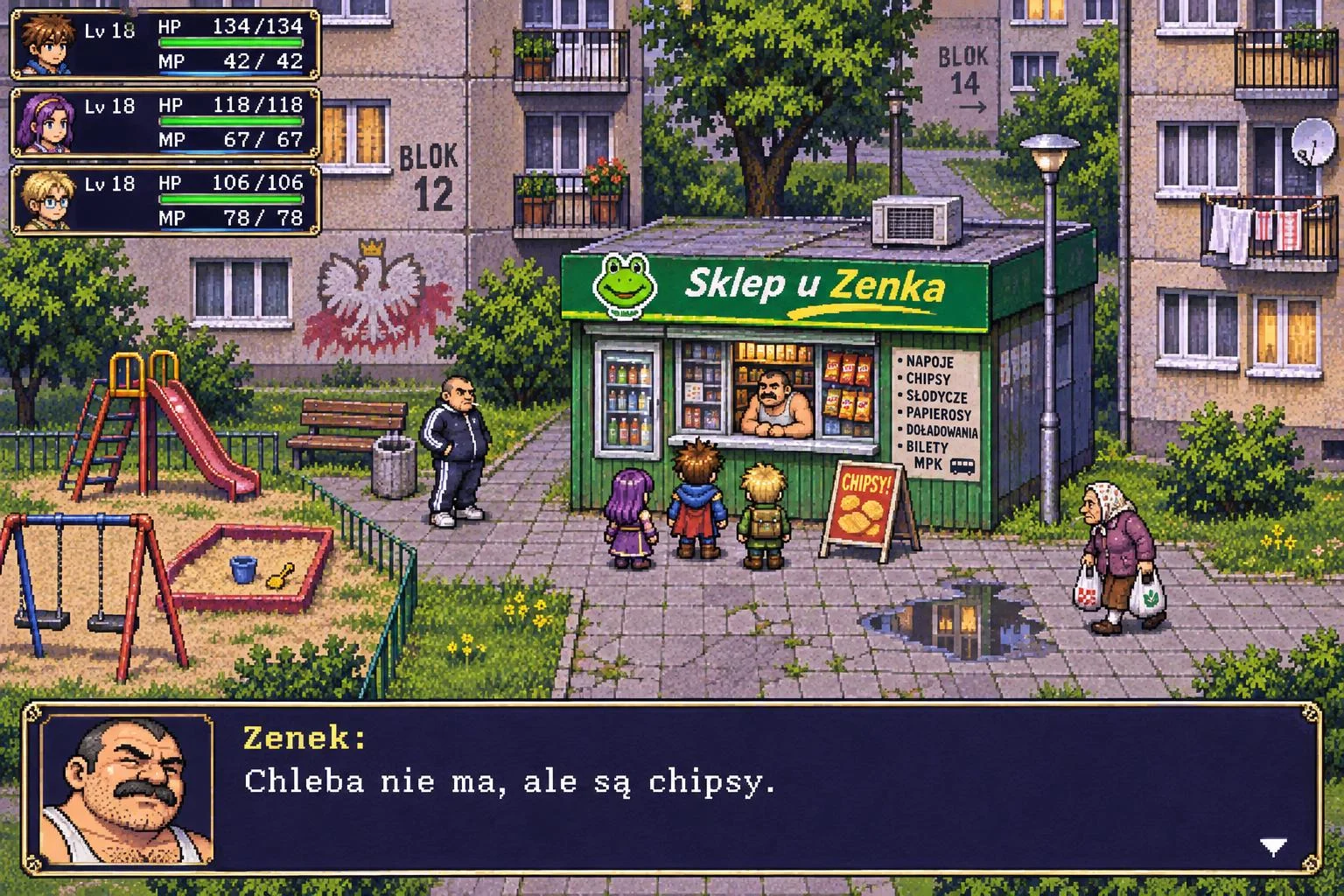
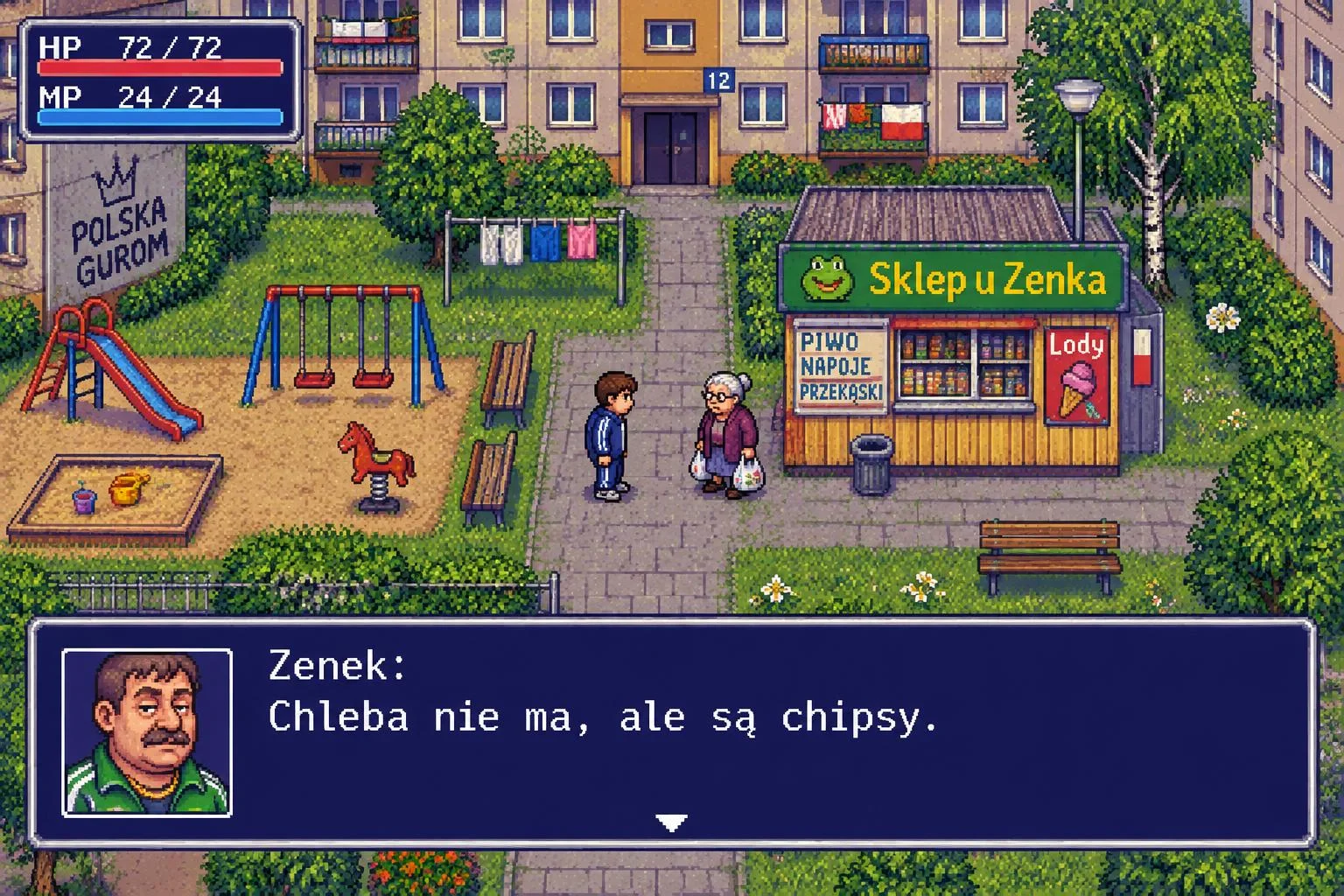
In the Polish-language prompt, I requested a top-down view, health and mana gauges, and a dialogue window containing a translated line: “Zenek: We’re out of bread, but we have chips.” The model independently added a portrait of Zenek with a mustache in the dialogue frame, three party members with level indicators, and an emblem on the apartment building wall. The requested Polish text was reproduced down to the letter, including the colon.
Original PlayStation horror
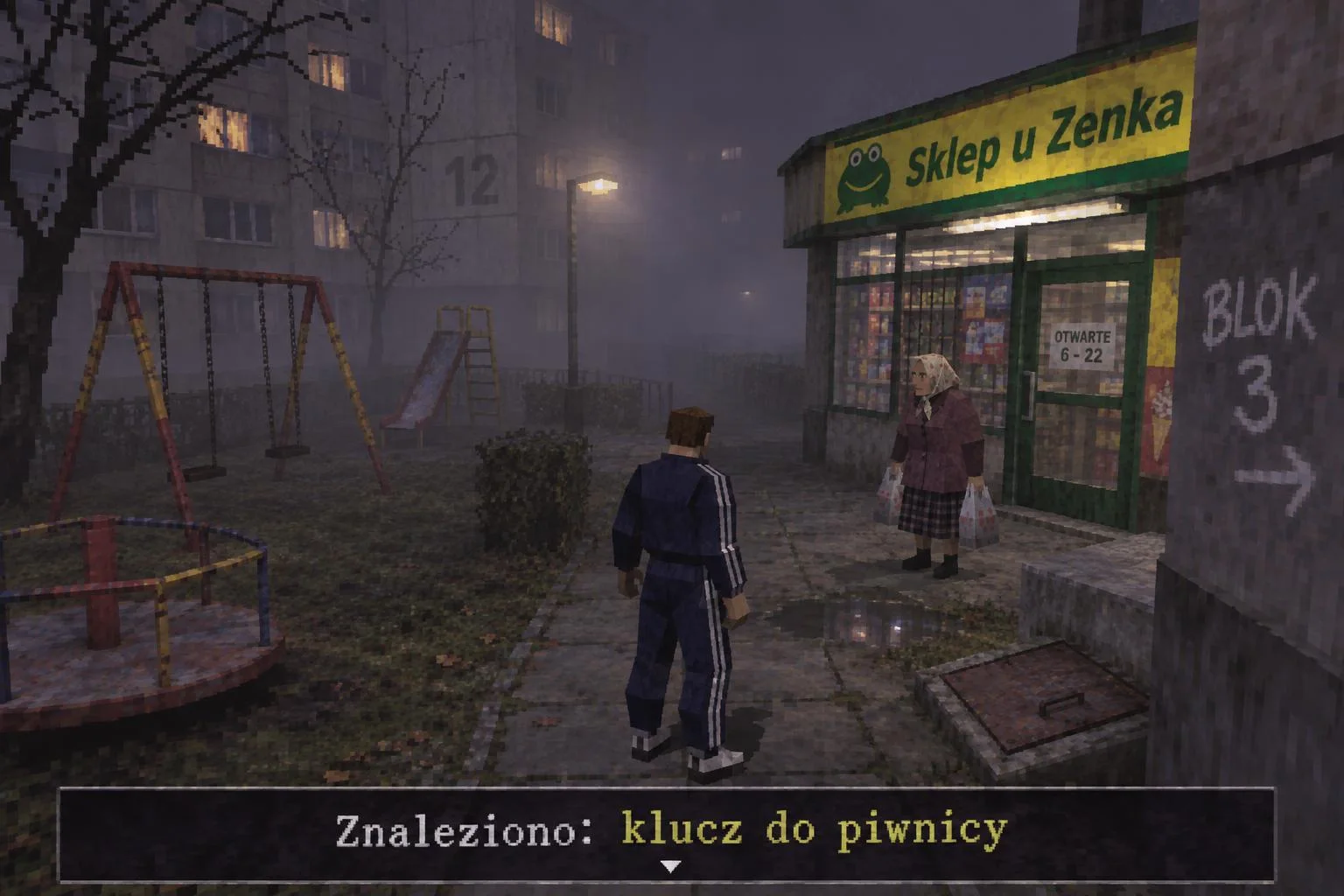
This is my favorite generation of the batch. Volumetric fog, a fixed camera angle, low-res textures, a gloomy stairwell, and the notification “Found: basement key” (translated from Polish: “Znaleziono: klucz do piwnicy”) rendered in a raster font reminiscent of a CRT display. The model captured that original PS1 aesthetic is about atmosphere and lighting limits, not just low polygon counts.
City builder interface
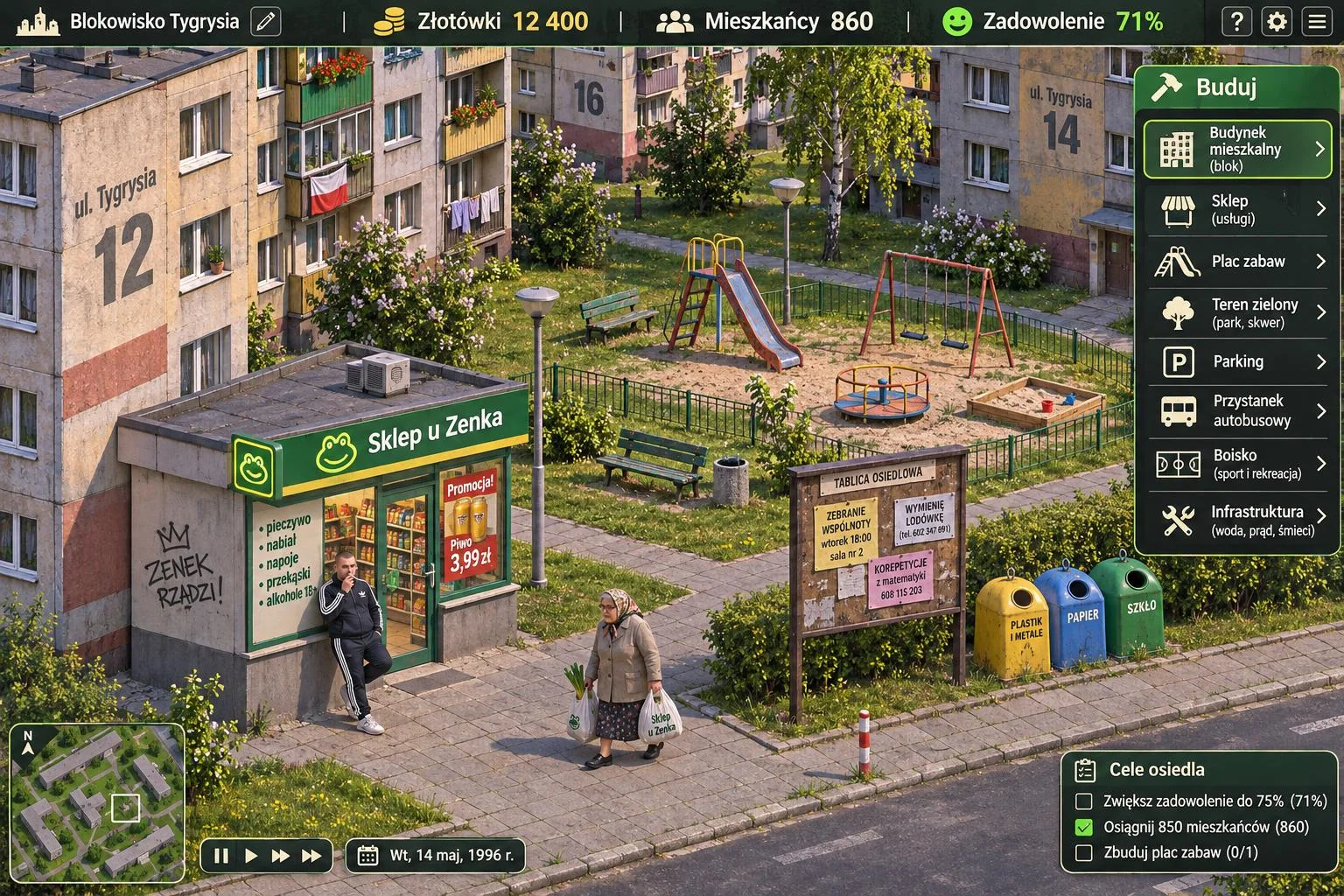
Here, the objective was testing dense HUD elements and small fonts. The top resource bar (“Zlotowki 12 400 | Mieszkancy 860 | Zadowolenie 71%”) appeared cleanly, and the right-hand building menu generated contextually appropriate Polish labels that were never specified in the prompt: playground, parking lot, bus stop, sports court. Older image generators would have produced garbled squiggles here.
Anime open-world game
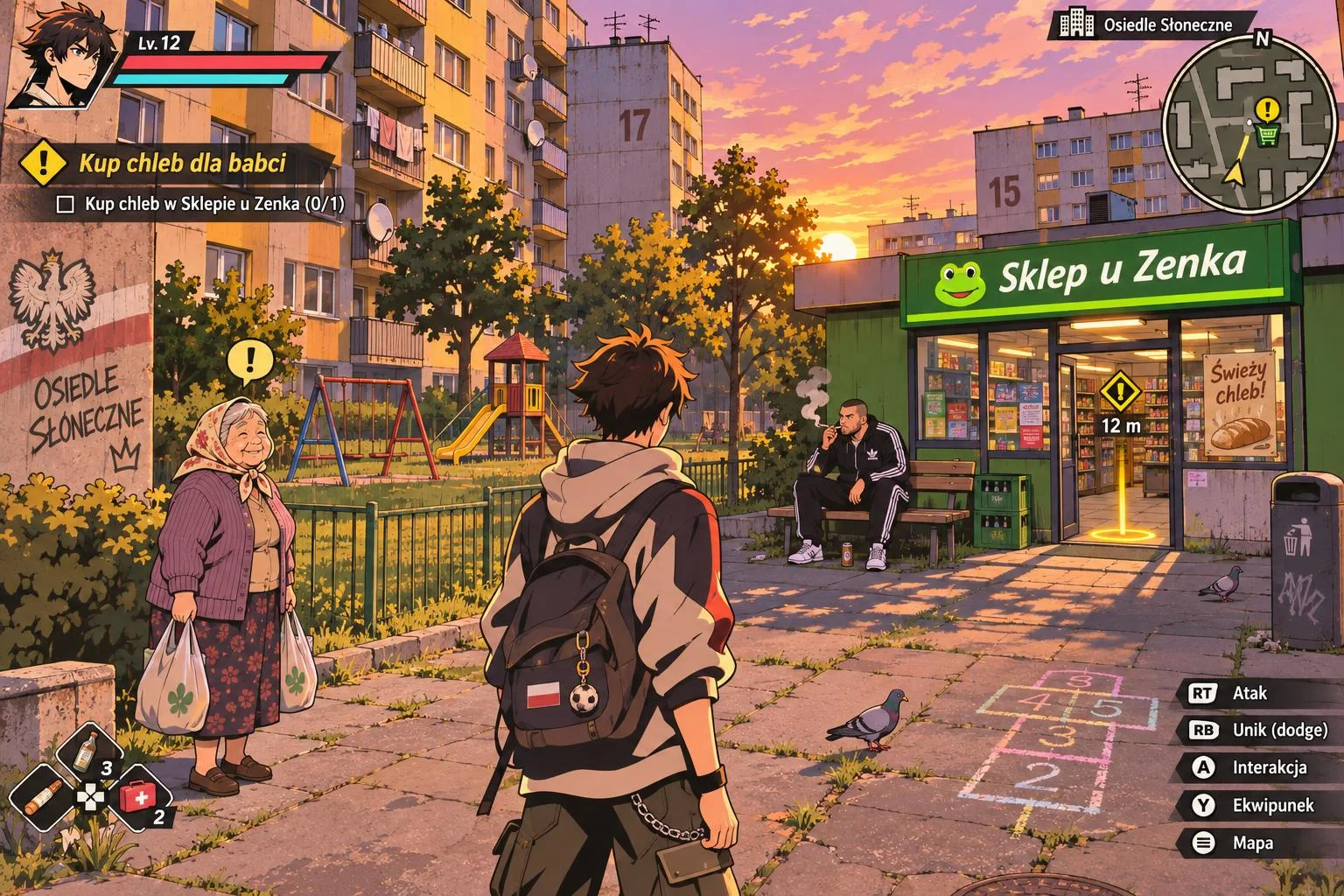
Golden hour lighting, a mini-map, an active quest objective marker reading “Buy bread for grandma” (translated from the Polish test prompt), and a cel-shaded protagonist facing away toward the horizon. It looks like an authentic promotional still for an unreleased open-world adventure.
Voxel sandbox
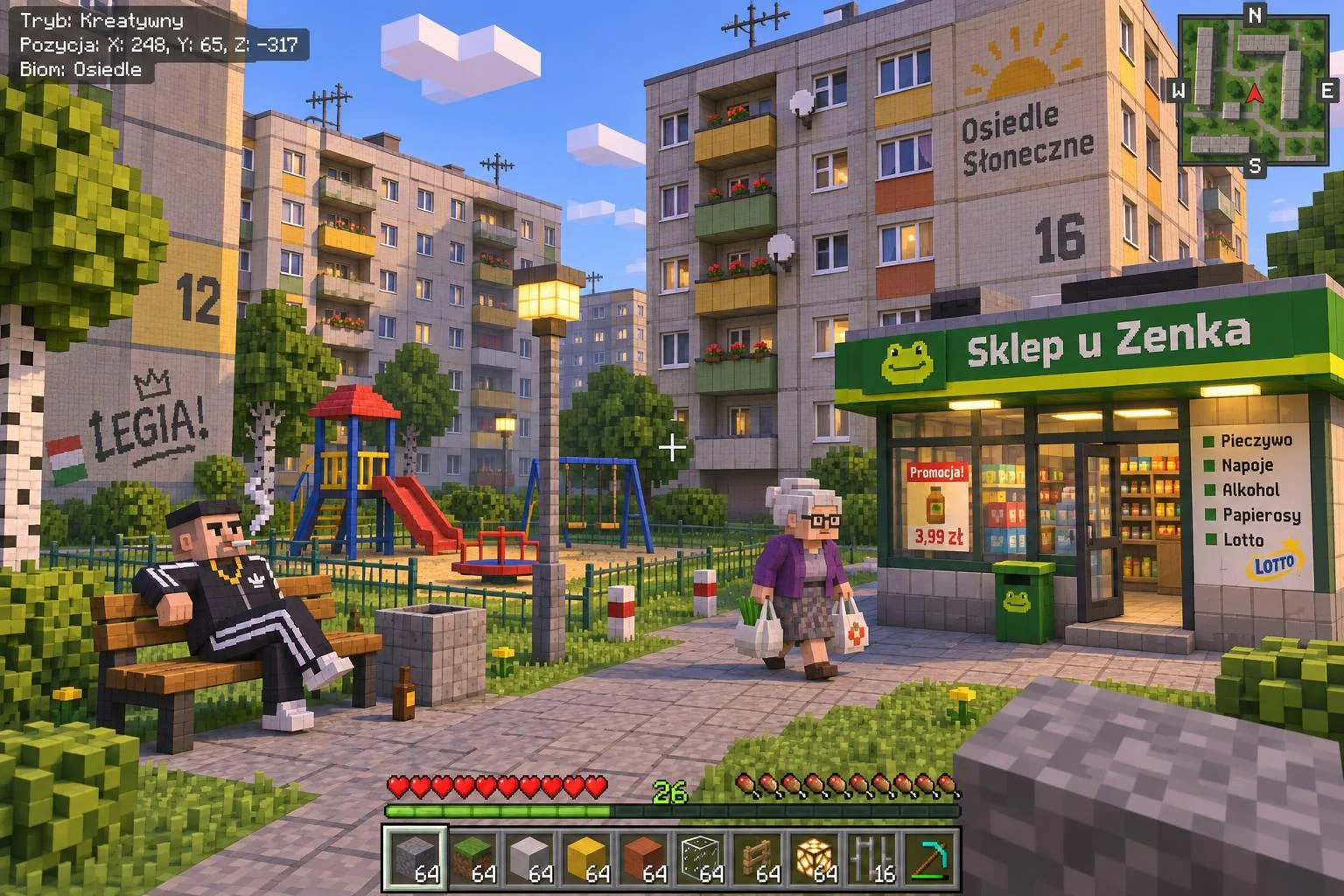
Every element is constructed from textured cubes, complete with an inventory hotbar at the bottom. Despite the voxel styling, the specific architectural layout remains recognizable. Interestingly, the model added graffiti (“LEGIA!”) on its own accord without being prompted. When putting AI graphics into production, monitoring unprompted hallucinations is essential.
90s point-and-click adventure
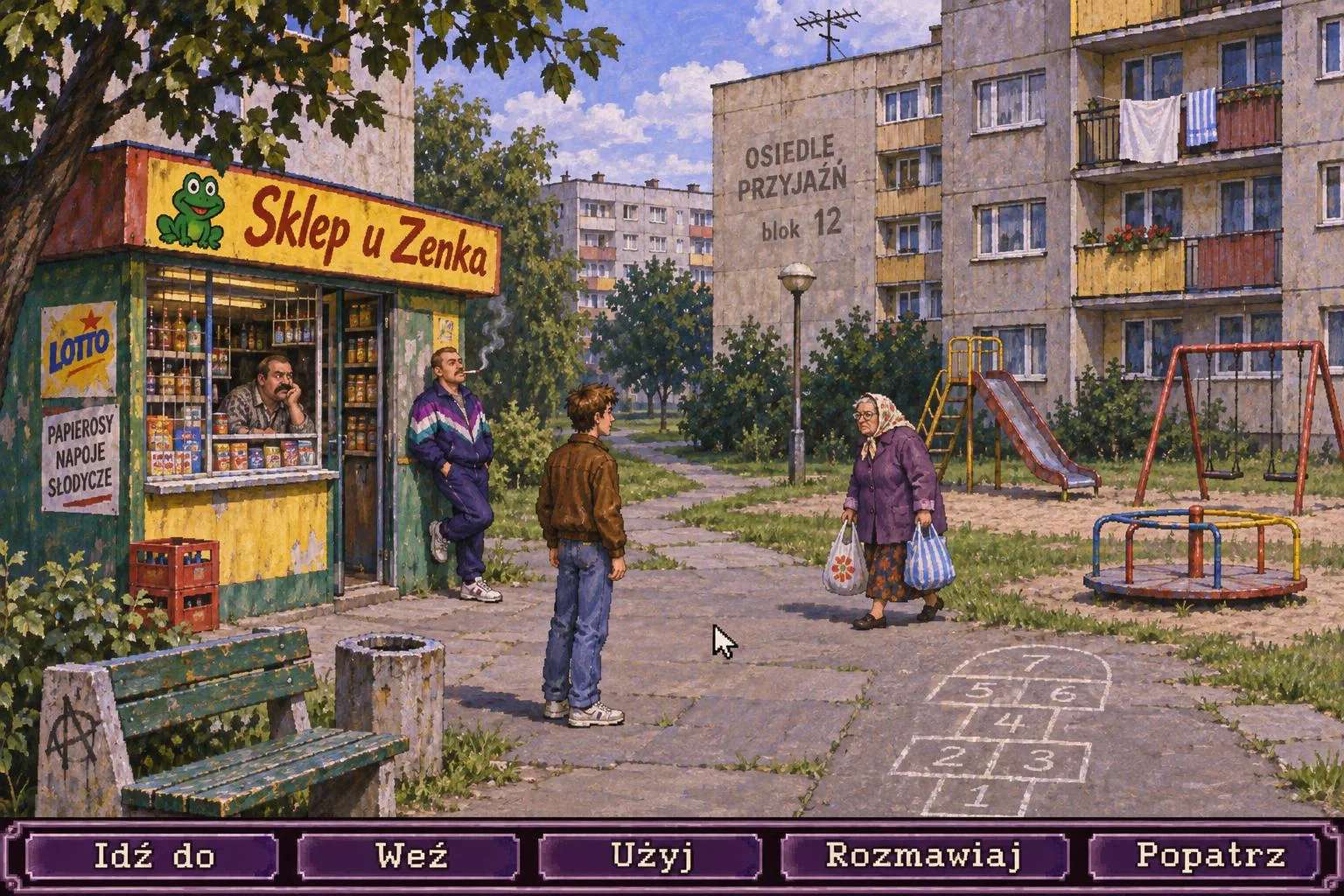
Hand-drawn 2D background coupled with a classic verb interface: “Walk to | Pick up | Use | Talk to | Look at” (translated from the Polish UI original). The cursor hovers above the path, a young character stands in a jacket, and hopscotch outlines mark the concrete. For indie game pre-production, backgrounds generated at this level function well as level design mockups.
Photorealistic AAA action title
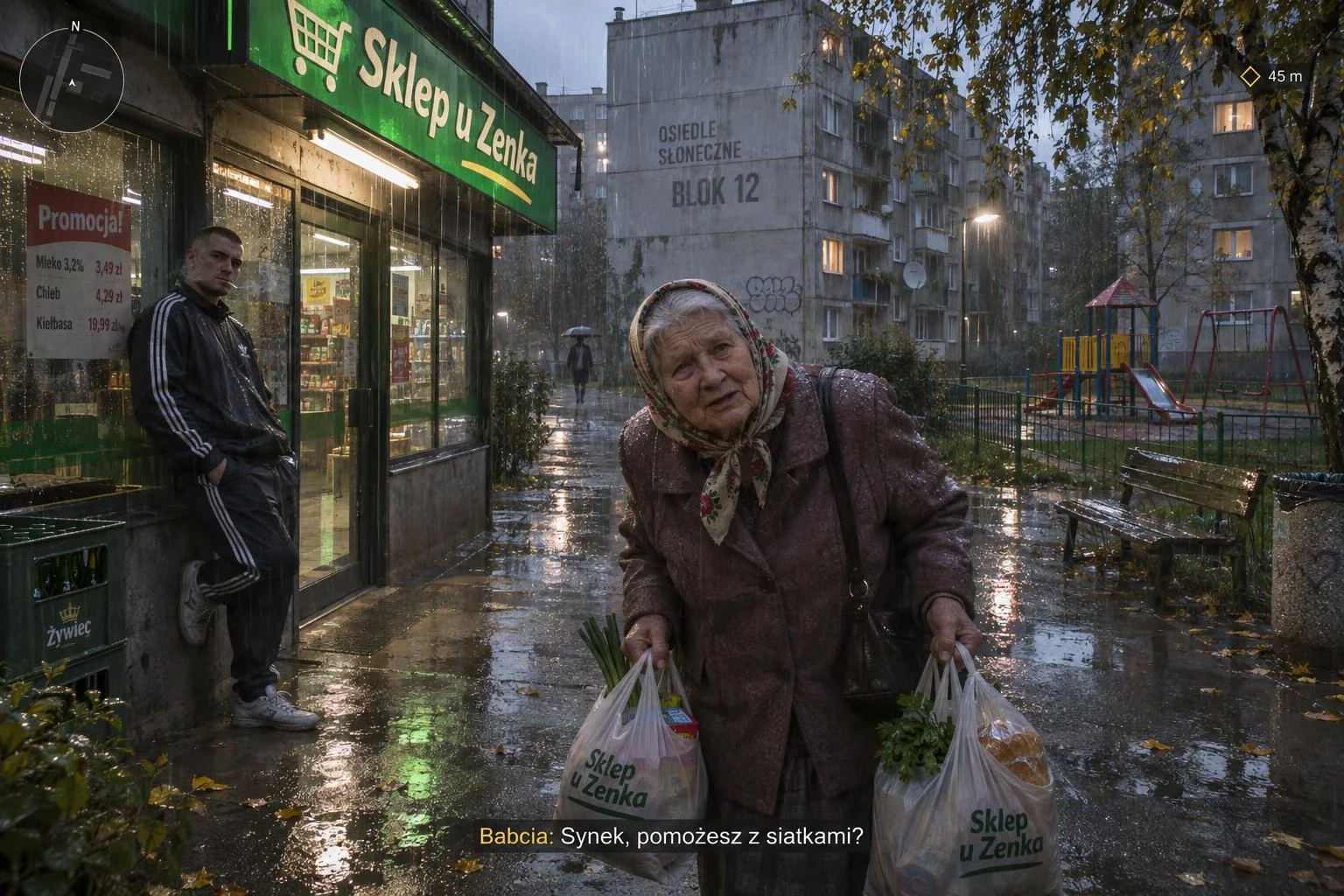
Rain effects, puddle reflections, and dialogue subtitles along the lower edge: “Grandma: Son, can you help with the bags?” (translated from Polish: “Babcia: Synek, pomozesz z siatkami?”). The facial detail on the character is sharp enough that it almost reads as a raw photograph rather than a game engine render. This highlights a limitation: in hyper-realistic styles, the model can easily drift toward plain photography and lose the stylized game aesthetic.
Arcade fighting game
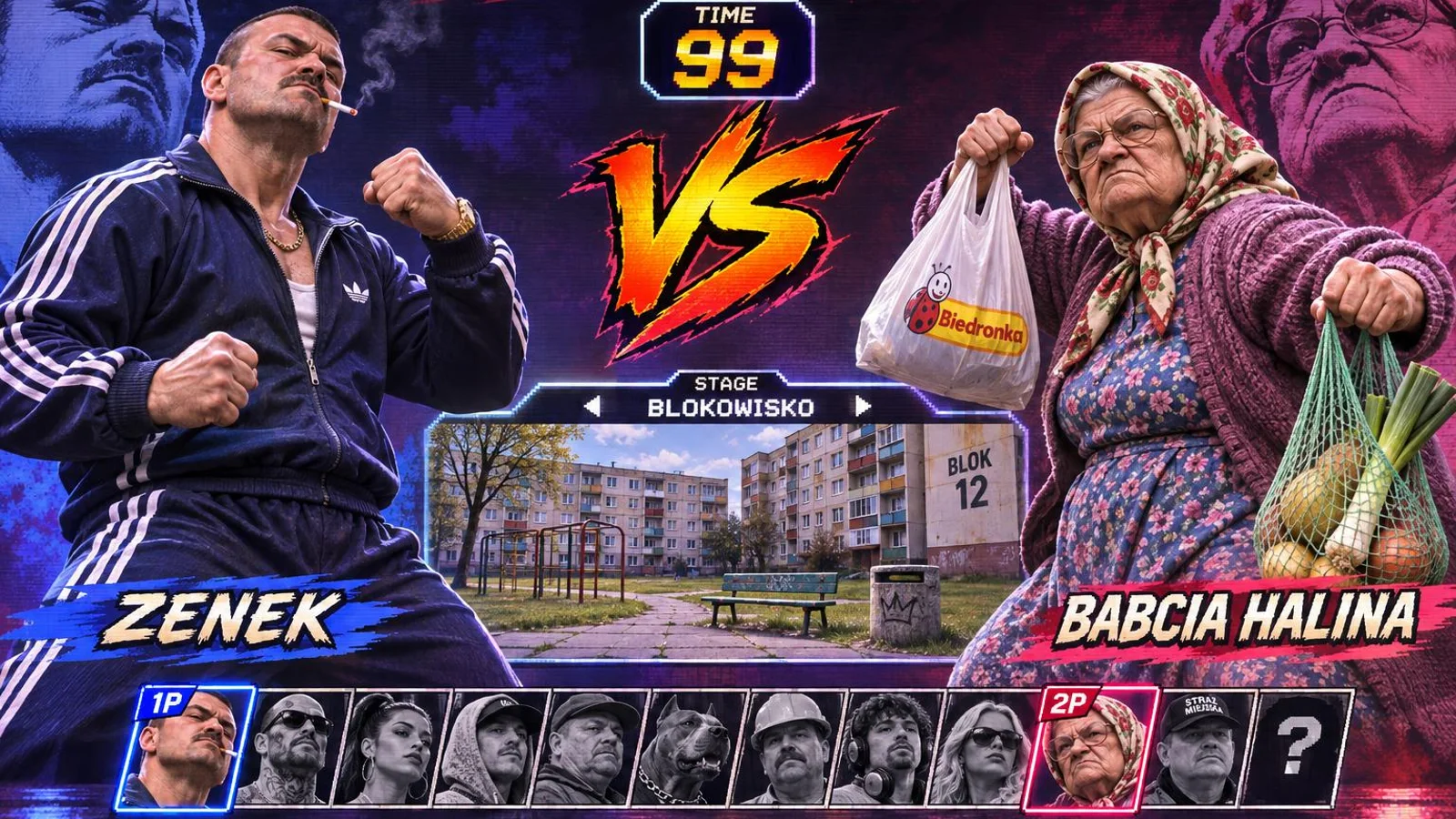
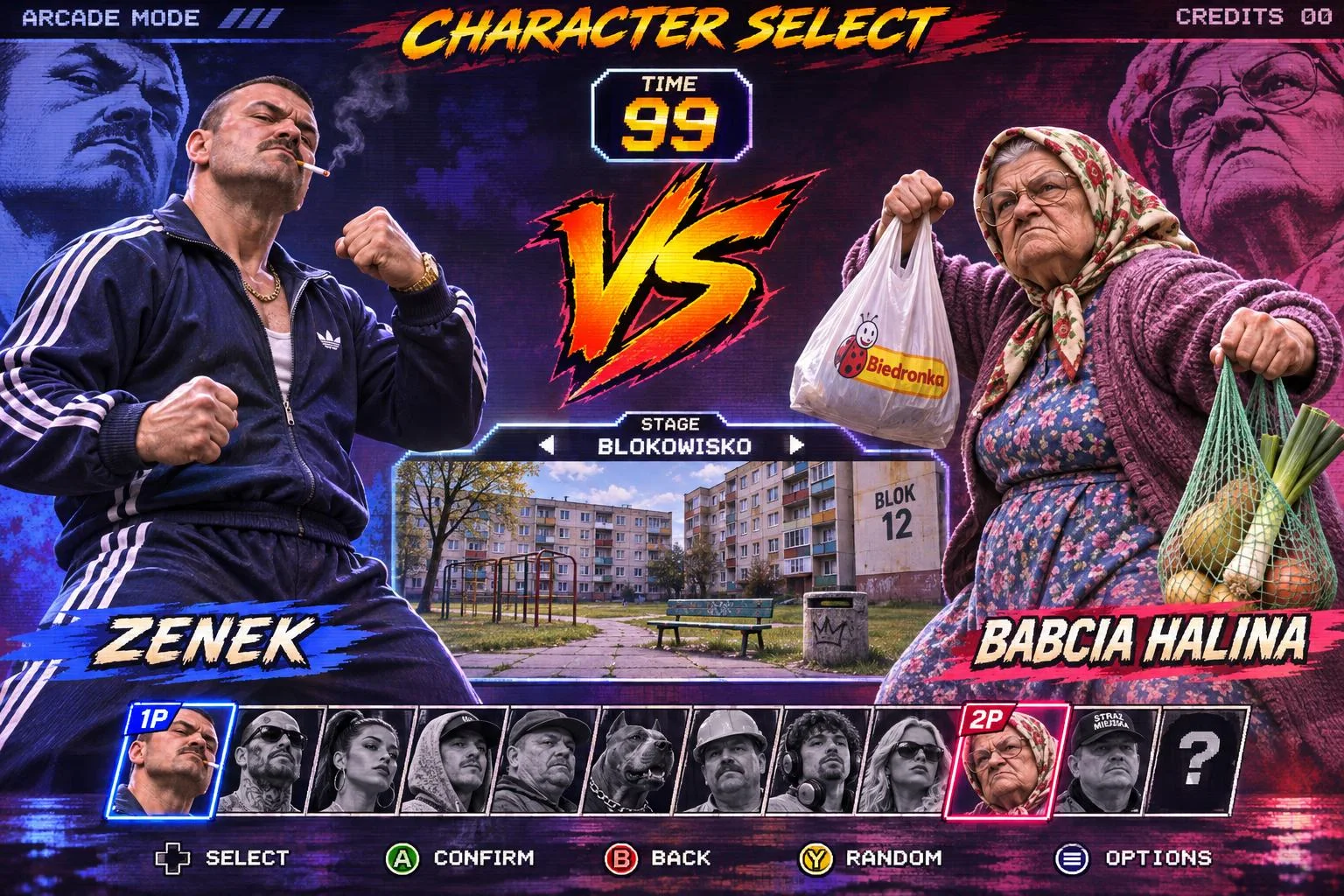
“ZENEK” versus “BABCIA HALINA”, a center VS graphic, a 99-second round timer, and a stage titled “Blokowisko”. The model created an entire character select roster along the bottom row on its own initiative. The interface elements defaulted to standard English fighting game terminology while retaining the specific requested Polish names.
PS2-era racing game menu
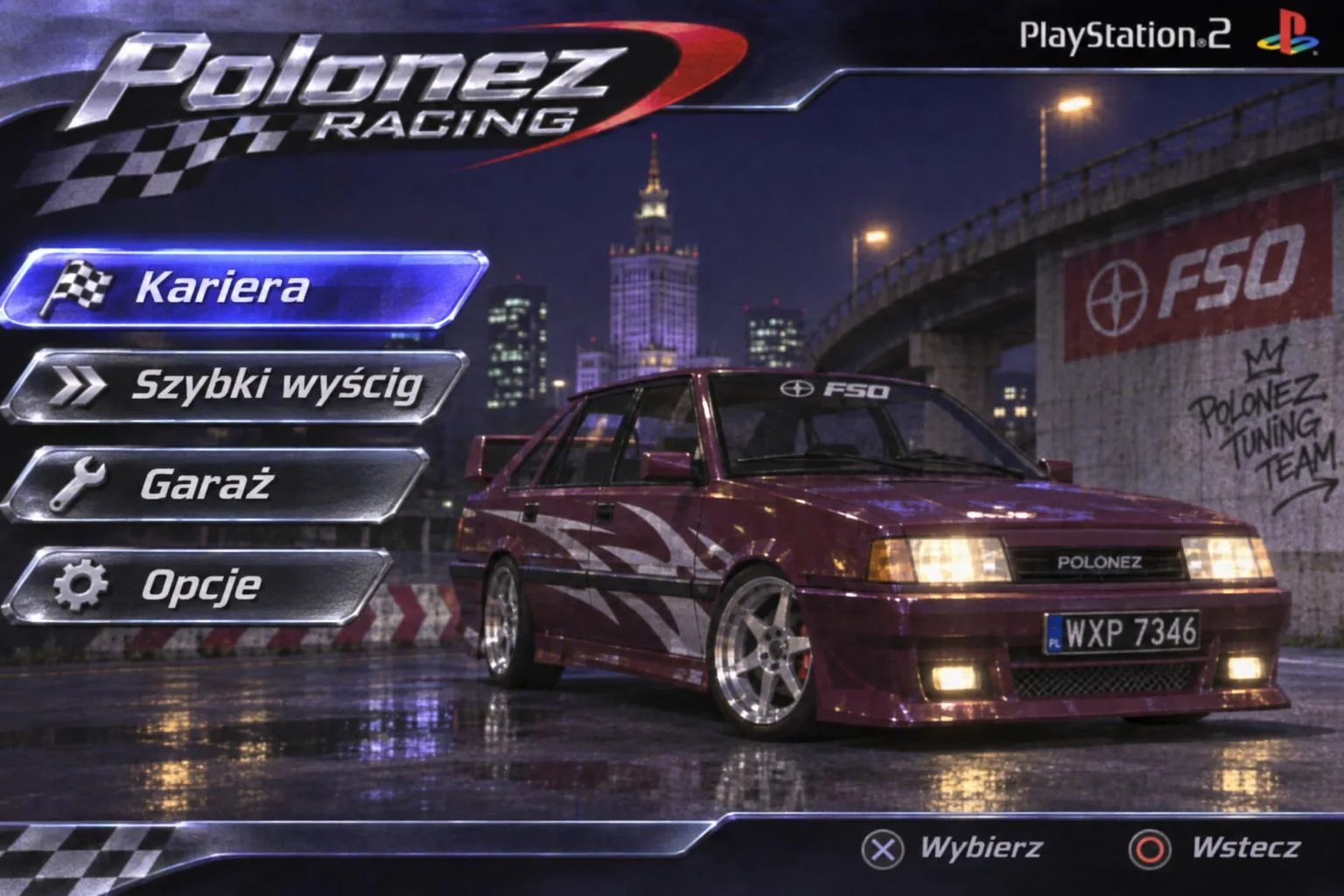
A tuned hatchback set against an urban architectural backdrop, framed by a chrome navigation menu: “Career, Quick Race, Garage, Options” (translated from Polish). One key practical note: the model generated genuine PlayStation 2 and manufacturer logos that were never requested. For commercial game development, such third-party intellectual property must be scrubbed or avoided in prompting.
Collectible card game
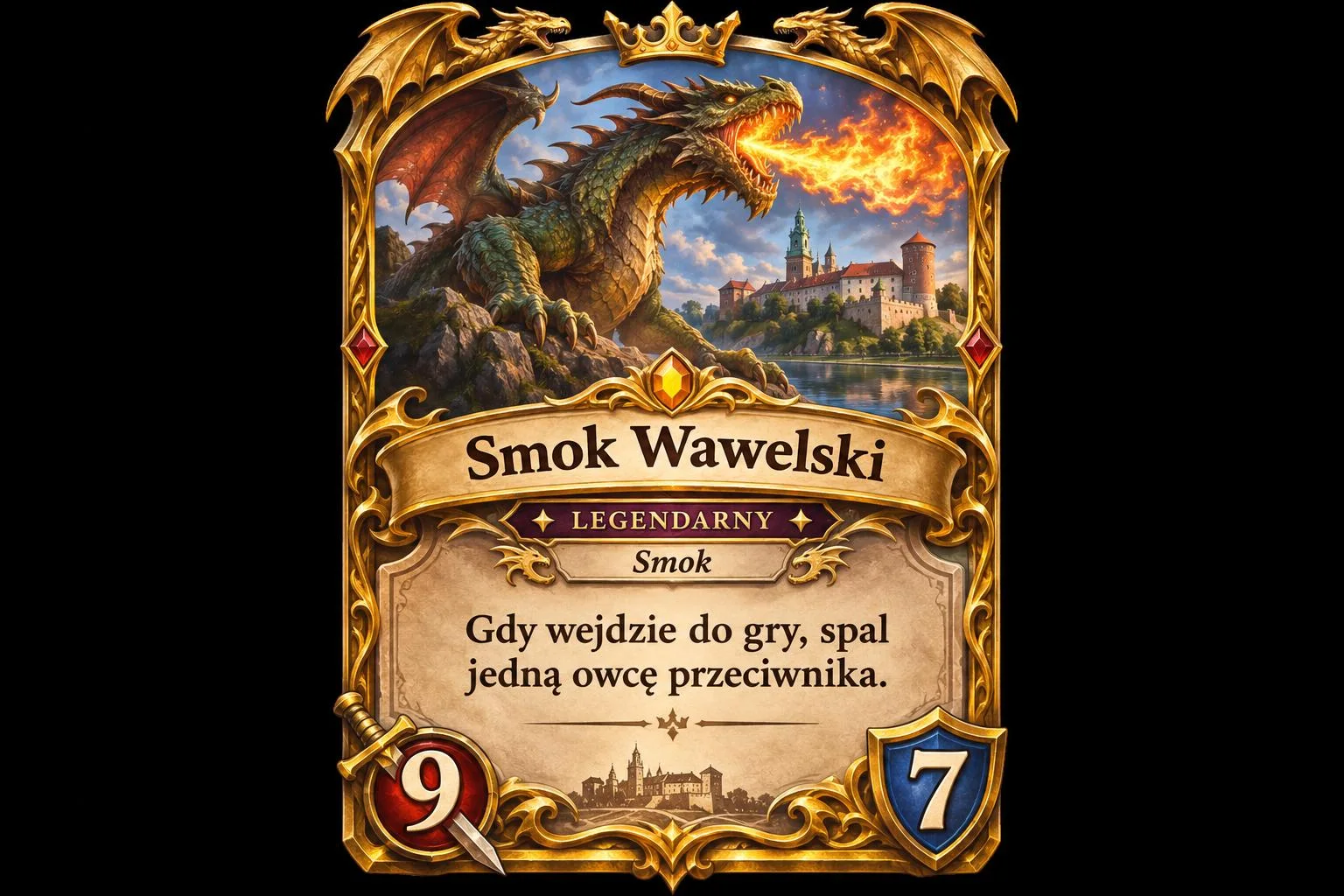
A fantasy creature card with 9 Attack, 7 Defense, and a detailed ability box: “When entering play, burn one opponent sheep” (translated from Polish: “Gdy wejdzie do gry, spal jedna owce przeciwnika”). The card frame layout is coherent, typography is sharp, and the background illustration matches the theme. This was the most production-ready result of the set, suitable for immediate tabletop prototyping.
GPT-Image-2.6 Flare: same prompt in 9 seconds
I also ran the identical prompt set through the lightweight Flare model on medium quality. Flare averaged 8.8 seconds per generation and cost $0.034 per image. The drop in visual quality only becomes apparent upon zooming in: background geometry is simpler and facial features carry less definition. For rapid prototyping and moodboards, Flare is more than adequate. Sunburst remains the better choice for client-facing presentation decks.
My takeaway from this test series: GPT-Image-2.6 is currently one of the strongest generative models for game mockups and UI-heavy concept art. It renders non-English text cleanly and adheres closely to genre-specific composition rules. However, maintaining visual consistency across multiple asset sheets still requires manual direction and editing. If you are exploring video styles, see our guide on generating GTA 6-style graphics.
Sources
- Author’s API benchmarks (OpenRouter, openai/gpt-image-2.6-sunburst and openai/gpt-image-2.6-flare models), November 5, 2026.
- OpenAI: GPT-Image-2.6 Flare model documentation
Verified: November 5, 2026.
More on this from QUANTSLANT

 ai tools·GPT-Image-2.6 in Codex: Availability and API Cost GuideIs GPT-Image-2.6 live in Codex? Here is how Codex handles image generation, what it costs compared to the OpenAI API, and how to preserve your plan limits.