Jensen Huang: The Man Who Bet on AI and Won - Denny’s to $3T
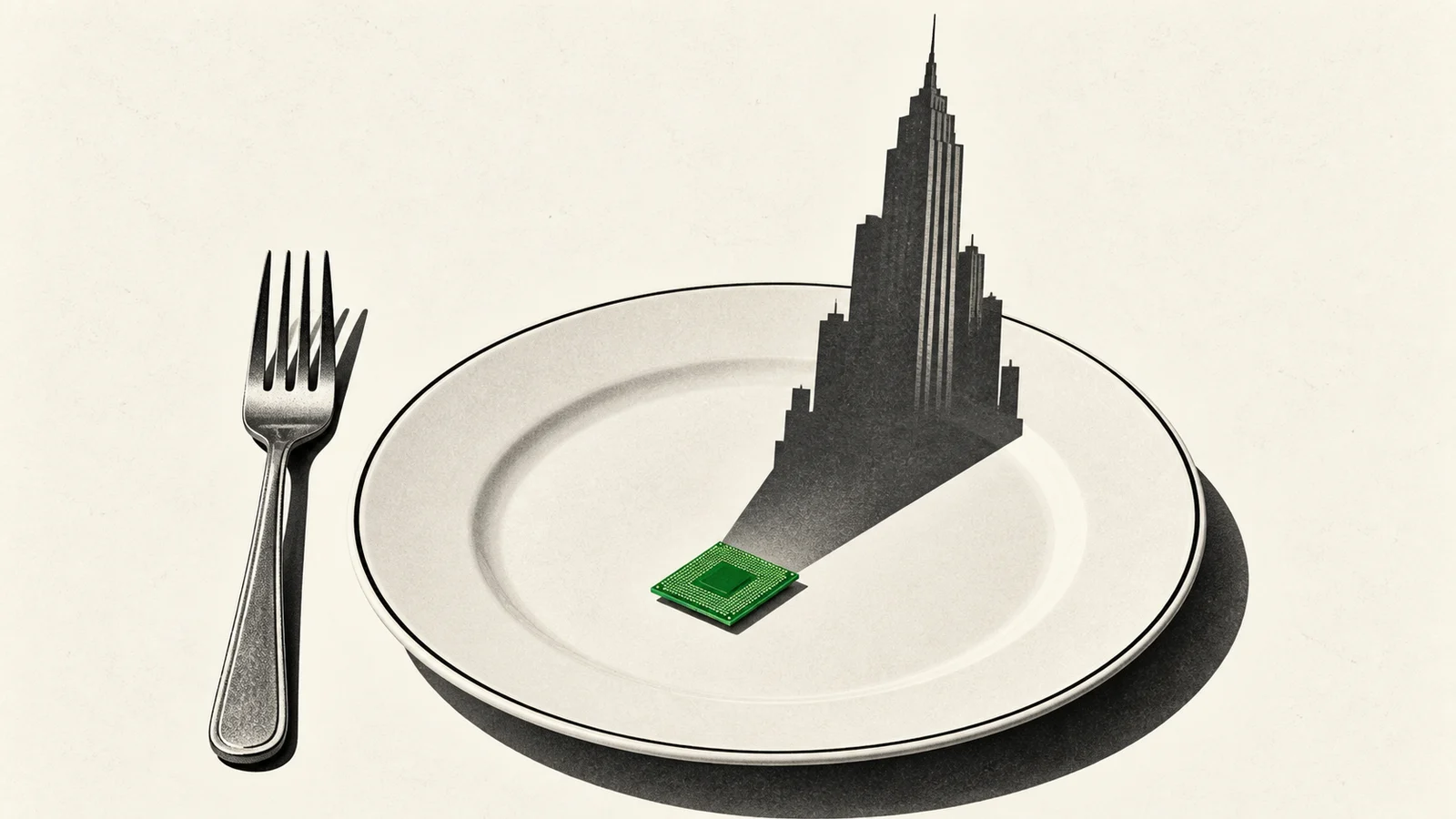
How Jensen Huang turned a Denny's meeting into a $3 trillion empire by betting on parallel computing years before the AI revolution began.
👁 121 reads
How a 1993 meeting at Denny’s led to the most valuable tech company in the world, and why CUDA became the unbeatable moat in the AI revolution.
The Visionary from Denny’s
On February 18, 2026, exactly 33 years will have passed since that memorable meeting at a Denny’s restaurant in San Jose, where Jensen Huang, along with Chris Malachowsky and Curtis Priem, founded a company called NVIDIA. Today, that same man who dreamed of revolutionizing computer graphics leads a tech empire worth over $3 trillion - more than the GDP of most countries in the world.
Jensen Huang’s story is one of consistency, vision, and the ability to see the future where others saw only a niche. In 1993, the graphics card market was dominated by a few players, and computer games were just taking their first steps toward three-dimensional graphics. Huang, a Stanford University graduate with a master’s degree in electrical engineering, saw something more - a future where parallel processing would become the key to solving the most complex computational problems.
NVIDIA’s early years were the story of a typical Silicon Valley startup - long hours, limited funds, and attempts to convince investors of a vision that seemed too ambitious. From the very beginning, Huang talked about “democratizing supercomputers,” but in the mid-1990s, that sounded like science fiction.
CUDA - The Revolution Nobody Noticed
The real turning point came in 2006 when NVIDIA introduced the CUDA (Compute Unified Device Architecture) architecture to the market. It was a decision that would be recognized for years as one of the most important strategic moves in technology history. Huang bet on something that seemed risky at the time - transforming graphics cards into universal computing processors.
CUDA allowed programmers to harness the computational power of GPUs for tasks beyond graphics rendering. In practice, this meant that thousands of graphics cores could simultaneously perform scientific calculations, simulations, or data analysis. It was a revolution whose significance most of the market failed to appreciate for years to come.
“CUDA wasn’t an accident. It was a deliberate strategy for years. We knew parallel processing was the future, but we didn’t know we would become the foundation for AI” - Huang said during the GTC 2023 conference, recalling the beginnings of the CUDA architecture.
For the next decade, CUDA was primarily a tool for scientists and researchers. Universities used NVIDIA cards for climate simulations, pharmaceutical companies for molecular modeling, and the film industry for advanced rendering. Huang consistently invested in developing the ecosystem, even when profits were small. He was building a moat, not yet knowing how deep it would prove to be.
The Transformer Moment
The breakthrough came in 2017 with the publication of the famous paper “Attention Is All You Need” by the Google Brain team. The Transformer architecture, which became the foundation of modern language models, turned out to be perfectly suited to NVIDIA GPU capabilities. Suddenly, all those years of investment in CUDA began to pay off in ways no one had predicted.
OpenAI, training its GPT models, Google with BERT and LaMDA systems, and Meta with AI projects - everyone needed enormous computational power. And everyone reached for NVIDIA solutions. Not because they were the cheapest, but because they were the only ones that worked at the appropriate scale.
Huang, who for years had been perceived as the CEO of a gaming company with data center ambitions, suddenly became one of the most important figures in the AI revolution. His decade-old vision - that GPUs would become universal computing engines - was being realized before the eyes of the entire world.
An Empire Worth $3 Trillion
The numbers speak for themselves. In 2020, NVIDIA’s market capitalization was around $300 billion. In February 2026, the company crossed the magical threshold of $3 trillion, becoming the most valuable tech company in the world. A 1000% increase in six years - an unprecedented result in financial market history.
Key products, such as the H100 and subsequent H200 chips, became the most sought-after components in data centers worldwide. Companies are willing to wait months for deliveries, paying prices exceeding $40,000 per single chip. People wait months for NVIDIA graphics cards, much like exclusive sports cars.
“AI is no longer an experiment - it’s the new infrastructure of the digital world” - Huang said during the Q4 2025 earnings presentation, explaining the company’s growth phenomenon to investors.
NVIDIA’s data center segment revenue grew from $2.9 billion in fiscal year 2021 to over $180 billion in 2025. It’s growth that redefines the concept of business success. Every quarter brings new records, and Wall Street analysts raise price targets for the company’s stock monthly.
CUDA as an Unfair Advantage
Why has NVIDIA dominated the AI market so completely? The answer lies in a concept Warren Buffett calls a “moat” - a competitive advantage that cannot be easily copied.
CUDA is much more than a hardware architecture. It’s an entire ecosystem consisting of libraries, development tools, documentation, and a developer community. Over 20 years, NVIDIA built a platform that today is used by virtually every AI researcher in the world. Switching to competing solutions would mean not only changing hardware but rewriting millions of lines of code and retraining thousands of engineers.
AMD, Intel, and new companies like Cerebras are trying to challenge NVIDIA, often offering better technical specifications or lower prices. But none of them have an ecosystem comparable to CUDA. This is the real strength of Huang’s position - not just a technological advantage, but an ecosystem advantage that took decades to build.
As Professor Christopher Manning, one of the pioneers of NLP, noted during the 2025 Stanford AI conference:
“NVIDIA didn’t win just because it has the best chips. It won because for 20 years it consistently built tools that are now the industry standard. That’s the difference between a product and a platform.”
Challenges of Empire
NVIDIA’s success, however, brings new challenges. The company has become so dominant that its position is beginning to raise concerns among regulators worldwide. The European Commission is already conducting preliminary investigations into monopolistic practices in the AI industry, and voices in the U.S. Congress are calling for antitrust intervention.
Huang must also face geopolitical pressure. Export restrictions imposed by the U.S. administration on China forced NVIDIA to develop special, limited versions of its chips for the Chinese market. This is both an opportunity for new products and a risk of losing one of the most important markets.
Competition is also awakening. Google is developing its TPU chips, Amazon is investing in Trainium chips, and Microsoft is experimenting with its own hardware solutions. Each tech giant realizes that dependence on a single supplier is a strategic risk.
The biggest challenge, however, may be maintaining the pace of innovation itself. Moore’s Law is slowing, and the physical limits of semiconductors are becoming increasingly tangible. NVIDIA must not only maintain its technological advantage but also find new development paths in a world where every nanometer matters.
The Man Behind the Success
Who is Jensen Huang - the man who led NVIDIA to the position of the world’s most valuable tech company? Born in Taiwan, raised in the U.S., he combines Asian strategic patience with American business pragmatism. His signature leather jackets have become legendary in Silicon Valley, but it’s substance, not style, that defines his leadership.
Huang is known for his obsession with technical details. He still personally reviews key design decisions, participates in weekly engineering team meetings, and can discuss chip architecture for hours. This is rare among CEOs of companies this size, but it’s precisely this technical intuition that allowed him to make decisions that seemed irrational from a short-term perspective but proved brilliant in the long run.
Google · Your sourcesQuantslant higher in your Google - one clickAdd to preferred sources →“Jensen has a unique ability to think about a future that’s a decade away, but make decisions that make sense today” - his longtime colleague and NVIDIA co-founder Chris Malachowsky said in an interview with Fortune.
Conclusion
Jensen Huang’s story is about how vision, consistency, and a bit of luck can change the world. From a meeting at Denny’s in 1993 to an empire worth $3 trillion in 2026 - it’s one of the most remarkable transformations in tech business history.
CUDA, which for years was a niche tool for scientists, became the foundation of the AI revolution. Huang built a moat so deep that even tech giants struggle to overcome it. NVIDIA is no longer a graphics company or even a semiconductor company - it’s a technology platform defining the future of artificial intelligence.
The challenges facing Huang and NVIDIA, however, are enormous. Regulatory pressure, geopolitical tensions, intensifying competition, and the physical limits of semiconductor technology are just some of the problems that could threaten the company’s dominance.
Jensen Huang foresaw the AI era and built the infrastructure that enabled it. Regardless of what the future brings, his vision from that Denny’s restaurant changed the world forever.



More on this from QUANTSLANT



 magazine·The Quiet War Open-Source AI Already WonOpen-source AI models have already won the war that matters - not by beating benchmarks, but by becoming the foundation everyone builds on.