Kling 4.0 Is Now Available: Specs, Pricing, and API Status
Kuaishou has officially opened Kling 4.0 to all users as of 15 October 2026. Here is a breakdown of the new features, pricing discounts, missing capabilities, and developer access.
👁 118 reads
Kuaishou officially opened access to its latest video generation model on 15 October 2026, confirming that Kling 4.0 is now available to everyone. The update brings single-generation clips up to 30 seconds, multi-keyframe control with up to 10 images, and an updated creation interface on the web platform. However, while web, CLI, and MCP access are live today, standard commercial API integration remains marked as coming soon.
Following an initial announcement on 28 September 2026 that provided early access to Kling 4.0 Flash for Ultra yearly subscribers, the general release is now active across accounts. You can track our comprehensive breakdown of the architecture in our central Kling 4 hub. Alongside the main release note, Kling AI announced on X that the release features a refreshed interface on kling.ai alongside developer tooling via MCP and CLI, while full business API access and 10-bit HDR output will roll out later.
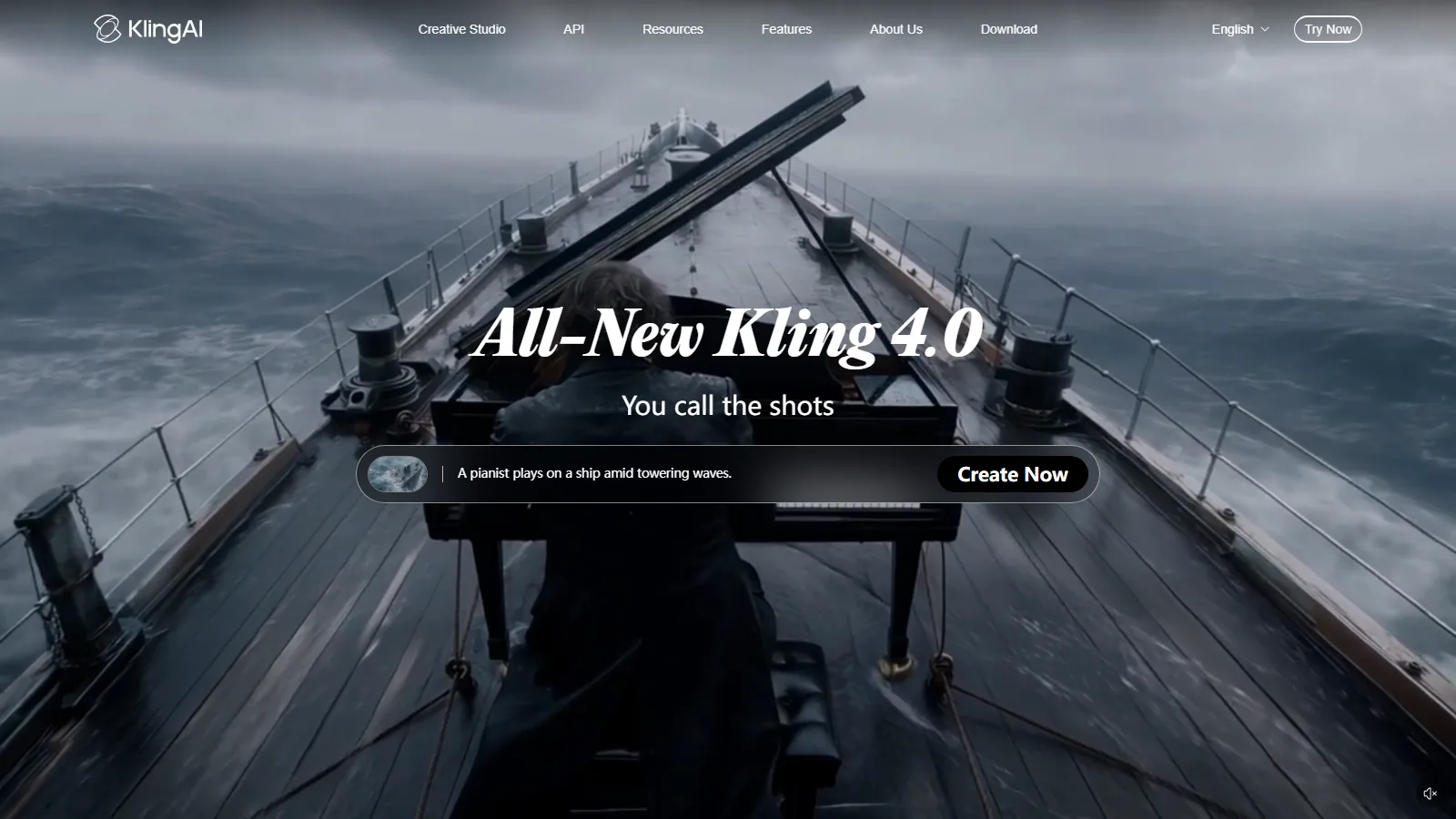
What Kling Announced for the General Release
The official release notes highlight several major architectural and interface changes compared to previous releases. The web interface now features a unified input box accepting text, images, video, and audio simultaneously. Creators can work across continuous timelines, alternate between grid and list views, and use an updated canvas interface featuring nodes and an Agent assistant.
Prompt complexity has also expanded, supporting prompt lengths of up to 8,000 tokens. For scene continuity, the platform now accepts complex reference packages: up to 10 images, up to 5 videos (totaling up to 30 seconds combined), voice references, and up to 7 distinct elements (including up to 3 video-based elements), capped at 15 items in total. It also supports white-model and depth-map reference videos. In terms of workflow choices, the lighter Kling 4 model option, Kling 4.0 Flash, remains targeted at fast, high-volume generation at 720p resolution with single first-frame image inputs.
Feature Comparison: Kling 4.0 vs Kling 3.0
To understand how generation parameters have expanded since the February 2026 release of the previous iteration, consult our in-depth comparison of Kling 4.0 vs Kling 3.0. Below is an overview of the core official capability changes:
| Capability | Kling 3.0 | Kling 4.0 |
|---|---|---|
| Max Clip Duration | 3 to 15 seconds | 3 to 30 seconds |
| Keyframe Inputs | First and last frame | Up to 10 keyframe images |
| Supported Resolutions | 720p, 1080p, native 4K | 720p, 1080p, 4K |
| Audio Output | Native audio mode | Two-channel stereo, sync |
| Speech Languages | 5 languages | 9 official languages |
| Max Prompt Length | Standard prompt limits | Up to 8,000 tokens |
Language Support: Built for Global and English Markets
A key capability highlighted in the release notes is expanded linguistic coverage. English is officially supported as one of the 9 primary languages for both synthesized speech and on-screen text generation (which also handles logos and emoji). The full roster of official languages includes English, Chinese, Japanese, Korean, Spanish, Portuguese, German, French, and Hindi. Notably, languages like Italian and Dutch are absent from the supported list.
For English audio generation, Kling 4.0 supports three specific regional accents: American, British, and Indian. Chinese accents are similarly divided into Beijing, Taiwanese Mandarin, Northeastern, Sichuan, and Cantonese. This native handling reduces the need for external lip-syncing pipelines when generating spoken dialogue in English directly inside the tool.
Kling 4.0 Pricing and Plan Discounts
With the platform open, Kling AI has introduced pricing banners on its membership page advertising a “Limited-Time 10% Off” Kling 4.0 usage perk on higher tiers. You can explore exact plan structures in our guide to Kling 4.0 pricing and plans. Kling displays all subscription prices in USD without VAT information:
- Basic: Free tier using daily free credits. Watermarked output, no commercial rights, and no Kling 4.0 discount.
- Standard: $8.80 per month ($6.99 for the first month) for 660 credits ($1.06 per 100 credits). Kling 4.0 is not listed in its plan benefits. Yearly billing is $79.20 per year.
- Pro: $32.56 per month ($25.99 for the first month) for 3,000 credits ($0.87 per 100 credits). Includes the 10% Kling 4.0 discount. Yearly billing is $293.04 per year ($0.81 per 100 credits).
- Premier 8K: $80.96 per month ($64.99 for the first month) for 8,000 credits ($0.81 per 100 credits). Includes the 10% Kling 4.0 discount. Yearly billing is $728.64 per year.
- Premier 18K: $181.99 per month ($135 for the first month) for 18,000 credits ($0.75 per 100 credits).
- Premier 28K: $283.99 per month for 28,000 credits ($0.75 per 100 credits).
- Premier 38K: $376.99 per month for 38,000 credits ($0.73 per 100 credits).
- Ultra+: $544.99 per month ($402 for the first month) for 57,000 credits ($0.71 per 100 credits). Includes the 10% Kling 4.0 discount. Yearly billing is $4,457 for the first year, then $4,902.99 per year ($0.65 per 100 credits).
Paid plans grant watermark removal, commercial licensing, and access to 1080p and 4K outputs. I checked in the kling.ai creator on 15 October 2026: Kling 4.0 costs 15 credits per second at 1080p and 10 at 720p, so a 30-second 1080p clip is 450 credits. The Standard plan does not list Kling 4.0 in its plan benefits - seconds per plan are in Kling 4.0 pricing.
What Is Still Missing in Kling 4.0
Despite the release, several planned features remain marked as “coming soon” by Kuaishou:
- Developer API: Standard pay-per-second REST API packages do not currently support Kling 4.0.
- 10-bit HDR: While 720p, 1080p, and standard 4K generation are supported, 10-bit HDR in 1080p and 4K has not yet shipped.
- Two-Minute Video Extension: While single clips run up to 30 seconds, chaining extensions up to 2 minutes remains in development.
Developer Access and API Status Check
If you want to automate workflows, our technical walkthrough on Kling 4.0 MCP and CLI details the supported tooling. While commercial REST APIs are absent, developers can access Kling 4.0 via an official Model Context Protocol (MCP) server and a CLI tool linked directly to personal Kling account credits.
The command-line interface is distributed via npm and runs on Node.js 18+:
npm i -g @klingai/cli-global
kling login
kling text_to_video --model kling-video-v4_0 "drone shot flying over a snowy mountain peak" --duration 10 --aspectRatio 16:9 --poll 300
For Claude Code users, the MCP server can be added directly:
claude mcp add --transport http kling https://kling.ai/mcpRegarding external developer endpoints, I checked the developer platforms personally on the evening of 15 October 2026. On the official portal at kling.ai/dev, the platform states “Kling 4.0 API Coming Soon” and notes that existing enterprise credit packages (starting at $700 for 5,000 units) do not support version 4.0. Third-party aggregators such as reAPI, kie.ai, and OpenRouter currently list Kling 4.0 as “coming soon” or only list version 3.0 models. While fal.ai has published schemas for seven v4 endpoints, I sent two requests for a 3-second scene (a red cube on a table). Both requests returned within seconds with an identical pre-rendered 12-second astronaut placeholder clip at 0 billable units and 0.03 seconds compute time, confirming public external generation endpoints are not yet live.
What You Should Do Now
If you plan to test the model today, follow these practical steps:
- Evaluate Existing Credits: Check your current subscription tier. If you plan to test Kling 4.0 extensively, note that only Pro, Premier 8K, and Ultra+ tiers receive the 10% credit discount.
- Inspect Prompt Ratios: In the web generator, review the credit cost displayed on your dashboard for different duration targets (3 to 30 seconds) before committing credits.
- Use MCP or CLI for Automation: If you build automated pipelines in tools like Claude Code or Cursor, connect using the official npm package or MCP endpoint rather than waiting for third-party API providers.
Frequently Asked Questions
Is Kling 4.0 available to free users?
The release note states that Kling 4.0 is available to everyone, and Basic users have access to the generation platform with daily free credits. However, free accounts receive watermarked outputs, cannot use generated content commercially, and do not receive the 10% credit discount available to Pro and higher plans.
How much does Kling 4.0 cost per second?
Kling 4.0 costs 15 credits per second at 1080p and 10 at 720p - I checked in the creator on 15 October 2026. A 30-second 1080p clip uses 450 credits, which is 3.17-4.88 USD depending on the plan. 4K is marked “Coming Soon”.
Can I use Kling 4.0 via an API right now?
The official business REST API packages do not yet support Kling 4.0, and the developer portal lists it as coming soon. However, developers can access the model today using their account credits via the official CLI tool and the Model Context Protocol (MCP) server.
Does Kling 4.0 support English accents?
Yes, English is one of the 9 officially supported languages for audio dialogue and text rendering. The model specifically includes options for American, British, and Indian English accents.
Sources
- Kling AI Official Release Note: Kling 4.0
- Kling AI Membership Plans
- Kling AI Developer Platform
- Kling AI Developer Pricing
- Kling AI Official Announcement on X
- npm Package Repository: @klingai/cli-global
- Kling AI on YouTube: official Kling 4.0 videos (28.09-15.10.2026)
As of 15 October 2026. Kling changes plans and availability often - check kling.ai before buying.
More on this from QUANTSLANT

 guides·1 Gbps Fiber, but Wi-Fi Is Slow? How to Fix ItPaying for 1 Gbps fiber but seeing 150-300 Mbps over Wi-Fi? Check your router placement, Wi-Fi band and Ethernet cable before upgrading.