Midjourney vs Gemini: Image Generator Test 2026
We tested Midjourney v7 Draft Mode against Google's Gemini 2.5 Flash Image to see which AI image generator wins in 2026 for speed, cost, and quality.
👁 139 reads
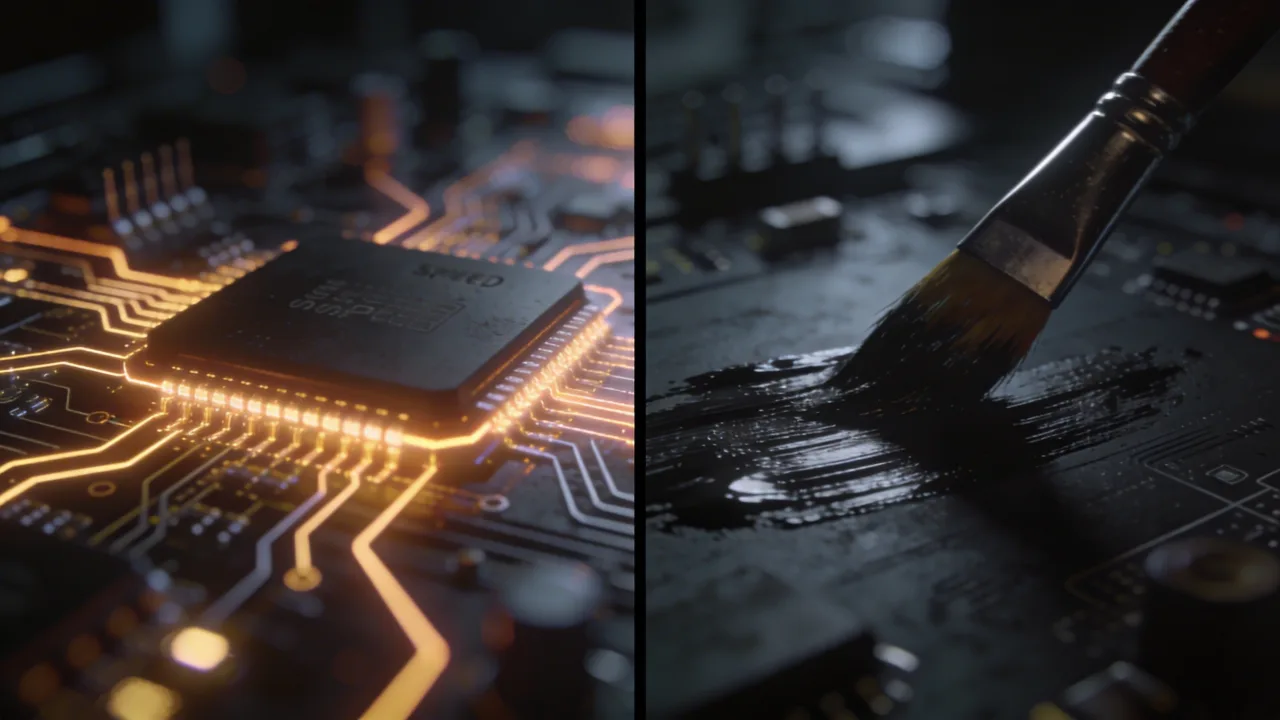
February 2026 marks a split in the AI image generation market. On one side, Google’s Gemini 2.5 Flash Image (known as “Nano Banana”) prioritizes lightning speed and ecosystem integration. On the other, Midjourney v7 with Draft Mode promises 10x faster generation at half the GPU cost. We tested both tools to see how they perform in practice and which use cases they’re best suited for.
Speed comparison: Google leads, Midjourney catches up
Gemini 2.5 Flash Image generates images in 1-2 seconds for standard prompts. That’s genuinely lightning-fast, especially compared to traditional rendering modes. Midjourney Draft Mode costs half the price and renders images 10 times faster than standard mode. In practice, that means about 3-6 seconds per image in Draft mode.
In May 2025, Midjourney optimized V7, bringing Fast mode down to about 40 seconds and Turbo mode to 18 seconds. That’s still considerably slower than Google’s offering, but for Midjourney users, Draft Mode is what matters most. Draft Mode is blazingly fast (10x faster) and serves for prototyping images at half the GPU cost.
In practical testing, the difference is clear: if you’re generating 100 product images for an e-commerce store, Google will produce them in under 2 minutes. Midjourney in Draft mode needs about 5-10 minutes. That might not sound like much, but at production scale, it’s a significant gap.
Pricing: the numbers speak for themselves
Imagen 4 Fast offers incredible speed at an accessible price of $0.02 per generated image. Generating an image with a text prompt using the Imagen 4 Fast model costs $0.02 per image. The standard Imagen 4 model costs $0.04, and Ultra costs $0.06.
Gemini 2.5 Flash Image is priced at $30 per million output tokens, with each image counting as 1,290 output tokens ($0.039 per image). That’s slightly more than Imagen 4 Fast, but still competitive.
Midjourney works differently - you don’t pay per image, but for GPU time. The Basic plan costs $10 monthly and includes about 3.3 hours of GPU. The Standard plan is $30 monthly with 15 hours of GPU and unlimited Relax mode. Turbo mode provides high performance at twice the cost of standard V6 jobs, while Draft Mode costs half (in terms of jobs).
If you need to generate a few hundred images monthly, Google’s payment model may be cheaper. At larger scale with regular use, Midjourney’s unlimited Relax mode (from $30) becomes more cost-effective.
Quality and aesthetics: still two different worlds
Midjourney creates images with the highest artistic quality, but falls short with text and precision. It’s still the undisputed master when it comes to atmospheric visualizations, concept art, or photorealistic portraits with artistic flair.
The main area where Imagen 4 truly shines is text rendering. Imagen 4 handles text exceptionally precisely, providing clean, readable typography that doesn’t require additional editing. This is a crucial advantage in commercial applications - generating posters, memes, or graphics with text.
The 10x speedup of V7 in Draft mode comes at a quality cost that advanced users describe as “soulless,” while Google Gemini 2.5 generates images in under 2 seconds for $0.05 per image. Users complain that Draft Mode loses Midjourney’s “soul,” though it maintains aesthetic consistency.
Gemini 2.5 Flash Image generates images 2 to 3 times faster than the GPT-4o Image model, significantly accelerating the creative process and leading to better user experience. Quality is solid, especially in business applications, but Midjourney’s artistic “atmosphere” remains out of reach.
Who should use Google, who should use Midjourney?
Gemini 2.5 Flash Image is ideal for three scenarios. First: e-commerce and mass marketing. If you need to generate hundreds of product variants, advertising banners, or social media graphics, Google’s speed and price are unbeatable. Second: projects with text - posters, infographics, labels. Third: API integration. Midjourney provides better artistic quality but works primarily through Discord, limiting API integration options.
Midjourney v7 is the choice for completely different tasks. Midjourney is the best example of artistic tools. It creates images with a professional, polished look that can be breathtaking. It excels in brand campaigns, concept art for games or films, fantasy and science fiction illustrations, and work by artists who need atmosphere and “vibes.”
While Midjourney has masterfully captured the imagination of the “AI artist,” Google targets the needs of the “creative professional” and enterprises. Companies need character consistency, multi-stage editing, and API access.
Professionals use hybrid scenarios
You don’t have to choose. The most effective teams adopt complementary platform use instead of exclusive selection: Midjourney for hero graphics and major campaigns (20 percent of needs), DALL-E for automated generation and API workflows (60 percent of needs), and Imagen for workflows integrated with Google Cloud (20 percent of needs).
In February 2026, more and more creative studios are adopting exactly this approach: Google for rapid iterations and concept testing, Midjourney for final, key visualizations. This isn’t a fight to the death - it’s market segmentation.
Google · Your sourcesQuantslant higher in your Google - one clickAdd to preferred sources →Who wins? It depends what you’re generating
There’s no clear winner, because Google and Midjourney are competing in different leagues. Google Imagen 4 Fast is a production engine - fast, cheap, scalable. Midjourney v7 is an artistic tool - slower, more expensive per image, but with a unique atmosphere.
If you run an online store, marketing agency, or need to generate hundreds of graphics weekly - go with Google. If you’re a concept artist, game designer, art director for premium campaigns - Midjourney is still king. And if you work in a large team? Use both. The market has already figured this out - now it’s your turn.

More on this from QUANTSLANT
 benchmarks·7 Local AI Models on RTX 4090 vs Cloud: Non-English Writing TestWe tested 7 free local AI models on RTX 4090 with 13 tasks in Polish. Gemma 4 12B scored 72.3 points, beating paid Claude Haiku 4.5 but trailing Opus 5.5's 94.2.