Radiology Shows How AI Reshapes Expert Jobs Without Replacing Them
Three-quarters of the FDA's 1,400 cleared AI medical devices target radiology, making the field the clearest early model for how AI co-workers change - but do not eliminate - specialist professionals.
👁 114 reads
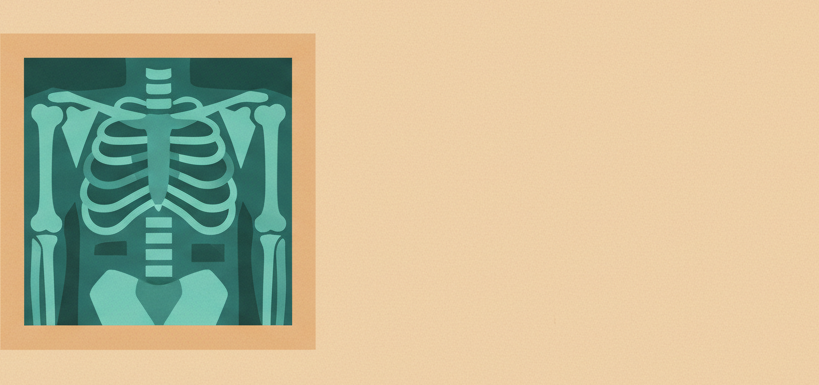
Three-quarters of the approximately 1,400 AI-enabled medical devices cleared by the Food and Drug Administration as of early 2026 are designed for radiology - a concentration that makes the specialty medicine’s clearest test case for AI reshaping, rather than removing, expert human roles.
- About 75% of the roughly 1,400 AI-enabled medical devices cleared by the FDA as of early 2026 are for radiology
- Human diagnostic error rates on medical images are estimated at 3-5%, translating to around 40 million errors worldwide each year
- The number of radiologists is forecast to grow by 26% or more over the next three decades, contrary to 2016 predictions of replacement
In 2016, Nobel-winning AI researcher Geoffrey Hinton predicted radiologists would be replaced by machines within five years. That forecast has not aged well: the number of practitioners is expected to grow by 26 percent or more over the next three decades, according to the reporting. Yet Hinton was not entirely wrong. AI systems now match or exceed physician performance on certain imaging tasks, and an analysis of 43 clinical trials found that AI-assisted colonoscopies detect more polyps than conventional ones.
The stakes are real. Human error rates on diagnostic images are estimated at 3 to 5 percent, which translates to roughly 40 million diagnostic mistakes worldwide each year. AI tools address that gap in two ways: some improve efficiency by drafting reports or flagging urgent cases, while others identify abnormalities invisible to the human eye.
The harder problem, radiologists say, is the collaborative design. Curtis Langlotz, director of the Center for Artificial Intelligence in Medicine and Imaging at Stanford University, notes that even a more reliable AI will still make mistakes a skilled physician would catch - meaning radiologists must now audit algorithm outputs rather than simply apply their own judgment.
“This requires a whole mental rewiring.”
The shift is distinct from older rule-based alerts in electronic medical records, which physicians override roughly half the time. AI image-analysis systems operate on a different level of accuracy, demanding a different kind of deference.
Practitioner takeaway: For anyone building or using AI decision-support tools outside medicine, radiology’s experience points to a concrete workflow implication: when an AI system’s average accuracy exceeds a human expert’s, the human role shifts from primary decision-maker to exception-spotter. That inversion requires deliberate interface design - surfacing confidence levels, flagging low-certainty outputs, and training users to resist the reflex to override by default.
Google · Your sourcesQuantslant higher in your Google - one clickAdd to preferred sources →
More on this from QUANTSLANT


 ai tools·Anthropic Merges Claude Chat and Cowork Memory