Two Schools, One Problem: Is Learning Still an Effort?
Fourteen-year-olds ask: why learn when AI can do it? Two classrooms, two philosophies, and the question schools can no longer avoid in 2026.
👁 113 reads
Fourteen-year-olds increasingly tell me: “Why should I learn this when AI can do it for me?” We once asked the same question about calculators and Wikipedia. The difference is that a calculator couldn’t write an essay about classic literature, and Wikipedia couldn’t pretend it came up with the ideas itself. Artificial intelligence can do both. And that’s exactly why schools in 2026 face a question they can no longer postpone.
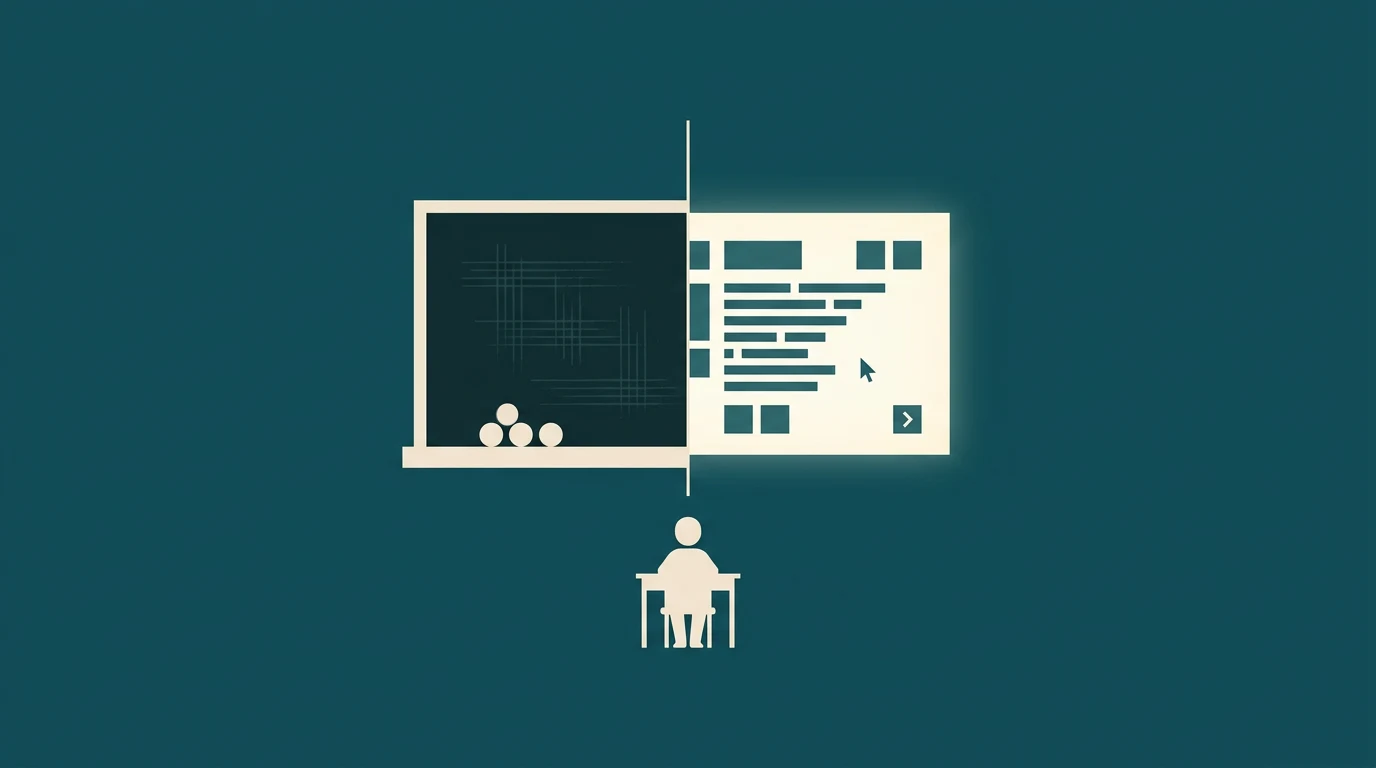
Because in the same school, often on the same hallway, two completely different scenarios are playing out today. In one classroom, a teacher says: “Phones in the box, everyone writes by hand, no chatbots.” In another: “Open the model, ask it for three arguments, then check where it’s wrong.” These aren’t two schools. They’re two philosophies of what learning even is - and both contain something true.
The Teacher Who Banned It
Let’s start with the side that’s harder to defend, because it takes the most hits today. Imagine a literature teacher with twenty years of experience who one September collected a stack of essays and realized that half the class suddenly writes like graduate students. The same polished constructions, the same elegant phrases, the same suspiciously perfect grammar. And zero life. Zero mistakes that reveal someone actually thought.
It’s easy to make this teacher into a dinosaur who fears the future. But I defend her, and with full conviction. Because she’s not defending spelling. She’s defending something far more subtle - the student’s right to not know something, to struggle with it, and in that struggle to actually learn. When a thirteen-year-old sits over a blank page and doesn’t know how to start a paragraph, something happens in their head that no model can replace. They develop the ability to tolerate uncertainty. Learning is fundamentally the art of enduring your own incompetence long enough to move through it.
AI eliminates that incompetence instantly. With one prompt. And that’s its treacherous charm - it gives results without process. But school isn’t about results. Nobody needs another essay about classic novels. It’s purely about the process that writing that essay triggers in the student. Banning AI in a literature class is a bit like banning elevators at the gym. Not because elevators are bad. Because you came here to exercise your legs.
The problem is that this argument, though elegant, has a crack. Because the world outside the classroom door isn’t a gym. The world outside the classroom door is exactly that elevator.
The Teacher Who Used It
And here enters the second classroom, all bright and modern. The teacher - let’s say it’s a subject closer to computer science or social studies - doesn’t fight the model, but invites it in. Students get an assignment: generate an answer, then break it down into its components. Where does the AI make things up? Where does it sound smart but say nothing? Where does it hide assumptions nobody told it to make?
This is, in my opinion, the most interesting thing that can happen in school today. Because this lesson doesn’t teach using AI. It teaches distrust of AI, and that’s completely different. A student who can catch a model in an error is in a better position than a student who never saw a model - and in two years will swallow the first generated nonsense as revealed truth.
I’m not afraid of children who use artificial intelligence. I’m afraid of children who trust it. Those are two completely different generations, though sometimes only one lesson separates them.
This second school has a brutal argument on its side: reality. Because these students in five, ten years will enter a world where inability to work with AI will be roughly what inability to use a computer is today. You can be offended by this, but being offended by reality is a hobby for people with guaranteed pensions. School doesn’t give its graduates that guarantee.
And yet. When I look at that bright, open, modern classroom, something bothers me about it. Because the line is very thin between “I’m teaching you to critically use a tool” and “I’m conditioning you that thinking starts with a prompt.” A teacher who teaches verifying AI is doing something smart. But if the student never wrote anything themselves before, what are they actually verifying against? You need a template of a good sentence in your head to sense that the model is producing an empty sentence. And that template comes precisely from that first, dark, old-fashioned classroom where phones lie in a box.
The False Choice
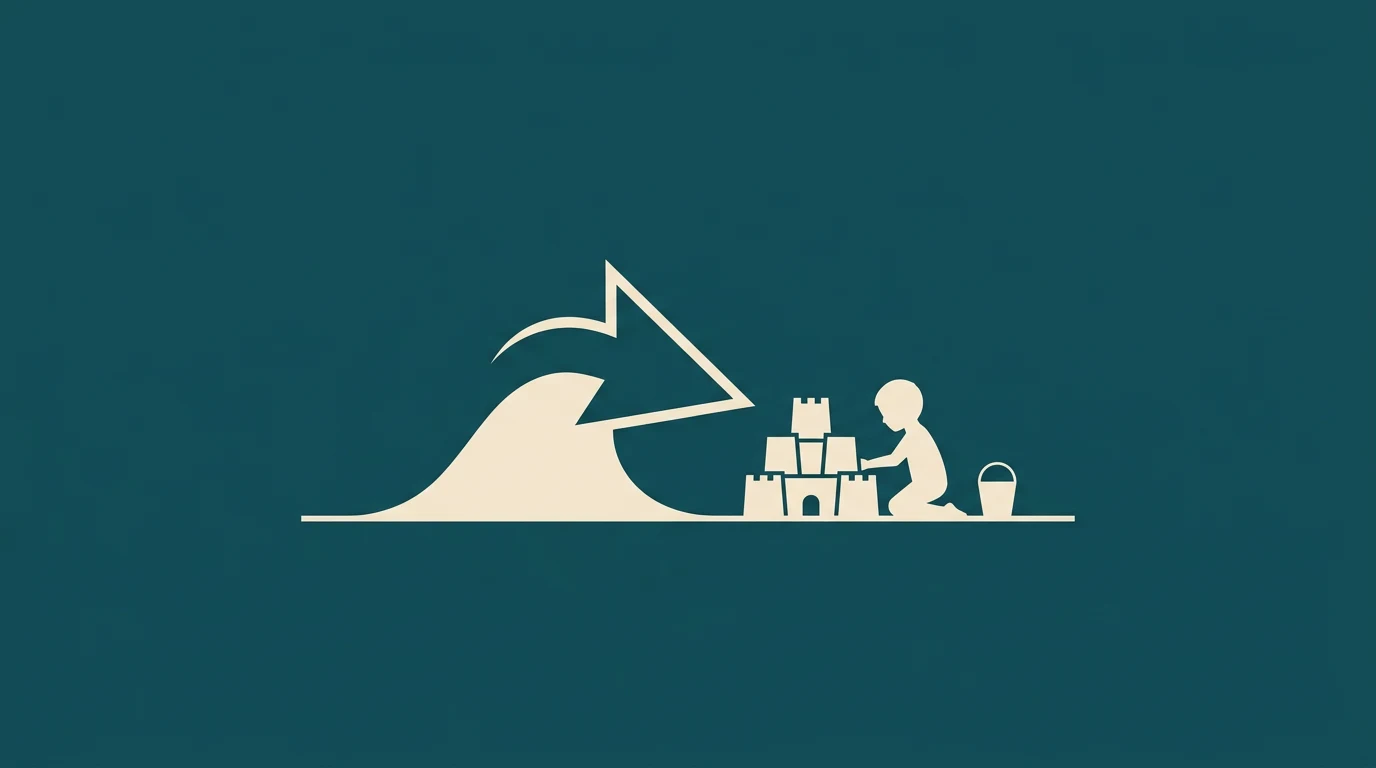
And here I get to the core that eluded me for a long time. We stubbornly frame this issue as a dispute between two camps: ban versus allow. Ossified versus progressive. Analog versus digital. This is convenient because it lets everyone pick a team and cheer. Except it’s a false choice - and I suspect both camps know this deep down.
The truth that doesn’t fit into either slogan goes like this: both these lessons are needed, just in the right sequence and at the right age. You can’t teach critical use of AI to someone who hasn’t first learned to think without it. It’s like learning to play an instrument. First scales, boring, tedious, by hand, a thousand times. Only then improvisation with a band. No sensible person gives a child a synthesizer with auto-composition and says “now create.” But in digital education we do exactly that and wonder why it produces muzak.
I see here a temptation I sometimes succumb to myself when writing about technology. The temptation to say that since a tool exists, resistance to it is by definition stupid. Well, it isn’t. A tool’s existence doesn’t eliminate the question of when to reach for it. We have cars, yet we still make children walk to school because we know legs need to be used. We have translators, yet we still teach languages because we know that understanding a foreign language changes something in a person that a translated caption won’t change.
School is one of the last places where you’re still allowed to do things inefficiently on purpose. Where inefficiency is the point, not a bug. And that is, paradoxically, its greatest value in a world that’s gone crazy about shortening every path.
What We’re Really Afraid Of
Under this whole dispute about AI in school lies, I think, a fear much older than any language model. Fear that we’re raising a generation that will never experience the pleasure of understanding something difficult on their own. That we’ll rob them of that specific thrill when after an hour of struggling with a problem, everything suddenly clicks into place and you feel an inch taller.
This isn’t fear about grades or cheating. Cheating always existed, I cheated too and somehow survived. This is fear about the atrophy of a certain disposition of character - patience with your own lack of understanding. AI gives an answer before you manage to properly struggle with the question. And it’s precisely in that struggling that something forms which used to be simply called thinking.
But I also have the other side of this fear, and it’s talked about less often. I’m afraid of teachers who ban AI not because they’ve thought it through, but because it’s more convenient. Because a ban is easy. A ban doesn’t require understanding how this technology works yourself, where it lies, what it’s good for. A ban is abdication dressed up as principle. And this second fear is as justified as the first, we just brag about it less.
Because the truth is that a teacher who doesn’t understand AI themselves can’t protect a student from it. They can at most push them into a private, uncontrolled relationship with the model - at home, at night, without any adult who would say “look, here it’s making things up.” What’s banned at school doesn’t disappear. It moves into shadow. And in shadow, nobody teaches anything.
Google · Your sourcesQuantslant higher in your Google - one clickAdd to preferred sources →Not One Box for Phones
If I had to design this school today, I wouldn’t choose either of the two classrooms. I’d build something that sounds banal but is damn difficult: a school aware of its own phases. One that in younger grades defends the blank page and manual error like independence - because that’s where you build the muscle. And one that in older grades opens the door to the model, but opens it as a coach, not as a cheerleader. That says: now that you already know how to think yourself, I’ll show you how not to let that thinking be taken from you.
This requires from the teacher the rarest thing of all - to understand the tool well enough themselves to know when to hide it and when to bring it out. That’s much harder than a blanket ban and much harder than enthusiastic “use it freely.” It requires judgment. And judgment is precisely that competence which no machine will produce for us.
So I return to that fourteen-year-old from the beginning and their question: “Why should I learn this when AI will do it for me?” The best answer I know goes like this: you’re not learning to be able to do this one thing. You’re learning to become someone who can judge whether the machine did it well. And that can’t be generated. You have to develop it in yourself on foot, on the same old, inefficient road that everyone before you walked.
Two classrooms, one hallway. And a growing conviction that the future doesn’t belong to either of them separately - only to someone who can move between them with open eyes. The rest is just a dispute about where to put the box for phones.
More on this from QUANTSLANT
 guides·Higgsfield Tutorial: Create AI Videos Without Burning CreditsLearn how to use Higgsfield's AI video models efficiently. This step-by-step guide shows you how to create your first video without wasting your monthly credit budget.