Who Pays for Free GPT? Hint: Check the Mirror
I break down the economics of three AI models and show who's actually footing the bill for what everyone calls free intelligence.

👁 115 reads
Every large language model costs roughly as much as a sizeable apartment block just to train. Not a few hundred dollars, not a few thousand: tens, sometimes hundreds of millions of dollars burned inside refrigerated halls packed with graphics cards that run as hot as small power stations. And then someone walks up to you and says: here, use this for free. So you do. Every day. Without a moment’s thought about who actually benefits from the gift.
That paradox is where I want to start. Because in a world where nothing is as expensive to produce as artificial intelligence, AI is somehow the thing most often handed out at no charge. Free GPT. Open Llama. And alongside them, Claude, which bills you without ceremony. Three models, three completely different answers to the same question: if this costs a fortune, who on earth is paying for it?
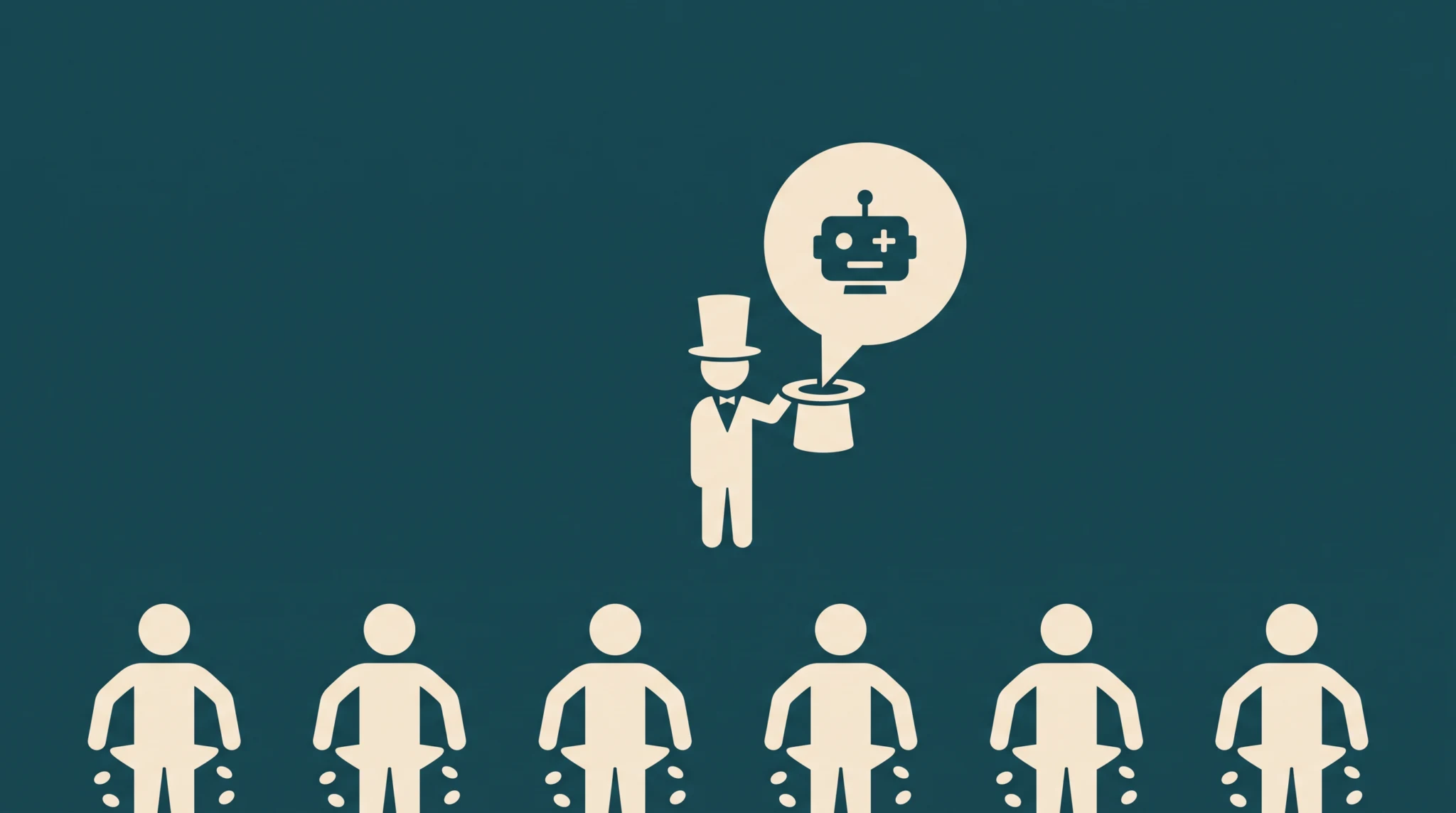
Free never means without cost
Let’s start with the simplest truth, which is somehow not obvious: when you get something for free on the internet, you are the product. That line has been worn smooth by years of Facebook and Google discourse, but applied to AI it takes on a sharper, newer edge.
Free access to a language model is not an act of charity. It’s a strategy. OpenAI doesn’t give GPT away out of humanitarian impulse; it gives it away to build a habit. To get hundreds of millions of people accustomed to reaching for a chat window, not a search bar, every time they have a question. Habit is worth more than any subscription in this game. Once you’ve trained the whole world to think of your product as the default, you own something no amount of money can buy outright: the default position.
You pay for that with three things you rarely count. First, data. Every conversation, every corrected sentence, every moment you click “this answer is better” is free training material, or at the very least a signal about how people actually use these tools. Second, attention and dependency. A model you use every day works its way into how you think, work, and write. Third, your future wallet. The free tier is a threshold, not a destination. The entire architecture of free GPT is designed so that at some point you hit a limit, feel constrained, and reach for your card.
It’s the classic freemium model, but AI comes with one extra catch. Ordinary freemium costs almost nothing per free user: one more Instagram profile is a fraction of a cent. Every query you send to a language model, on the other hand, burns real electricity and real processor time. Free GPT is therefore not just a habit-building investment for the company; it’s also a bleeding wound on the energy bill. Someone has to dress that wound, and that’s where investors arrive with bags of money, betting that addiction will eventually turn into profit.
Claude, or the honesty of the invoice
Against that backdrop, Anthropic and its Claude do something that looks less appealing at first glance but is healthier on closer inspection. They say plainly: this costs money, so pay for it.
When you pay for a model, the relationship becomes simple and legible. You’re not the raw material; you’re the customer. Your data carries different weight, because the company doesn’t need to extract it from you to balance the books: you’ve already paid. That’s a subtle but fundamental shift in the balance of power. In a free model, your interests and the provider’s are in quiet conflict: the company wants to squeeze as much signal from you as possible, you just want an answer. In a paid model those interests align. The company needs you satisfied enough to renew.
When you don’t pay for a tool, you are its material. When you do pay, you become its reason for existing. That’s not a nuance; it’s the difference between being farmed and being served.
I don’t want to idealize this. Anthropic is not a monastery; it’s a company that also burns billions and will also need to recoup them eventually. But it chose a different path: instead of accumulating a mass of free users and praying for conversion, it’s building a reputation as a serious tool for individuals and businesses that have a concrete problem and are willing to pay to solve it. The model is closer to old-fashioned craftsmanship than to the new attention economy. Good work, honest price.
What I find striking is that the company which most loudly talks about safety and caution in AI also chose the most transparent business model. It’s hard not to feel that’s not a coincidence. It’s harder to sustain an ethical mission narrative when you simultaneously live off monetizing human attention. The paid model is simply more consistent with the story Anthropic sells about itself.
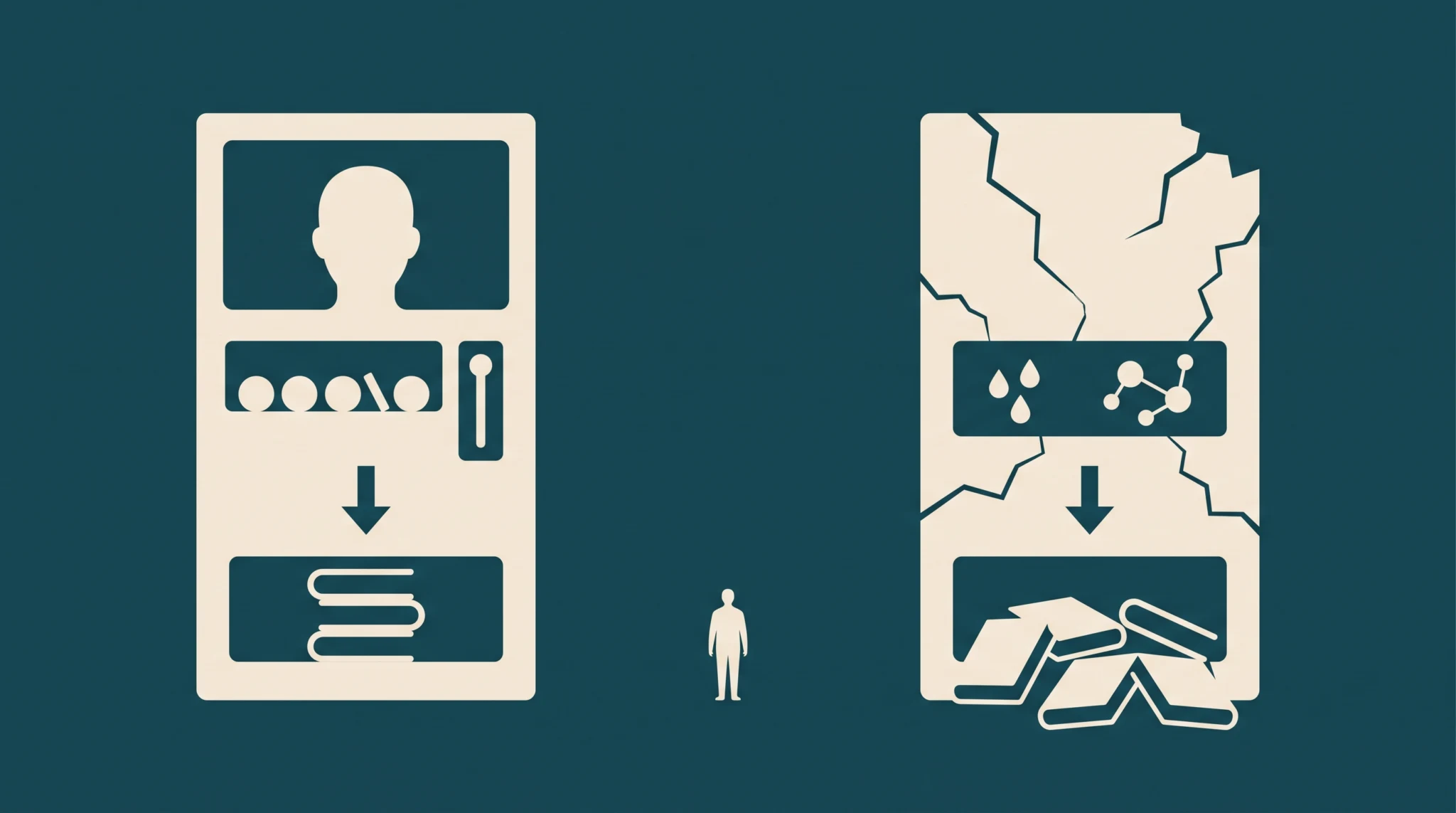
Llama, or a gift that isn’t really for you
And here we reach the most interesting case: Meta and its Llama, distributed as an open-weights model. You can download it, run it locally, dig into it, build your own products on top of it. It looks like the most selfless gesture in the whole field. A company worth hundreds of billions of dollars gives away the work of its best engineers at no charge. Where’s the catch?
There is one, and it’s beautiful in its perversity. Meta doesn’t sell models; Meta sells advertising. AI never has been and never will be its core product. It’s a weapon in a war being fought elsewhere. While OpenAI and Google build closed, paid ecosystems and try to position themselves as owners of the future infrastructure of intelligence, Meta does something clever: it sets fire to the ground beneath their feet.
By releasing a powerful model for free, Meta ensures that nobody can build a durable, expensive monopoly on top of artificial intelligence. If free Llama is good enough, why would anyone pay a fortune for a competitor? It’s a scorched-earth strategy. The point isn’t to earn money from the model; the point is to stop anyone else from earning too much. And along the way, the world of developers, researchers, and startups learns to build on Meta’s technology, feeds it improvements, stress-tests it across thousands of scenarios, and builds an ecosystem around it. A free gift that cements your own position while weakening your rivals: there are few more elegant strategic moves.
It needs to be said plainly: open source from a large corporation is not a freedom movement; it’s a market maneuver. That doesn’t make it bad. I use open models myself and think they’re one of the best things to happen to this industry: they put a ceiling on prices, give users independence, and make it possible to build things privately and locally. But it’s naive to believe this is driven by a love of humanity. It’s driven by cold calculation that, at this particular moment, happens to align with our interests. For now.
Three bills, three different payers
Let’s lay all three models side by side, because it’s only together that they form a complete picture of the industry.
Free GPT is paid for by the user: with their data, their habit, and the implicit promise that they’ll pay for real someday. It’s also paid for by investors who are financing the loss in hope of a future attention monopoly. It’s a model where the price is hidden, spread over time, and diffused across so many millions of people that no individual ever feels it.
Claude is paid for by the customer: directly, by card, every month. It’s the simplest and oldest arrangement in the world: something costs money, so you pay and you receive. The bill is visible, the relationship clean, the expectations clear.
Llama is paid for by Meta itself: knowingly, deliberately, to destabilize its competitors’ markets and protect its real money-printing machine, which is advertising. It’s the most indirect of the three bills: the user receives a genuine gift, but that gift is ammunition in someone else’s war, not a gesture of goodwill.
Notice that in none of these three scenarios is intelligence actually free. It always costs something; the only question is where that cost is hidden and who is absorbing it at any given moment. That, in my view, is the one skill worth developing in any encounter with this industry: for every “free,” be able to find the real payer and ask what they expect in return.
Google · Your sourcesQuantslant higher in your Google - one clickAdd to preferred sources →What this means for you and for me
I’m not writing this to frighten you or to push you toward any particular side. I’m writing it to strip these tools of their aura of magic and pure generosity, because that aura is dangerous. A person who believes they’re getting something for nothing stops asking what they’re giving away in exchange.
Practically speaking: when you use a free model for trivial things, drafting an email, summarizing a text, brainstorming an idea, you’re paying a price that is entirely acceptable. You’re getting enormous value in exchange for data you wouldn’t have sold for more elsewhere anyway. But when you feed confidential company documents, customer data, or your most private affairs into a free interface, it’s worth remembering that you are a source, not a customer. And a model that costs nothing has no incentive to treat your secrets with the care of a paid service.
When you’re building something serious, something your business or your independence is meant to rest on, either pay directly for a service and treat the bill as the cost of peace of mind, or reach for an open model and take responsibility for running it yourself. Both paths make sense. The worst option is the third: building your entire operation on something that is free today because someone needs your habit, and that will stop being free the day that habit becomes a lever.
Because that is exactly how this generosity ends. Free models are not gifts; they’re invitations into a relationship whose terms will be filled in later. Open models are not a revolution; they’re a weapon that happens to be pointing in our direction for now. And paid models are not greed; they’re the only arrangement where you know from the start where you stand.
The most expensive thing in this entire industry isn’t a graphics card or an electricity bill. It’s the illusion that you’re getting something for free. You’ll pay for it one way or another, so you may as well choose the currency consciously, before someone chooses it for you.
More on this from QUANTSLANT
 premium·Stop Tweaking Your Prompts. Start Managing Your ContextMost AI frustration doesn't come from bad prompts. It comes from a cluttered context window.