Banning ChatGPT in Schools Is Like Banning Calculators
Teachers who ban AI today sound just like those who banned calculators in the 1970s. History shows us which side wins, and what students really lose.
👁 116 reads
When calculators first appeared in classrooms in the 1970s, some math teachers treated them like a civilizational threat. The argument was simple and sounded reasonable: if a machine calculates for the student, the student will stop knowing how to calculate. Children won’t know their multiplication tables, adults won’t be able to count change at the store, and the entire nation will become intellectually infantilized. Half a century has passed. People still calculate just fine. And those who banned calculators are now an anecdote - warm, slightly embarrassing, told at class reunions.
I’m writing about this today, in 2026, because I’m experiencing déjà vu so strong it’s uncomfortable. Except this time the machine isn’t a plastic box with eight digits on a display, but a language model that can write an essay about classic literature, solve a physics problem, and explain photosynthesis more patiently than many textbooks. And once again I hear the same argument, in the same tone of panic: if a machine writes for the student, the student will stop knowing how to think.
False Symmetry, Real Lesson
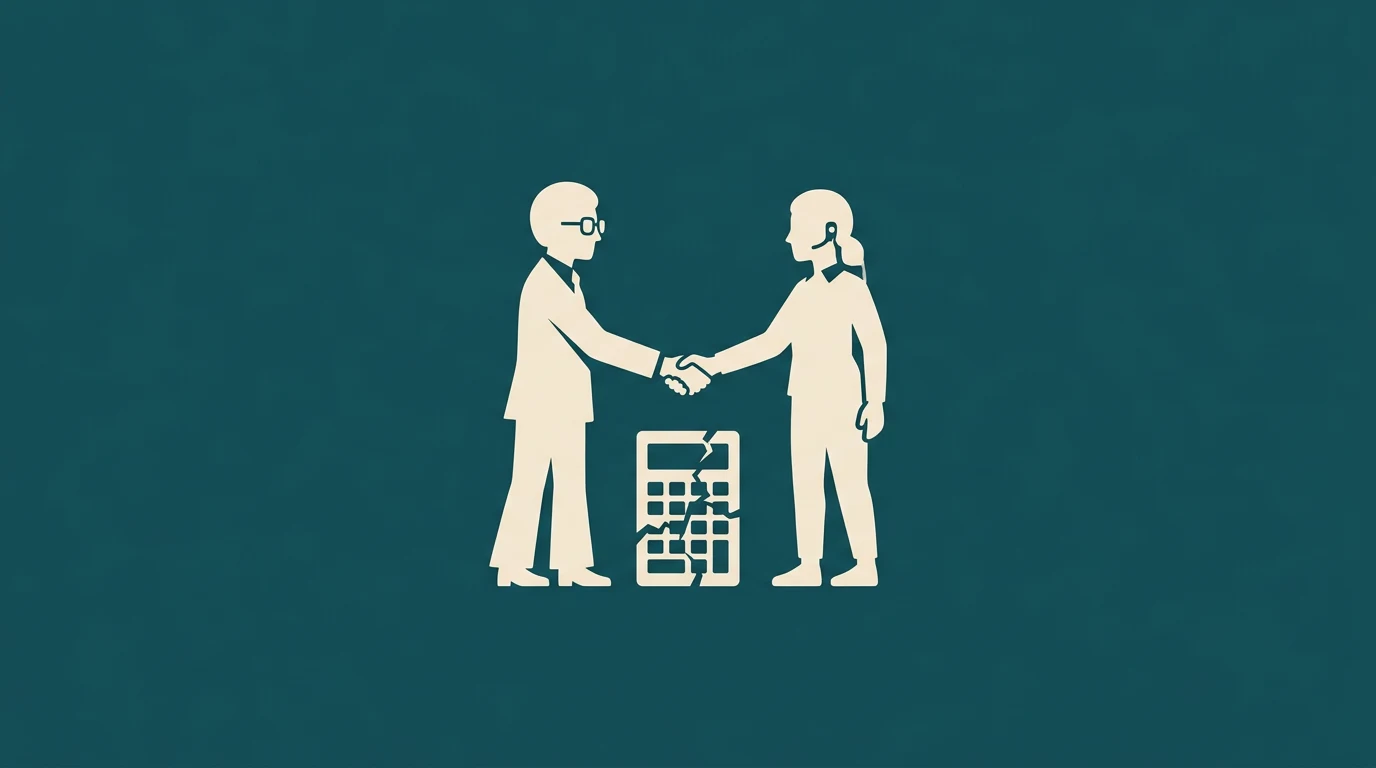
Before someone accuses me of cheap equivalence: no, ChatGPT is not a calculator. A calculator performs one narrow operation - it calculates. ChatGPT touches the core of what schools consider their product: language, argumentation, synthesis, creativity. The qualitative difference is enormous, and pretending it doesn’t exist would be dishonest.
But the analogy isn’t about the tool. It’s about the reflex. The reaction to calculators and the reaction to AI flow from the same root: from the conviction that the value of education lies in execution, not in understanding. That what matters is that the student personally by hand multiplied three-digit numbers, not whether they understand why you multiply and when the result doesn’t make sense. That what matters is that the student personally produced three pages about a literary work, not whether they can distinguish a good interpretation from nonsense.
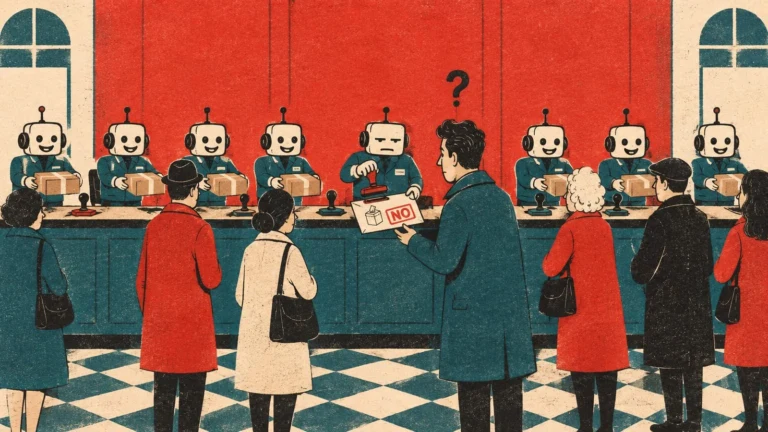
Here we get to the heart of the matter, which most discussions about AI in schools carefully avoid. The ban doesn’t defend student thinking. The ban defends a certain model of teacher work, in which proof of learning is the existence of a physical product - a notebook, an essay, a column of calculations. The language model didn’t kill that product. It only exposed that the product was never what really mattered.
Who’s Really Fighting and Over What
To understand why the ban is so tempting, you need to name the forces clashing here. Because this isn’t a dispute about pedagogy. It’s a dispute about interests, comfort, and fear - just dressed in the language of concern for children.
First, there’s the interest of the teacher overburdened by the system. Teachers check dozens of papers, teach several classes, fill out electronic and paper grade books simultaneously, and for all this receive a salary whose amount is its own scandal. For such a person, AI isn’t an exciting revolution, just another problem thrown on the pile. How do you check whether a student wrote it themselves? How do you grade when the old scale has lost meaning? The ban is attractive not because it’s right, but because it’s cheaper in energy than rethinking your entire profession from scratch.
Second, there’s the interest of the system, which measures itself in numbers. Final exams, standardized tests, school rankings - this entire machine feeds on comparable, scorable results. AI blows this comparability to pieces, because suddenly it’s unclear whose result it is. The system doesn’t want to deal with this, because dealing with it would mean rebuilding exams, and rebuilding exams means years of work, consultations, and political risk. It’s easier to issue a ban.
Third, and this is most interesting, there’s the interest of the students themselves - which doesn’t lie where adults think. A student who uses ChatGPT to paste ready-made answers is robbing themselves of education. But a student who uses it to ask questions at three in the morning, to explain things they didn’t have time to understand in class, to check their own reasoning - that student is doing something previous generations could only dream of. The ban doesn’t distinguish between these two. It treats them both as cheaters.
Banning AI in schools isn’t a shield protecting students’ minds. It’s an umbrella protecting adults from a rain of questions they don’t yet have answers to.
What the Ban Really Teaches
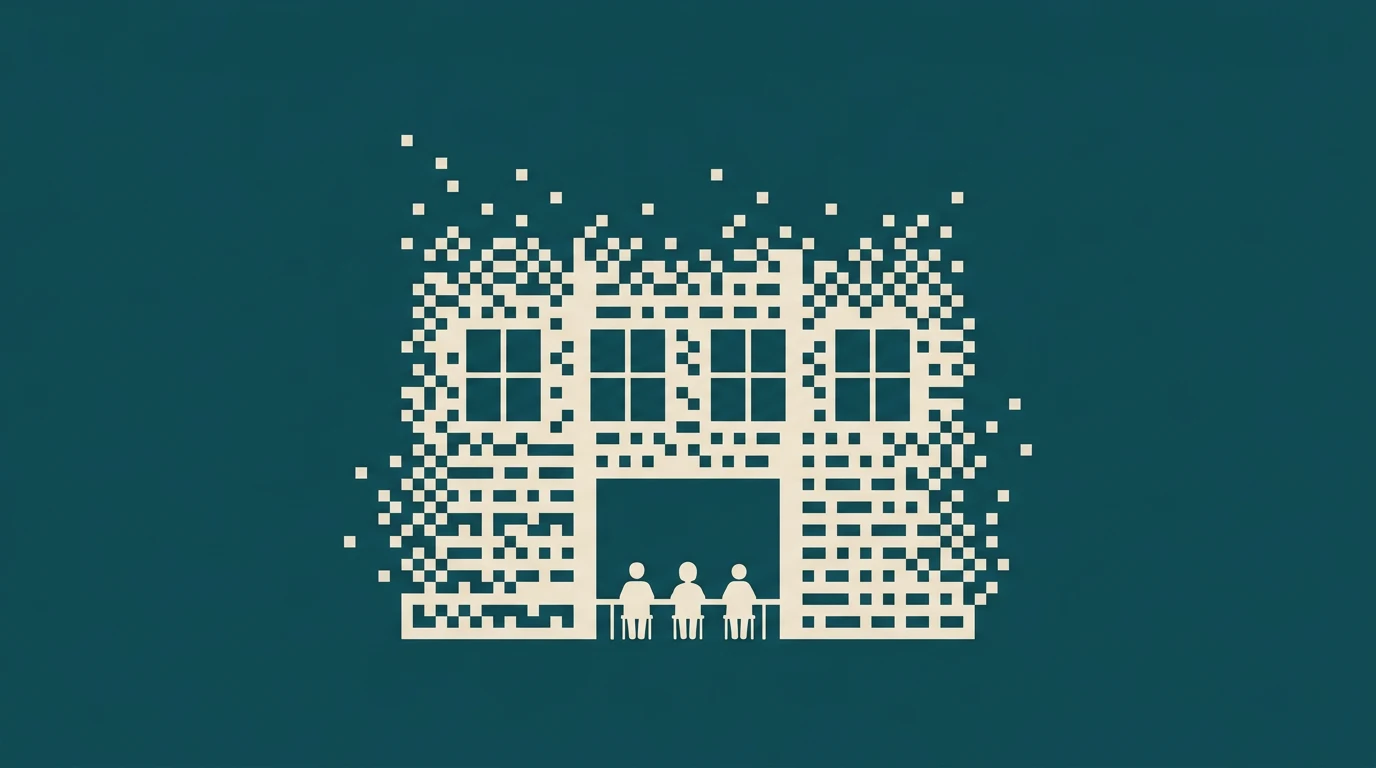
There’s something deeply harmful in the ban that goes beyond the AI question itself. The ban teaches children that school and life are two separate worlds. That there’s “classroom reality,” where 21st-century tools are forbidden, and “the reality of the rest of life,” where they’re obvious. A student who returns home after lessons and normally uses a language model for work, for language learning, for coding, perfectly understands this schizophrenia. And draws exactly one conclusion from it: school isn’t keeping up, so it’s not worth taking seriously.
This is the real cost of the ban that nobody talks about. It’s not that the student won’t write an essay independently. It’s that they stop believing school has anything to do with their future. And when a teenager stops believing in the meaning of an institution, no regulation will reverse that.
Imagine a high school senior in a small town. No tutor, because their parents can’t afford it. No one at home who can help with chemistry. But they have a phone and free access to a model that will explain redox reactions patiently and at any hour. For this student, AI isn’t cheating - it’s the first tutor they’ve ever been able to afford. A teacher who takes this away in the name of “independence” is in practice defending the privilege of those who can afford private help. This is anti-advancement, even if intentions are noble.
It’s Not About Allowing Everything
I’d be dishonest if I pretended the solution is cheerfully optimistic “do whatever you want.” It’s not. A language model can destroy the learning process as effectively as it can strengthen it. If a student pastes instead of thinking - they lose. If instead of struggling with a blank page, they have a machine fill it - they don’t exercise the most important muscle education gives: tolerance for your own helplessness that precedes understanding.
But the answer to bad use of a tool has never been banning the tool. The answer is teaching good use. Nobody banned the internet because you can find nonsense on it. We learned - with varying success - to distinguish sources. Nobody banned Wikipedia, though at first it was treated like intellectual poison. Today it’s one of the pillars of access to knowledge, and schools simply teach how to use it wisely and where its limits lie.
A mature school in 2026 doesn’t ask “whether to allow AI,” but “what to allow it for and what not, and how to verify it.” This means uncomfortable but necessary things. It means shifting evaluation from product to process - more work in class, under the teacher’s eye, fewer papers written at home without witnesses. It means assignments that can’t be solved by pasting, because they require reference to a specific class discussion, to local context, to personal experience. It means teaching critique of what AI produces - because the ability to point out where a model is wrong is now more valuable than the ability to write from scratch a text the model will write better.
Google · Your sourcesQuantslant higher in your Google - one clickAdd to preferred sources →Revolution Without Revolutionaries
The biggest problem in education isn’t ChatGPT. The biggest problem is that technological revolution has hit a system that doesn’t have the resources to digest it. Teachers trained on this issue by the state are still rare. Curricula were written in a world that no longer exists. Exams reward reproduction, not thinking - and suddenly a machine appears that reproduces better than any human. This isn’t an AI crisis. It’s a crisis of purpose that AI has only illuminated like a spotlight.
And that’s why I feel a strange mixture of compassion and impatience toward the teacher who bans it today. Compassion - because they’ve been left alone with a problem they didn’t create and for whose solution they received no tools beyond their own common sense. Impatience - because the ban is an escape, not an answer, and every year wasted pretending the problem doesn’t exist distances us from a school that could be truly good.
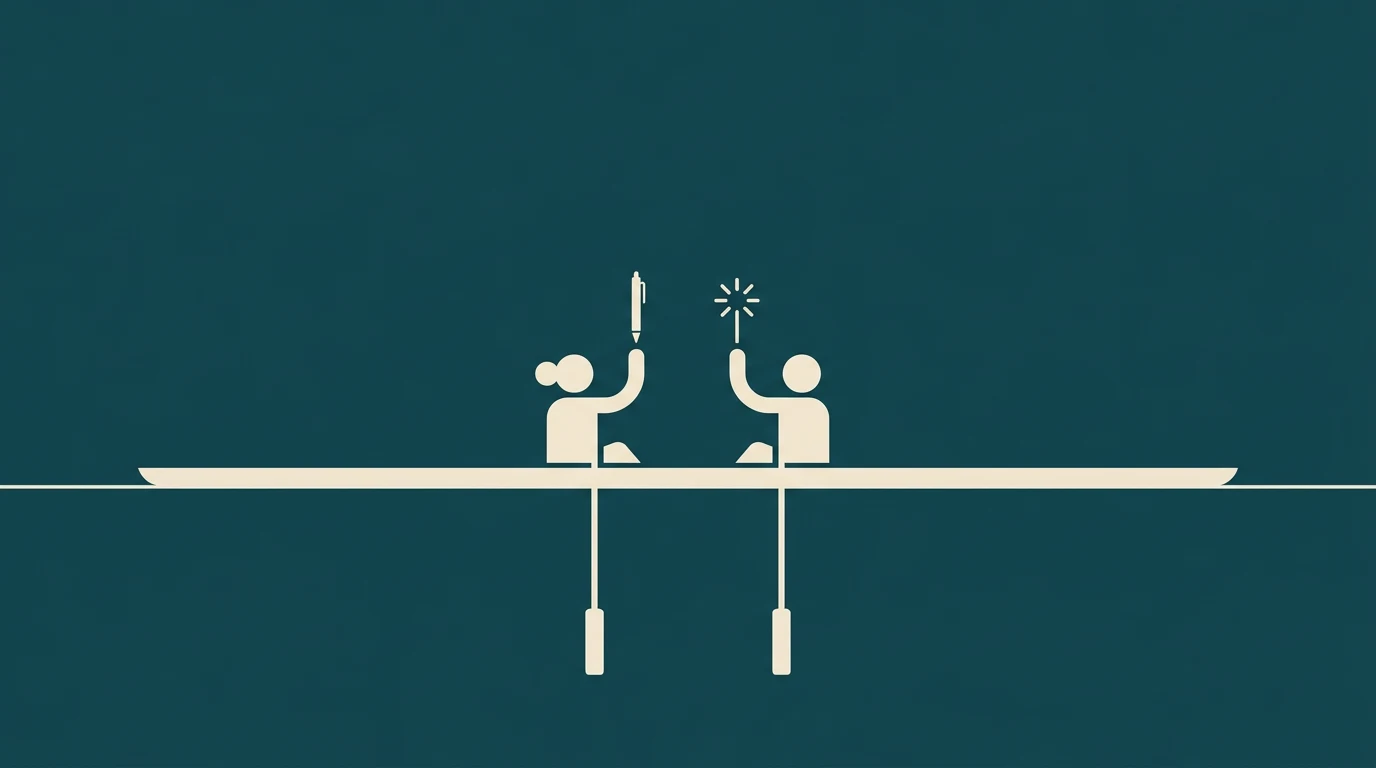
Let’s return to the calculator, because this story has a moral that usually gets lost. The calculator didn’t kill mathematics. It changed what schools expect from mathematics. It stopped being about mechanically multiplying columns of numbers, and started - at least in theory - being about understanding when and why you multiply. Freed from tedious calculation, students could focus on the harder question: does this result even make sense. The calculator didn’t rob us of thinking. It moved thinking up a floor.
ChatGPT does exactly the same thing, just on a higher floor and with higher stakes. It frees students from mechanical text production so they can focus on the harder part: is this text true, does the argument hold up, where’s the manipulation hiding, what do I actually want to say. This is a higher level of education, not lower. But to reach it, you have to abandon the conviction that value lies in execution.
A teacher who doesn’t do this won’t protect their students. They’ll only protect their own image of a profession that has already ended. In twenty years, the story of how ChatGPT was banned in schools will sound exactly like the story of banning calculators sounds today - warm, slightly embarrassing, with the same disbelief in the voice. Except this time the stakes aren’t multiplication tables, but whether we teach an entire generation to think with machines, or against them.
And I have no illusions about this: the machine will stay. The only question is whether schools will learn to live with it before students learn to live without schools.
More on this from QUANTSLANT

 guides·Polaroid Effect on Photos: Ready Prompts & 7 AI TestsThe Polaroid effect can fail with the first prompt: instead of a white border you get a different face and milky haze. We test frame, warm tone, flash, and aging.