The Quiet War Open-Source AI Already Won
Open-source AI models have already won the war that matters - not by beating benchmarks, but by becoming the foundation everyone builds on.
👁 115 reads
There’s a moment in the history of every technology when the outcome is already decided, but no one has announced the end yet. Electricity became inevitable long before the last city connected its first light bulb. The internet won over closed corporate networks years before anyone wrote an article about it. Victory in technology is rarely an explosion. It’s more like a quiet shift in the ground that you don’t feel until you look down and notice you’re standing somewhere different than you were yesterday.
I argue that we’re at exactly such a moment in artificial intelligence right now. Open models - those whose weights you can download, run locally, fine-tune and take apart - have already won. It’s not that they will win. They won. It’s just that this was a war most people didn’t know was even happening, because everyone was watching a completely different stage.
The Stage Everyone Was Watching
The public spectacle of AI has looked the same for two years. Company X announces a new model. Charts appear showing their model beating the previous one by a few percentage points on tests whose names no one outside the industry will remember. Tech media writes about a “breakthrough.” Two weeks later, the competition announces their own model that beats that one by another few points. And so on in circles.
This theater of benchmarks sucked us all in. We started believing that the war for AI is about who has the smartest model in any given week. That the top of the leaderboard is what counts. That the winner is whoever first reaches some abstract ceiling of intelligence.
This was a mistake about the nature of the conflict. Because technology wars almost never get decided at the top. They get decided at the bottom - where technology meets the mass of people who want to do something with it. And at that bottom, open models were doing something the whole time that benchmarks don’t measure at all.
Where the Real Battle Was Fought
Imagine an engineer at a mid-sized company that wants to weave AI into their product. Not in a lab, not at a Valley giant, but at a normal business - of which there are hundreds of thousands. This person has three questions, and none of them sound like “which model won the latest benchmark.”
First: can I rely on this in a year, in three years, regardless of someone else’s business decisions? Second: are the data I’m running through this guaranteed not to leak beyond my server room? Third: what will this cost when it stops being a toy and becomes part of a product used a million times a day?
For all three questions, a closed model available only through someone else’s API answers poorly. You’re relying on a company that can change pricing, discontinue the model, or go bankrupt. Your data flows through someone else’s servers. And the cost grows linearly with success - the better you do, the more you pay the model owner.
An open model answers these questions differently, and that’s the whole secret. You have the weights locally. No one will take them away. Data doesn’t leave your infrastructure. And the cost when you scale depends on your hardware, not someone else’s margin.
Closed models won every single week. Open models won every single year. And technology is built over years, not weeks.
This is the essence of the shift we didn’t feel. Companies, universities, governments and individual programmers started building their foundations on what they could own. Not because open models were smarter - often they were several months behind. But because they were predictable, controllable and theirs. And you build infrastructure on those three things, not on a temporary advantage in a chart.

Forces, Interests and Why This Was Inevitable
It’s worth asking why anyone releases model weights at all when training them costs astronomical sums. The answer isn’t altruistic, and that’s exactly why it’s durable.
A company losing the race for the closed summit has one powerful weapon: it can burn the ground under the leader’s feet by opening what the leader wants to monetize. If I can’t sell you the best model, I can make the best model stop being worth money, because a good-enough model is free. This is a classic pretender’s move that we’ve seen before with operating systems, browsers and databases. Openness is the weapon of the weaker party who has nothing to lose in the licensing model, because they weren’t winning it anyway.
Add geopolitics to this. Countries and regions that don’t want to depend on a handful of companies from one corner of the world have an existential interest in technology that no one can shut off on them. An open model is digital sovereignty in file form. For a government thinking in decades, this argument is priceless.
And finally - mass. Hundreds of thousands of researchers, students and engineers worldwide can only work on what’s open. They don’t have budgets for someone else’s API at experimental scale. But they have time, curiosity and numbers. Every improvement, every fine-tuning technique, every way to compress a model to run on weaker hardware - all of this is born in the open ecosystem, because that’s where everyone can look under the hood. A closed model is developed by a team. An open model is developed by humanity.
When you combine these three forces - the pretender who wants to burn the ground, states seeking sovereignty, and the mass of people who can only work on open systems - it’s no accident that open-source tipped the scales. It was written into the structure of interests from the very beginning. A closed model must win everything. An open one just needs to be good enough.
What It Really Means That They “Won”
I need to be honest here, because it’s easy to over-interpret. I’m not claiming that open models are smarter than the best closed ones. Most of the time they’re not. The most spectacular, most expensive, most polished models still usually come from closed labs that can spend on one training run what others spend on ten years of operation.
But “winning the war” doesn’t mean “having the best single specimen.” Winning means: becoming what everyone builds on by default. It means: shifting the ecosystem’s center of gravity so that your logic becomes the norm, and the other side must adapt to it.
And that’s exactly what happened. Today, when someone starts a serious AI project, an open model is the default starting point, not an exotic alternative. Closed models haven’t disappeared - they’ve become a premium service you reach for when you need the absolute peak and are willing to pay for it and depend on a vendor. It’s the same position closed operating systems found themselves in when the open system started powering nearly every server in the world. Windows didn’t disappear. But the internet runs on Linux, not on it.
Notice that this is the best possible analogy. The average person still sees a closed system on their screen and thinks it “won.” They don’t know that every page they open, every service they use, stands on an open foundation they’ll never see. The visible layer may belong to giants. The layer everything stands on belongs to everyone.

What This Means
The consequences of this quiet victory are bigger than they appear at first glance, and I want to point out three I consider most important.
First, power over AI has dispersed more than the panic about “a few companies controlling artificial intelligence” suggests. Yes, the frontier belongs to giants. But the ability to do genuinely useful things has spread across the world. This changes the risk calculation. You can no longer lock this technology in a vault and release it drop by drop, because a good-enough version is already everywhere and can’t be taken back.
Second, the business model based on selling access to intelligence as such is structurally fragile. If your advantage is three months over a free alternative, you’re selling a melting ice floe. Real money will shift where it always shifts in maturing technologies: to integration, to data, to trust, to specific applications. Not to the engine itself, but to what gets built on it.
Third, and I like this best - a certain philosophy won. The philosophy that technology as fundamental as machine thinking is better kept in open hands than closed ones. Not from naivety, but from the cold calculation of thousands of independent actors who each separately chose control over convenience. This is a rare case where distributed, selfish interest of many assembled into something that looks like a common good.
The question remains why almost no one announced this victory. I think for a simple reason: open-source victory has no face. There’s no single company raising a flag, no CEO walking on stage saying “we won.” There’s just a quiet, distributed, million-times-repeated decision - download the weights, run them locally, build on your own. Victories without faces don’t make covers. Yet they’re the ones that most often change the world permanently.
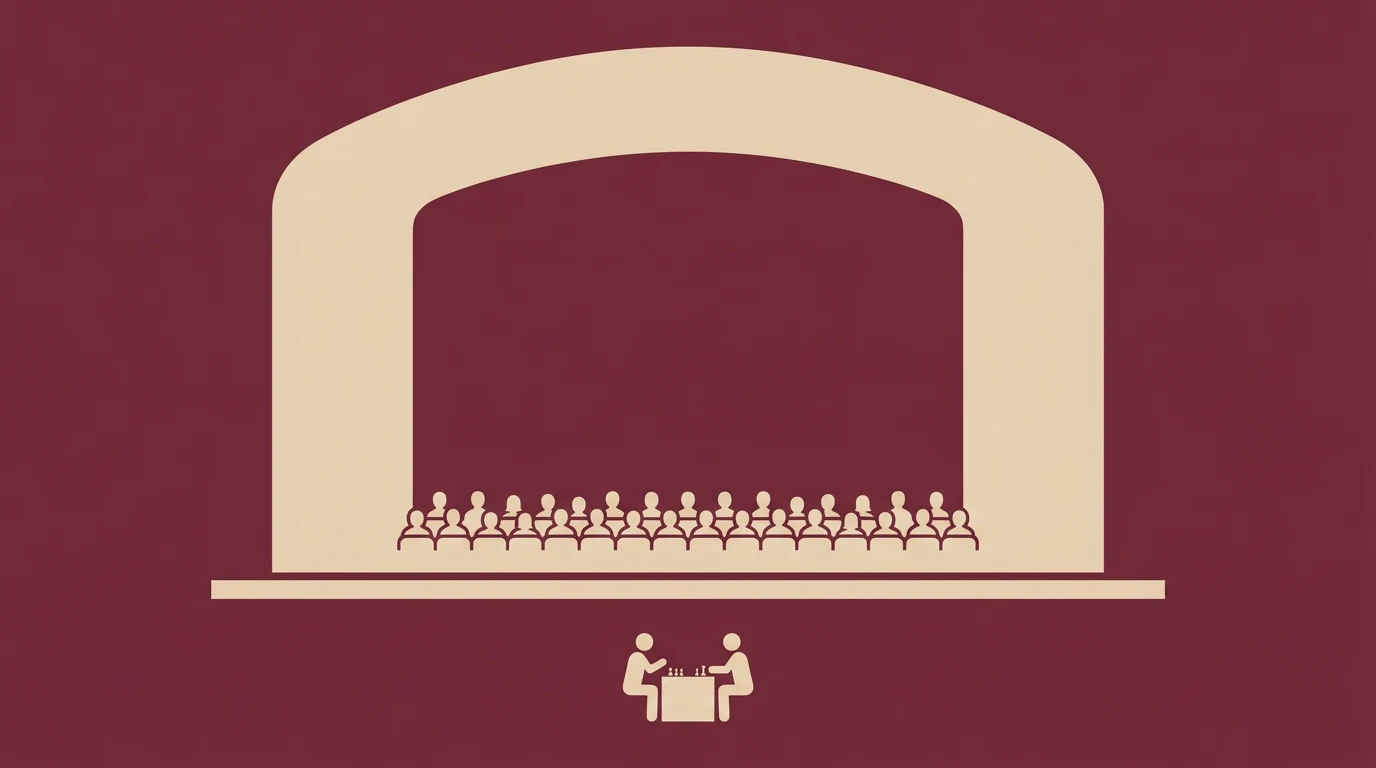
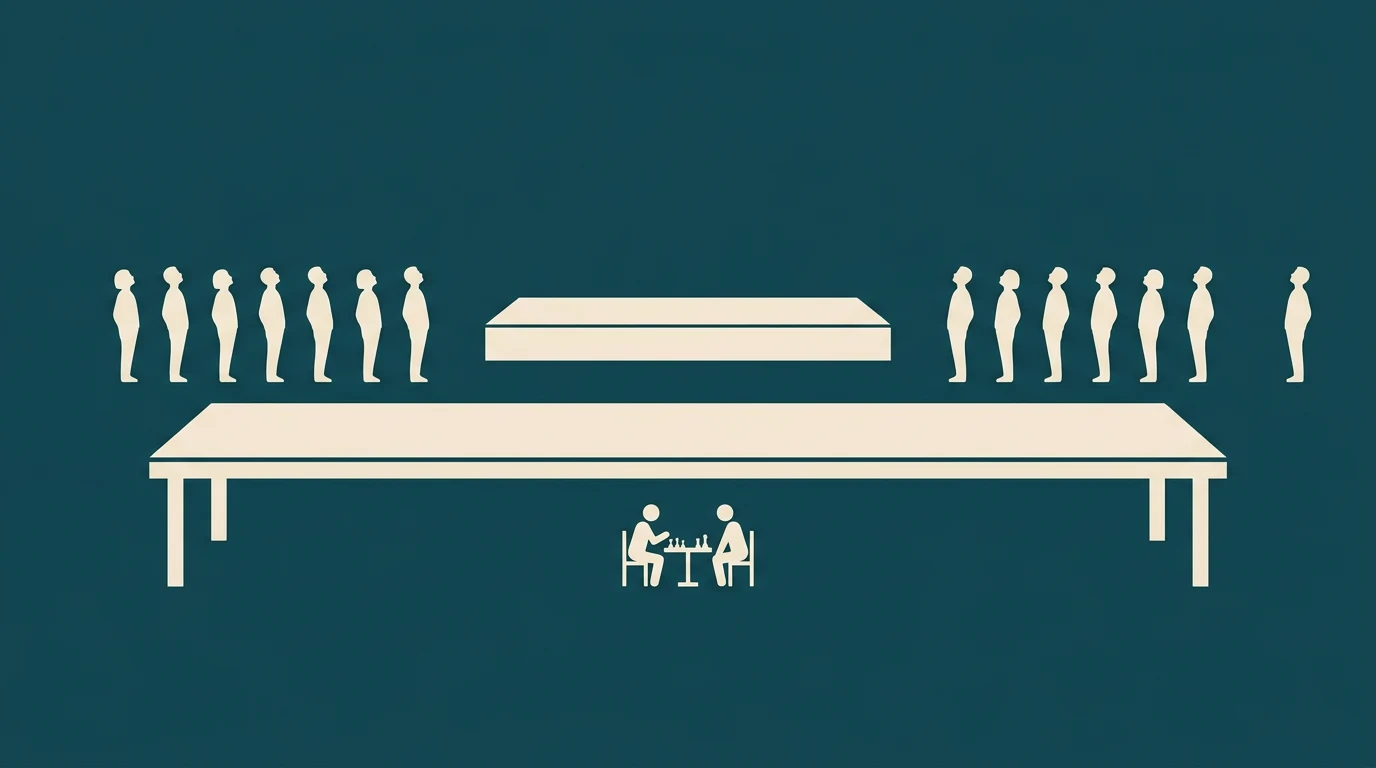
The war no one knew was happening ended without announcing a ceasefire. The ground already shifted. We’re still watching the brightly lit stage where giants announce new records, thinking that’s where the future is being decided. But the future long ago moved under the table, where someone quietly finished the game and already started setting up pieces for the next one.
More on this from QUANTSLANT
 guides·One Room, 6 Styles: AI Interior Design VisualizationSix AI-generated designs for the same living room. Prompts that change decor while keeping windows, doors and perspective consistent.