There’s No Such Thing as Free AI: Who Really Pays
Free AI tools seem like a gift, but someone always pays. We break down the hidden costs behind OpenAI's freemium, Anthropic's subscriptions, and Meta's open-source.
👁 115 reads
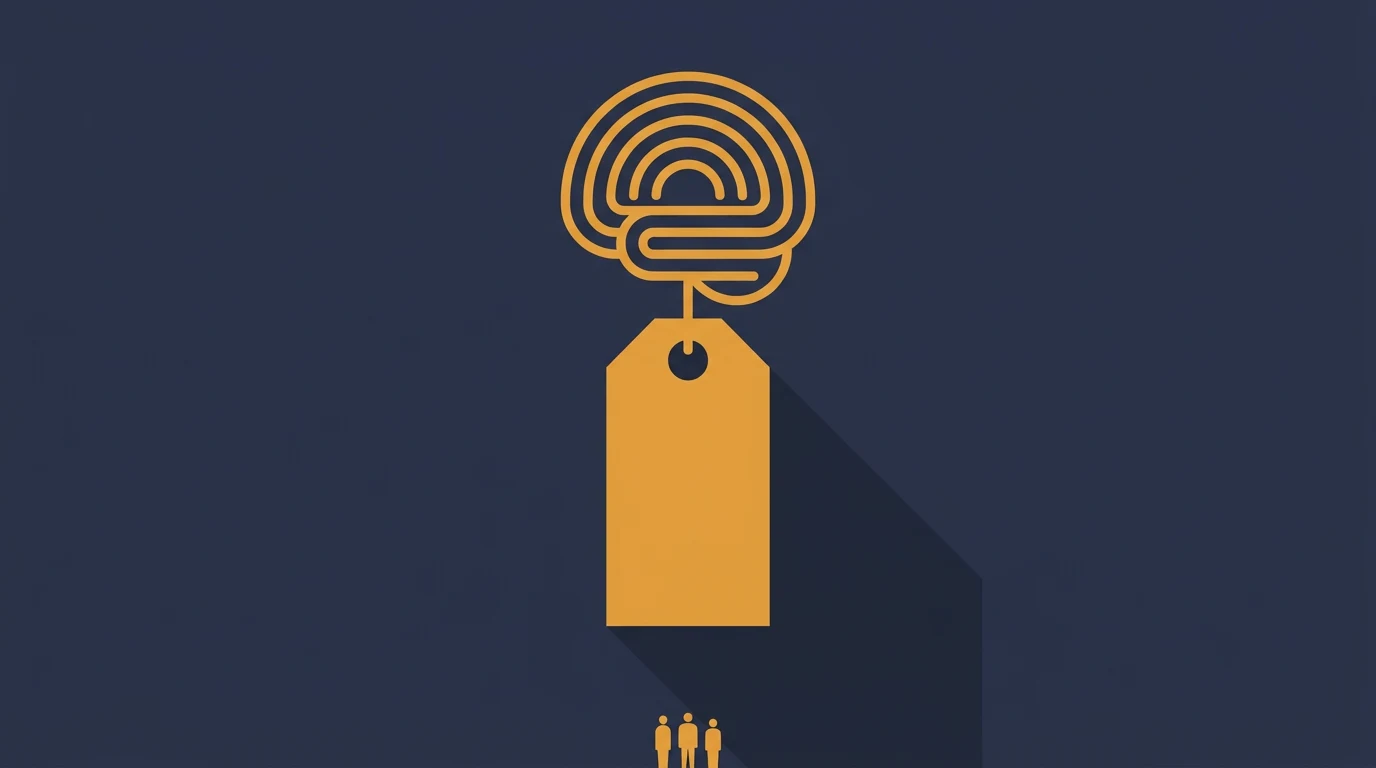
I’ll start with a sentence that sounds like a joke but isn’t: the most expensive thing in the world of artificial intelligence has “free” written on it. Not a paid Claude subscription. Not an API invoice. Not a cluster of GPUs running Llama. The most expensive thing is that chat window you enter without logging in, without a credit card, without any commitment, and type “write me a poem about a cat.” Because someone did pay for that poem - just not you, and not in the currency you think.
Three major business models have spread across the market today like three different answers to the same question. OpenAI says: take it free, pay later. Anthropic says: pay upfront, know what you’re paying for. Meta says: don’t pay us anything, take the code, do what you want. Each of these propositions looks like an act of generosity. None of them are. And that’s what I want to argue about today - where the bill is hidden in each of them - mainly with myself.
Free Means Most Expensive
When something is free, you’re the product - this sentence has already had a dizzying career and managed to wear itself out. But in the case of AI, we need to refresh it, because the mechanism is more subtle than with social media. Facebook made money off you by selling your attention to advertisers. A free language model does something different and more fundamental: it learns to be better thanks to you, so it can later sell that improvement to someone who will pay.
Every question you ask, every correction, every click on “this answer is better” isn’t random noise. It’s training data of the highest quality - fresh, human, contextual, exactly the kind you can’t buy for any amount of money, because it only emerges when a real person really needs something. Free access isn’t a gift. It’s an invitation to co-create a product for which you won’t receive a share of the profits.
There’s a second layer, less cynical but equally economically hard. The free tier is the most effective sales channel ever invented. It draws you in, gets you used to it, changes your way of working so that after three months you can’t imagine a day without this tool - and then it shows you a wall. Query limit. Slower model. “This feature is available in the Plus plan.” And you pay, because the cost of giving it up is already higher than twenty dollars a month.
Free in AI doesn’t mean “without cost.” It means “deferred and hidden cost” - you pay with data, with habit, and with the fact that your way of thinking slowly adjusts to a tool whose rules you don’t set.
I’m not saying this to scare you. I use free tools every day myself and think it’s fantastic that someone anywhere in the world has access to the same technology as an engineer in Silicon Valley. But I want us to call things by their names. Free GPT is the best-paid internship in history - an internship where you work for free, teaching a machine that will later be sold to your employer.
Paid Means Honest to a Fault
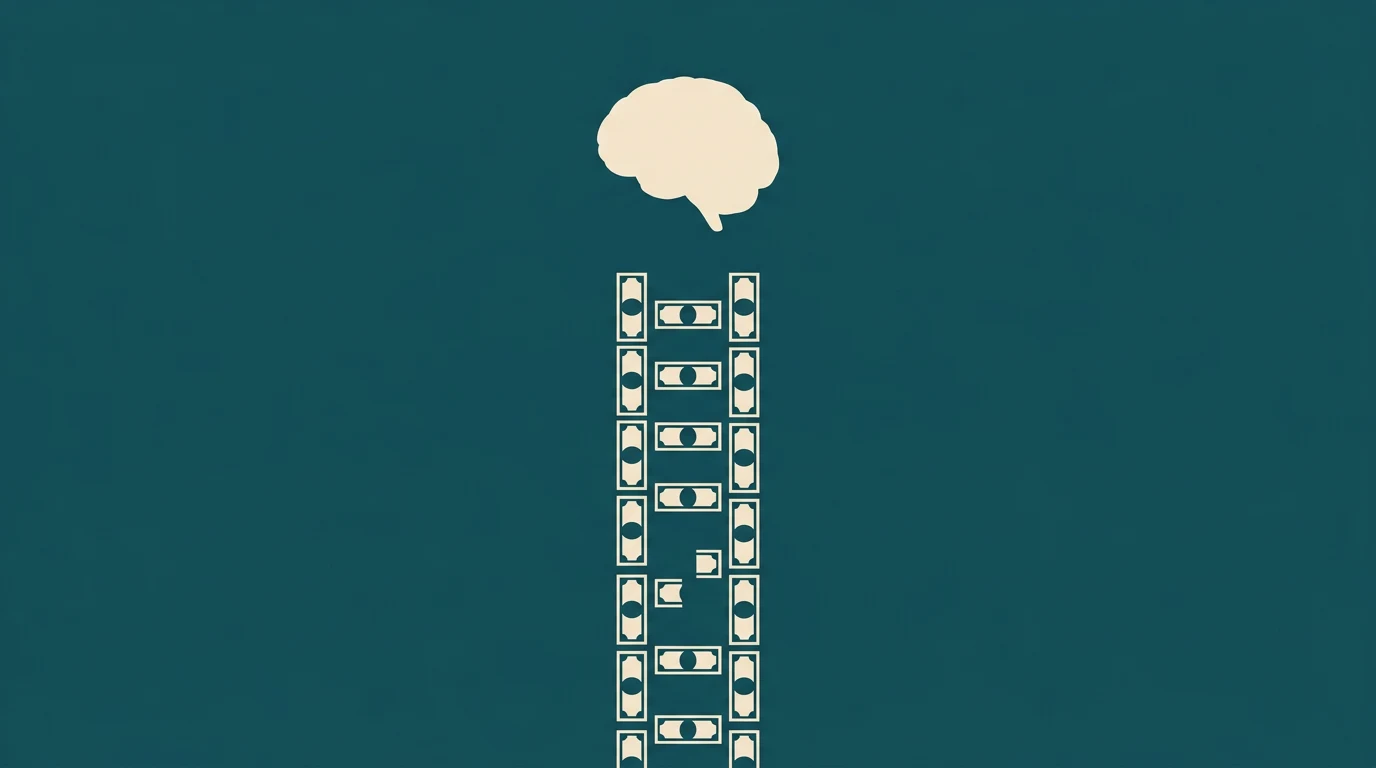
Anthropic plays differently with Claude and, I’ll say openly, this model impresses me the most - not because the product is better (though it often is), but because there’s some old-fashioned honesty to the transaction. You pay twenty dollars, you get a tool. You pay for tokens in the API, you get responses. It’s clear who the customer is, what they’re paying for, what they can expect.
This is a model where your interests and the provider’s interests are at least partially aligned. A company that lives off your subscription has a reason for you to be satisfied - otherwise you’ll cancel. A company that lives off your data has a reason for you to stay and click, regardless of whether it’s good for you. It’s a subtle difference, but it contains an entire philosophy.
There is, of course, a catch, and a big one. The paid model creates inequality of access. If the world’s best intelligence costs money, it means the world’s best intelligence will be had by those who can afford it. A programmer at a wealthy company gets the latest Claude with full context, while a student who scraped together a budget to buy a laptop uses the free tier with limits. A gap emerges that didn’t exist ten years ago, because Google searched the same way for everyone.
The paid model is fair at the individual scale and unfair at the societal scale. This tension has no simple solution, and let’s not pretend it does. You could say that’s how every market works - better cars cost more. But a car takes you from point A to point B. Intelligence, literally, increases your ability to think, create, and earn. If it becomes a luxury good, the inequalities we already have get a booster shot.
Open-Source Means a Gift with a Second Bottom
And here comes Meta with its Llama, all in white, with the slogan “open models for everyone.” Download, run on your own server, modify, build a business, don’t pay us a penny. Sounds like the purest form of altruism in this whole story. And if a foundation or university were doing it, maybe I’d believe it. But it’s being done by one of the most ruthless money-making machines in the history of capitalism, so forgive me for asking: where’s the bill.
The bill exists, it’s just issued to the competition, not to you. Meta was late to the race. OpenAI and Google built moats - closed, expensive, best models. Meta had no way to catch up frontally, so it did something smarter: it decided to burn down the moat. If you give away a model almost as good as the paid one for free, you undermine your competitor’s entire business model. Why would anyone pay OpenAI when they get comparable quality for free from Meta?
This is a strategy that in the tech industry is called “commoditizing the complement.” Turn your rival’s product into a cheap commodity available everywhere, and value will shift to another place - one you happen to control. Meta doesn’t need to make money on the model. Meta makes money because AI is cheap and ubiquitous, which makes its platforms, ads, and infrastructure more valuable. Open-source isn’t philanthropy. It’s a weapon in a war of attrition, where the victim is supposed to be the competition’s margin.
This doesn’t mean it’s bad. Paradoxically, something good for all of us comes out of this cynical calculation - genuinely free, open technology that you can run locally without giving your data to anyone. If you care about privacy, open-source is the only one of the three options where your questions don’t fly to someone else’s server. This has enormous value and I want to say this clearly, so it doesn’t sound like I’m turning up my nose.
But “open” in “open-source” with these models is a half-truth. You get the model weights, the finished engine. You don’t get the data it was trained on, or full documentation of the process. You can’t recreate it from scratch. It’s a bit like getting a car with a welded-shut hood - you can drive it, you can repaint it, but you can’t look inside and you can’t build a second one. Real open-source is a recipe. What we get is often a finished dish with a sealed ingredient list.
Who Really Pays Here
Let’s bring this together, because only from a bird’s-eye view can you see how elegantly these three models complement each other - and how in each of them the bill is cleverly shifted outside the field of vision.
In the free model, you pay - with your data, attention, and addiction, which will later turn into a subscription. In the paid model, you pay, but at least you know about it and get something concrete in return, at the expense of those who can’t afford it. In the open-source model, the competition pays - and you’re a soldier in someone else’s war who got a free weapon because the general wants you to shoot in a specific direction.
And beneath all this is another layer of costs that the entire industry talks about reluctantly. Each of these queries, free or paid, burns electricity and water for cooling server farms. Training these models consumes the energy of entire cities. We all pay this cost, regardless of the business model, and it doesn’t appear on any invoice. It’s a bill issued to the future, and the future doesn’t yet know how to demand payment.
There is no free intelligence. There’s only intelligence that someone other than the user pays for - and the whole game is about you not noticing who and when. This isn’t conspiracy theory. It’s ordinary economics, just dressed in the language of mission, openness, and democratization. Every time I hear “we’re making this free because we believe in universal access to AI,” I reflexively look for where they hid the meter.
Google · Your sourcesQuantslant higher in your Google - one clickAdd to preferred sources →What to Do About It
I’m not urging you to quit. I use all three types of tools myself, each for something different, and I think it would be foolish not to use them. I’m urging something more modest: awareness of which game we’re actually playing. When I write something really personal to a free chat, I remember that I’m feeding the machine with it. When I pay for Claude, I know I’m buying myself a more honest relationship and a better tool, and I accept that it’s a privilege. When I run an open model locally, I know I’m using a weapon that someone forged not for me, but which incidentally protects me.
Because the real question isn’t “whether to pay for AI.” The answer to that will always be yes - you’ll pay one way or another. The question is: in what currency do you want to pay and do you agree to an exchange rate you didn’t set.
Because what worries me most isn’t that we’re paying. Paying for valuable things is fine. What worries me is that we give away data on autopilot, sell attention for convenience, and imperceptibly shift our thinking toward what the machine suggests more easily. These are currencies that have no rate on any exchange, so we don’t see how deeply we’re going into debt with them. And the bill, as it is with hidden debts, always comes eventually. Only not to the one who incurred it, and not when they expect it.


More on this from QUANTSLANT
 guides·ChatGPT Can’t See Files: How to Check Access to ContentWhen ChatGPT can't see your files, check if the attachment uploaded, the format is supported, and cloud permissions are correct before analyzing documents.