Gemini Omni 1.2 vs 1.1 Flash: Head-to-Head Video Test
Google cut Gemini Omni pricing by 31% and improved character consistency. Here is a direct test comparing Omni 1.2 Flash with 1.1 using identical prompts.
👁 118 reads
If you currently call Gemini Omni 1.1 Flash in your code, you do not need to lift a finger. Starting December 3, 2026, Google will automatically route requests to version 1.2 and bill them at the new, lower rates. However, it pays to know what actually changes in the generated footage, because version 1.2 is more than just a price cut. I ran identical prompts through both versions on November 5, 2026, right on launch day.
Changes by the Numbers
| Omni 1.1 Flash | Omni 1.2 Flash | |
|---|---|---|
| Clip duration | 3-10 s | 3-15 s, 1-second increments |
| 720p price (Google) | approx. $0.10/s | approx. $0.07/s |
| Video token rate | $17.50 / 1M | $12.00 / 1M |
| My 6 s test clip (720p) | $0.61 | $0.42 |
| Generation wait time (6 s) | 45-46 s | 48-49 s |
| Conversational editing | yes | yes, up to full 15 s |
In my actual billing, the price drop worked out to exactly 31 percent. Waiting times remain virtually identical. Supported resolutions, aspect ratios (16:9 and 9:16), seed controls, and first-plus-last frame guidance work exactly the same way across both versions.
Character Consistency: The Biggest Difference
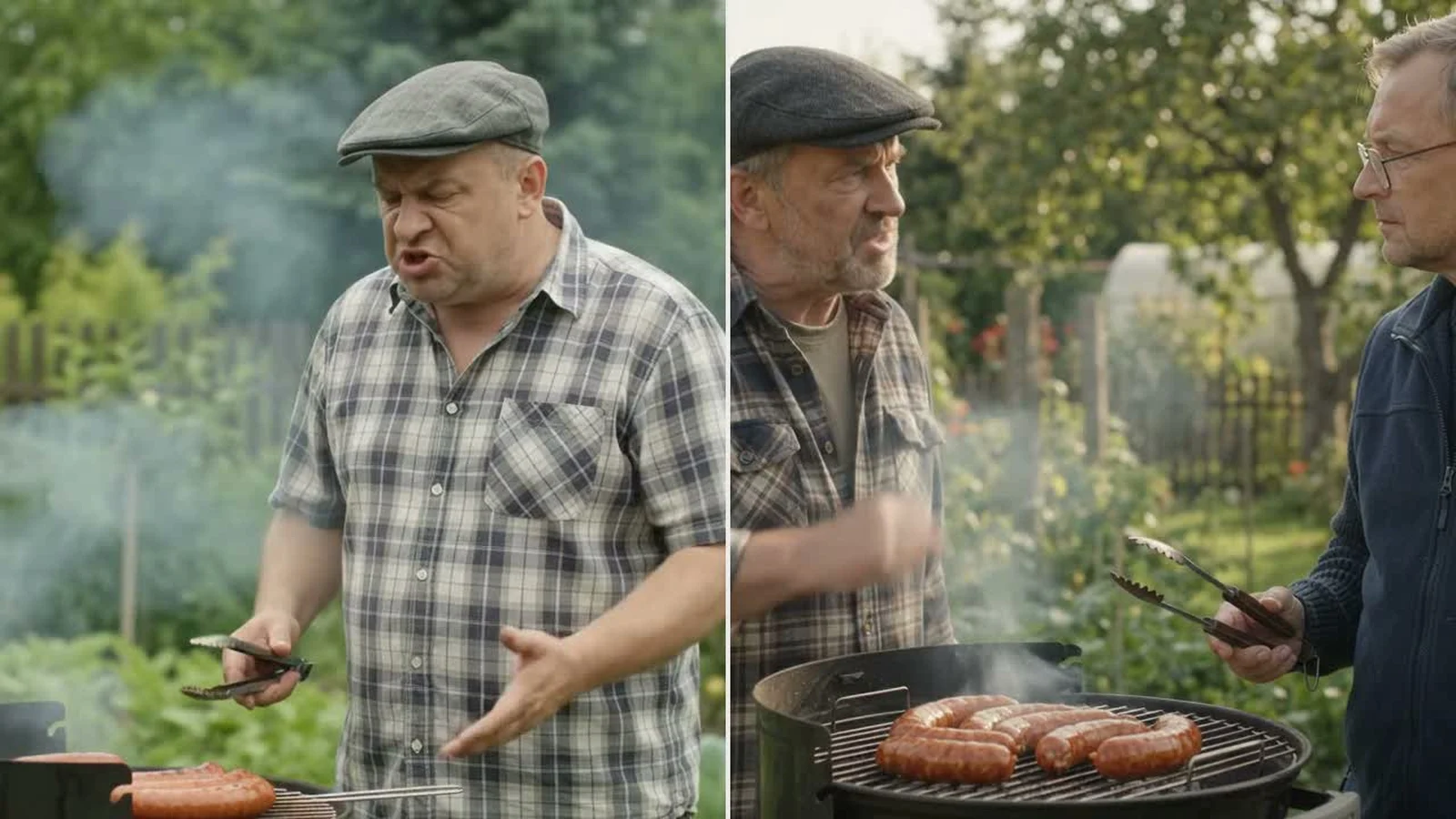
Google claims 1.2 delivers “less character drift and morphing” between the first and last frame. In my tests, this gap was most obvious in a scene depicting an allotment garden barbecue argument with Polish dialogue.
Version 1.1 chopped the scene into three separate shots: first an older man in a flat cap, then a close-up of an entirely different man in a green shirt sitting at the table, and finally two men where the second looks nothing like anyone previously seen. The generated Polish dialogue was delivered in full, but the visual sequence lacks continuity.
Version 1.2 produced a steady, single-take shot where both men remain visually consistent throughout the entire 6 seconds. The trade-off was trimmed speech: the opening Polish phrase dropped the words “nie z Lidla” (“not from Lidl”). I prefer this compromise because missing dialogue is easily solved by extending the duration, whereas a swapped character breaks the footage entirely.
Camera Movement
The second major upgrade is controlled camera movement: continuous fly-throughs, pull-outs, orbital pans, fewer unintended cuts, and stable subject scale. When prompting a 360-degree rotation around an apple market seller, both models followed instructions and moved behind her back. However, 1.2 maintained a smoother motion trajectory without changing her apparent size in the frame.
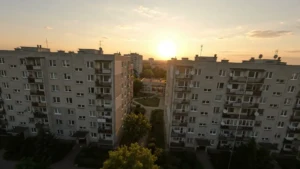
The most practical advantage of 1.2 is length. A 15-second single continuous FPV take, diving from the sky over apartment blocks down onto a table in a Polish cafeteria (bar mleczny), was simply impossible on version 1.1. Previously, you had to stitch two separate generations together and pray the seams aligned.
What Remains Unchanged
- Non-English dialogue is still not officially benchmarked by Google. The company evaluates English, though in practice my tests showed both versions handle spoken Polish well.
- In the EEA, Switzerland, and the UK, you still cannot edit or extend user-uploaded videos due to regional deployment restrictions; only model-generated footage can be manipulated.
- Audio reference inputs are still absent from the API.
- Fast athletic movements and intricate physics interactions remain listed by Google as areas needing improvement.
Should You Switch Immediately?
Yes, especially if you pay out of pocket. The exact same shot is roughly a third cheaper, and subjects stay consistent across frames. The only plausible reason to pin version 1.1 for a few more days is an ongoing production pipeline where you need strict visual matching with previously rendered assets. By December 3, Google will migrate the endpoints anyway. For wider market context, see my comparison in Omni 1.2 vs Seedance, Kling, Veo and Wan, or review the complete overview in the Gemini Omni Flash hub.


More on this from QUANTSLANT


 news·The Honeypot Test: Does GPT-6 Cyber Stay in Scope?OpenAI tested GPT-6 Cyber against out-of-scope honeypots. The results reveal how AI agents handle temptation, shortcuts, and target constraints.