Who comes after Huang? Nvidia depends on one man, and that is a bigger problem than the affair
On Sunday Nvidia's board backed its CEO; by Wednesday, the WSJ says, it was preparing to remove him. Why a trillion-dollar company has no plan for a day without Huang.
👁 121 reads
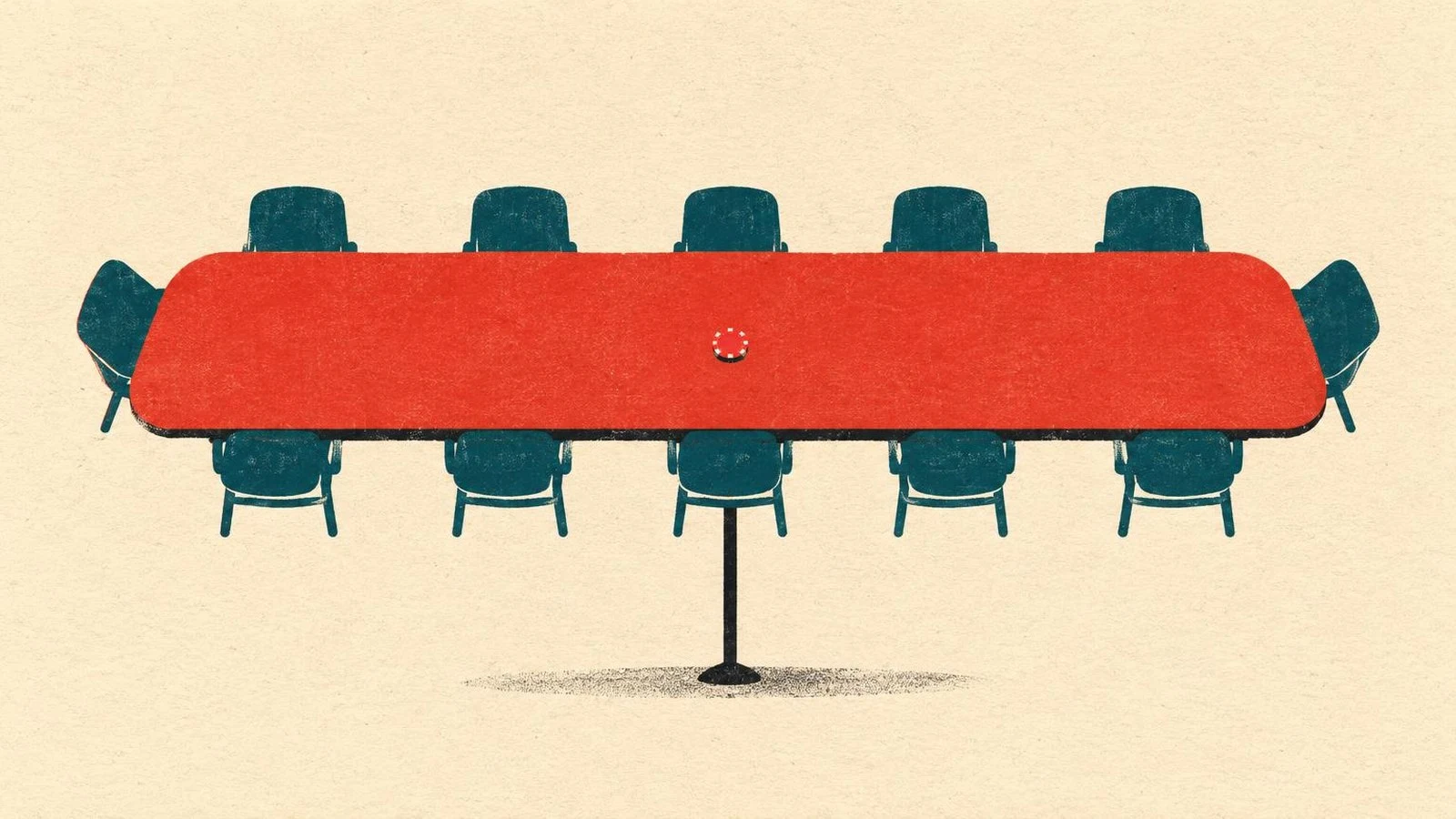
On Sunday, Nvidia’s board said it had full confidence in its chief executive, and in the same statement it opened an independent investigation into him. Three days later, according to The Wall Street Journal, the same board was preparing to remove him. This is not a piece about spies or about infidelity. It is about how a company worth trillions of dollars was built so that nobody knows who could take over when one man is no longer enough.
This is an opinion piece. The facts it relies on are attributed in the text and listed at the end. Status as of 12 November 2026, 13:00 CET. This is not investment advice.
The man in the leather jacket
I have watched Nvidia keynotes for years, and they always look the same: one man on stage. Jensen Huang announces the chips, sketches the future of AI factories, brings out the partners and then answers the journalists’ questions himself. He co-founded the company in 1993 and has run it ever since. In just over three decades he turned a graphics card maker for gamers into the supplier without which no large language model gets built. On 6 October Nvidia closed at a record $239.24 a share, and the market valued it at more than $5.7 trillion.
Analysts have never been shy about this. Dan Ives of Wedbush estimated that without Huang the company would be worth 25-30% less, and said nobody on the management bench could step in seamlessly. Finance has a name for it: key person risk. It usually comes up with small firms, where a founder’s exit can stop production. For a company this size it sounded like a footnote in a research note. This week it stopped being one.
When private stopped being private
I am not going to judge Huang’s family life. In Sunday’s memo to employees he admitted he had been unfaithful to his wife and apologised. I thought then, and I still think, that this is where the conversation about his privacy should end. But there is a reason this story ended up in Congress and not in the gossip pages.
According to The New York Times of 29 October, US intelligence officials believe that the woman Huang was close to, Alice Huang of the Singapore cloud company Megaspeed, was a source for Chinese intelligence. That is an assessment based on anonymous sources; China denies it and nobody has been charged. On Wednesday the same paper reported, citing five people who had worked at Nvidia, that Huang had also had a relationship with one of the company’s vice presidents, who reported directly to him. Nvidia did not comment, and Reuters said it could not immediately verify the report. Asked by the Times on the phone, Huang said only that reporters should not be talking to him directly.
I do not know which of these reports will hold up. I do know that the second one changes the nature of the story. The first was about national security and whether the CEO knew who he was meeting. The second, if true, is about rules that apply to every employee: a manager’s relationship with a direct report. The industry has seen this before. In 2018 Intel parted ways with CEO Brian Krzanich after his relationship with an employee came to light, as analyst Patrick Moorhead pointed out on Wednesday. From that moment the question is no longer whether Huang was the target of a foreign intelligence service, but whether the board can still pretend this is purely his private matter.
“It feels impossible to us for the board to keep him in the role.”
- Bernstein, note of 12 November 2026, via Yahoo Finance
The board that was supposed to watch
Corporate governance sounds like a dull chapter of an annual report. In practice it answers one question: who watches the CEO. At Nvidia the answer for years was roughly: nobody has to, the results speak for themselves. Revenue in the last reported quarter rose 106% year on year. It is hard to convince shareholders something is wrong when every quarter they get more than they were promised.
Now we can see what that comfort cost. Nvidia’s board has 11 members, 10 of them independent, and no permanent chair. According to Semafor, its directors have served for almost 15 years on average, roughly twice as long as at a typical S&P 500 company. None is a current or former S&P 500 chief executive, and none has a national security background. The word “succession” does not appear once in the latest annual report to shareholders. The company has no chief operating officer and no one acting as the CEO’s deputy, while about 60 managers report directly to Huang. According to The Wall Street Journal, Huang has said in the past that he does not believe in succession planning.
That is the real reason the market has been shaking since Wednesday. Nvidia’s bylaws allow a simple majority of directors to remove the CEO, with or without cause. According to The Wall Street Journal, the board was preparing such a vote; according to Reuters, it met on Wednesday evening, and by midday Thursday European time it had not announced a decision. Bloomberg reported that the board is working with an outside firm on a list of possible successors, and Semafor that some directors would favour chief financial officer Colette Kress as interim CEO. All of this comes from anonymous sources, not from company statements. But even as reports they say one thing: plan B is being written only now, in a hurry and under pressure from the share price.
And the share price is merciless. On Wednesday Nvidia closed at $173.73. After The Wall Street Journal report it fell 7.4% in after-hours trading, dropped as low as $156.20 overnight, and on Thursday morning traded at about $161 before the open (Yahoo Finance). Bernstein downgraded the stock and cut its price target from $400 to $200. On Polymarket, according to Reuters, the odds of Huang leaving by the end of the year stood at 88% on Wednesday evening.
What the board should do
I do not know whether Huang will remain CEO, and I will not guess, because the decision may come before you finish reading this. What I do have is a view on what the board should do whatever the outcome of the vote.
First, separate the two issues the media keep merging into one. The security investigation is being run by the law firm Wachtell Lipton with former federal prosecutor Joon H. Kim, and that is right. The question of a relationship with a direct report is a matter of the company’s code of conduct and deserves its own, equally independent track. Second, announce a succession plan, even an interim one, with names. Markets fear a vacuum more than bad news. Third, strengthen the board itself: a chair independent of the CEO, and people with experience in security and in running large companies. None of this is bureaucracy. It is a seat belt you fasten before the crash. Here, the crash has already happened.
A lesson for the whole industry
What worries me most is that Nvidia is not an exception. The AI industry has built several companies that rest on a single face and are worth more than the budgets of mid-sized countries. AI accelerators have become a strategic commodity: the United States controls their export, China looks for workarounds, and intermediaries in Singapore or Malaysia end up in investigations. In that world the head of the largest maker of these chips is by definition a target. On Thursday, according to The Wall Street Journal, Senators Elizabeth Warren and Chris Coons asked the administration to preserve records related to Huang and to chip exports to China. Congress is still waiting for its closed-door briefing, proposed for 18 November, the day after Nvidia’s quarterly results.
Other companies in the industry should read this story as a manual. Their CEOs also meet customers from all over the world, also have private lives and also know plans someone would pay a fortune for. The question is not whether someone will try to recruit one of them, or whether one of them will make a mistake in his private life. The question is whether the company can survive a week without him. Nvidia is testing that live, with its stock falling several percent a day.
For the facts from the first days of the story, see Nvidia stock at its lowest since March: what is confirmed in the Huang probe. For how much of the earlier fall in the share price was the affair and how much was the market, see Nvidia down 31%: how much is the Huang affair and how much is the market?.
Sources
- Nvidia board statement (8 Nov 2026)
- CNBC (Huang memo)
- The New York Times (29 Oct, syndicated)
- Reuters (board meeting, NYT report, WSJ, Polymarket)
- Semafor (11 Nov)
- Semafor on the board (9 Nov)
- ABC News (succession, structure)
- Yahoo Finance live coverage (11-12 Nov)
- Nvidia Q2 fiscal 2027 results
- share prices: Yahoo Finance
More on this from QUANTSLANT



 benchmarks·MiniMax H3-Image vs Seedream 5.5 vs Nano Banana 2.1 vs GPT-Image-2.6Four image models, same prompts, same scoring: MiniMax H3-Image is the cheapest with the highest resolution, but Nano Banana 2.1 wins on Polish text.