AI Video Isn’t the Next Step After the Image. It’s a Different Species
Sora and Veo 3 are not an improved Midjourney. They are a separate category of machine, one that changes not just how we make images but our relationship with what we accept as recorded reality.
👁 117 reads
The first time I watched an AI-generated clip of a person speaking, voice perfectly synced to lip movement, I felt something I had never felt looking at a Midjourney image. With a static image there is always a gap: I look at “it.” With video and audio, when someone is talking directly at me, my brain switches modes. I’m not watching. I’m listening to someone. And only a second later do I remember that the someone doesn’t exist and never did.
Most commentary has missed this distinction entirely. When Sora and Veo 3 arrived, the tech press reflexively reached for a familiar frame: “Midjourney, but video.” One more step along the same evolutionary path. The model takes a prompt and returns an image, except now the image moves. It’s a tidy shorthand that completely misses what is actually changing under the hood and, more importantly, inside our heads.
I want to take it apart. Because if we treat video generation as animated Midjourney, we make bad decisions: as creators, as companies, as a society that is about to stop trusting its own eyes.
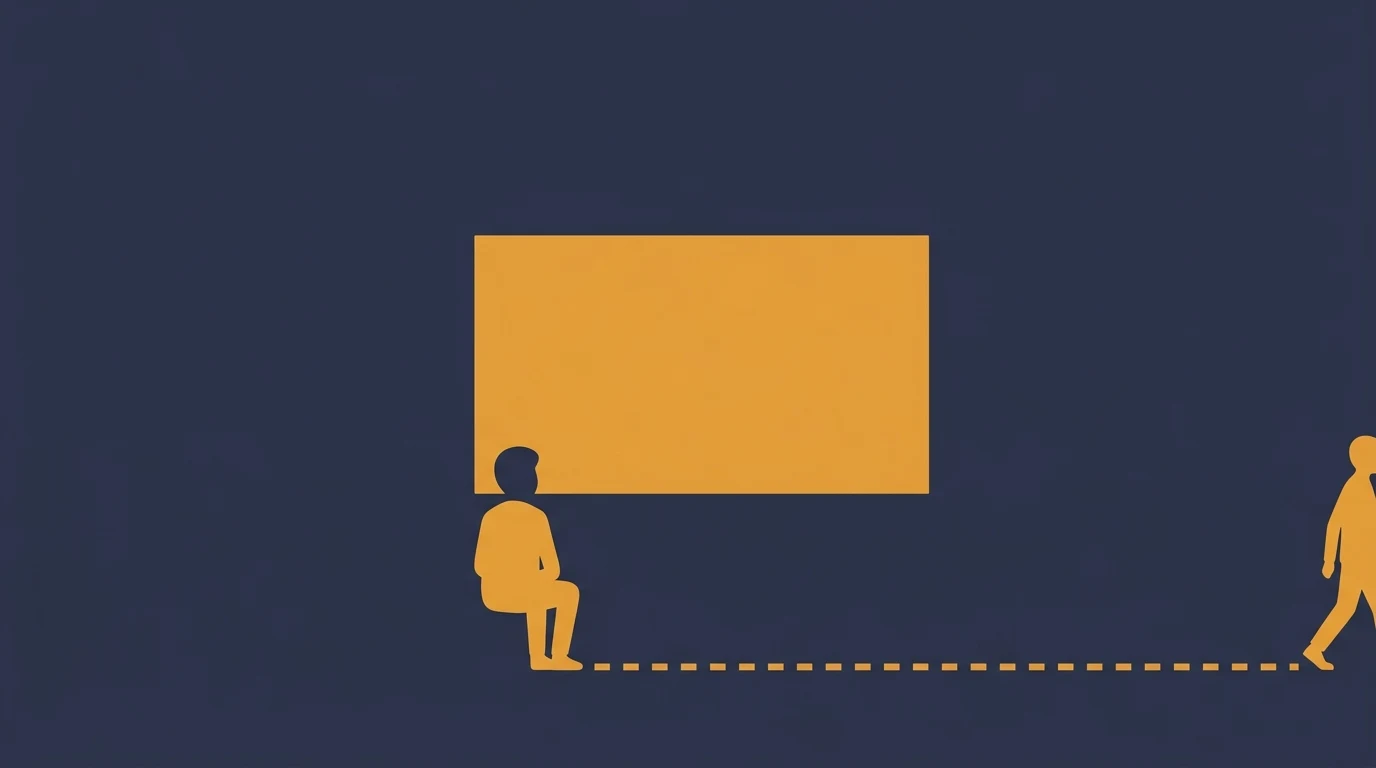
An image is a thing. Video is an event.
Start with the simplest distinction, which is also the deepest. An image exists outside of time. You can look at it for a second or an hour; the order doesn’t matter. Midjourney has one problem to solve: what should the frame look like. Composition, light, texture, coherence, all of it plays out in a single moment that the viewer parcels out at their own pace.
Video is an event unfolding in time, and that changes everything. The model no longer needs to generate one good frame. It needs to generate a hundred good frames that are bound together by physics, continuity and causality. A ball thrown upward must slow, stop and fall. A shadow must track its light source. A face that turns away from the camera and turns back must be the same face. This is not “a picture times thirty frames per second.” It is a completely different class of problem.
Midjourney can get away with a beautiful lie: a hand with six fingers is forgivable because the image is, after all, “just” an image. Video has no such luxury. When a sixth finger appears and disappears between frames, the brain catches it immediately, because evolution spent millions of years training us to detect movement that doesn’t add up. That is why convincing video generation requires the model to learn something close to intuitive physics. And that is a step toward something far larger than graphics.
Sound closes the loop
The biggest difference, and the one almost nobody talks about, concerns Veo 3 and its ability to generate audio alongside image. This is not a feature add-on. It is the closing of a sensory loop that turns a clip into something indistinguishable from a recording.
You can mentally tag an image as “made.” It has a border, it’s flat, it hangs in a gallery or sits in a feed. But a scene in which a person speaks to camera, with the right vocal timbre, floorboards creaking in the background and a breath audible at the end: that scene triggers the reflex of presence. We stop processing “composition.” We start processing “someone who is here, telling me something.”
Midjourney undermined our trust in images. Video with sound undermines something far deeper: our trust in testimony. In the sentence “I saw it with my own eyes and heard it with my own ears.”
Twenty years ago a photograph was evidence. Ten years ago video was still evidence, in court, in journalism, in a family argument. We have already unlearned treating photographs as truth, because Photoshop and then image generators dismantled their authority. But a video recording with sound still carries the aura of fact. That aura is now on sale, and Veo 3 can manufacture it without a camera, without an actor, without an event.
A different business, different stakes
These technical differences translate directly into who is fighting for this market and why. Midjourney is a relatively small company that built a brilliant product around images. Sora belongs to OpenAI, Veo to Google. It is no accident that the biggest players on the planet are the ones competing in video, not nimble startups.
The reason is brutally simple: generating video is incomparably more expensive than generating an image. Every second means dozens of linked frames, audio, a longer context window, enormous computational costs both in training and at inference time. This is a game for entities with their own data centers, their own chips and billions to burn. Images democratised graphic creation. Video, at least for now, does the opposite: it concentrates vast cultural power in the hands of a few corporations.
But cost isn’t the only reason this is a giants’ game. The second reason is strategic, and few people appreciate it. A model that learns to predict what happens in the next frame is learning a model of the world. It learns that glass shatters, that water flows downward, that objects hidden behind something else come back intact when the obstruction is removed. For companies like Google and OpenAI, video is not the end product. It is a training ground for AI that needs to understand physical reality: robotics, simulations, autonomous systems. The TikTok clip generator is a side effect of something far more ambitious. Midjourney never had those aspirations, because a static image is a dead end when it comes to understanding the world. Video is a highway.

Manipulation changes in kind, not just degree
Over the past two years we have grown so accustomed to generated images that we’ve developed a basic hygiene around them: don’t trust a photo without context. The image of the Pope in a puffy white puffer jacket taught us caution more effectively than many a media-literacy campaign. But video with audio is a threat of a different order, not because it is “more realistic,” but because it attacks a different mechanism of trust.
A fake image manipulates what we see. A fake video of someone speaking and moving manipulates whom we believe. The difference is between a forged document and a forged witness. Imagine a clip in which a well-known politician says a few sentences they never actually said, rendered with their voice, their facial expressions, their breathing patterns. It doesn’t need to be perfect. It needs to be good enough that in the first five seconds, before critical thinking engages, it has planted a seed of doubt. In the age of the scrolling feed, five seconds is an eternity.
There is a second, subtler effect that worries me more than individual deepfakes. It is what is sometimes called the liar’s dividend. Since any video could be fake, anyone caught red-handed can now say: “that was AI-generated.” A genuine recording that implicates a politician, documents a war crime, exposes an abuse: all of it can now be dismissed with a wave of the hand. We don’t even need to see a single convincing fake. We only need to know that such fakes are possible, and the authority of real testimony collapses.
What this means for creators
I don’t want this to read as a catastrophist manifesto, because I have an enthusiastic side too and it would be dishonest to hide it. For creators, generative video opens things that until recently existed only as wishes. Someone with an idea and no budget can now make things that once required a crew, equipment and money they didn’t have. That is real democratisation of visual storytelling, and pretending it isn’t would be foolish.
But we need to understand where we actually are. Current models are excellent at clips of a few seconds. They cannot yet sustain a consistent character through a full scene, let alone a film. They have no sense of editing rhythm, pacing or dramatic structure. They produce frames, not narratives. Which means that for the foreseeable future the most valuable skill will not be writing a prompt. It will be assembling these fragments into something that has meaning and rhythm. Direction, not generation.
This is why the fear that “AI will take filmmakers’ jobs” is just as shallow as the excitement that “now anyone can make a film.” What will change is where the value lies. It will shift from technical execution toward vision, taste and editorial judgment. The machine generates an infinite supply of raw material. The person who knows what to cut becomes more valuable, not less.
Google · Your sourcesQuantslant higher in your Google - one clickAdd to preferred sources →Why the distinction matters
Back to where I started. Treating Sora and Veo 3 as “Midjourney but video” is not an innocent shortcut. It is a mistake that lulls us into complacency. We domesticated the image and think that because we managed the first challenge, we’ll manage the second one the same way. We won’t.
Video with sound strikes at the foundation on which our sense of the real rests: sensory testimony. It does so in the hands of companies of unimaginable power, for whom the public clip generator is just the visible tip of a much larger project. And it does so at a moment when our social mechanisms for verifying truth are weaker than they have ever been.
I am not opposed to the technology. I am opposed to naming it wrongly, because the name determines how we prepare for it. Midjourney taught us not to trust pictures. That was a lesson in aesthetics. Sora and Veo 3 will force us to rethink something far more serious: what it actually means for something to have happened, when we can see and hear things that never happened at a quality indistinguishable from life.
This is not the next step after the image. It is a change of species. And when the species changes, old instincts don’t merely stop being enough. They start to betray us. The most dangerous thing is not a machine that can impersonate reality. The most dangerous moment is when we stop noticing that it’s impersonating anything at all.
More on this from QUANTSLANT
 premium·Who Pays for Free GPT? Hint: Check the MirrorI break down the economics of three AI models and show who's actually footing the bill for what everyone calls free intelligence.