AI Designs 16 Novel Viruses from Scratch in First Experiment
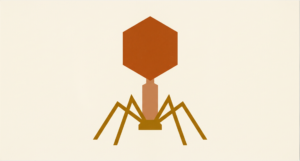
Scientists have used AI trained on DNA sequences to design 16 new viruses from scratch, marking the first time artificial intelligence has generated novel viral genomes.

👁 115 reads
Scientists have used artificial intelligence trained on DNA sequences to design 16 new viruses from scratch, in what researchers are describing as the first time AI has generated novel viral genomes. The viruses pose no threat to people, according to reporting cited by MIT Technology Review, but the experiment opens questions that reach well beyond the laboratory.
- AI was trained on DNA sequences and produced 16 novel viruses that researchers say pose no threat to people
- The experiment raises the prospect of both medical breakthroughs and potential misuse in biological weapons development
- The work points toward future AI-designed life forms more complex than viruses
The method involved feeding the AI large volumes of existing DNA sequence data, allowing the system to learn the underlying patterns of viral genomes and then generate new ones that do not correspond to any known virus. The 16 resulting genomes were novel - not modifications of existing strains but original designs produced entirely by the model.
Google · Your sourcesQuantslant higher in your Google - one clickAdd to preferred sources →Promise and risk in the same result
Researchers say the work could lead to meaningful medical advances. Engineered viruses are already used as delivery vehicles in gene therapy and vaccine development, and an AI capable of designing them from first principles could accelerate that pipeline considerably. The ability to rapidly prototype viral structures could help scientists develop treatments for diseases that have so far resisted conventional approaches.
At the same time, the same capability that makes the technology medically useful also makes it a dual-use concern. Commentators and biosecurity researchers have noted that a system capable of designing harmless viruses operates on the same underlying principles as one that could, in theory, design harmful ones. That tension - between the legitimate scientific value of the work and its potential for misuse - sits at the center of how the research is being received.
The experiment also points in a longer-term direction. Scientists involved in the work suggest that AI-designed life forms more complex than viruses are a plausible next step, as models grow more capable of navigating the combinatorial complexity of larger genomes. That prospect extends the dual-use debate beyond virology into synthetic biology more broadly.
For now, the immediate result - 16 novel viruses, none dangerous to humans - is being treated as a proof of concept rather than a finished product. Whether the technique moves toward clinical application or attracts tighter regulatory scrutiny may depend on how quickly biosecurity frameworks can keep pace with what AI systems are now demonstrably able to do.

More on this from QUANTSLANT
 news·AI Chatbots Linked to Mental Health Harms as OpenAI Partners Up