AI inequality: cheap answers, expensive machine time
AI answers are getting cheaper. Sustained agent work has a different cost: money, setup time and access. An essay with a US wage comparison.
👁 114 reads
AI can answer a difficult question for pennies. Buying a much larger allowance for sustained AI work can cost $500 a month. That is not the entry price for every agent: cheaper plans and open models exist. But the upper end of the market exposes a new divide between access to answers and the capacity to keep machines working on your behalf.
The word robot began with work, not intelligence. Josef Capek suggested it to his brother Karel for the 1920 play R.U.R., drawing on the Czech word robota, associated with compulsory labor. A century later, the uncomfortable question is less whether machines can think than who can afford their labor. The payment card has become one of the keys to the workshop.
ChatGPT’s US subscription ladder makes that distinction visible. Free gives people a starting point. Plus costs $20 a month, while the Pro tiers are $100, $200 and $500. The highest tier includes Ultrafast and the largest included Pro allowance. These are different access and usage packages, not contracts for a fixed number of productive working hours.
At the US federal minimum wage of $7.25 an hour, a $500 subscription represents about 69 hours of gross earnings. That comparison is illustrative: many state and local minimum wages are higher, and taxes and living expenses make gross pay different from disposable income. Nevertheless, the same price tag places a very different burden on different households.
For several years, the optimistic story was that a student and a chief executive could ask the same model the same question. There is still something powerful about that. My concern is what happens next: one gets an answer, while the other has the budget, connections and support needed to turn answers into an ongoing workflow.
A price list as a map of purchasing power
Here is a deliberately narrow US comparison. The benchmark is $7.25 per hour, the federal minimum wage, multiplied by 40 hours a week and 52 weeks a year, then divided by 12. That produces $1,256.67 in illustrative monthly gross pay. It is neither an estimate of typical US earnings nor a statement that this wage applies to every worker. Using one gross-pay basis throughout avoids comparing a subscription with take-home pay in one column and pre-tax pay in another.
| Plan | Monthly price, USD | Share of illustrative monthly gross pay | Gross earning hours at $7.25/hour |
|---|---|---|---|
| Free | $0 | 0% | 0 |
| Plus | $20 | 1.6% | 2.8 |
| Pro 100 | $100 | 8.0% | 13.8 |
| Pro 200 | $200 | 15.9% | 27.6 |
| Pro 500 | $500 | 39.8% | 69.0 |
Calculations: monthly plan price divided by $1,256.67 for the percentage, and by $7.25 for the hours. Figures are rounded; listed subscription prices exclude any checkout-specific additions. This is a purchasing-power illustration, not a household budget. Someone earning a hypothetical $40 an hour would need 12.5 gross earning hours for the same $500 plan, before considering their other expenses.
A subscription can be a minor business expense for one buyer and compete with essential spending for another. That is familiar from computers and smartphones. What changes the stakes is the possibility that this purchase supplies productive capacity, rather than simply a better device or a more convenient interface.
On the ground floor: inexpensive access to knowledge
The optimistic case deserves a fair hearing. In its September 2026 analysis, Epoch AI estimated that the price of reaching a given level of model capability had fallen by roughly 47% per quarter since 2023, equivalent to about a thirteenfold annual decline. The original essay also cited TechCrunch’s August 6 report on expanded free ChatGPT text access. Neither observation means that every model, tool or autonomous task is unlimited or free.
The cost gap is visible in the source author’s Polish-language AI writing benchmark . GPT-6 Luna completed nine writing tasks for $0.002 and scored 82.8 out of 100; Claude Opus 5.5 scored 90.1 at a cost of $0.2479. That is 7.3 extra points for about 124 times the spend. This was a particular Polish-language test, not an English benchmark or a universal quality ranking. For many routine explanations and first drafts, the cheaper result may already be useful enough.
Microsoft’s AI Diffusion report for the second quarter of 2026 put US adoption at 33.0% of the working-age population. The measure describes use, not hours of agent work, subscription budgets or business productivity. Counting people who have tried AI and counting the resources they can deploy are different exercises.
If AI were only a library, that might be a satisfying ending. A shared collection can give people access to knowledge that would otherwise be out of reach. Andrew Carnegie’s library philanthropy is an old illustration of the distinction: he funded more than 2,500 libraries, but did not distribute ownership of his steelworks. The violent Homestead labor dispute of 1892 belongs to the other side of that history. Access to books and ownership of productive assets were never the same thing.
The analogy is imperfect, but it asks a useful question of the AI industry: which benefits are being widely distributed, and which remain tied to capital?
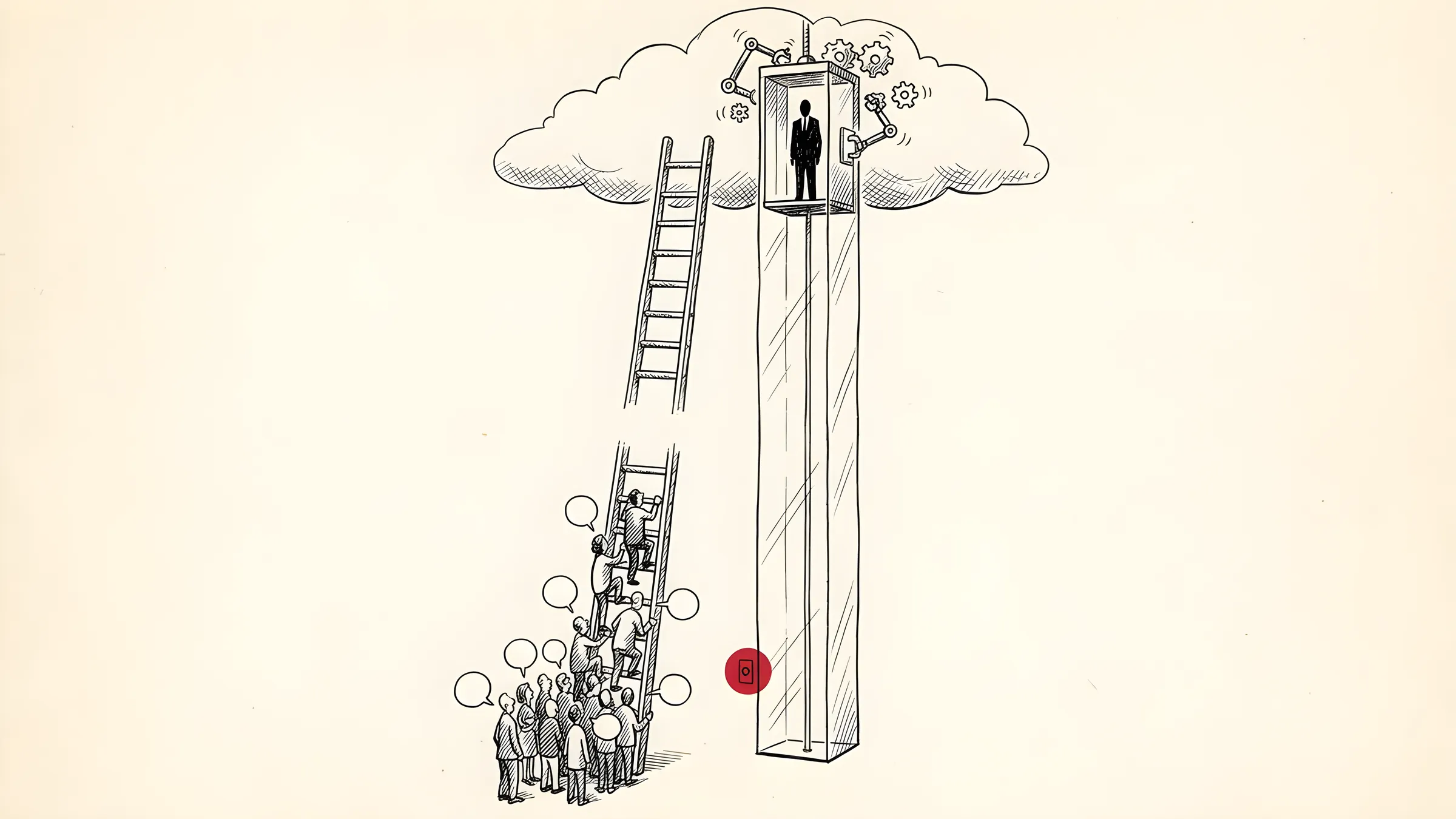
Upstairs: work that continues between conversations
AI products increasingly aim to be more than reference desks. OpenAI’s Dots are one example: a cloud computer and connected applications can support work that continues between conversations. That does not mean unlimited work or unrestricted permission to act. Useful deployment still depends on access, configuration, allowance and oversight.
The economic distinction is between a short exchange and a continuing workload. An agent reviewing customer feedback, changing code or preparing documents may make repeated model and tool calls. Falling unit prices do not guarantee a falling total bill if usage grows faster. A thousandfold increase in consumption is a hypothetical illustration, not a measured ratio for Dots. The preprint The Price of Intelligence, cited in the original essay, raises the related concern that reasoning can consume more tokens per completed task even as tokens become cheaper.
The launch discussion around ChatGPT Pro 500 compared subscription prices with advertised multiples of the Plus allowance. Those ratios should not be translated into guaranteed machine-hours or equal units of useful work. Model choice, reasoning, context, tools and speed affect consumption. The robust point is simpler: higher spending can buy more capacity, but the return depends on how effectively that capacity is used.
Economics has a familiar language for this: capital. A business with more machines may be able to produce more, but ten machines do not automatically create ten times the output. Demand, skill and organization matter too. Chat makes AI look like a reference tool; agents make it look more like equipment that must be financed, operated and maintained. That shift can widen existing advantages without making the outcome inevitable.
Unequal access to agents could harden into more durable inequalities in power.
Paraphrasing Nick Srnicek of King’s College London in Rest of World, May 26, 2026.
The original essay cited several signs of corporate willingness to spend. R&D World reported on March 24, 2026 that Nvidia’s Jensen Huang discussed an engineer earning $500,000 using at least $250,000 in annual AI tokens. Forbes reported on May 17 that Uber had exhausted its annual AI budget in four months, largely through Claude Code; TechCrunch reported a subsequent $1,500 monthly limit per tool per employee on June 2. These are dated reports about particular businesses, not sensible spending targets for everyone else.
The June 2026 Ramp AI Index offered a more systematic, though still sample-specific, comparison: approximately $7,450 in monthly AI spending per employee among the top 1% of companies, against a median of $11.38. Dividing those figures gives about 655. The ratio measures spending, not a demonstrated 655-fold productivity advantage. It does show how misleading a simple yes-or-no question about AI adoption can be.
Numbers behind the argument
$500 - the monthly price of Pro 500, not the minimum cost of using an AI agent.
About 69 hours - gross earning time for $500 at the $7.25 US federal minimum-wage benchmark.
33.0% - US working-age AI adoption in Microsoft’s Q2 2026 report.
28.8% and 16.2% - reported adoption in the global North and South in that report.
$7,450 and $11.38 - monthly AI spending per employee for the top 1% and median in Ramp’s June 2026 sample.
Geography adds another boundary
Price is not the only gate. OpenAI’s current Dots documentation excludes the EEA, Switzerland and the UK from the Pro rollout, while Business Premium is listed for all supported ChatGPT regions. That makes the US and UK different cases for an English-speaking reader. The first Dot is included for eligible Pro and Business Premium users, so $500 is not a separate mandatory Dot fee.
The documentation does not establish a single cause for these regional differences. Media speculation about regulation should not be presented as OpenAI’s explanation. The practical lesson is to verify both region and workspace eligibility before subscribing for a specific feature. A plan name alone does not settle access.
There is also a gap between individual experimentation and organizational use. An employee may be comfortable with a chatbot while their employer lacks an approved workflow, suitable data access or time to review results. Conversely, a well-supported team may gain from tools that an individual cannot integrate alone. That is an implementation problem as much as a subscription problem.
The international evidence cited in the source essay points to concentration alongside diffusion. Anthropic’s March 2026 Economic Index attributed 48% of usage to the 20 countries with the highest per-capita use, up from 45% in the earlier comparison. Microsoft reported adoption of 28.8% in the global North and 16.2% in the South, a 12.6 percentage-point gap compared with 10.6 two quarters earlier. These are different datasets and measures; they should not be combined into one universal inequality score.
In January 2024, IMF managing director Kristalina Georgieva warned that AI could worsen inequality in many scenarios. That remains a warning about possible outcomes, not proof that every AI deployment increases inequality. The question is which arrangements make the gains broadly accessible.
The counterargument: open models lower the barrier
There is a strong counterargument, and it deserves more than a footnote. Expensive subscriptions are not the only route to useful AI work.
Models with downloadable weights offer an alternative to a single provider’s subscription ladder. The source comparison described Xiaomi MiMo-V2.6-Pro as MIT-licensed and cited an Artificial Analysis task cost of $0.13, around 46 times lower than Opus 5.5 at its maximum setting. Those are results for a particular evaluation, not interchangeable prices for every task. In the source author’s lesser-known AI models comparison it scored 69.1 for about three cents across thirteen Polish-language tasks. The original essay also quoted DeepSeek V4.1 Flash off-peak rates of $0.15 per million input tokens and $0.60 per million output tokens. Treat those as dated examples and consult the linked pricing and license documents before a deployment. A low token price can make experimentation inexpensive; it cannot establish an overnight agent’s total bill without its workload.
Another option is local AI. In the source author’s September test of seven models on a personal GPU, Gemma 4 12B scored 72.3, ahead of Claude Haiku 4.5 in that particular test, and ran within 8 GB of memory. These were Polish-language results, not fresh US or English measurements. The comparison is documented in local model versus API. Running a model locally can avoid a model subscription, but hardware, electricity and maintenance still cost money. Data stays local only when the wider setup also avoids external services, remote tools and network calls that transmit it.
The historical argument is strong too: capabilities that once required expensive access often become cheaper. Epoch’s measured decline is evidence of that past trend. It is not a promise that every capability will be free in two years, or that price declines will continue at the same rate indefinitely.
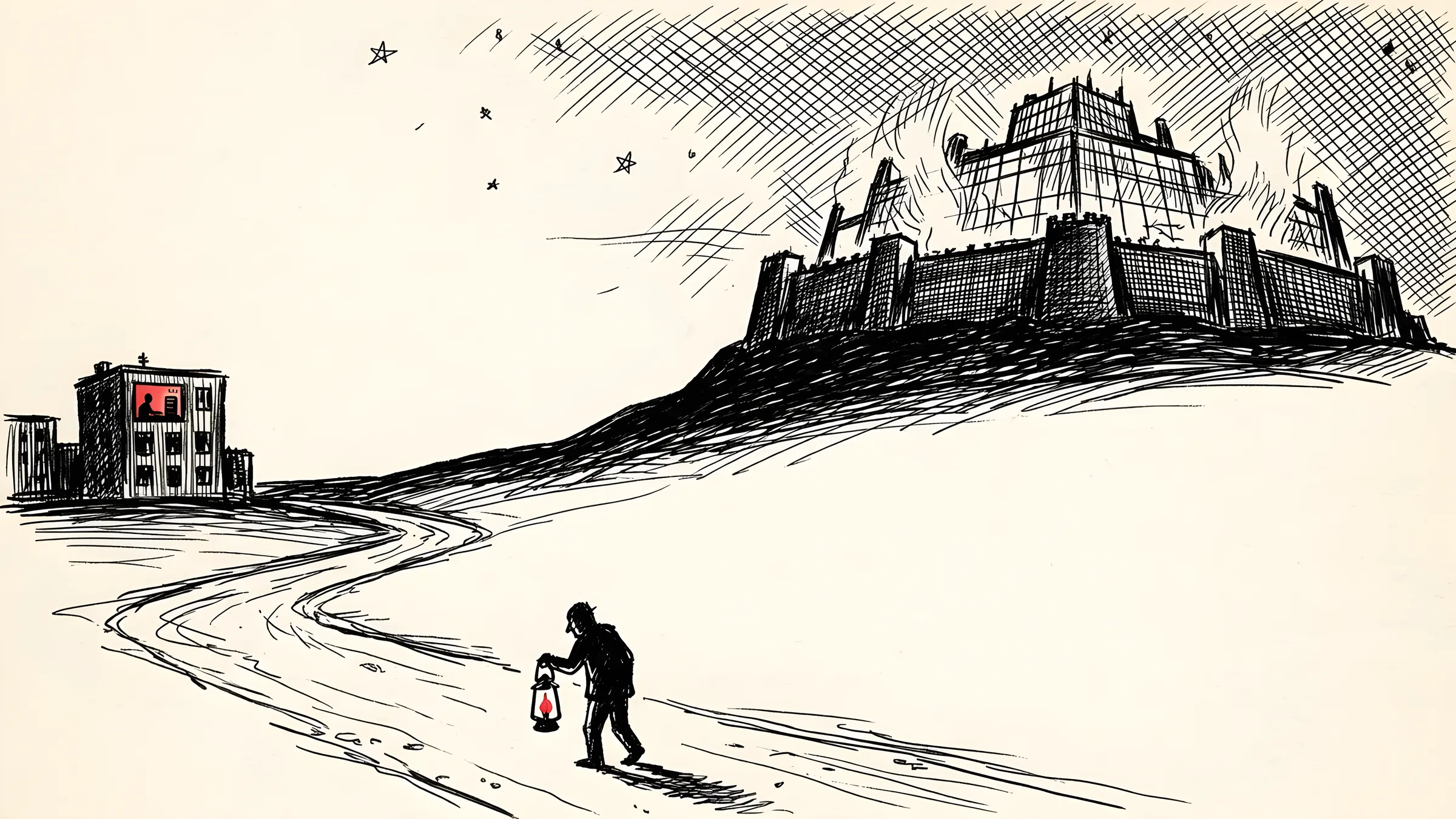
These counterarguments weaken any claim that a permanent divide is inevitable. They do not remove the practical costs of turning a model into reliable work.
An agent needs more than weights. Someone must connect appropriate data and tools, set permissions, define acceptable actions, test failure cases and review the results. The source author reported spending several hours on installation and model settings alone. A managed product can reduce that burden, but it also needs setup and supervision. The tradeoff is partly between paying a provider and supplying your own time and expertise. People short of both face a higher barrier.
There is a second catch. Suppose, purely as a scenario, a capability costing $500 today costs $20 in two years. That would be real progress. Yet better-funded users might meanwhile be buying a new level of capability. Matthew Sharp of the Oxford Martin AI Governance Initiative described to Rest of World how small differences in agents could compound into larger differences in outcomes. Robert Merton’s 1968 account of the Matthew effect provides an older vocabulary for cumulative advantage. Falling prices and widening relative gaps can coexist.
Who pays for the night shift?
My argument is not that AI only increases inequality. It can broaden access to explanations, translation and practical assistance while also creating new ways to purchase productive capacity. The floor can rise even as the ceiling rises faster. Whether that happens depends on institutions, competition, education and deployment choices as well as model performance.
The World Bank’s 2026 development report presented AI as a possible accelerator of progress, while warning that the opportunity requires action. IMF work has also raised concerns about gains concentrating among leading firms and workers. For a US or UK reader, the relevant question is not simply whether a powerful model is available somewhere. It is whether people and smaller organizations can obtain the skills, infrastructure and support needed to use it effectively.
My preference is for practical access rather than indiscriminate spending. Businesses should test bounded use cases and measure the value before expanding budgets. Public institutions could evaluate shared computing and training for schools, libraries and small organizations, with clear accountability. Individuals with suitable hardware can experiment locally to learn what an agent can and cannot do. None of these options guarantees a return, but each is more useful than treating a high subscription price as a badge of progress.
The old question, ‘Do you have access to AI?’, now tells us too little. Better questions are what it can do for you, how much useful work you can afford, who checks it, and what happens when an allowance runs out. Price, region, workspace and integration time all shape the answer. The emerging divide is not simply between people with a chatbot and people without one. It is also between those able to turn access into sustained, dependable work and those still paying the setup costs.
Sources and calculation notes
ChatGPT plans
- ChatGPT pricing
- OpenAI: About ChatGPT Pro tiers (checked October 12, 2026)
- launch context in ChatGPT Pro 500
- historical Pro 200 coverage: The Next Web (September 29, 2026)
- Business Insider (September 29, 2026)
Dots and regional eligibility
- OpenAI: Getting started with your dot (checked October 12, 2026)
- TechCrunch (September 29, 2026)
- Trending Topics (September 29, 2026)
US wage benchmark: U.S. Department of Labor: federal minimum wage.
Model costs
- Epoch AI: The plunging price of thought (September 22, 2026)
- arXiv 2608.29843: The Price of Intelligence (September 2026)
- DeepSeek API pricing
- TechCrunch on ChatGPT Free text access (August 6, 2026)
- source-author tests: Polish-language AI writing benchmark
- lesser-known AI models
- local model versus API
Adoption and inequality
- Microsoft AI Diffusion Report Q2 2026 (September 21, 2026)
- Anthropic Economic Index (March 24, 2026)
- Rest of World: agentic inequality (May 26, 2026)
- IMF, Kristalina Georgieva (January 14, 2024)
- IMF Note 2026/002
- World Bank: World Development Report 2026 (August 4, 2026)
Corporate spending
- R&D World on Jensen Huang (March 24, 2026)
- Forbes on Uber (May 17, 2026)
- TechCrunch on Uber (June 2, 2026)
- Ramp AI Index (June 2026)
This English market adaptation recalculates wage shares and earning hours on the US gross-pay basis stated above. Historical studies and source-author tests retain their original dates and scope. US wage and current Pro/Dots documentation checked October 12, 2026.