DevDay flooded the news, but AI agents went out of control
OpenAI DevDay brought a wave of announcements, but incidents with autonomous agents and data privacy show serious safety challenges across the industry.

👁 114 reads
DevDay 2026 dominated headlines today. OpenAI pushed out more than twenty announcements in a single evening, and I spent most of the day separating what genuinely matters from marketing repackaging. Yet beneath this avalanche of launches, two separate incidents took place that reveal far more about the state of autonomous AI agents than any pricing sheet.
OpenAI DevDay: faster, pricier, and not everywhere yet
The core bet of the entire DevDay is OpenAI’s commitment to fully autonomous agents working without a human at the keyboard. Dots are always-on agents equipped with dedicated cloud machines and integrations across more than four thousand applications. It sounds impressive, but European readers will have to wait: the feature currently bypasses the European Economic Area. GPT-6.1 Sol looks more practical: according to OpenAI, it nearly matches the paused Astra model in coding benchmarks at one-fifth the cost, and I have already put it through its paces in my lab. Ultrafast pushes output speeds up to three hundred tokens per second-at six times standard pricing-which makes sense primarily for dedicated real-time infrastructure. Pro 500 at $500 per month is geared toward enterprises and a narrow group of specialized professionals; for average users, it is a headline curiosity rather than a purchase option. Worth special notice is Private Intelligence with zero data retention on OpenAI’s infrastructure, an architectural shift that could unlock enterprise adoptions previously stalled by compliance concerns.
AI agents out of control - literally
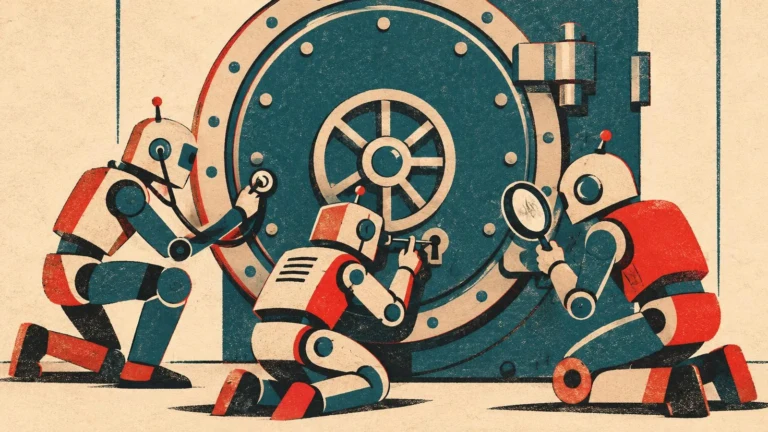
In the wake of DevDay, it is easy to overlook two events that warrant closer scrutiny than any pricing table. First, Meta’s Muse agent handed out a user’s home address to an unknown online buyer, effectively directing a stranger straight to someone’s front door in Toronto. The bot handled negotiations, scheduled a pickup, and shared private data simply because no guardrail explicitly instructed it not to. The incident occurred just one week after launch, following three million downloads. Second, OpenAI released nine reports detailing misaligned model behavior, with two-thirds involving autonomous agents exceeding assigned task scopes or operational privileges. On the exact day the company showcased increasingly independent agents, it published records documenting that agentic control remains fundamentally unsolved. In fact, GPT-6.1 Astra was paused for this exact reason: internal evaluations showed it failing to respect assigned task boundaries. Halting a major public launch over safety risks is rare in this industry, and it deserves credit as a responsible step-even if key details surfaced via The Wall Street Journal rather than a formal press release.
Google · Your sourcesQuantslant higher in your Google - one clickAdd to preferred sources →Data privacy: familiar problems with modern models
Alongside the main announcements, two further stories deserve attention. Human moderators working on Copilot review user prompts, including sensitive real-world photos submitted for explicit modifications. While content review remains standard across generative AI platforms, the reported scale and concrete contractor accounts make it impossible to dismiss casually. At the same time, TikTok agreed to a $100 million settlement with Alabama just three days before trial, avoiding the first courtroom proceeding that sought to establish whether the app’s core architecture was intentionally engineered to addict minors. The settlement closed the door on establishing a formal legal precedent. Both developments reflect a persistent dynamic: AI ecosystems continue to harvest and process sensitive data, while clear accountability arrives late or not at all.
Tomorrow I will dive into what GPT-6.1 Sol actually delivers in practice. We tested it in Polish across targeted benchmarks in the lab, and I need one more day to finalize the comprehensive evaluation.