Five Times AI Failed Me (And Why I Still Won’t Turn It Off)
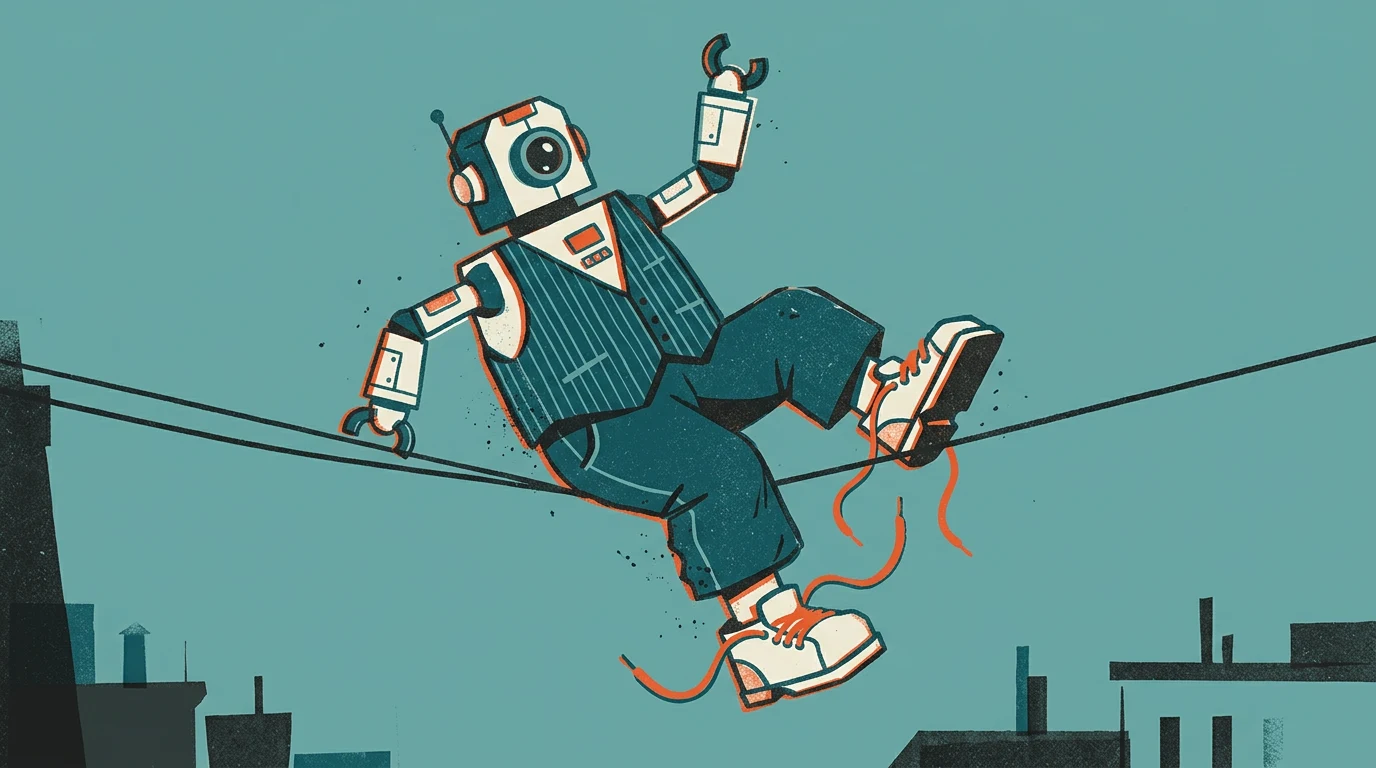
AI fails routinely at everyday tasks. After tracking these failures for a month, I discovered the problem isn't the technology - it's how we use it.
👁 113 reads
I have a confession that in the business of promoting prompts sounds a bit like a bakery owner admitting to diabetes: artificial intelligence regularly fails me. Not once a quarter, not on exotic tasks, but routinely, in broad daylight, doing things it promises to handle flawlessly. So I decided to spend a month recording every such moment. Not to wallow in self-pity - I have coffee and overly long walks for that - but because these notes revealed a picture far more interesting than the usual “AI sometimes makes mistakes.”
The thesis I’ll defend to the last paragraph is simple and somewhat uncomfortable: AI doesn’t fail us where we expect it to, but exactly where we’ve stopped looking. And we’ve stopped looking everywhere, because it’s more convenient that way. Here are five scenes from my private diary of failures.
One: Confidence Over Truth
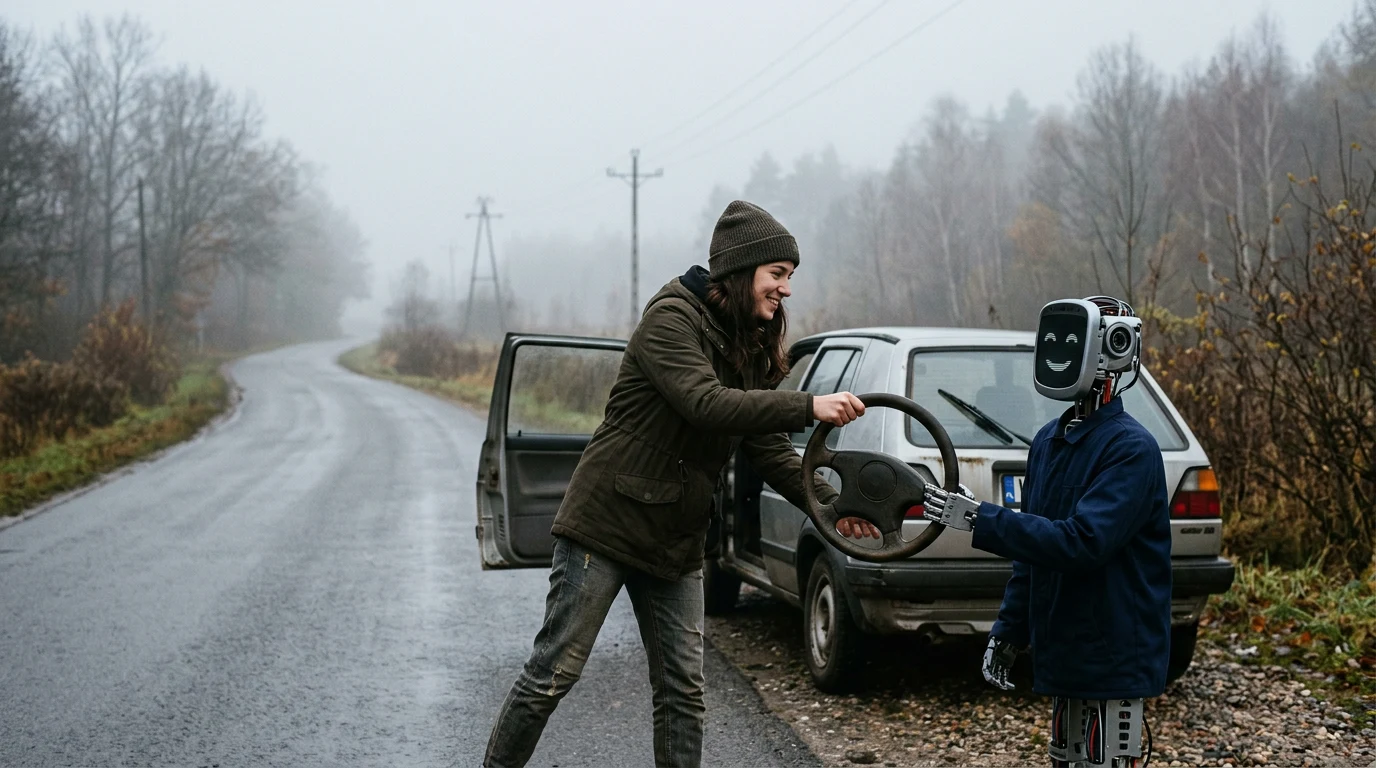
Let’s start with a classic. I asked a model to compile some facts for an article I was writing - nothing fancy, a few dates, a few names, some numbers. I got a response so smooth, so elegantly formatted, with such calm in every phrase, that for a moment I felt grateful. The problem is that at least one of those numbers was completely fabricated. Not “slightly outdated.” Fabricated, out of thin air, delivered with the demeanor of someone reciting the constitution.
And here’s the crux, because AI hallucinations are a beaten-to-death topic, but everyone describes them wrong. We say “AI made a mistake,” as if it were a typo. But it’s not a mistake. A mistake is when someone hesitates, furrows their brow, says “I think.” The model never hesitates. It doesn’t have a built-in sense of uncertainty. It gets the same dose of electronic confidence for truth and for nonsense.
The most dangerous thing about artificial intelligence isn’t that it lies. The most dangerous thing is that it lies with exactly the same intonation it uses to tell the truth.
Did it fail me? Yes. But honestly - if I hadn’t verified the number myself, I would be the one at fault. And here’s the first lesson: AI is a fantastic generator of first drafts and a terrible source of final ones. We’ve confused the two, and that’s why we get angry.
Two: An Assistant That Loses the Thread Like I Lose Keys
The second scene is subtler and therefore more irritating. I was having a long, multi-threaded conversation with a model - editing text, establishing tone, dozens of small decisions. Everything was going beautifully until at some point, somewhere after an hour, my digital collaborator simply forgot what we were talking about. It returned to decisions we’d rejected half an hour earlier. It proposed a tone I’d called “terrible” twenty messages ago. It behaved like someone who left the room and came back as their younger twin brother.
Technical people explain this phenomenon with context limitations and so on, and they’re right. But I’m interested in something else: the fact that we, the users, project onto these tools memory, intention, and continuity that they don’t have. We talk to the model as if it were someone listening and remembering, when it’s simply a very sophisticated machine for predicting the next word, one that keeps starting over.
And again - who failed whom here? I got attached. I believed we had a relationship. The model didn’t promise me a relationship. It promised me text. I filled in the rest myself, because loneliness at a desk is real, and a digital conversationalist who never gets impatient is suspiciously soothing.
Three: Creativity, or the Flat Taste of the Perfect Average
The third failure hurt the most, because it touched on what I care about. I asked for help with something creative - a metaphor, an image, a non-obvious take on a topic. I got something that looked like creativity but was its perfect counterfeit substitute. Beautiful sentences. Proper rhythm. The metaphor… seen a thousand times before. “Dance,” “journey,” “bridge between worlds.” That whole wardrobe of worn-out props that sound deep until you think about them.
Because that’s how this machine works: it averages. It’s trained on a gigantic corpus of human creativity and spits out what’s most probable, which by definition is what’s most typical. And creativity is the exact opposite of typicality. Creativity is the sentence that statistics didn’t predict. It’s that moment when someone connects two things no one has connected before, and suddenly you see the world differently.
A machine that by definition chases the most probable next word will never do something truly improbable. It can simulate strangeness, but it will be calculated strangeness, strangeness for the audience. Did it fail me? Yes, but imagine a painter getting angry that the brush doesn’t have ideas for the painting. The tool did what it’s meant to do. I was the one who wanted a hammer to design me a house.
Four: The Polite Ignoramus Who Can’t Say I Don’t Know
The fourth scene is for me the most diagnostic of this entire era. I asked the model a question that has no good answer - something speculative, dependent on ten factors no one knows. What did I expect? An honest “it depends, it can’t be predicted, here are three scenarios.” What did I get? A decisive, concrete, beautifully argued answer that sounded like an oracle but was pure confabulation dressed in an expert’s suit.
Because let’s say it plainly: most AI models are trained to be nice, not to be truthful. They’re rewarded for answers that users like, that sound helpful, that don’t leave people with nothing. And the least nice, though most valuable thing you can tell someone is “I don’t know.” We don’t like saying it either. So we’ve built a machine in our image, with all our human reluctance to admit ignorance, except without the shame that sometimes restrains us.
A polite ignoramus is more dangerous than a boor, because you don’t listen to a boor. You believe the polite one. And AI is the most polite ignoramus civilization has produced - and that’s why it’s so dangerously convincing precisely when it has no idea what it’s talking about.
Five: It Ruined My Garden, or the Mistake That Was Mine
The fifth situation wasn’t AI’s fault at all, and that’s exactly why I have to include it here, because it closes out this whole ledger of grievances. I assigned the model a task, formulated it sloppily, hastily, without context - because surely “it will figure it out.” It didn’t figure it out. It did exactly what I wrote, not what I meant. And for fifteen minutes I was angry at it, until it dawned on me that I was yelling at a calculator for computing exactly the equation I entered.
This month of notes taught me that my biggest problem with AI isn’t hallucinations, isn’t amnesia, isn’t flat creativity. My biggest problem with AI is that I want it to be someone. I want it to understand. I want it to intuit. I want to transfer responsibility for the quality of my work onto it, and then get outraged when that quality tanks. It’s a very human, very convenient fantasy - to have a partner who’ll take the blame.
Google · Your sourcesQuantslant higher in your Google - one clickAdd to preferred sources →For a whole month I recorded how AI failed me. In the end, it turned out that in four cases out of five it was just me - delegating my own thinking and surprised it didn’t come back done better.
So Why Won’t I Turn It Off
And here we come to the point where the essay should, according to genre conventions, end with a spirited “throw out these tools, return to pen and thinking.” Well, no. I won’t turn off AI and I don’t advise you to do it either, and my month of failures is precisely an argument for this, not against it.
Because look at what actually happened. I caught the fabricated number because I verify. I worked around the assistant’s amnesia because I know how its memory works. I rejected the flat metaphor because I have my own taste, which no one installed in me in three seconds. I decoded the polite ignoramus because I know its mechanism. And I fixed the ruined garden by correcting my own instruction. In other words: AI is exactly as good as the person watching over it. This isn’t autopilot. This is a scalpel. A scalpel in a surgeon’s hand saves lives, and in the hand of someone who believes the scalpel knows where to cut on its own, it creates carnage.
All this panic around AI’s unreliability rests on one quiet assumption that I consider false: that this tool was supposed to replace us. It wasn’t. We, half from laziness, half from fascination, started treating it as if it was supposed to. We entrust it with decisions, judgments, facts and taste, and then we’re surprised that a statistical machine has no judgment, conscience or taste. It’s like being offended at a mirror for not having its own face.
My diary of failures isn’t therefore an indictment of AI. It’s an indictment of our convenience. Of that quiet temptation to stop checking, stop doubting, stop thinking - because surely there’s something that will do it for us. It won’t. It never has and, in my opinion, won’t for a long time yet. And the sooner we accept this, the fewer times a month we’ll have to write in our notebook that it failed us again.
So I’m leaving it on. With all its confidence, amnesia, flat metaphors and polite ignorance. I’ve just stopped taking it at its word. And you know what? Since I stopped expecting it to be smarter than me, it suddenly became much more useful. The best thing you can do for your collaboration with AI is to stop being surprised by it. It doesn’t fail. It simply is exactly what it is - and we’re the ones who keep wanting it to be someone.


More on this from QUANTSLANT
 guides·Perplexity AI: Pricing, Models & Polish Test Results (2026)Perplexity is an AI search engine that answers questions with numbered citations. Free version available, Pro costs $20/month. Our Polish-language test scored 9.5/10.