Game Poster Prompts Without Copying an Artist’s Style
Build original game posters with prompts that describe artistic techniques instead of naming the artists they resemble.
👁 114 reads
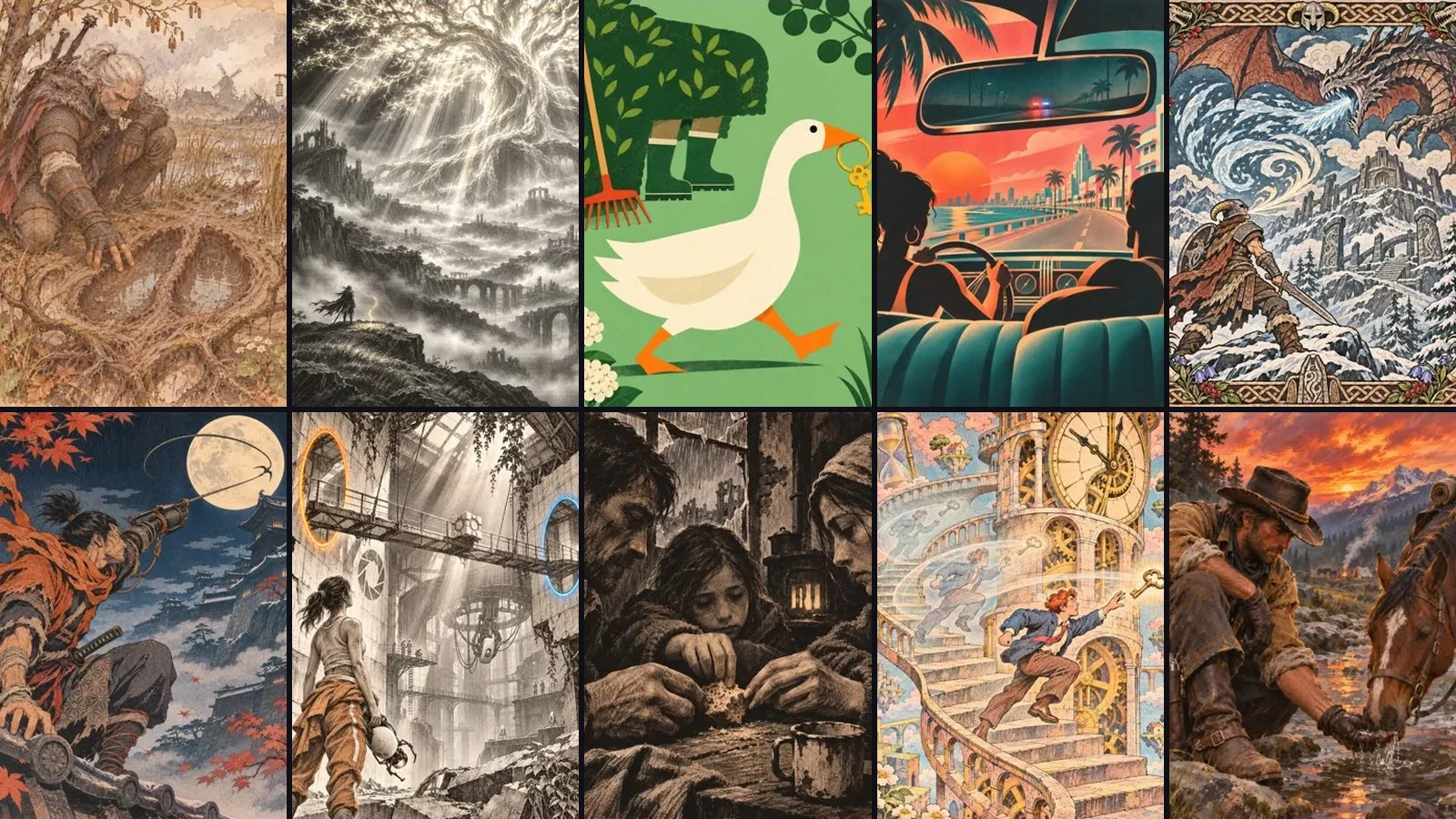
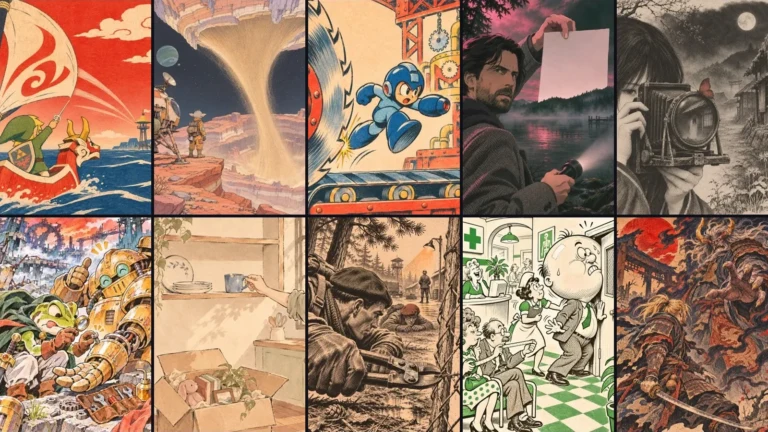
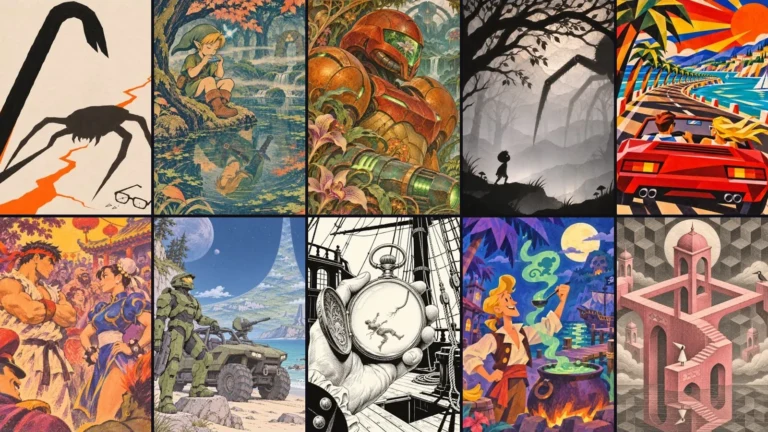
One hundred game posters inspired by twenty classic illustrators came from prompts that never named an artist. That is the key to the whole method. Instead of asking for “a Saul Bass style,” the prompt describes “flat cut-paper silkscreen, three colors, one unsettling visual pun in ample blank space.” The model gets a description of a technique, not a shortcut to someone else’s body of work - and the result looks like a poster, not a copy.
The full gallery is in Player’s Atlas: 100 Games in the Style of 20 Master Illustrators. Here, I break down the prompts so you can do the same with your favorite game. I made the images with the generator built into Codex, but the same approach works in ChatGPT and through the API.
A three-part prompt template
Every prompt in the atlas follows exactly the same structure.
- A fixed opening, the same for all one hundred images: format, no text, and a safe margin.
- The scene: exactly what happens in the poster. This is where the creative work happens.
- The technique: a description of the style without an artist’s name, shared by five games in a series.
Here is the fixed opening, word for word:
Create one original finished collectable art print, one full bleed vertical 4:5 composition (1024 x 1280). Recognizable video game motifs in an original interpretive scene. No typography anywhere, no text, no lettering, no numerals, no labels, no logo, no signatures, no watermark, no extraneous margins, no mockup. Preserve essential composition within central 90 percent.
Every sentence has a job. “No typography” rules out the garbled titles and captions image generators like to add to posters. “No signatures” helps prevent the model from faking an artist’s signature in the corner. And “central 90 percent” means you can later crop the poster to fit a frame or an Instagram square without losing the important part.
Build the scene around one idea, not a character
A common mistake with fan posters is a description like “Geralt with a sword in a forest.” The result is an image anyone could have made. In the atlas, every scene has one clear idea that a player can understand in a second. Here is the scene prompt for The Witcher 3:
Geralt, white hair tied back, two sword hilts on his back, kneels at an enormous split hoofprint on a marsh. Branching wet alder roots suggest a great horned animal when viewed together. Pale day over Velen reeds. Emphasize investigator hand and footprint.
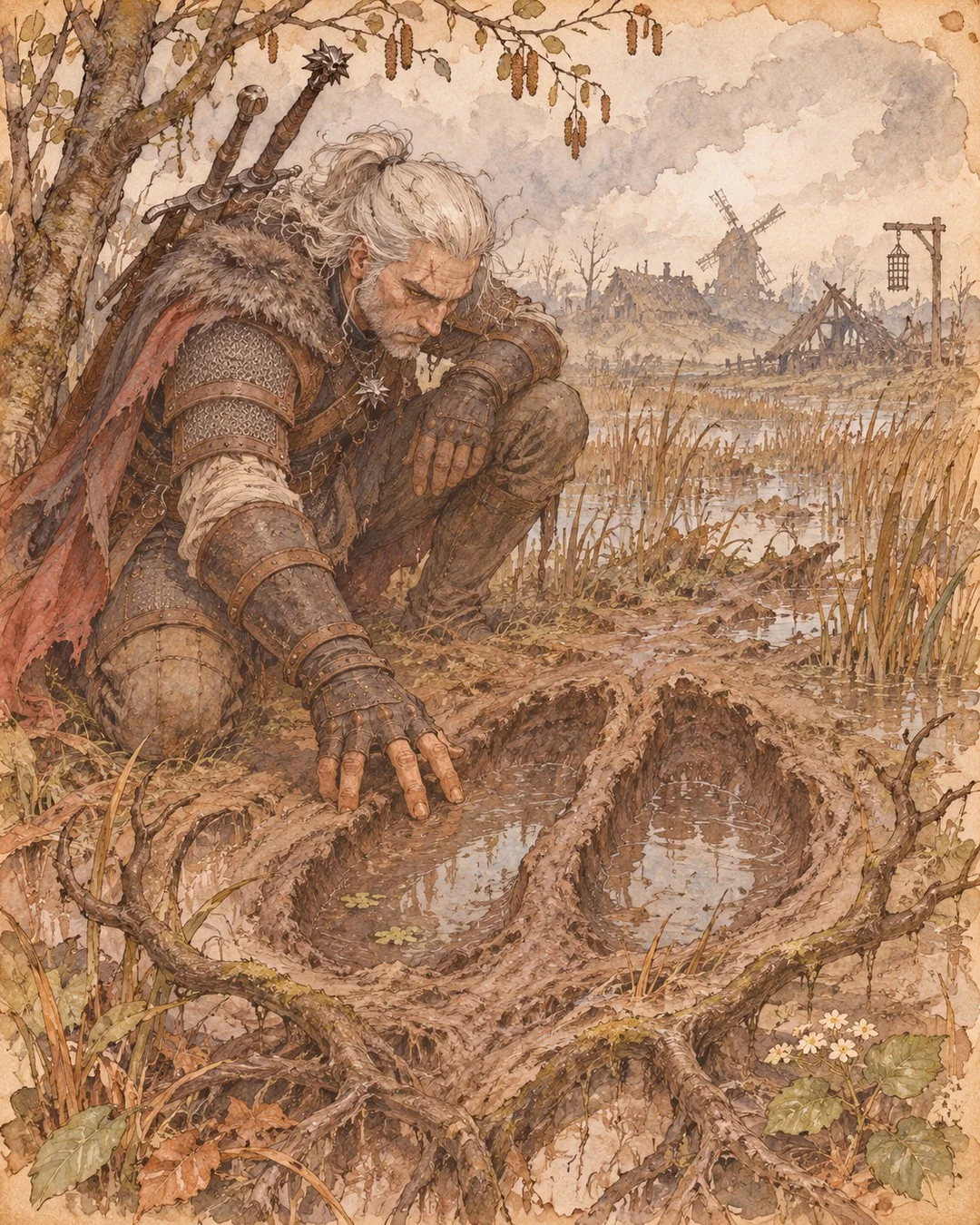
Geralt is investigating a trace, not fighting, because detective work is one of the game’s strengths. The monster itself stays out of sight; the roots only hint at it. The Half-Life example works the same way: instead of showing Gordon with a weapon, it uses a crowbar whose shadow resembles a headcrab, with broken glasses in the corner.
A huge crowbar casting the shadow of a long-legged headcrab across a single orange fissure in a laboratory floor. Black, orange and chalk. Tiny broken glasses in a corner.
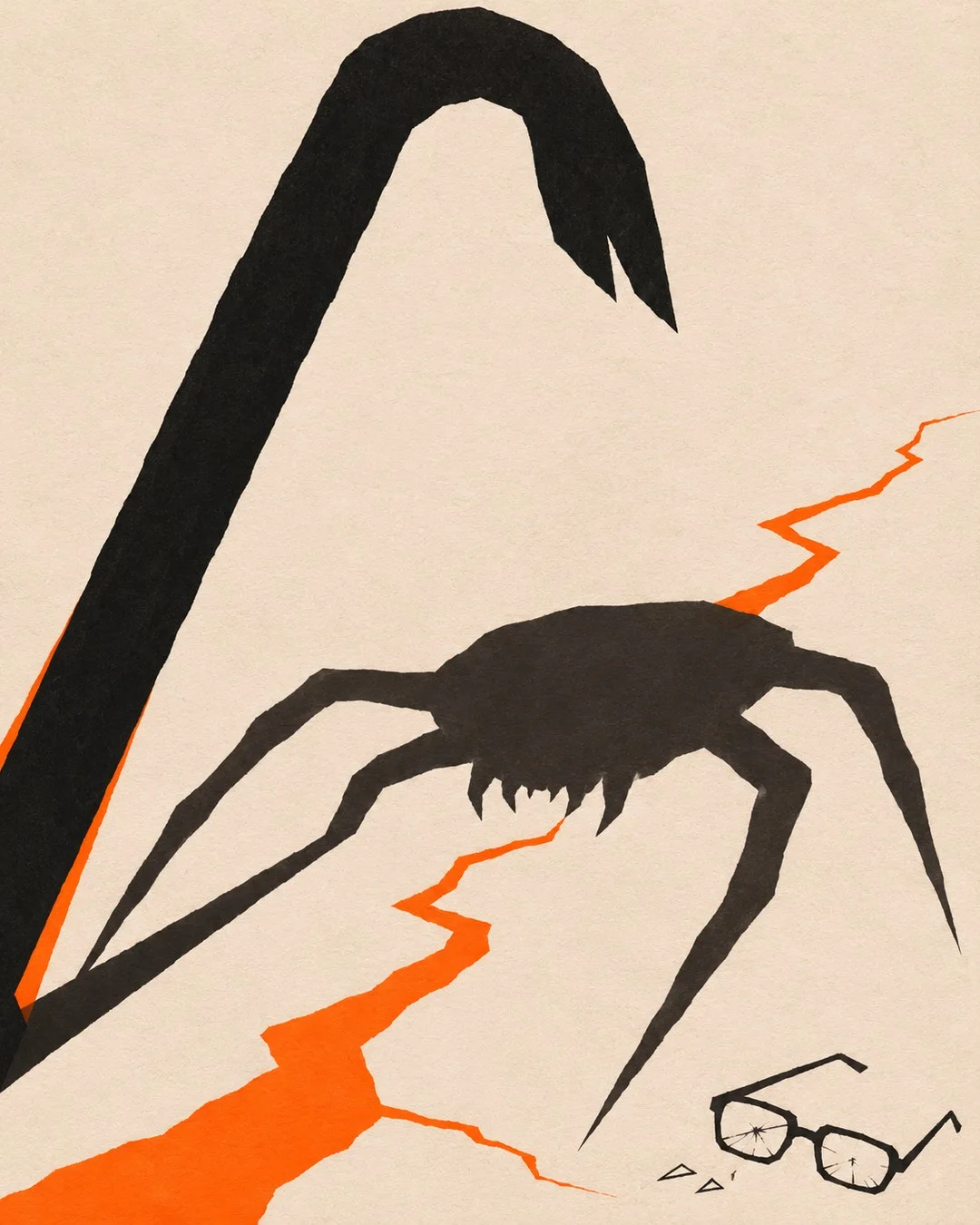
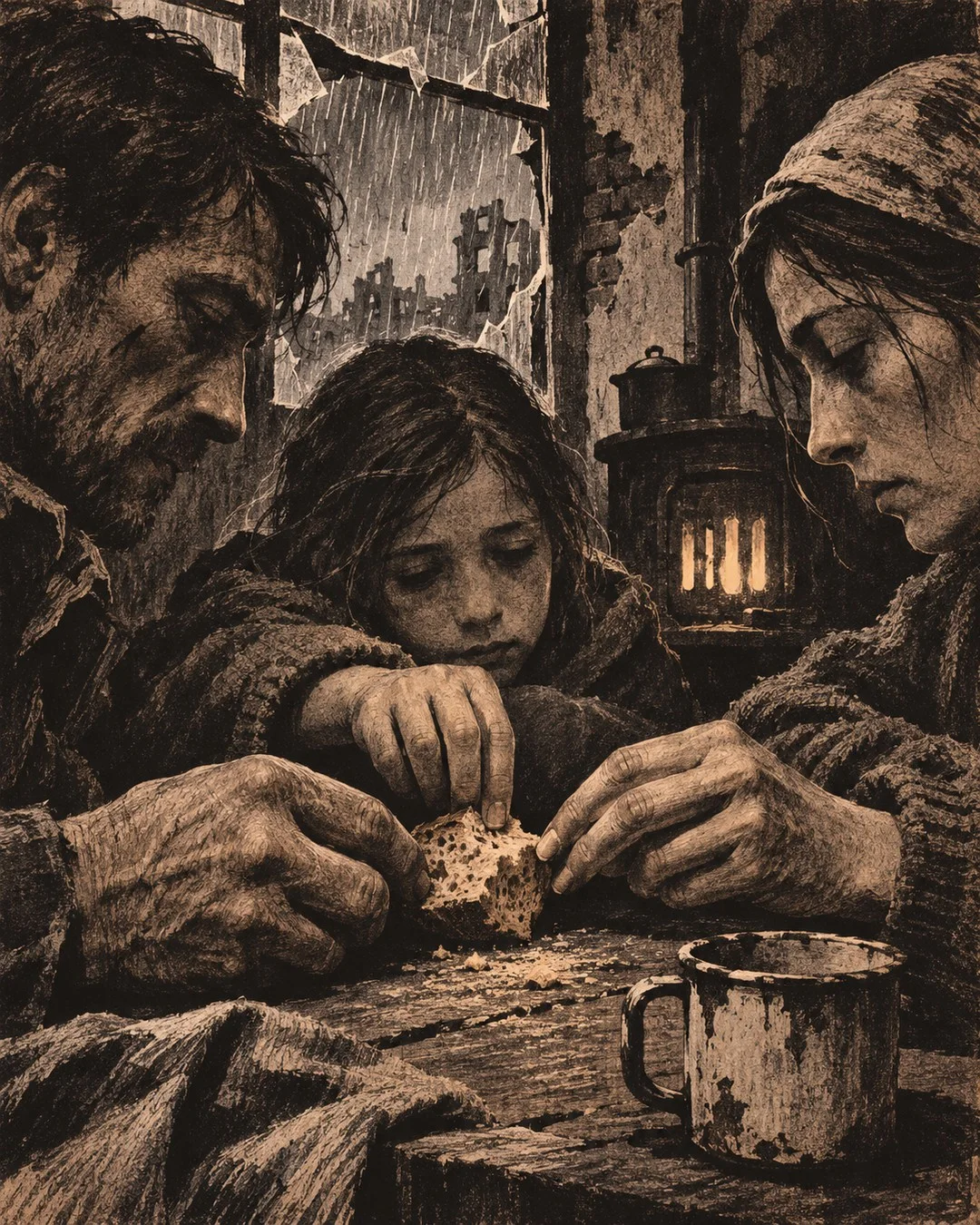
My advice: before writing the scene, ask yourself what you feel in the game, rather than who you see in it. In Braid, the key idea is rewinding time, so the key appears in three places at once. In This War of Mine, it is hunger, so the poster shows only hands sharing bread.
Describe the technique, not the artist
This is the part you can copy. Each series in the atlas has a one-line technique prompt. Here are six examples, exactly as they went into the generator:
- Fairy-tale book illustration (a series inspired by Arthur Rackham):
Edwardian fairy-tale book illustration, lively brown pen and ink, wiry irregular contour, translucent watercolor, stained pale paper, expressive gesture, dreamlike but specific storytelling - Poster built around a single symbol (Saul Bass):
flat editorial cut-paper silkscreen, rough scissor-cut edges, three spot inks, one disquieting visual pun in ample blank space, stark, economical, no frames - European science fiction comic art (Mœbius):
clear-line European science fiction comic art, hairline pen, detailed practical machinery, expansive mineral landscapes, restrained pastel flat color, an unhurried moment, a single image not a page of panels - Print with impossible space (M. C. Escher):
mathematical graphic print, precise wood-engraving hatchwork, interlocking tessellations and a single elegantly readable spatial contradiction tailored to the game, charcoal, paper and one selective accent - Charcoal and heavy hands (Käthe Kollwitz):
intimate expressionist charcoal and relief print, thick coarse ink, heavy hands sharply carved out of darkness, compassionate observation, modest scale rather than spectacle, deep black and warm paper - Futurist theatre poster (Fortunato Depero):
Italian futurist graphic theatre poster, flat angular marionette-like volumes, strong kinetic pattern, saturated vermilion yellow cobalt and black, bold mechanical wit, entirely pictorial without typography
Notice that the technique description also guides the composition, not just the colors. “One disquieting visual pun” in the Bass prompt encourages the model to look for a double meaning. “Heavy hands sharply carved out of darkness” in the Kollwitz prompt directs attention to the hands rather than the faces.
Match the technique to the game
The strongest posters in the atlas came from pairing the technique with the game’s subject. Escher works for puzzle games because his prints are puzzles in their own right. Kollwitz suits games about war and poverty. Cassandre, known for posters of trains and ocean liners, fits racing games. Depero’s Futurism suits classic arcade games because both are about rhythm and machinery.
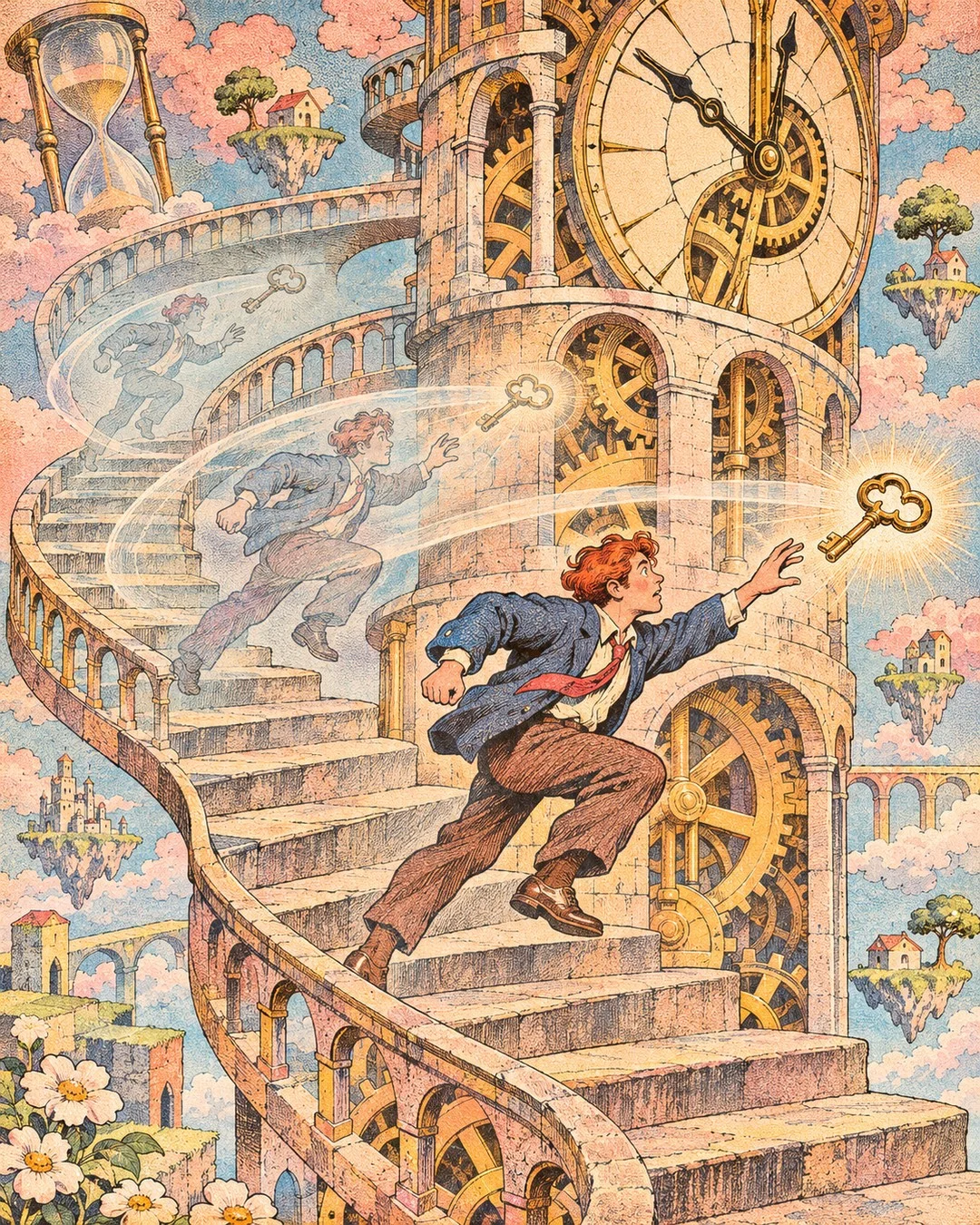
A ready-to-use prompt recipe
- Paste the fixed opening without changing it.
- Add
Subject:, the game’s name, and a scene built around one idea, in two or three sentences. Name specific props, character colors, and the setting. - Add
Technique:and one of the lines above, or write your own technique description: tools, paper, number of colors, and composition. Leave out artists’ names. - Generate several versions and choose the one where the idea reads immediately. If you have to squint to understand it, revise the scene, not the style.
One caveat: game characters are someone’s intellectual property. A poster for your own room or profile is fan art, but selling prints featuring someone else’s characters is a different matter. If you want to sell posters, use your own characters or games whose licences allow it.
Related: One apartment block in ten video game styles and 18 pop culture images in GPT-Image-2.6.
Sources
- My own collection, Player’s Atlas: 100 illustrations and full prompts, made with Codex’s built-in image generator, 5 November 2026.
- MoMA: A. M. Cassandre
- MoMA: Saul Bass
- Johnson Museum of Art, Cornell University: Käthe Kollwitz
- National Gallery of Art: M. C. Escher
Checked: 5 November 2026.
More on this from QUANTSLANT
 ai tools·Gemini Omni 1.2 Conversational Video Editing: How It WorksGemini Omni 1.2 Flash introduces conversational video editing. Here is how Google designed it, what failed on launch day, and regional restrictions.