HiDream-O1-Video Examples: 7 Prompts and Demos Tested
What can HiDream-O1-Video do? Explore 7 prompts and demos, from launch physics showcases to image-to-video tests and pricing breakdown.
👁 116 reads
HiDream-O1-Video-1.0 ranks 6th on the Artificial Analysis image-to-video leaderboard (1175 Elo), yet the creator has not published a single sample clip with an accompanying prompt. I have gathered 7 examples: one clip from a post on X, three official launch demos described by Chinese tech media, and three test prompts designed for its only functional mode-image-to-video. For full specs, pricing, and access options, check my HiDream-O1-Video guide.
Quick verdict (October 11, 2026)
- No official clips with prompts - none are available on HiDream’s official site, Hugging Face, or YouTube (as of October 11).
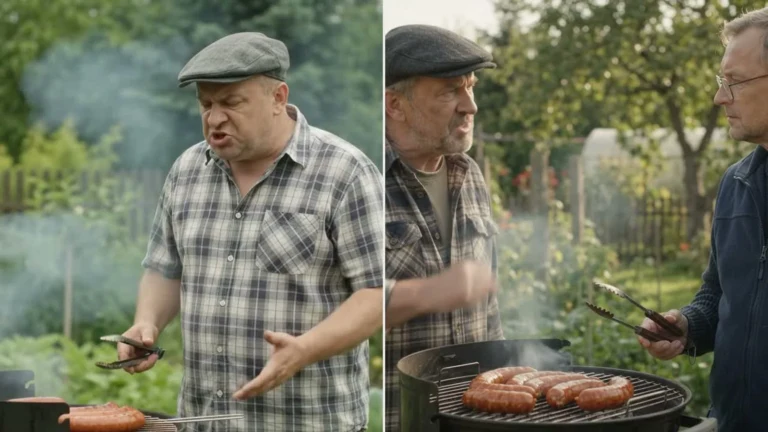
- The only public clip to watch is a three-model comparison shared in an X post by @Chinazhidx on September 15.
- Physics demos (string tension, thrown apple, bouncing ball) are known only via descriptions published by QbitAI. Images from those reports are omitted due to licensing uncertainty.
- No personal test clips yet - the model is not hosted on third-party aggregators I use. My prompts are provided strictly as test concepts to try yourself.
How to read these examples
The public HiHarness API accepts a single starting image (mandatory), an optional text prompt, and a force_10s parameter. There is no text-to-video mode available in the API, despite early teasers from September 15 and 17 suggesting otherwise. Therefore, every prompt below assumes you already have an initial keyframe. The model dynamically determines clip length (announced as 5-20 s) unless you explicitly enforce 10 seconds.
Benchmark platforms have also withheld prompt-paired clips. Arena.ai published ratings without public generation examples: on September 30, HiDream entered its Image-to-Video Arena at #7 with 1456 points.
Hidream-O1-Video-1.0 by @HiDream_AI just landed in the Image-to-Video Arena at #7 with 1456 pts!
- Arena.ai (@arena) September 30, 2026
| No. | Example | Tested capability | Source | Material |
|---|---|---|---|---|
| 1 | Same prompt across three models | Overall visual fidelity | Post by @Chinazhidx (Sept 15) | Embedded post clip |
| 2 | Red string pulled by two hands | Material tension and physics | HiDream demo via QbitAI | Text description only |
| 3 | Tossed apple | Dynamic clip duration | HiDream demo via QbitAI | Text description only |
| 4 | Bouncing ping-pong ball | Gravity and synchronized audio | HiDream demo via QbitAI | Text description only |
| 5 | Pouring coffee into a glass | Fluid dynamics and overflow | Suggested test prompt | None |
| 6 | Domino chain reaction | Sequential collisions | Suggested test prompt | None |
| 7 | Flag waving in the wind (10 s) | Cloth simulation and force_10s |
Suggested test prompt | None |
Launch showcase examples
1. Same prompt across three models
Use case: Quick side-by-side quality check against competitors before spending credits.
Prompt: Not disclosed by the author. The post only confirms that all three models received the exact same prompt, with HiDream appearing last (labeled under its Chinese launch moniker HD-V1).
Material: A vertical 720 x 1280 video shared by a Chinese AI news outlet. This is not from HiDream’s official account, nor is it an independently rendered clip.
Text, image, or video in. 5-20s 1080p video out.
- 智东西China AI News (@Chinazhidx) September 15, 2026
Analysis: The post echoes the marketing tagline (“text, image, or video in”). However, as of October 11, the API exclusively supports image input. It is unclear what input modality produced this footage, so treat it as vendor marketing rather than proof of text-to-video functionality.
2. Red string pulled by two hands
Use case: Simulating physical tension-cables, ropes, elastic bands, or fabrics held under stress.
Prompt: No official prompt was published. QbitAI (Sept 15, 2026) describes a benchmark demo where two hands pull a red cord to assess tension rendering. Here is a suggested English prompt matching that setup (untested, provided as a concept to try):
Two hands slowly pull a red string in opposite directions. The string straightens and becomes taut, fibers stretch slightly, a small vibration runs along it before it holds still. Close-up, soft daylight, static camera.
Material: None provided. Screengrabs from QbitAI are omitted due to unclear image rights.
Analysis: The initial keyframe should show the string hanging loose so the model has slack to tighten. Older video models frequently warp human fingers rather than stretching the cord in this scenario.
3. Tossed apple
Use case: Action sequences where generation length should adapt dynamically to the movement rather than a static timer.
Prompt: None disclosed. In the demo reported by QbitAI, the model autonomously chose the duration required to complete the catch. Here is a suggested test prompt:
A person tosses a red apple to a friend standing a few meters away. The apple flies in a natural arc, the friend catches it with one hand and takes a bite. Medium shot, park in late afternoon light.
Material: None; described only in text by QbitAI.
Analysis: Leave force_10s disabled here to verify how long the model lets the motion play out. Note the resulting duration: at $5.80 per minute (the Artificial Analysis reference rate), each second costs approximately $0.097.
4. Bouncing ping-pong ball
Use case: Gravity simulation, energy decay, and synchronized sound effects.
Prompt: None disclosed. QbitAI details a demo featuring a ball bouncing with diminishing height, matched with corresponding impact audio. Suggested test prompt:
A white ping-pong ball drops onto a wooden table and bounces, each bounce lower than the last, until it rolls to a stop. Each impact makes a crisp click. Low angle, shallow depth of field.
Material: None.
Analysis: While promotional material promises native sound generation, the HiHarness API documentation includes no audio flags or references to an audio track. If your API output arrives completely silent, it is an infrastructure limitation, not a prompt mistake.
Test prompts to try
Here are three scenes designed around HiDream’s claimed strengths: physics interactions, material rendering, and adaptive duration. I have not run these generations myself-they are test concepts for you to explore. You can generate base starting frames using the open HiDream-O1-Image weights covered in our main overview.
5. Pouring coffee into a glass
Use case: Product commercials, café branding, and beverage ads.
Hot coffee is poured from a glass carafe into a clear glass on a marble counter. The liquid swirls, foam rises, the glass fills to the brim and a few drops spill over the edge. Steam drifts up. Static close-up, warm morning light.
Material: None - suggested prompt to try, not a verified generation.
Analysis: Pouring until overflow is an effective test scene I ran across several models in our video model arena. While that was a text-to-video benchmark, here you must start with a clean photo of an empty glass.
6. Domino chain reaction
Use case: Chain reaction effects, video intros, and educational simulations.
A long curved line of wooden dominoes stands on a table. A finger pushes the first one and they fall one after another in sequence, the last domino knocks over a small toy figure. Camera slowly tracks along the line.
Material: None - suggested prompt to try, not a verified generation.
Analysis: This tests two common pitfalls simultaneously: whether tiles tumble in strict sequence and whether individual pieces vanish mid-motion. Allow the model to decide the duration to see if a longer domino line triggers extended output length.
7. Flag waving in the wind (fixed 10 seconds)
Use case: Motion backgrounds, web loops, and B-roll clips needing consistent duration.
A white and red flag waves on a flagpole against a cloudy sky. The wind changes strength, the fabric ripples and snaps, light passes through the thin cloth. Static wide shot.
Material: None - suggested prompt to try, not a verified generation.
Analysis: Ideal for testing "force_10s": true. Costs remain entirely predictable: roughly $0.97 per clip based on AA pricing estimates.
Scale: 100% = 20 s, the longest clip duration cited in announcements. Costs reflect calculations based on Artificial Analysis figures (recorded October 11, 2026); HiDream does not provide a public self-service price list.
Prompting tips for HiDream
- Prompt in English. The developer does not list officially supported prompt languages.
- Describe transformation, not the static scene. You already supply the image; your prompt must describe exactly how elements move and deform.
- State physical behaviors explicitly: use phrases like “bounces lower each time”, “becomes taut”, or “spills over the edge”.
- Include audio cues in the prompt even if API documentation lacks sound parameters-announcements suggest audio is derived from action descriptions.
- Supply high-resolution inputs: the API accepts images between 40 KB and 20 MB, maintaining the source aspect ratio in the rendered video.
To see how HiDream compares to competitors in cost and leaderboards, read our detailed breakdown: HiDream-O1-Video vs MiniMax H3 vs Vidu Q4. For models with native text-to-video capability, check our prompt examples for Wan 3.0 and MiniMax H3 Max.
Frequently asked questions
Has HiDream published official clips with accompanying prompts?
No verified samples exist (as of October 11, 2026) across official company domains, Hugging Face, or YouTube. Available material is limited to Chinese media descriptions and clips on X.
Can you run these prompts without a starting image?
Not via the official API. The image parameter is mandatory, requiring an input keyframe before generation.
How much does it cost to test all 7 examples?
Assuming 10 seconds per scene at Artificial Analysis rates, testing all seven would cost roughly $6.80. If the model defaults to longer runtimes, total costs will scale accordingly.
Will you update this guide with your own test generations?
Yes. Once HiDream-O1-Video arrives on standard aggregator platforms or direct API registration opens up, I will add hands-on clips alongside recorded render times and exact costs.
Google · Your sourcesQuantslant higher in your Google - one clickAdd to preferred sources →Sources and verification dates
- @Chinazhidx clip post on X (September 15, 2026)
- QbitAI launch report on HD-V1 and physics demos (September 15, 2026)
- HiHarness API documentation (accessed October 11, 2026)
- Artificial Analysis Image-to-Video Leaderboard (accessed October 11, 2026)