Meta Muse Spark 1.3: Benchmarks, Pricing and Test Results
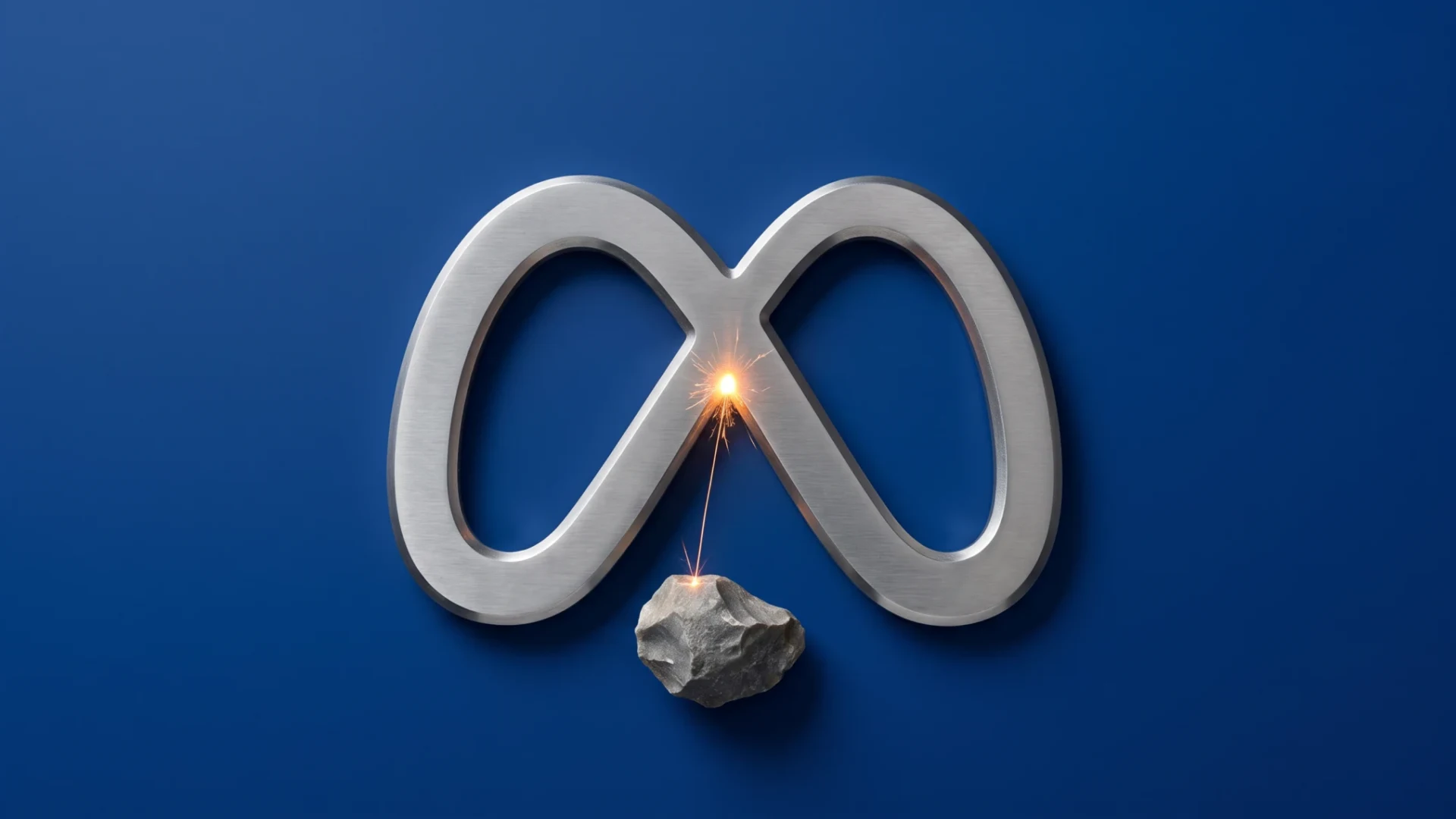
Meta's Muse Spark 1.3 scores 48 points in the AA index, generates 214-252 tokens/s, and costs $1.25/$4.25 per million tokens. We tested it in Polish for non-English performance.
👁 132 reads
Muse Spark 1.3 is Meta’s latest language model and the fastest model in the top tier of the Artificial Analysis ranking: 214-252 tokens per second at 45-48 points in the intelligence index. Released September 2, 2026, it costs $1.25 per million input tokens and has a cheaper Contributor version you pay for with your data. We ran it through our Lab: in 13 tasks in Polish it scored 75.5 out of 100 for $0.10. Below you’ll find results with response excerpts, benchmarks, pricing, reasoning levels, and how to access the model.
Summary
Muse Spark 1.3 in the max variant scores 48 points in the Artificial Analysis index - the highest among models outside Anthropic and OpenAI (as of September 27, 2026) - and generates text more than twice as fast as Claude Opus 5.5. It costs $1.25 / $4.25 per million tokens, while the Contributor version costs $0.10 / $0.20 in exchange for consent to train Meta’s models on your queries. In our Polish-language test it scored 75.5 points: less than Qwen3.8 Max (77.5) and GPT-6 Luna (81.8), more than MiMo-V2.6-Pro and GLM-5.3. The score is boosted by rule-following and clean typography, while judges rated its texts lower than MiMo’s (6.78 vs 7.12 out of 10), with the lowest naturalness in the group (5.63). Downsides: long wait for the first token (25-35 s in AA measurements), and access to the API is not officially confirmed in all regions.
What is Muse Spark
Muse Spark is a model family from Meta Superintelligence Labs. The first version from April 2026 powered the assistant in the Meta AI app and on meta.ai. In July, Meta opened API access for Muse Spark 1.1, and on September 2 released version 1.3. The model is closed and multimodal, and according to Meta is primarily designed for long agentic tasks, coding, and multi-agent workflows.
Meta lists four improvements over 1.2: better agentic work (asking clarifying questions, multitasking), coding with “~20% fewer tool calls and ~25% fewer tokens”, better instruction-following on long tasks, and greater resistance to attacks. The announcement text doesn’t provide benchmark numbers, only a comparison chart with GPT and Claude.
Benchmarks: Where Muse Spark 1.3 Stands
Independent numbers come from Artificial Analysis. Its index (version 4.3.2) consists of 10 tests: agentic tasks (30%), coding (20%), scientific reasoning (20%), and general knowledge (30%).
| Model | AA Index | Tokens/s | AA Task Cost |
|---|---|---|---|
| Claude Opus 5.5 (max) | 58 | - | $5.98 |
| GPT-6 Astra (max) | 53 | 63 | $3.26 |
| Muse Spark 1.3 (max) | 48 | 214 | $1.60 |
| GPT-6 Sol (max) | 48 | 86 | $1.06 |
| MiMo-V2.6-Pro | 46 | 44 | $0.13 |
| Muse Spark 1.3 (xhigh) | 45 | 252 | $1.37 |
| Qwen3.8 Max (0902) | 45 | 39 | $5.41 |
| GLM-5.3 (max) | 45 | 84 | $2.01 |
Data from September 27, 2026. Three takeaways from this table:
- Speed. 214-252 tokens per second is the highest in the top twenty-five of the index. Claude Opus 5.5 in the xhigh variant does 89.
- Verbosity. For the index, Muse Spark generated 170 million output tokens, against a median of 88 million. So part of the speed advantage is eaten up by response length.
- Startup latency. According to AA, you wait 25 to 35 seconds for the first token, depending on the measurement. For live chat that’s a lot, for background tasks it doesn’t matter.
According to AA, it performs strongest in agentic tasks (AA-Briefcase, GDPval-AA, AutomationBench). A comparison of lesser-known top-tier models, with our Polish test results for all four, is in the article Lesser-Known AI Models: MiMo, Qwen3.8 Max, GLM-5.3 and Muse Spark.
Pricing: Standard and Contributor
| Version | Input USD | Cached USD | Output USD |
|---|---|---|---|
| Muse Spark 1.3 | $1.25 | $0.15 | $4.25 |
| Muse Spark 1.3 Contributor | $0.10 | $0.002 | $0.20 |
| Claude Opus 5.5, for comparison | $4.00 | - | $20.00 |
Meta’s prices per million tokens, excluding VAT. Contributor is the same model at a fraction of the price, but Meta states explicitly that the discount is “in exchange for consent to use your queries and responses to train future Meta models”. It doesn’t include the max reasoning level. We wouldn’t use this version for customer data, contracts, or anything confidential. That’s our opinion.
Reasoning Levels
The API accepts a reasoning_effort parameter with values minimal, low, medium, high, xhigh, and max. The value “none” returns a 400 error, so reasoning cannot be disabled. Artificial Analysis measures the two highest levels: xhigh yields 45 points and $1.37 per task, max - 48 points and $1.60. In our Lab, all models get effort=low to keep comparisons equal.
Our Polish Test: 75.5 Points
Muse Spark 1.3 went through the same 13 tasks as Qwen3.8 Max, GLM-5.3, and MiMo-V2.6-Pro: 9 writing tasks, two proofreading tasks, and two general-knowledge quizzes. Settings as with all models in our Polish writing AI ranking: OpenRouter, effort=low, same token limits. Responses were blindly evaluated by three judges (Claude Opus 5.5, GPT-6 Sol, Gemini 3.1 Pro), and alongside Muse Spark the pool included four anchors from the first round. Their results differed from the originals by 1.0-1.7 points, and the order didn’t change. After calibration to the first round’s scale, Muse has 75.3 points.
| Model | Score | Judges (1-10) | Naturalness | Rules | Hard Proofread | Hard Quiz | Cost 13 Tasks |
|---|---|---|---|---|---|---|---|
| Claude Opus 5.5 | 91.8 | 9.22 | 8.50 | 25/26 | 30/30 | 48/48 | $0.3716 |
| GPT-6 Luna | 81.8 | 8.06 | 7.28 | 24/26 | 29/30 | 48/48 | $0.0041 |
| Qwen3.8 Max | 77.5 | 7.90 | 7.26 | 26/26 | 30/30 | 48/48 | $0.2357 |
| Muse Spark 1.3 | 75.5 | 6.78 | 5.63 | 25/26 | 29/30 | 48/48 | $0.1012 |
| GLM-5.3 | 62.7 | 6.22 | 5.81 | 23/26 | 26/30 | 46/48 | $0.0304 |
All results from the same evaluation pool, September 27, 2026. The combined score is 70% judge average, 20% instruction rule-following, and 10% text hygiene. In the 16-model ranking, Muse Spark with a score of 75.3 would take 11th place, just behind Qwen3.8 Max (75.9) and ahead of DeepSeek V4 Pro (74.1). Qwen’s score includes one response from a second attempt with a higher limit; with equal limits, Qwen would have 68.7 points in this pool, less than Muse.
Important caveat: Muse owes a significant part of its score to text hygiene. It had no broken sentences or incomplete constructions, so in that component it scored 88 out of 100. The judges’ scores alone (6.78) are lower than MiMo’s (7.12) and Qwen’s (7.90). Counting only judges and rules, it would be behind MiMo.
Response Excerpts
The translation of a newsletter full of English idioms came out best (8.67, compared to 9.50 for Opus):
“Bądźmy szczerzy: wdrożenie nowego klienta to nie fizyka kwantowa, ale ostatnio za bardzo szliśmy na skróty. (…) To był dla nas zimny prysznic.“ (“Let’s be honest: onboarding a new client isn’t rocket science, but lately we’ve been cutting too many corners. (…) That was a cold shower for us.”)
Judges only flagged “straciliśmy z radaru trzy duże konta“ (“we lost three big accounts off our radar”), which obscures that the clients left. The LinkedIn post also did well, with an apt phrase about “repeatability in unrepeatable craft”.
The worst was the kettle description from a product card (3.44). Muse padded the paragraph to the required length by repeating the entire specification a second time in one sentence:
“Pojemność wynosi 1,7 l, moc wynosi 2200 W, regulacja temperatury jest od 40 do 100 °C co 10 °C, funkcja podtrzymania temperatury wynosi 30 minut…“ (“Capacity is 1.7 l, power is 2200 W, temperature adjustment is from 40 to 100 °C every 10 °C, temperature maintenance function is 30 minutes…”)
In the article about electricity bills (3.89), it added “(this is an example)” 20 times and inserted a Turkish word into Polish declension: “za, na przykład, 20 zł (to przykład ceny, nie gerçekowa cena rynkowa)” (“for, for example, 20 zł (this is an example price, not a gerçekowa market price)”). The article was also too long - the only broken rule in the entire test (25 out of 26).
Beyond writing, Muse did the rest nearly flawlessly: easy proofreading 22 out of 22, hard 29 out of 30, both general-knowledge quizzes in full (46 out of 46 and 48 out of 48). It didn’t return a single empty response.
Fast Model That Thinks Long
Despite effort=low, Muse Spark did a lot of thinking: 17.2k reasoning tokens out of 22.7k total output tokens, or 76%. That’s why the 9 writing tasks took 135 seconds, almost as long as Claude Opus 5.5 (133 s), despite the speed in the AA table. The full 13-task test cost $0.1012, 3.7 times less than Opus and 25 times more than GPT-6 Luna. We didn’t test the Contributor version.
What we’d use it for: proofreading, translation, and tasks with hard rules, because it was nearly flawless there. For texts that need to sound natural in Polish, we’d choose GPT-6 Luna - higher score for 1/25 the cost. That’s our opinion. The Meta AI assistant has been available since 2025, but Meta doesn’t say which model it runs on; how to use it is described in the article Meta AI: What It Is and Where It Works.
How to Access Muse Spark
- OpenRouter -
meta/muse-spark-1.3, the only provider is Meta, pricing as from the producer. Requires 18+ age verification in account settings. - Meta Model API (dev.meta.ai) - Meta writes about a public preview with “expanded global access”, but doesn’t publish a list of countries. Users in Europe reported a region unavailability message in September. We haven’t confirmed this restriction.
- Muse Code - coding agent for macOS and Linux, in which Meta made version 1.3 available on launch day. We covered it in August.
- Muse app (personal agent, September 8) - Free, Power at $20, and Maximum at $100 per month plans, according to press reports only in the US and for adults. We wrote about this app’s privacy in our Muse assistant review.
Frequently Asked Questions
How much does Muse Spark 1.3 cost?
$1.25 per million input tokens and $4.25 per million output tokens, excluding VAT. The Contributor version costs $0.10 / $0.20, but Meta can train its models on it.
Is Muse Spark 1.3 available globally?
Through OpenRouter yes, after confirming 18+ age in account settings (based on an error message we received). Meta doesn’t provide a country list for its API, and the Muse app only works in the US.
Does Muse Spark 1.3 write well in Polish?
Correctly but stiffly: 75.5 out of 100 in our test, 7.56 out of 10 for correctness and 5.63 for naturalness. It did best on translation with idioms (8.67), worst on product description (3.44).
Is Muse Spark 1.3 open source?
No, the weights are closed. Meta released open weights for the smaller Muse Glimmer 30B.
Is Muse Spark better than GPT-6 Sol?
In the Artificial Analysis index they tie: both at 48 points in the max variant. Muse Spark is more than twice as fast (214 vs 86 tokens/s), GPT-6 Sol is cheaper per task ($1.06 vs $1.60).
Sources and Verification Date
Launch and changes
- Meta’s post about Muse Spark 1.3. Pricing and Contributor: Meta Model API pricing. Context and reasoning: model list and reasoning documentation. API availability: Meta Model API page. Muse app: TechCrunch. Index
- speed
- task cost
- and token count: Artificial Analysis and model leaderboard. Test results
- excerpts
- and costs are our measurements through OpenRouter (method: Quantslant Lab)
- age verification requirement - OpenRouter message on first attempt. Verified September 27
- 2026

More on this from QUANTSLANT



 guides·Linear Step-by-Step: Teams, Cycles, Roadmaps & GitHubLinear is built for speed: issues, cycles, projects and roadmaps work from day one. This guide walks you through your first team setup.