One Face, 10 Emotions: AI Portrait Prompts
How to change facial expressions without losing likeness. 10 prompts for laughter, focus, surprise and other emotions with examples of the same fictional person.
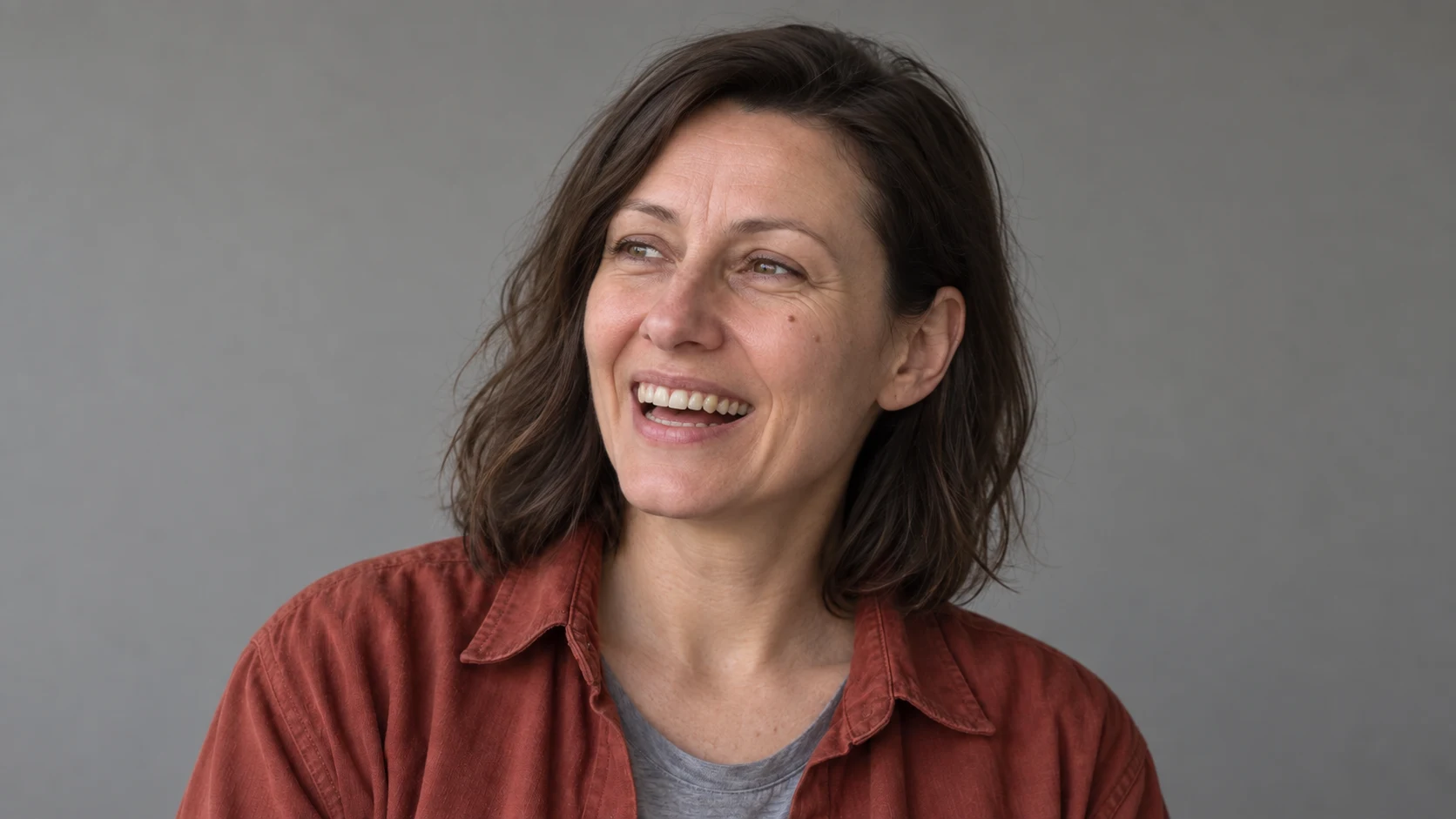
👁 116 reads
The same face doesn’t have to mean the same expression. A generator can treat a reference too literally and repeat the smile and head position even when it changes the entire setting. Then the series looks like one photograph with a swapped background.
We prepared ten prompts that separate identity from facial expression. Each describes the movement of eyebrows, mouth and eyes, plus a situation that triggers the reaction. It’s a simpler starting point than just the word “joy” or “sadness”.
What to Keep and What to Let Change
Identity is described by the shape of the nose, hairline, facial proportions and distinctive marks. Facial expression changes the position of the mouth, eyelids and cheeks. The instruction “keep the face exactly unchanged” can make it harder to get a clear reaction.
Use the phrasing “keep identity and age, change facial expression according to the description”. If you need a different head direction, specify it separately. Emotion, gaze and camera angle are three different decisions.
How to Read This Series
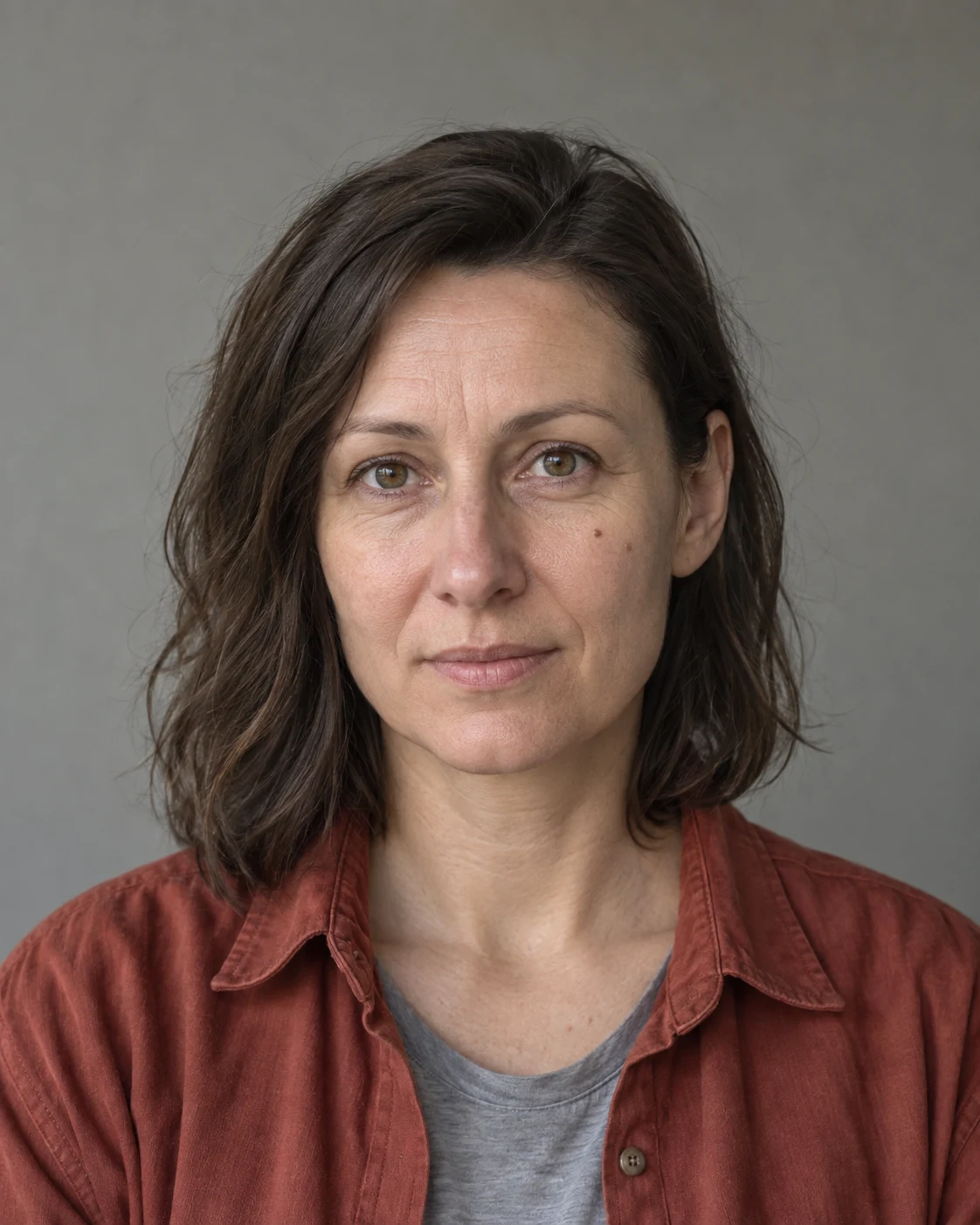
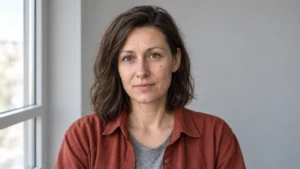
All examples show the same fictional character from the reference image and were generated by AI. The rust-colored shirt, gray background and general type of lighting remain constant. Facial expression and the described head position change.
These are qualitative examples of working with prompts, not a recognition study or model ranking. Emotion names describe the scene’s intent; viewers may interpret subtle facial expressions differently.
10 Prompts for Changing Facial Expression
1. Laughter
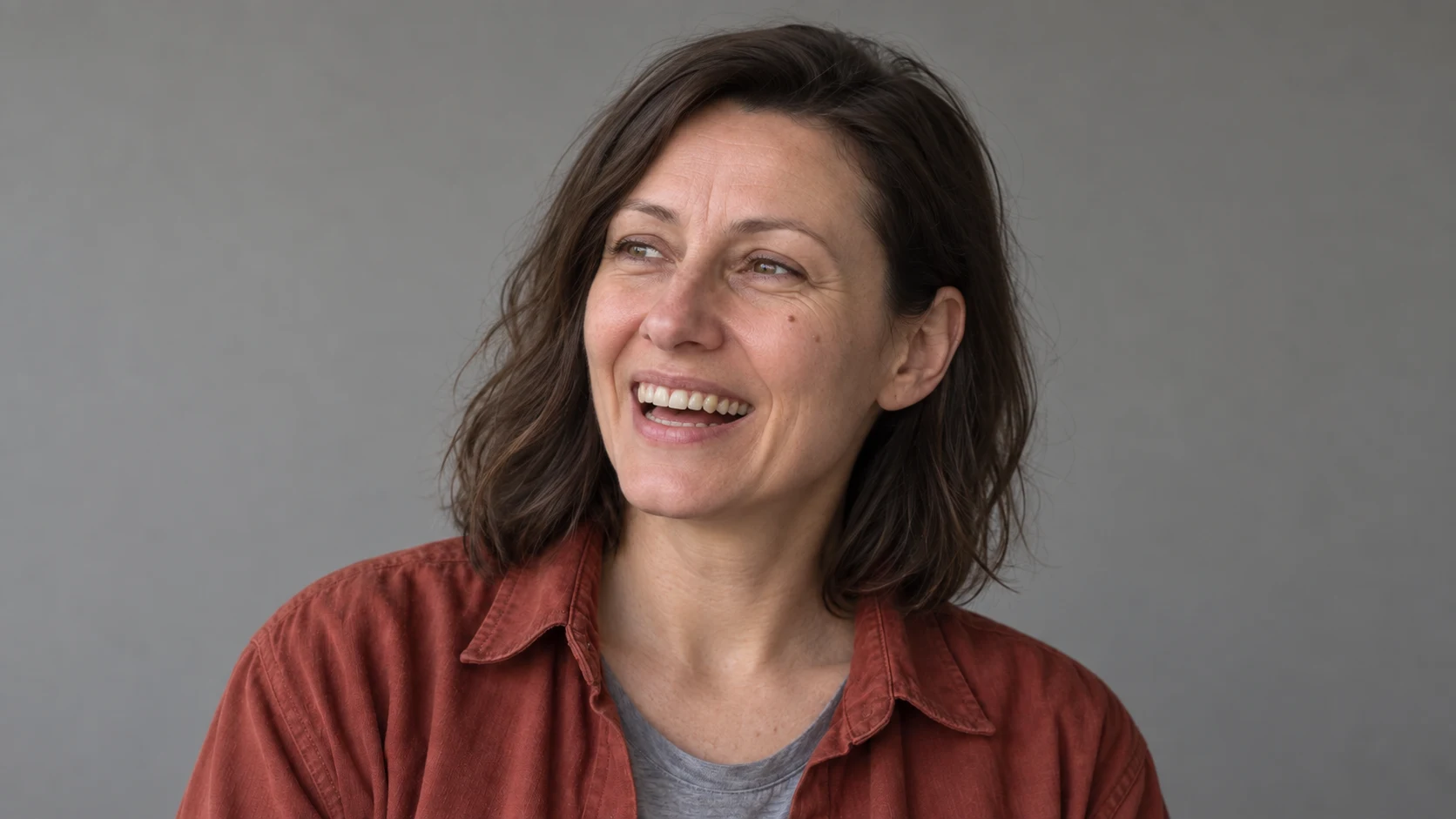
Open mouth, raised cheeks and wrinkles around the eyes give a clearer reaction than the neutral reference. The direction of gaze suggests contact with someone outside the frame.
Prompt to copy:
Use the attached portrait as a reference of the same fictional person. Keep age, facial features, moles, hairline and natural skin texture. No beauty retouching, skin smoothing, artificial gloss, text or frames. One realistic horizontal 16:9 photograph, space around the head. Portrait from shoulders, same rust-colored shirt, same gray background and soft window light. Change only facial expression, gaze and the described head position. Head slightly tilted back and turned left, genuine laughter: open mouth, visible teeth, cheeks raised, eyes squinted. Reaction to a joke outside the frame.
2. Surprise
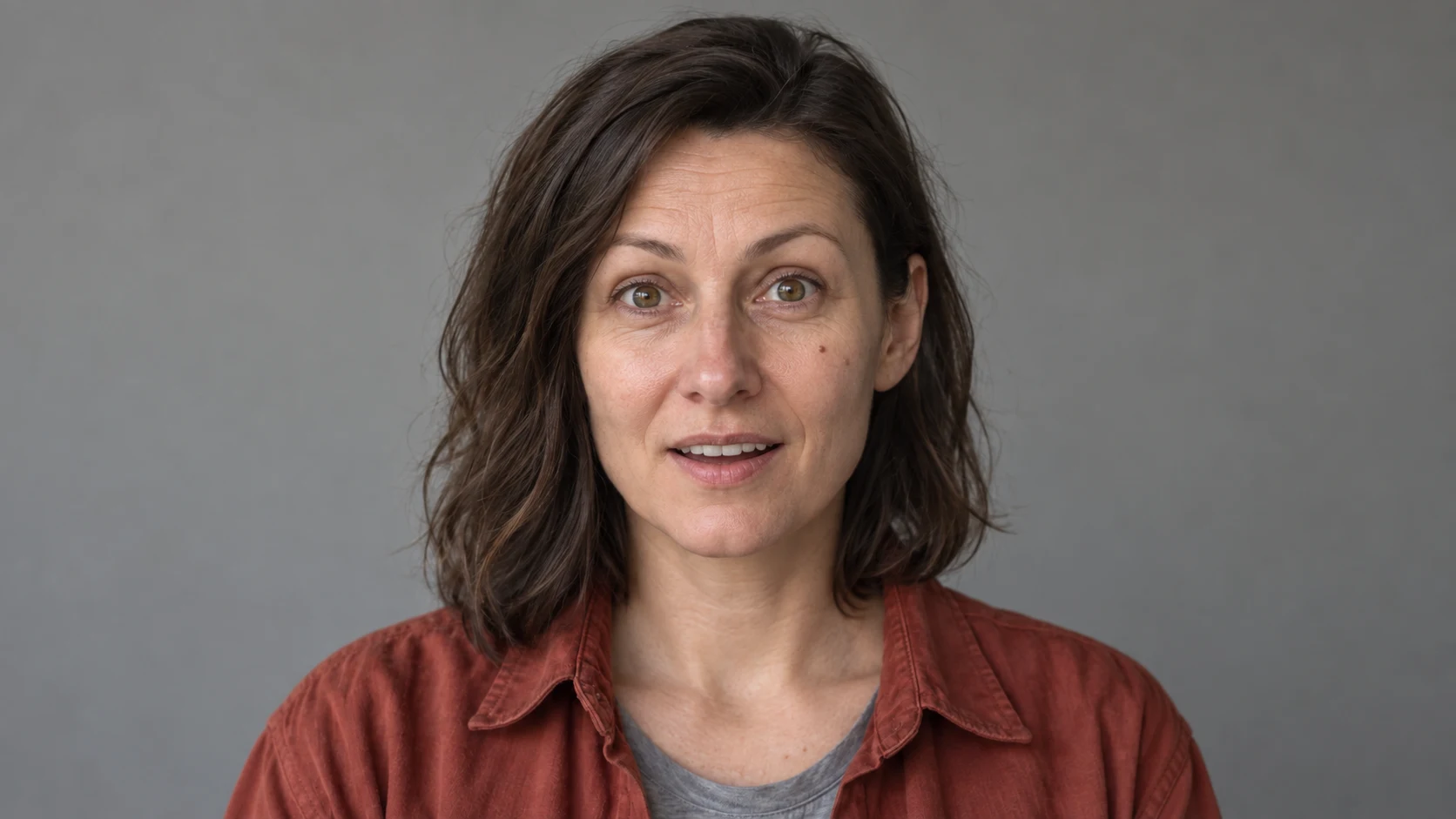
Raised eyebrows and parted lips clearly change the face. The reaction is moderate, without exaggerated eye opening.
Prompt to copy:
Use the attached portrait as a reference of the same fictional person. Keep age, facial features, moles, hairline and natural skin texture. No beauty retouching, skin smoothing, artificial gloss, text or frames. One realistic horizontal 16:9 photograph, space around the head. Portrait from shoulders, same rust-colored shirt, same gray background and soft window light. Change only facial expression, gaze and the described head position. Head vertically straight, both eyebrows raised, eyes wider open, lips slightly parted as during unexpected good news. No caricature.
3. Disbelief
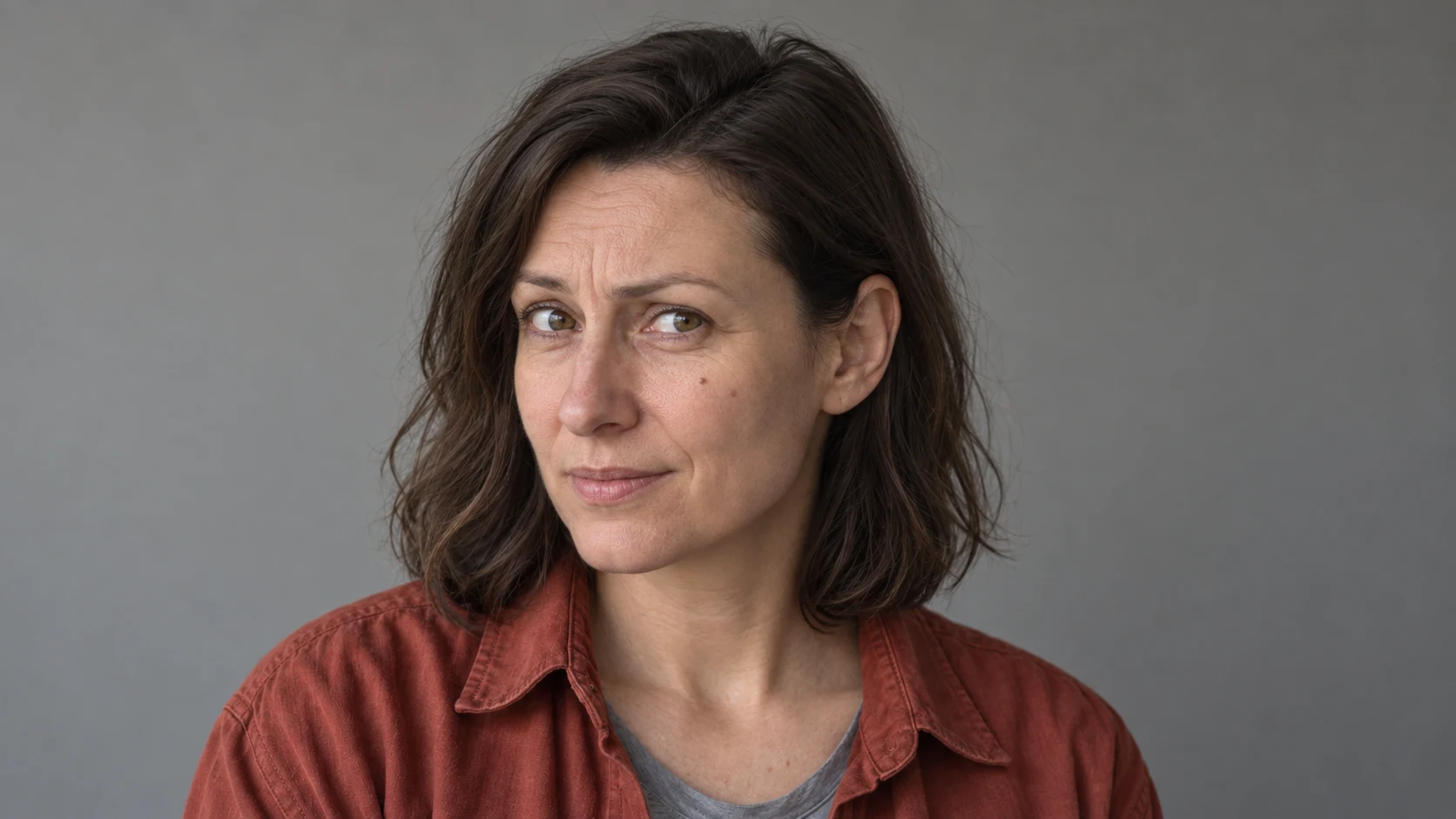
Asymmetrical eyebrows and a sideways glance help distinguish this variant from plain surprise. The mouth remains closed.
Prompt to copy:
Use the attached portrait as a reference of the same fictional person. Keep age, facial features, moles, hairline and natural skin texture. No beauty retouching, skin smoothing, artificial gloss, text or frames. One realistic horizontal 16:9 photograph, space around the head. Portrait from shoulders, same rust-colored shirt, same gray background and soft window light. Change only facial expression, gaze and the described head position. Head three-quarter to the right, one eyebrow raised, lips closed and slightly twisted, sideways glance toward the conversation partner.
4. Focus
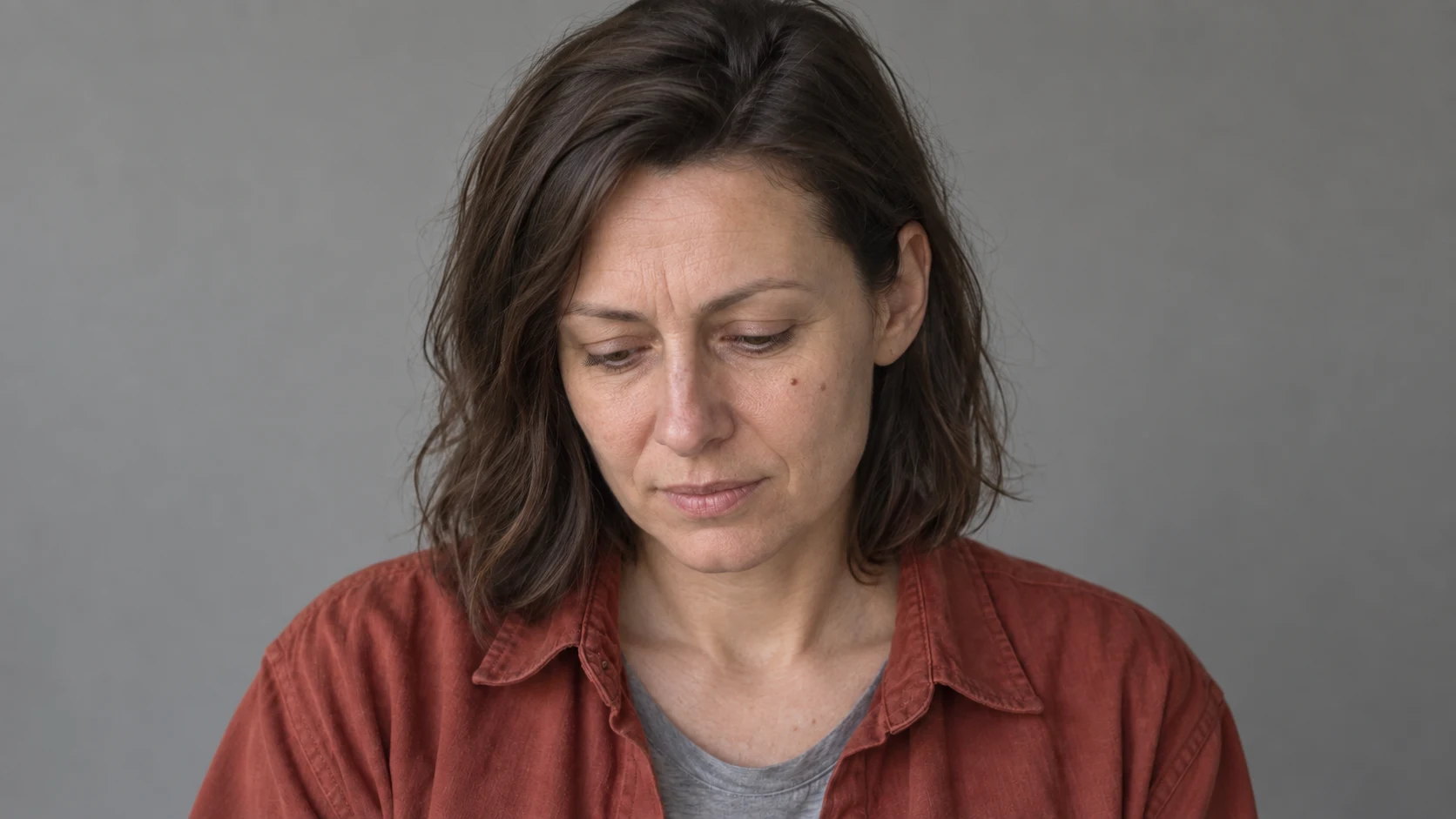
Lowered gaze and tension between the eyebrows realize the intent of concentration. Without work context, the same expression can also be read as worry.
Prompt to copy:
Use the attached portrait as a reference of the same fictional person. Keep age, facial features, moles, hairline and natural skin texture. No beauty retouching, skin smoothing, artificial gloss, text or frames. One realistic horizontal 16:9 photograph, space around the head. Portrait from shoulders, same rust-colored shirt, same gray background and soft window light. Change only facial expression, gaze and the described head position. Head lowered, gaze on a sheet of paper held below the frame, eyebrows slightly drawn together, lips calmly pressed. Camera slightly from above.
5. Irritation
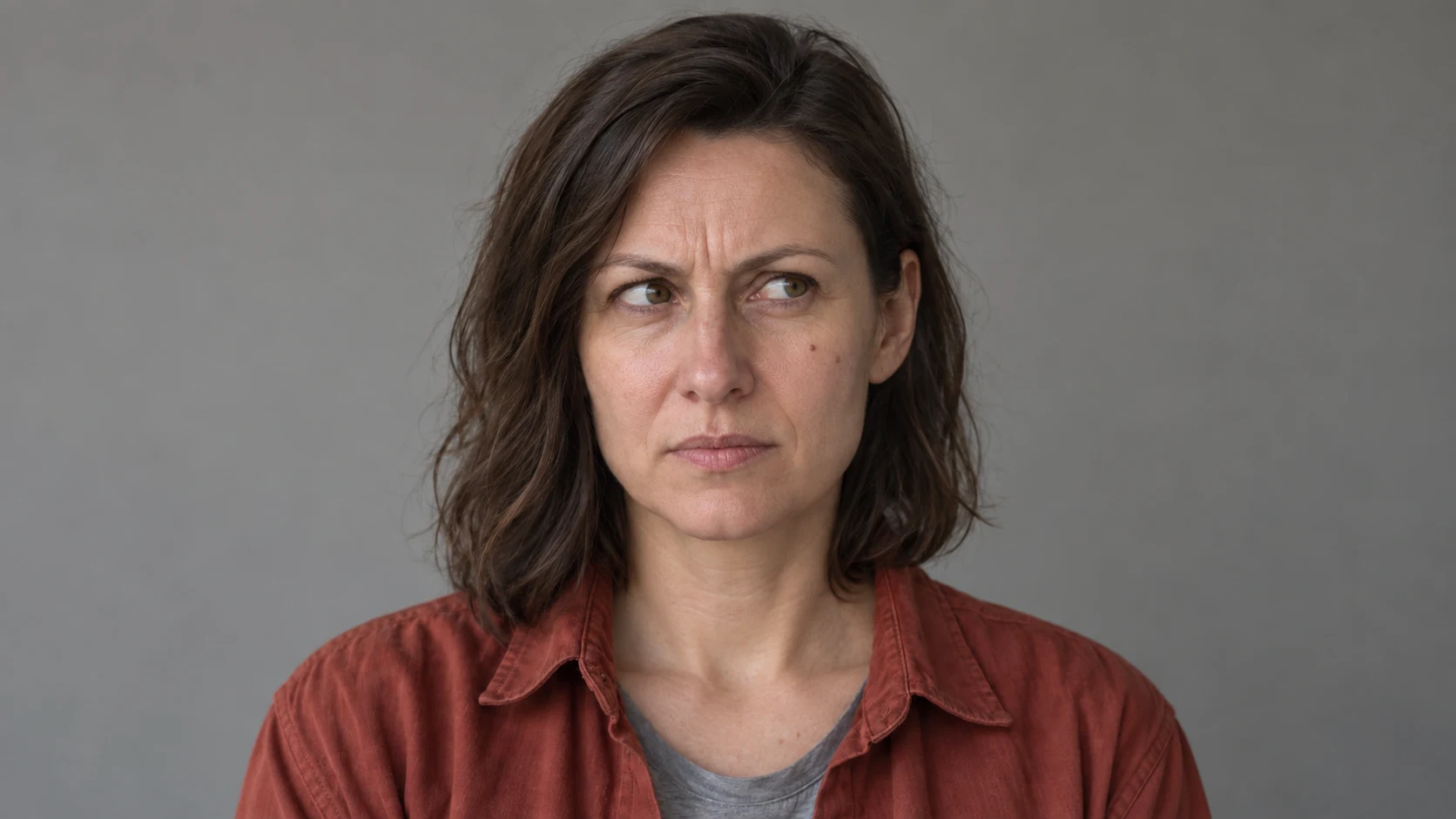
Drawn eyebrows and more tightly closed lips signal tension. The sideways glance distinguishes this reaction from focus on something below the frame.
Prompt to copy:
Use the attached portrait as a reference of the same fictional person. Keep age, facial features, moles, hairline and natural skin texture. No beauty retouching, skin smoothing, artificial gloss, text or frames. One realistic horizontal 16:9 photograph, space around the head. Portrait from shoulders, same rust-colored shirt, same gray background and soft window light. Change only facial expression, gaze and the described head position. Head straight, eyebrows drawn together, tense lips, gaze to the side. Moderate impatience of a person hearing the same argument again, without a grimace of aggression.
6. Embarrassment
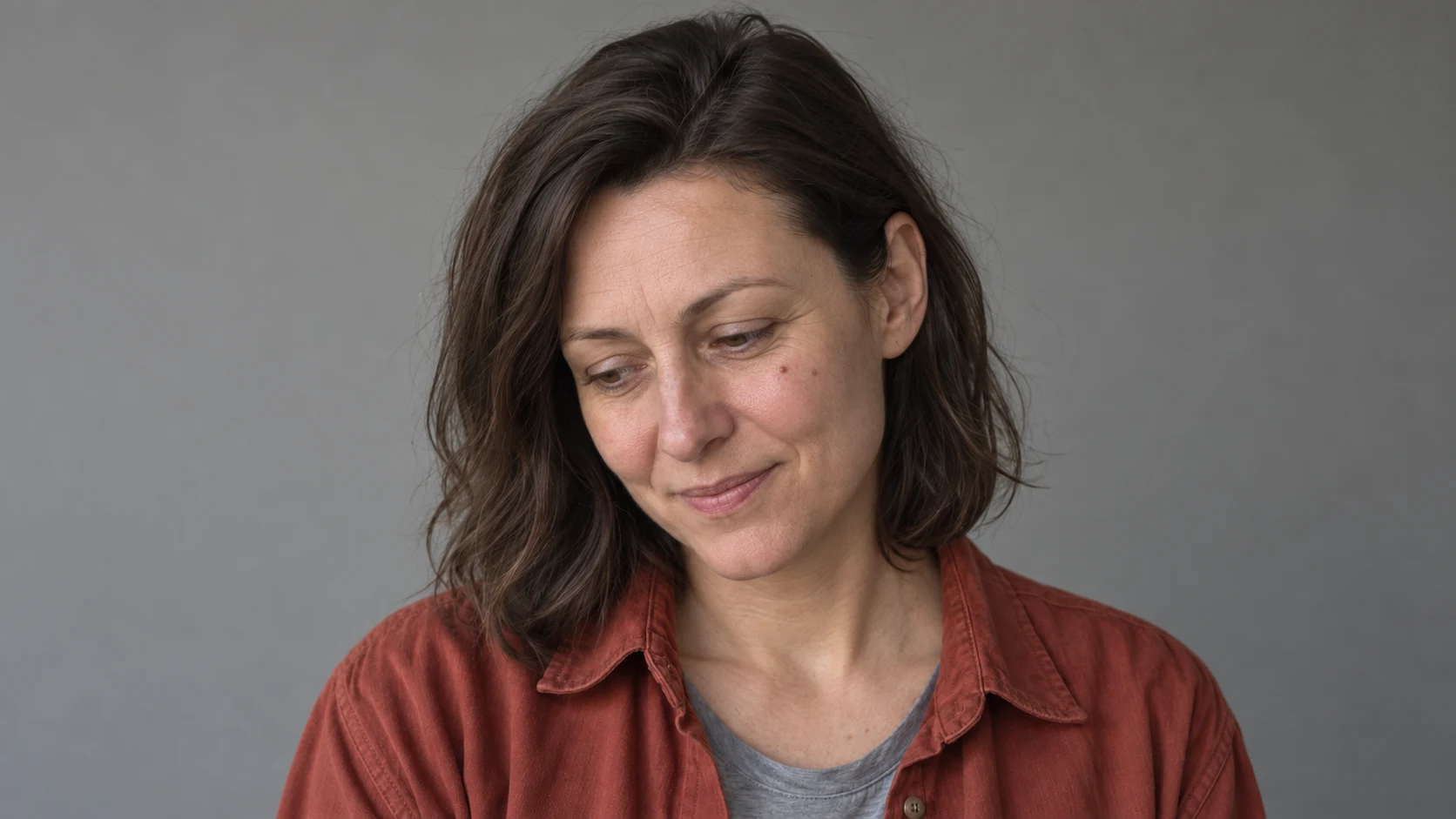
Lowered gaze, tilted head and a small smile create a subtle gesture. Embarrassment here is an interpretation of the entire pose, not one characteristic movement.
Prompt to copy:
Use the attached portrait as a reference of the same fictional person. Keep age, facial features, moles, hairline and natural skin texture. No beauty retouching, skin smoothing, artificial gloss, text or frames. One realistic horizontal 16:9 photograph, space around the head. Portrait from shoulders, same rust-colored shirt, same gray background and soft window light. Change only facial expression, gaze and the described head position. Head tilted toward right shoulder, gaze down, small nervous smile with closed lips, cheeks slightly flushed.
7. Relief
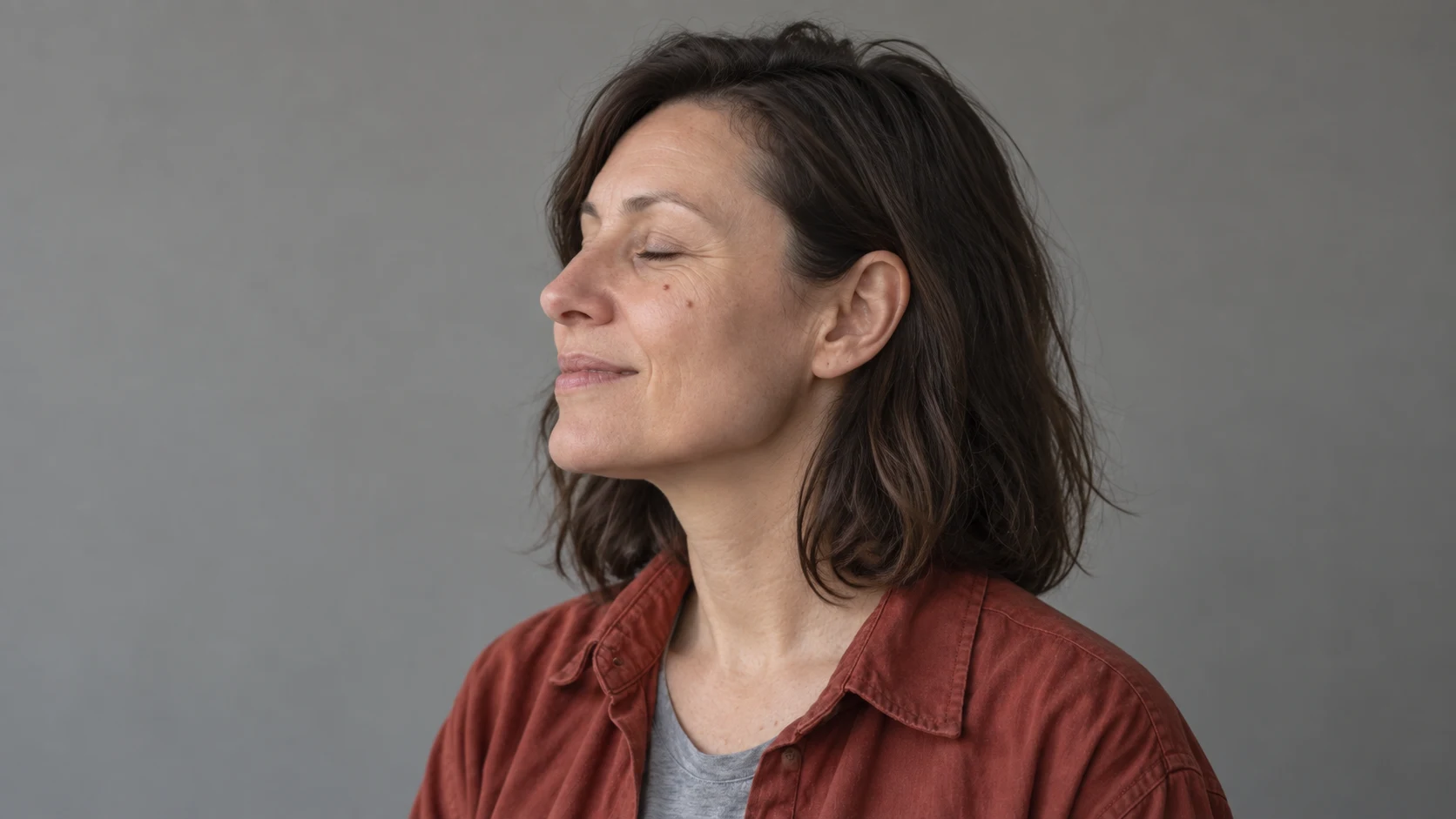
Closed eyes and raised chin give clear relaxation. This is also the largest change in head angle in this series.
Prompt to copy:
Use the attached portrait as a reference of the same fictional person. Keep age, facial features, moles, hairline and natural skin texture. No beauty retouching, skin smoothing, artificial gloss, text or frames. One realistic horizontal 16:9 photograph, space around the head. Portrait from shoulders, same rust-colored shirt, same gray background and soft window light. Change only facial expression, gaze and the described head position. Strict profile, closed eyes, relaxed jaw and subtle smile after receiving good news, shoulders gently lowered.
8. Sadness
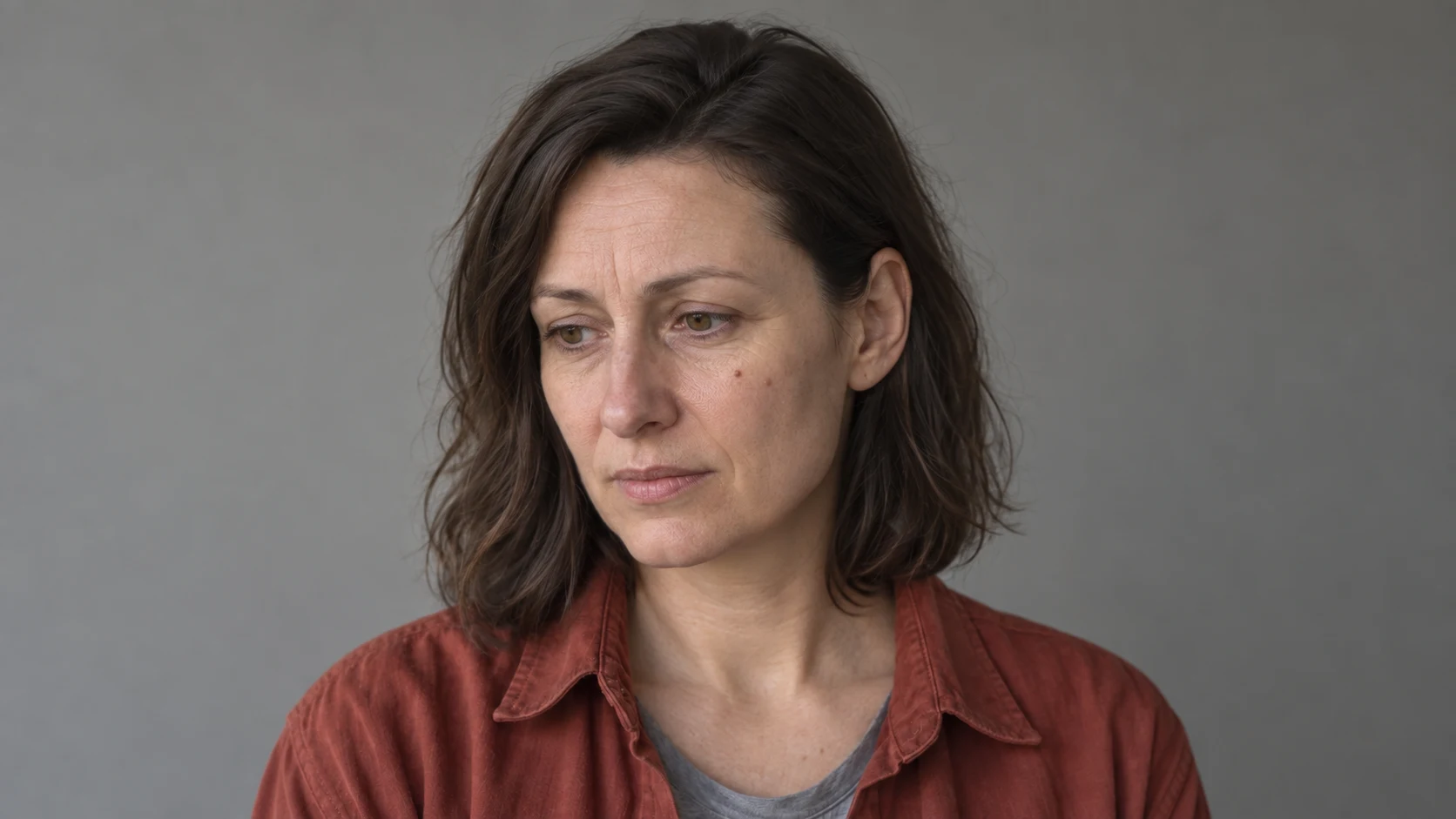
Lowered gaze and calm lips build a restrained portrait. The variant is similar to focus, which shows the limitations of describing emotions without context.
Prompt to copy:
Use the attached portrait as a reference of the same fictional person. Keep age, facial features, moles, hairline and natural skin texture. No beauty retouching, skin smoothing, artificial gloss, text or frames. One realistic horizontal 16:9 photograph, space around the head. Portrait from shoulders, same rust-colored shirt, same gray background and soft window light. Change only facial expression, gaze and the described head position. Face three-quarter to the left, lowered gaze, inner parts of eyebrows slightly raised, corners of mouth turned down. Quiet sadness without tears, without theatrical gesture.
9. Pride
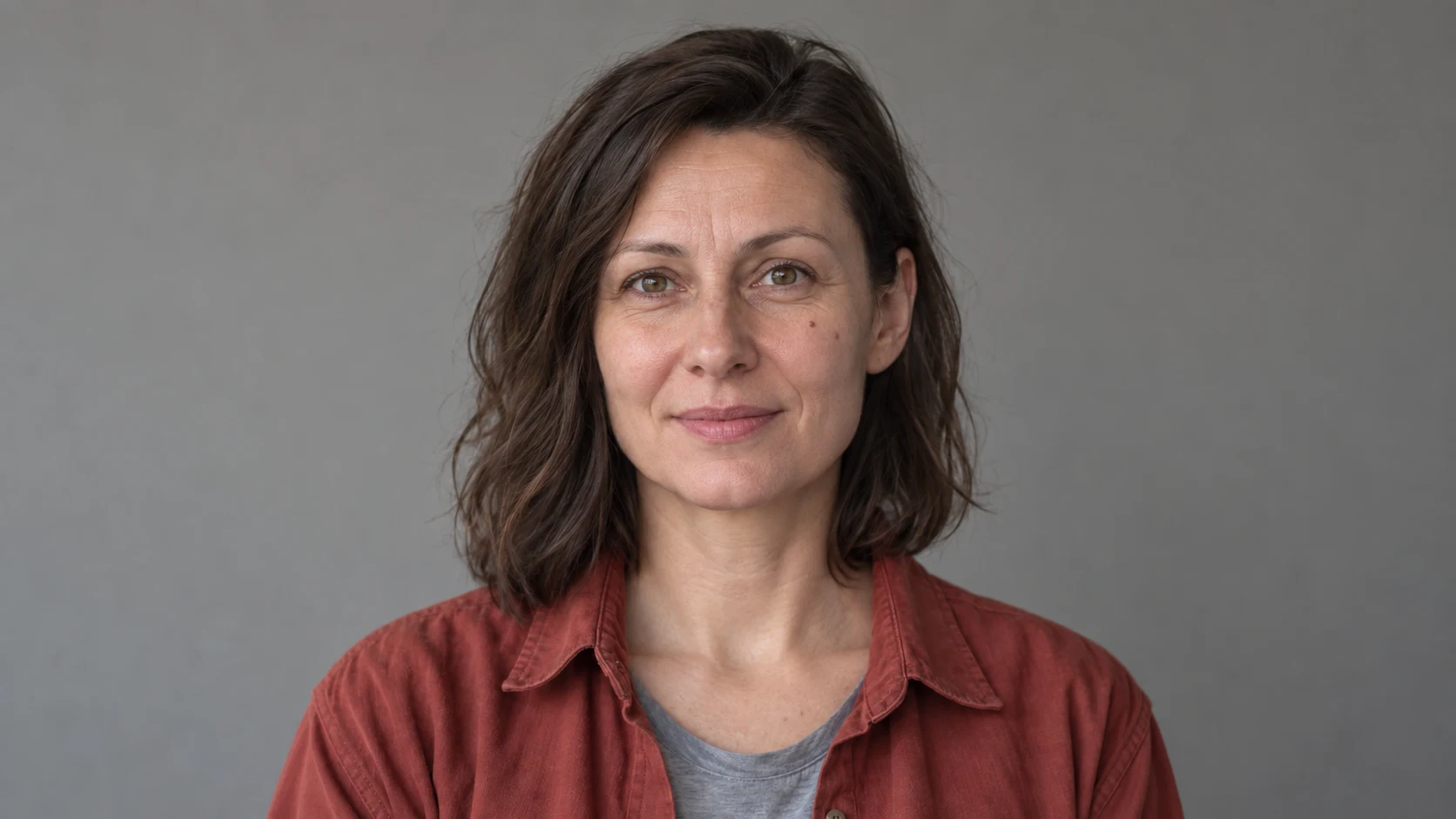
Slightly raised chin and a small smile create a calm reaction. The difference from the neutral portrait is small; not everyone will read it unambiguously as pride.
Prompt to copy:
Use the attached portrait as a reference of the same fictional person. Keep age, facial features, moles, hairline and natural skin texture. No beauty retouching, skin smoothing, artificial gloss, text or frames. One realistic horizontal 16:9 photograph, space around the head. Portrait from shoulders, same rust-colored shirt, same gray background and soft window light. Change only facial expression, gaze and the described head position. Head vertical, chin slightly raised, gentle closed smile, calm gaze into the lens, upright posture.
10. Curiosity
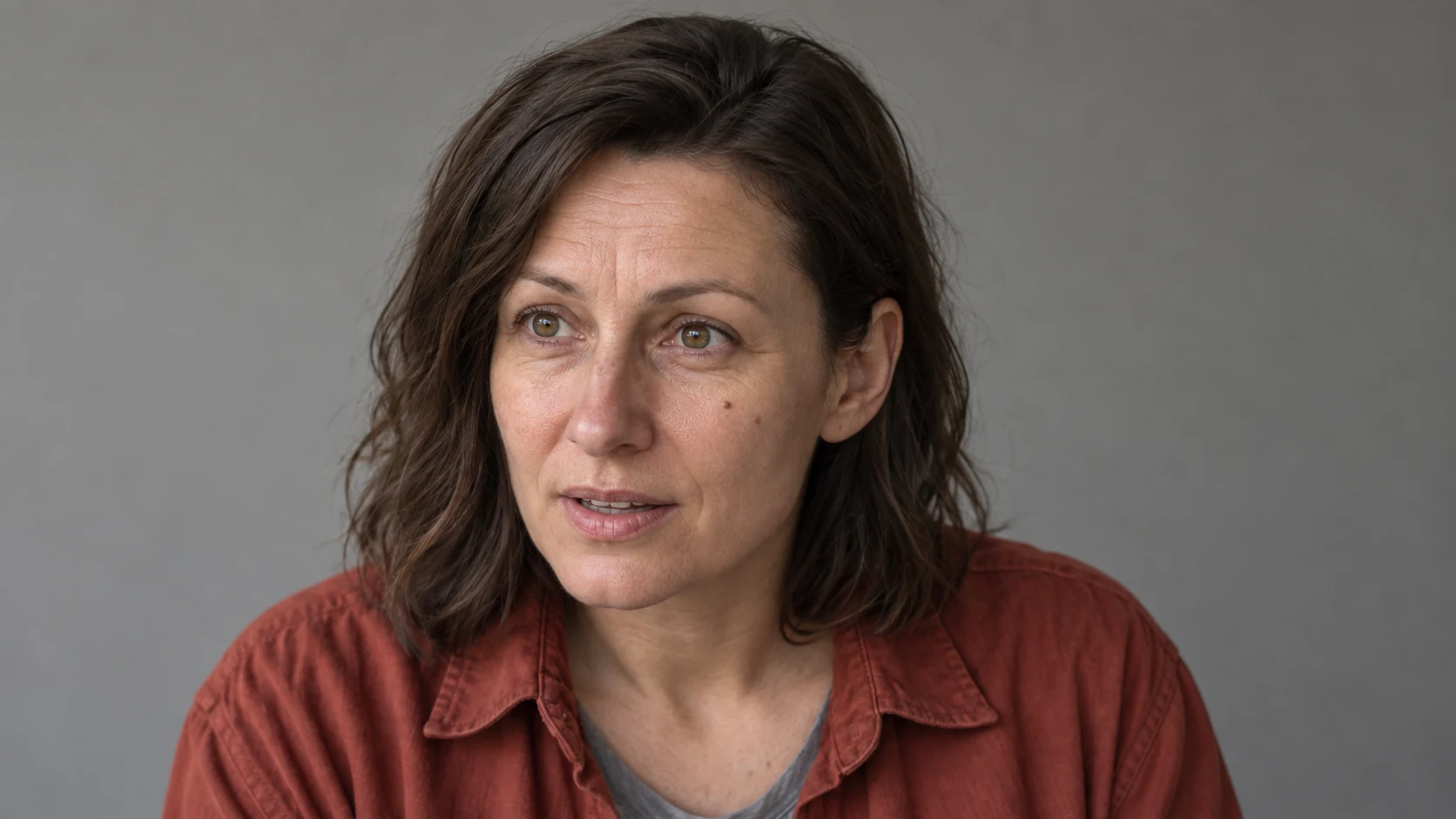
Leaning forward and parted lips suggest attentive listening. Not only the facial expression changes, but also the relationship of the head to the camera.
Prompt to copy:
Use the attached portrait as a reference of the same fictional person. Keep age, facial features, moles, hairline and natural skin texture. No beauty retouching, skin smoothing, artificial gloss, text or frames. One realistic horizontal 16:9 photograph, space around the head. Portrait from shoulders, same rust-colored shirt, same gray background and soft window light. Change only facial expression, gaze and the described head position. Head slightly pushed forward and turned left, eyebrows subtly raised, lips slightly parted, gaze focused on conversation partner outside the frame.
Why the Cause of the Reaction Helps
“Laughter after hearing a joke” describes a specific moment. The generator gets information about gaze direction, body relaxation and possible mouth opening. The adjective “cheerful” alone easily ends with a standard smile at the camera.
Similarly, focus on a sheet of paper or embarrassment after a mistake works. The prop doesn’t always have to appear in the frame, but its role organizes the character’s behavior.
How to Check If It’s Still the Same Person
Compare the hairline, nose, ears and visible marks. Don’t judge likeness solely by mouth width - with laughter its shape naturally changes. Pay attention to whether the model has made the person younger or slimmed the entire face.
With an extreme profile, some features disappear from view. If you need a strong angle change, an additional reference from the side will give a better reference point for evaluation.
When the Emotion Looks Theatrical
Limit the intensity of the reaction and indicate which elements should calm down. Don’t remove all signs of emotion at once. With surprise, slightly raised eyebrows and parted lips are enough; wide-open eyes don’t have to dominate the entire portrait.
Example prompt for a separate correction:
Keep current identity, age and head position. Reduce reaction intensity: raise eyebrows only slightly, relax cheeks, limit mouth opening. Keep gaze direction and natural wrinkles.Google · Your sourcesQuantslant higher in your Google - one clickAdd to preferred sources →
Which Three Prompts to Try
We would start with laughter, focus and disbelief. They differ in mouth movement, gaze direction and eyebrow tension, so it’s easy to see if the generator actually changes facial expression.
Then it’s worth moving to relief and curiosity. These reactions are more subtle and show well why describing a small gesture is sometimes more useful than a long list of emotional adjectives.
See also 10 prompts for natural portraits.
More on this from QUANTSLANT


 magazine·Jensen Huang: The Man Who Bet on AI and Won - Denny’s to $3THow Jensen Huang turned a Denny's meeting into a $3 trillion empire by betting on parallel computing years before the AI revolution began.